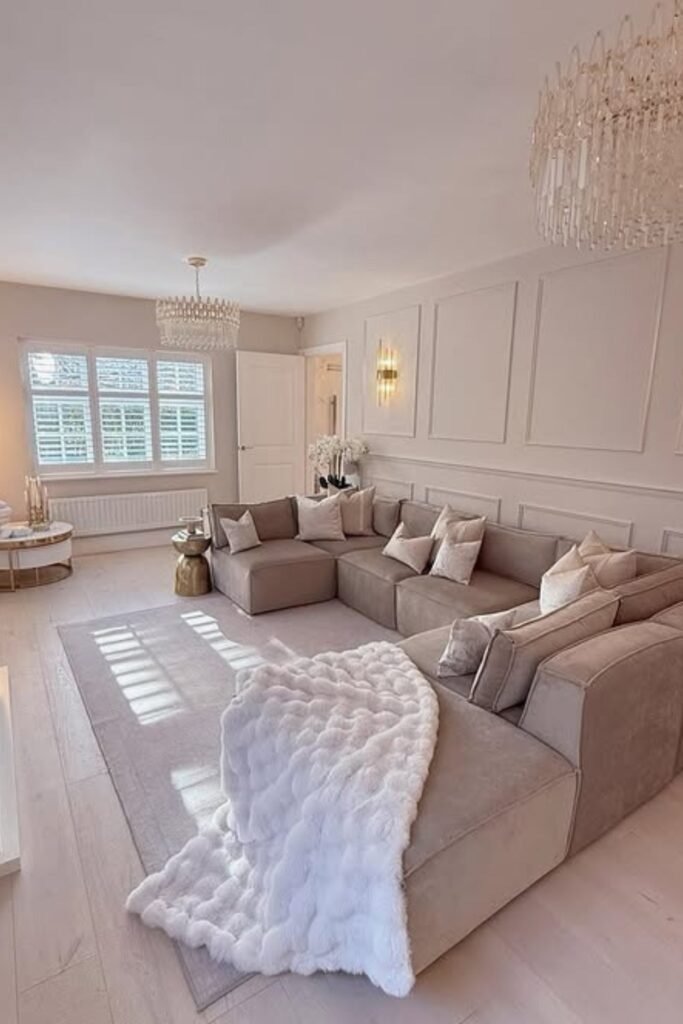
23 White Kitchen Ideas for 2026

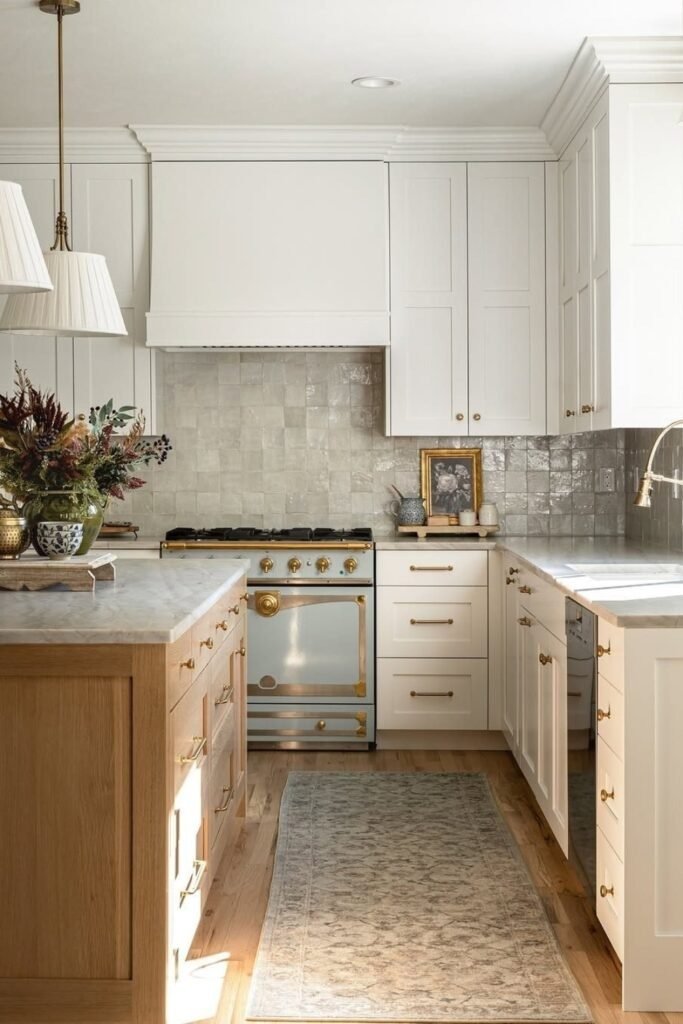
I have designed kitchens for more than two decades. Trends come and go. White kitchens never leave. They only change shape. Every few years, people think white is finished. Then it returns in a smarter way.
In 2026 the white kitchen is not plain. It is layered. It is warm. It feels lived in. The focus is comfort, light, and easy cleaning. People want a space that looks calm in the morning and cozy at night.
A good white kitchen today is not only about color. It is about balance. The room must hold contrast, texture, and shadow. Without these, white feels flat. With them, it feels expensive even on a small budget.
This guide explains how to make white work in real homes, not only in photos.
Is A White Kitchen A Good Idea?
Yes. A white kitchen still works in most homes, especially smaller ones.
White reflects light better than any other finish. In apartments and tight houses, it makes walls feel farther apart. The ceiling looks higher. Even old kitchens feel newer after painting cabinets white.
Cleaning is easier than people expect. Dust is less visible than on dark cabinets. Fingerprints show, but they wipe off quickly with a damp cloth. Modern matte paints and laminates also resist stains better than older glossy paints.
Another benefit is flexibility. When the floor, walls, and cabinets are white, you can change the look anytime. Change handles, stools, lights, or decor and the kitchen feels new again. You don’t need a renovation every five years.
The only problem appears when everything matches too much. White cabinets, white counters, white backsplash, white floor, white light. The room loses depth. The solution is not avoiding white. The solution is adding contrast and texture.
How To Make A White Kitchen Interesting?
Warmth Through Wood Accents
Wood keeps a white kitchen human. Without wood, the room feels like a clinic. Even a small wooden shelf or cutting board changes the mood. Oak works best because it has a soft grain. Walnut suits larger kitchens because it adds weight. The goal is not to dominate the room but to break the smooth surfaces so the eye can rest.
Balance with Black Accents
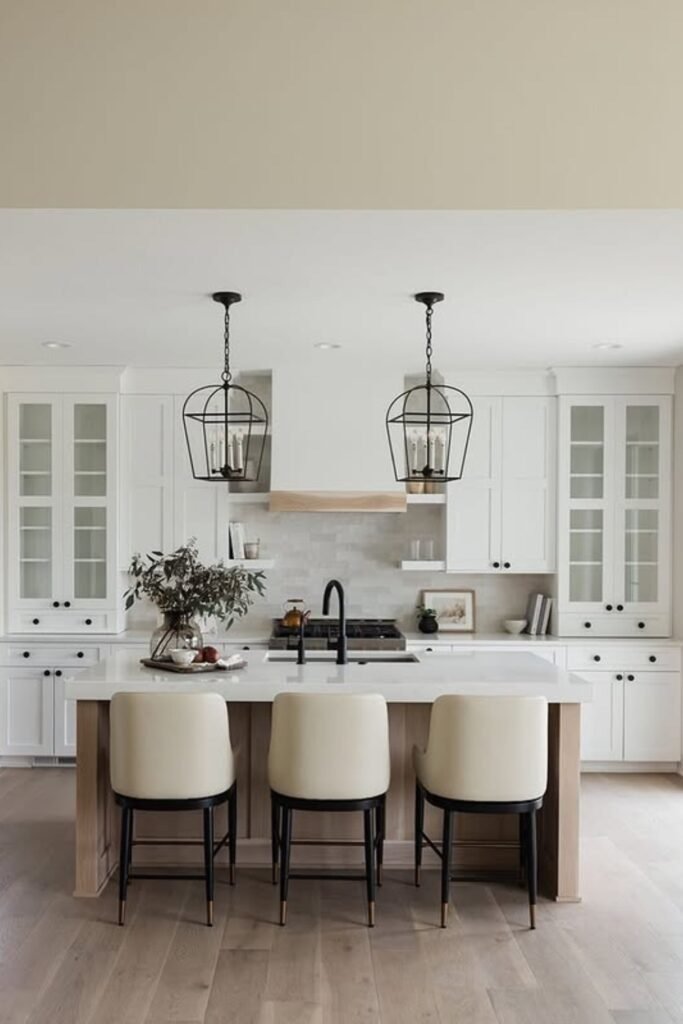
Black adds outline. Just like a sketch line around a drawing, it defines shapes. Black handles, faucets, or window frames make cabinets look sharper. Use it lightly. Too much black turns the room heavy. A few details create structure without darkness.
Add Natural Texture
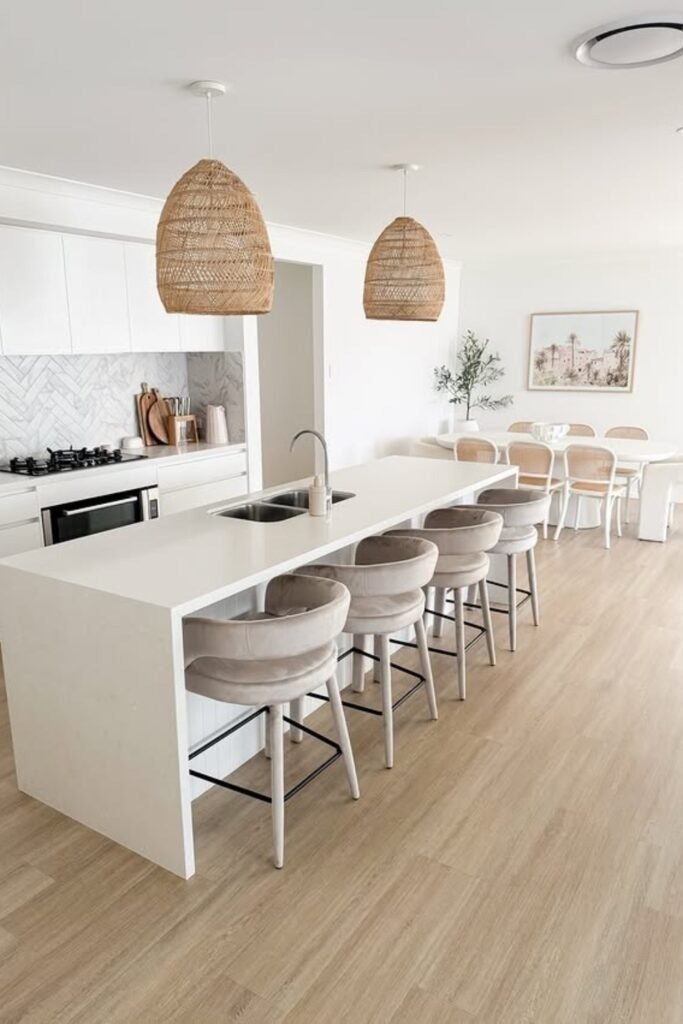
Flat surfaces everywhere make the kitchen boring. Texture fixes that. Stone backsplashes, clay tiles, woven baskets, and linen runners all work. These materials scatter light in different directions, which makes the space look alive instead of blank.
Go Sleek and Seamless
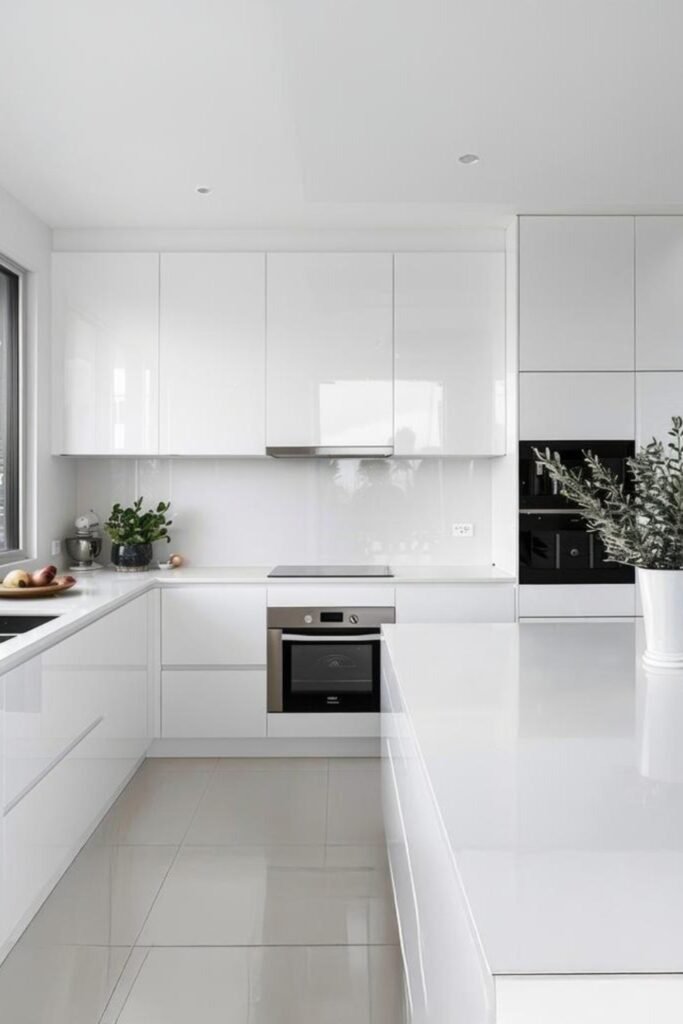
Handle-less cabinets create a calm wall look. In open homes, this matters a lot because the kitchen is always visible from the living room. Flat panels and hidden storage remove visual noise. The space feels organized even when busy.
Add Depth with Dark Details
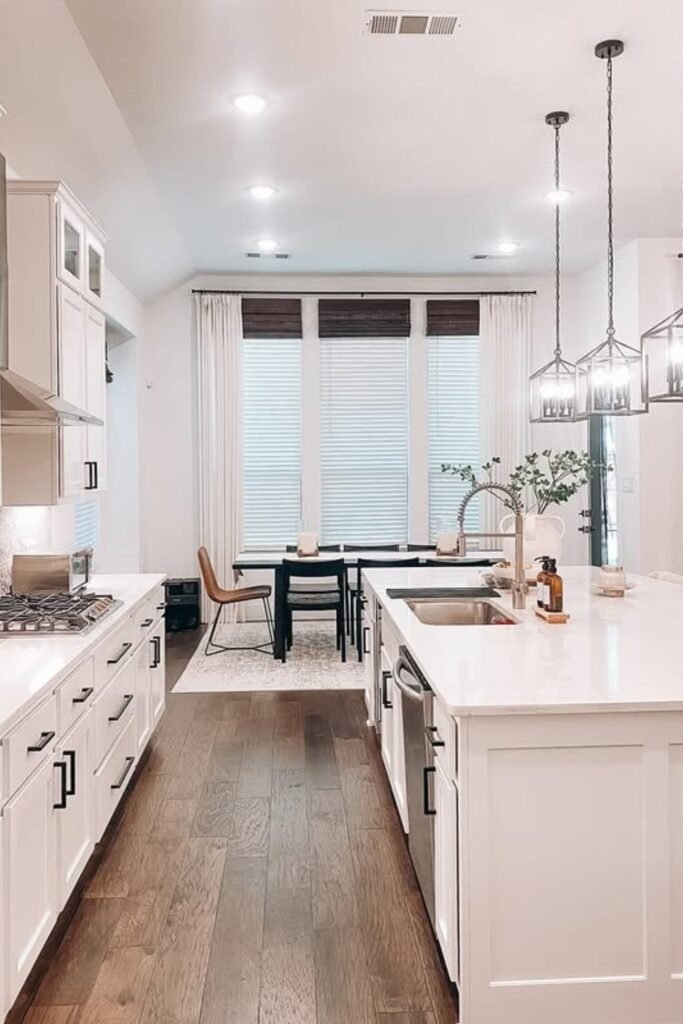
A darker island base or a charcoal pantry section adds grounding. The white then feels brighter instead of washed out. Depth is what makes white feel designed instead of accidental.
Highlight with Brass Fixtures
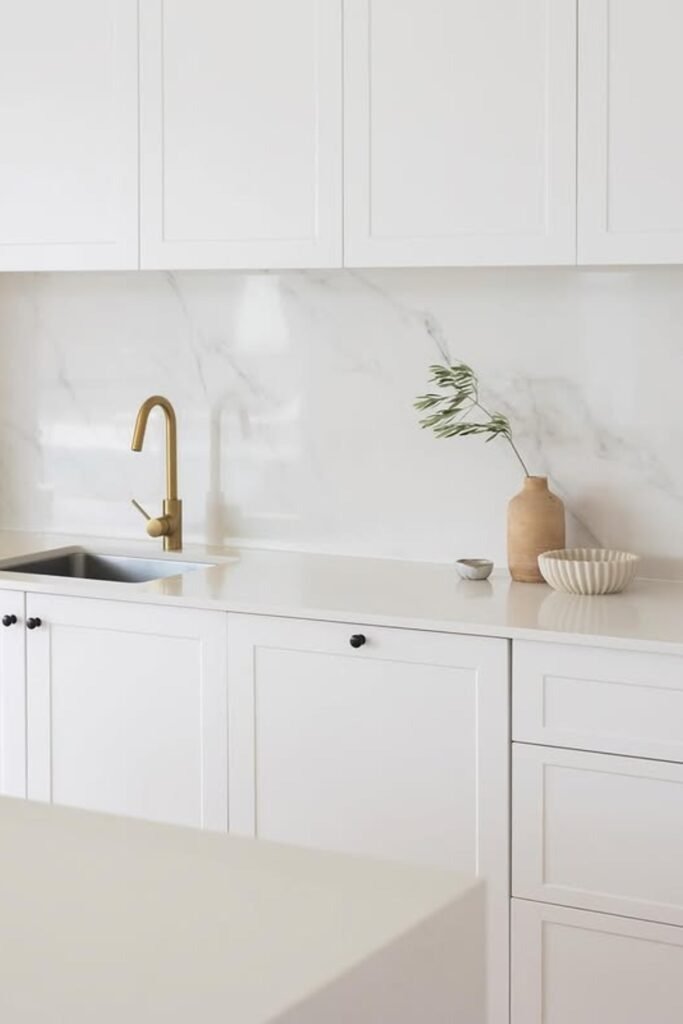
Warm metals prevent a sterile feel. Brass faucets and handles reflect warm light at night. Over time, they develop a soft patina, which adds character. The kitchen begins to age gracefully instead of wearing out.
Add Personality with Art
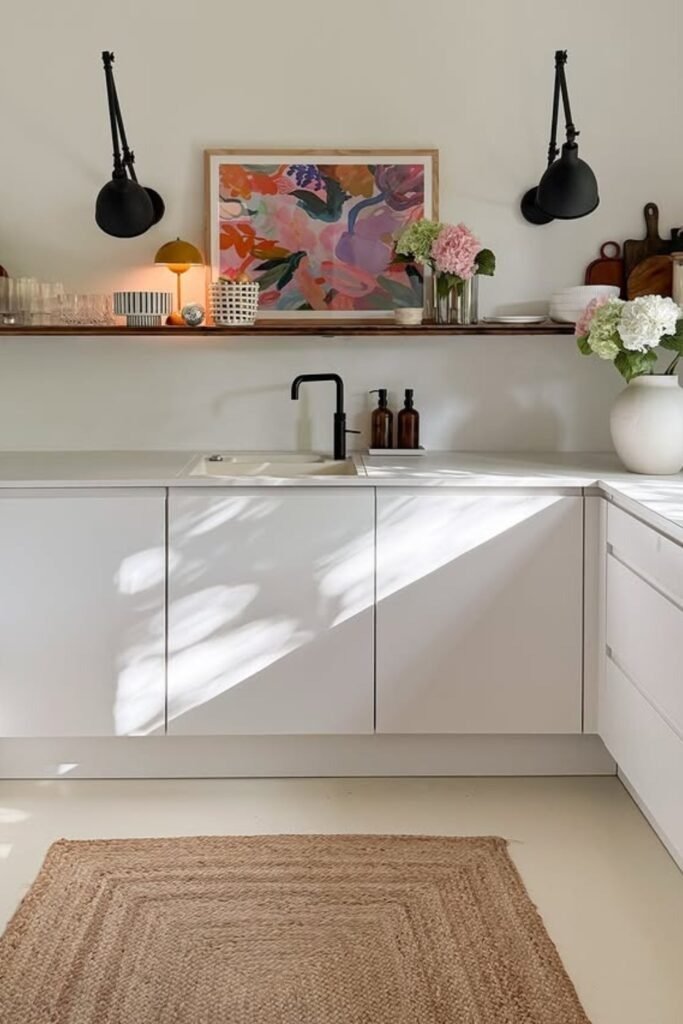
Kitchens should not look like showrooms. A framed print, small painting, or even a child’s drawing gives identity. White walls act like a gallery background. The art becomes part of daily life, not decoration saved for guests.
Mix Wood and White
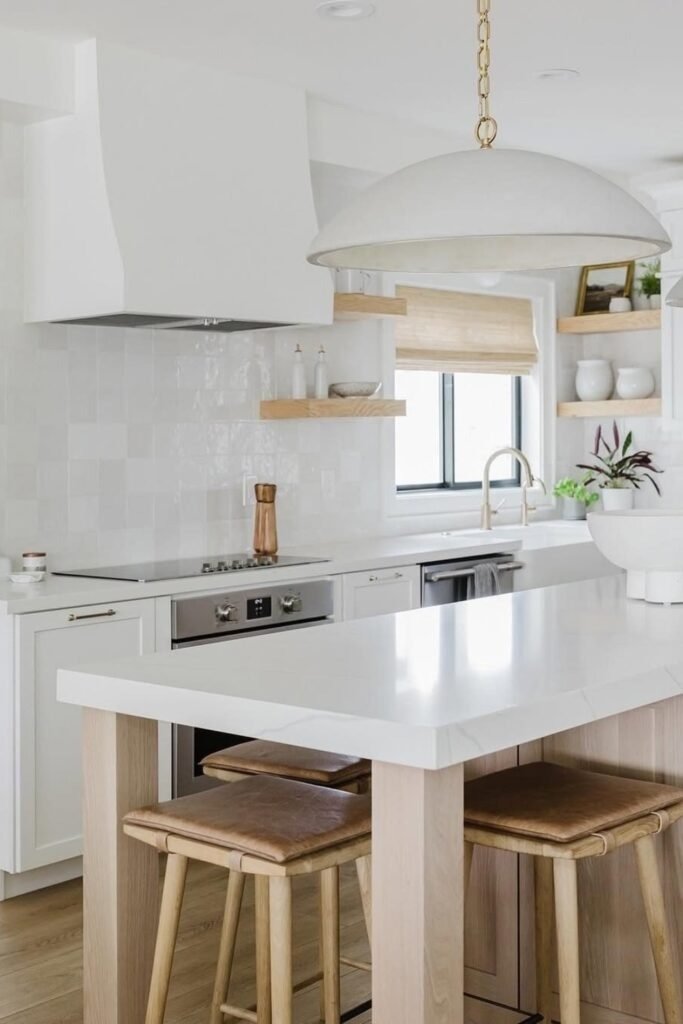
Half white cabinets and half wood cabinets work well in family homes. Upper cabinets stay white to keep brightness. Lower cabinets go wood to hide wear and scratches. This approach also makes maintenance easier over years.
Layer Soft Neutrals
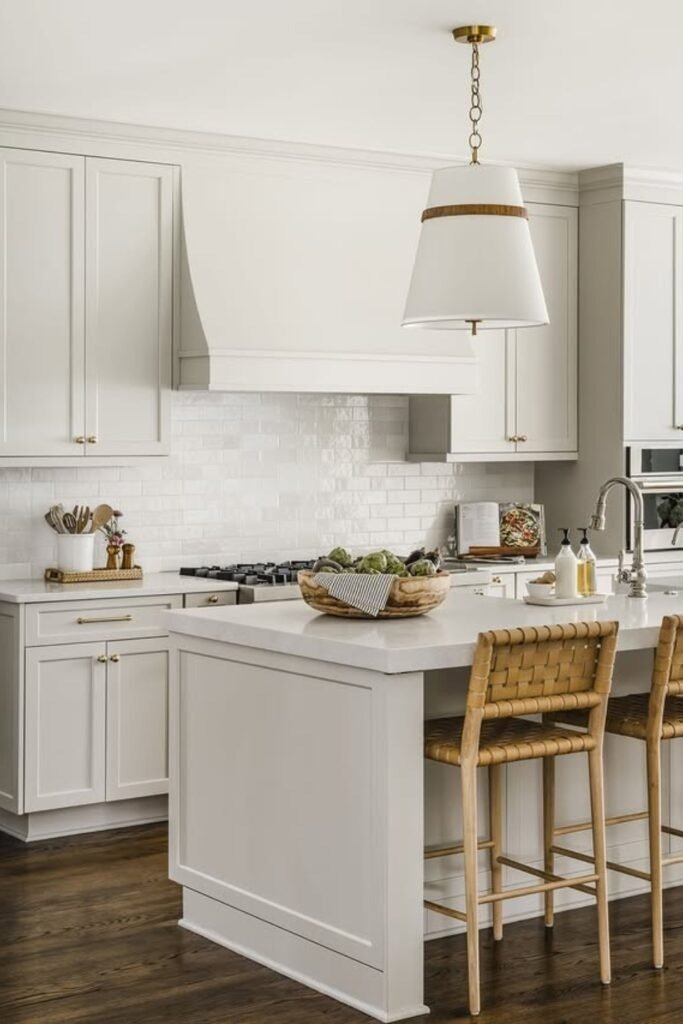
Cream, beige, and sand tones soften white. These colors work best in textiles like curtains, seat cushions, or rugs. They warm the environment without competing with cabinets.
Create a Coastal Calm
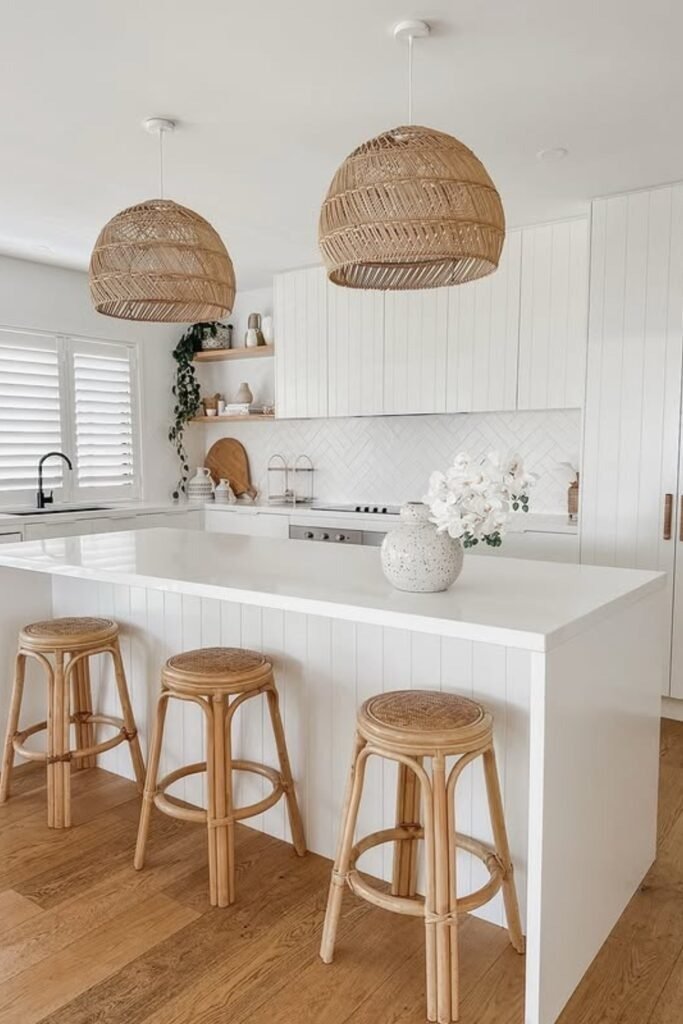
Soft blue dishes, glass jars, and light oak stools give a relaxed feel. The goal is airiness, not a beach theme. Keep the palette quiet so the kitchen stays timeless rather than themed.
Embrace Cottage Warmth
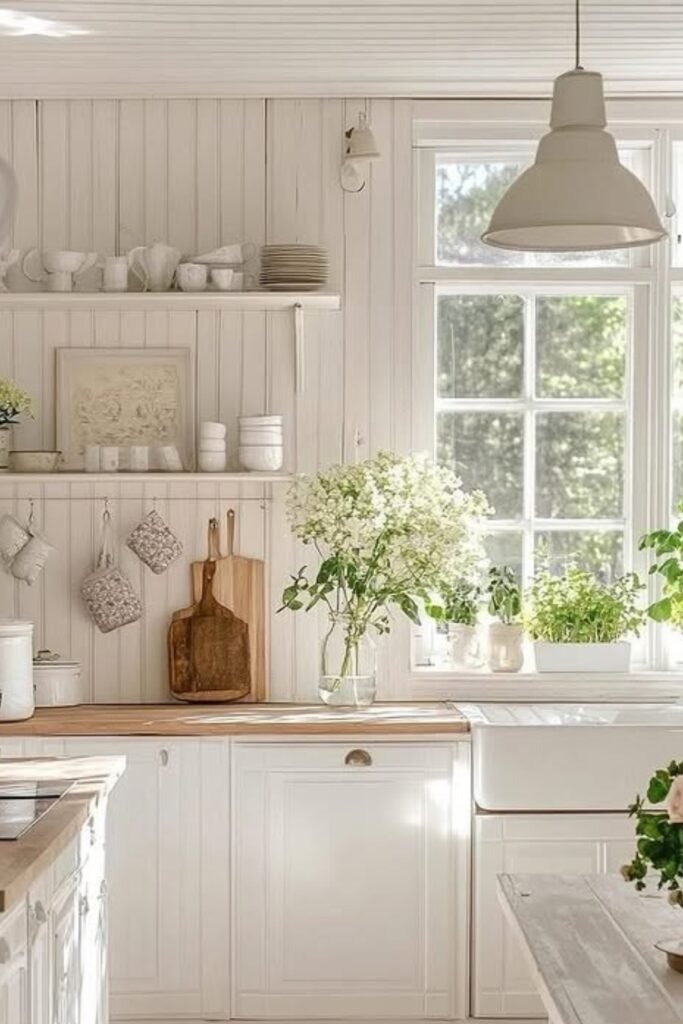
Panel cabinet doors, warm lighting, and ceramic jars create comfort. This style works especially well in older houses where sharp modern lines feel out of place.
Use Lighting for Drama
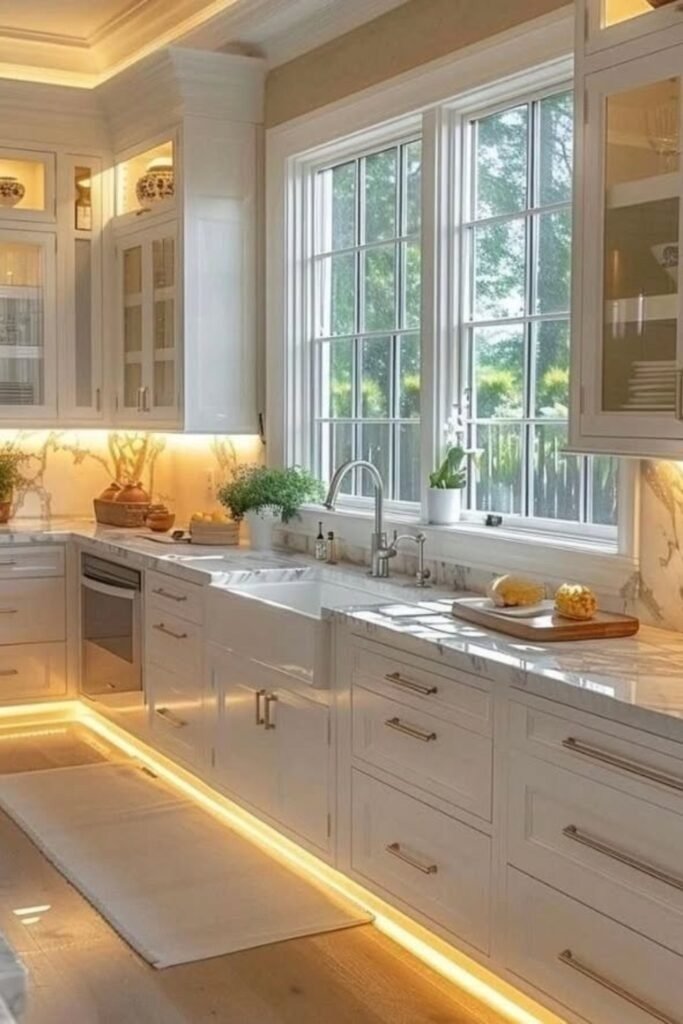
Lighting shapes the kitchen at night. Under-cabinet lights remove shadows on counters. Pendant lights over an island create focus. Warm bulbs prevent the white from turning grey after sunset.
Add Warm Metal Touches
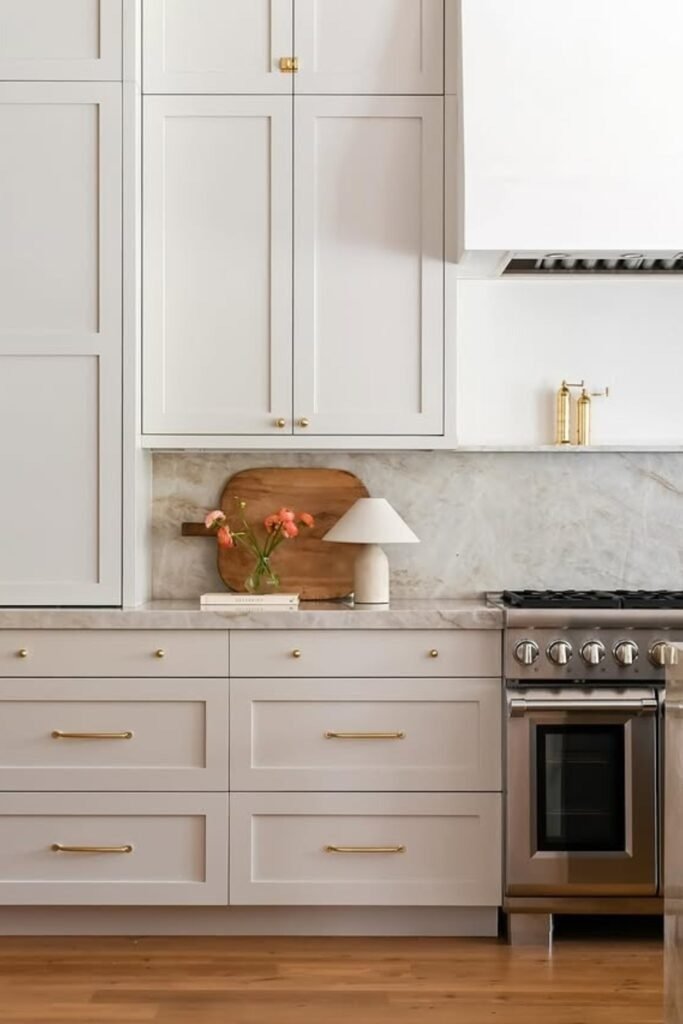
Copper bowls, bronze handles, or aged steel shelves create small highlights. Metal reflects movement and keeps the space from looking flat.
Bring in a Touch of Glam
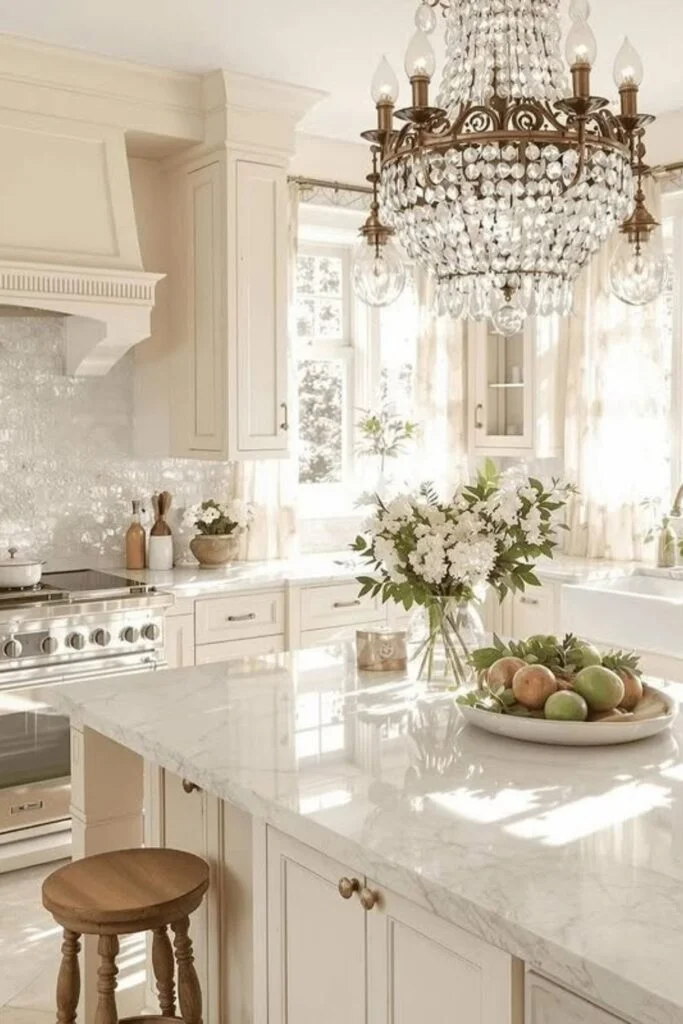
Gloss tiles or reflective backsplashes bounce light around the room. Used carefully, they make the kitchen feel larger. The key is restraint so the effect stays elegant.
Showcase Stone Drama
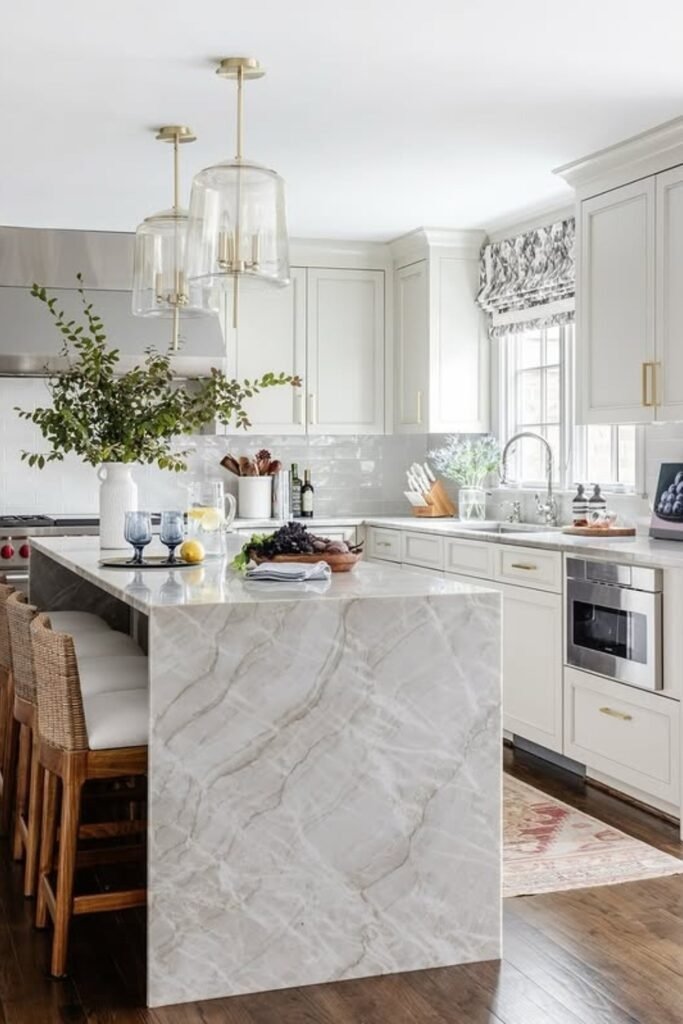
Natural stone with visible veining works beautifully in white kitchens. It gives motion to still surfaces. Even a small slab behind the stove becomes a focal point.
Keep It Polished and Bright
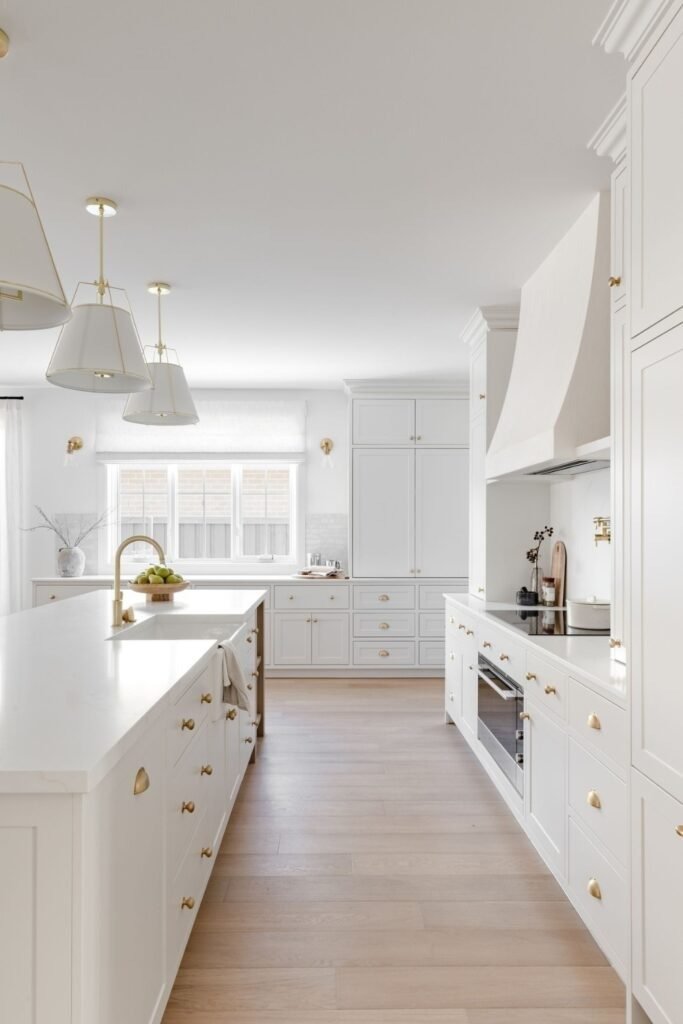
Smooth counters and clean cabinet lines help maintain order. In busy homes, visual calm reduces stress. People cook more comfortably in spaces that feel clear.
Add Bold Contrast
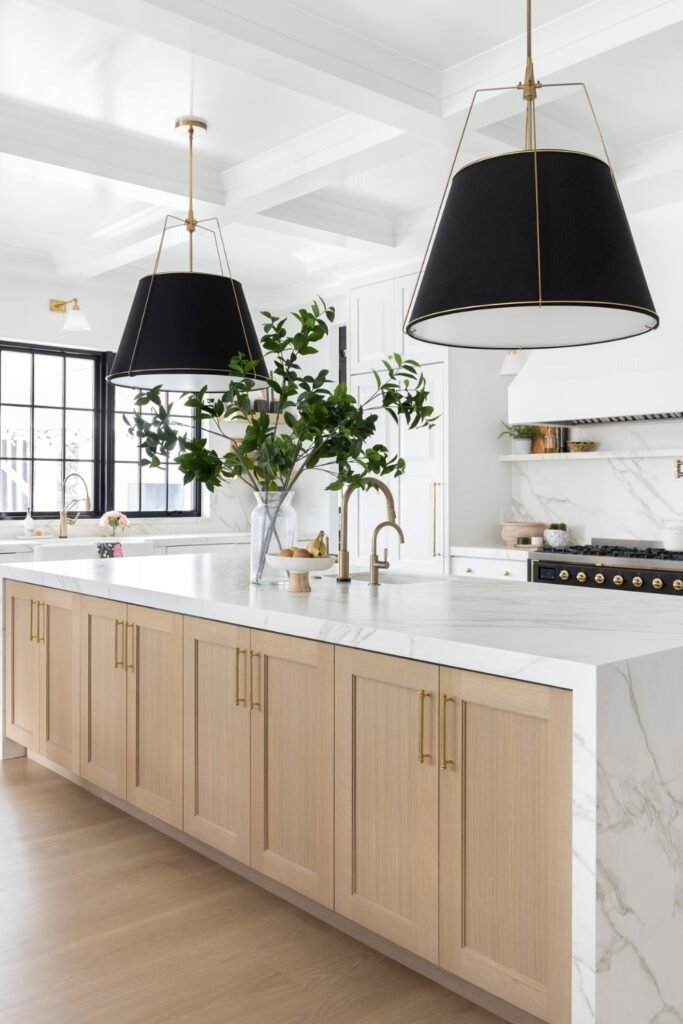
A deep green pantry door or navy island gives energy without repainting everything. Contrast should feel intentional, not random.
Keep It Sleek and Minimal
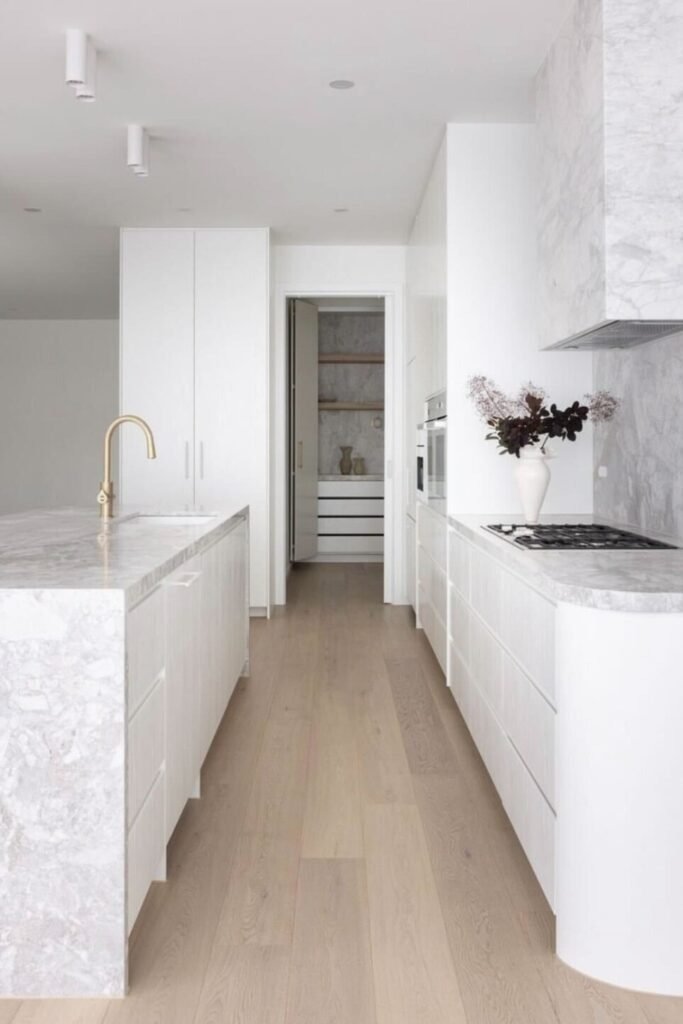
Minimal kitchens focus on storage. Hidden appliances and integrated panels remove clutter. This suits modern apartments where the kitchen shares space with the living area.
Layer Gold and Warm Wood
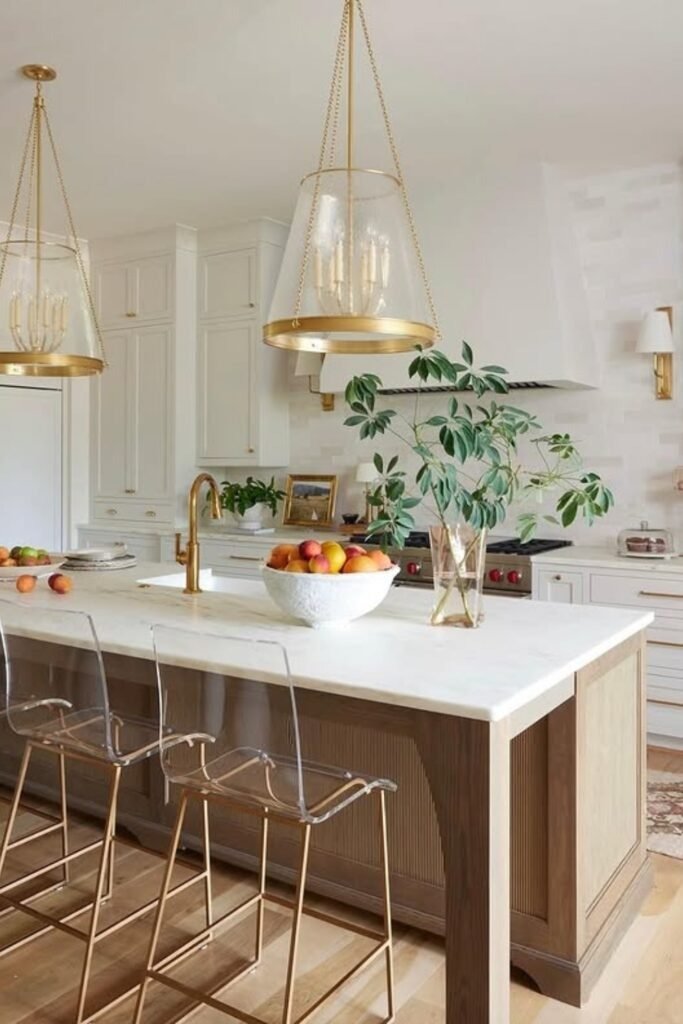
Gold hardware and warm wood shelves together create balance. Gold alone may feel flashy. Wood softens it.
Keep It Minimal but Warm
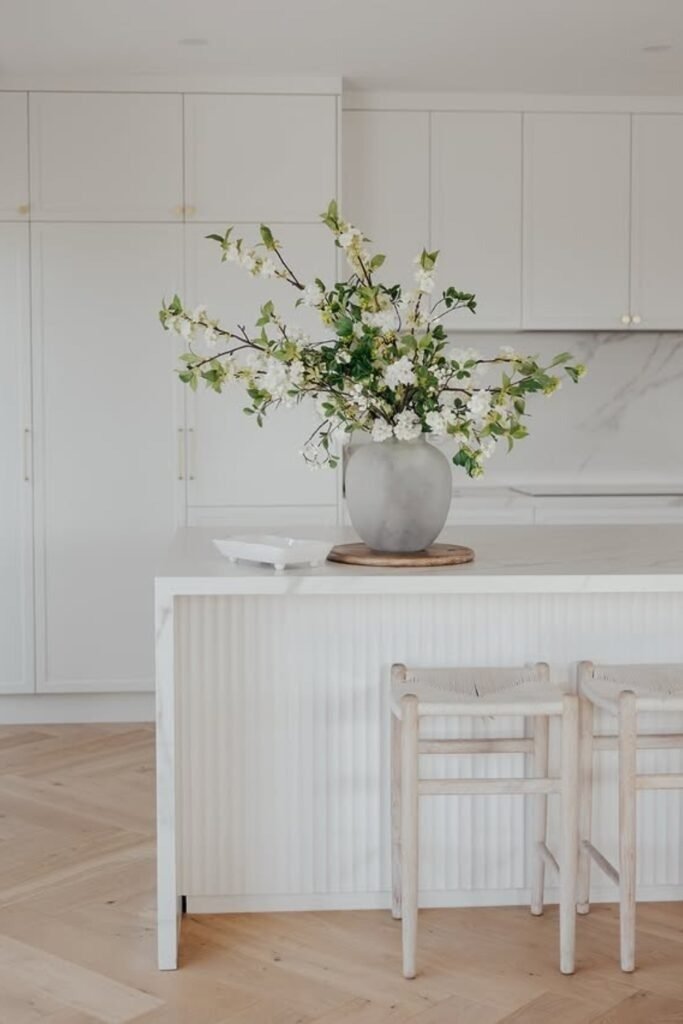
Minimal design does not mean empty. A few meaningful items displayed openly prevent the space from feeling unused.
Maximize Light and Space
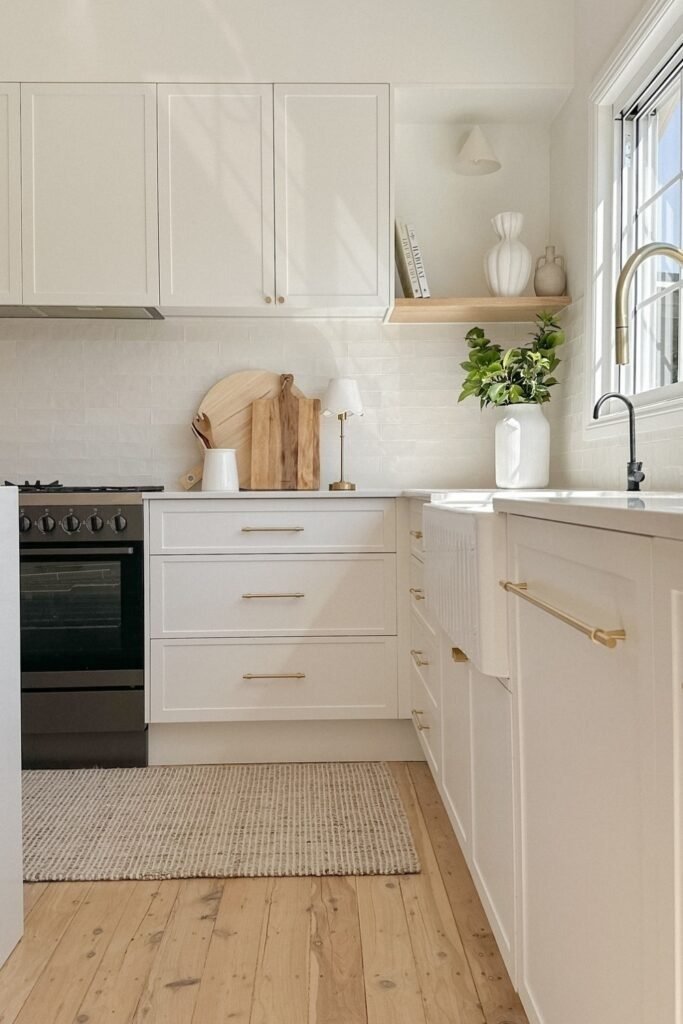
Glass cabinet fronts and open corners allow light to travel across the room. Even a small window becomes enough when reflections multiply it.
Keep It Glossy and Bright
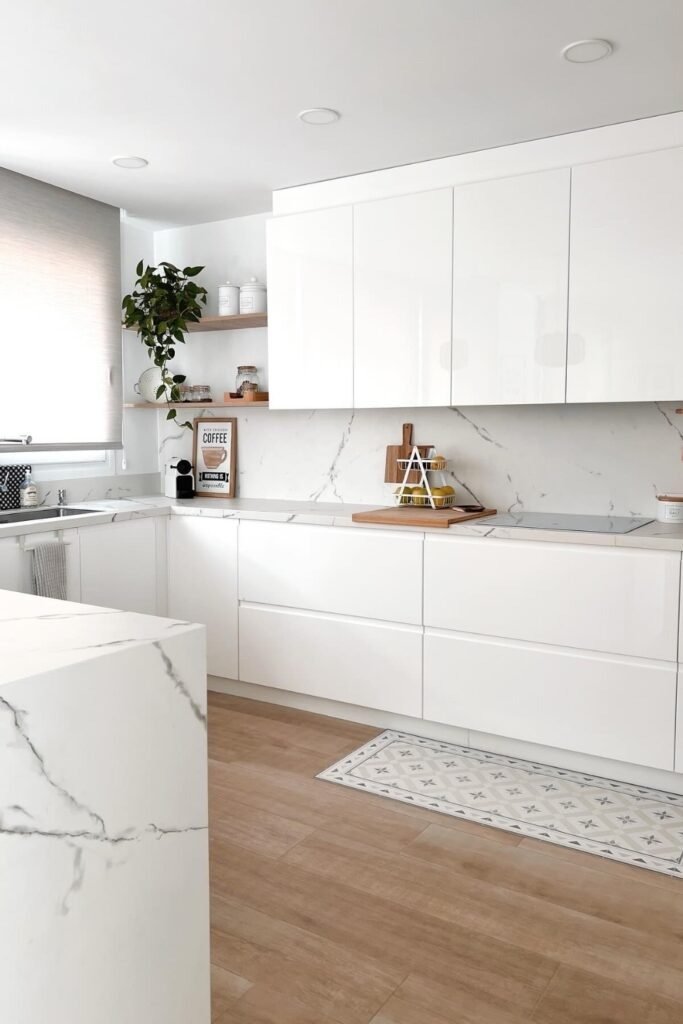
Gloss finishes help in darker kitchens where natural light is limited. They bounce artificial light across surfaces and reduce shadow pockets.
Soften with Florals
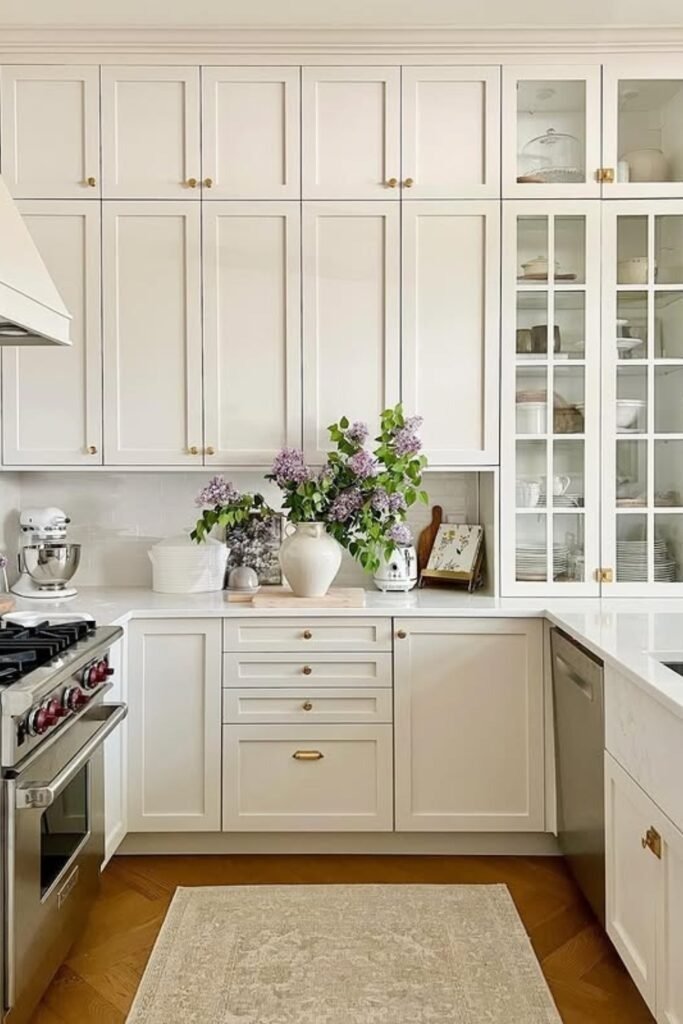
Fresh herbs or simple flowers change the mood instantly. Green leaves break the uniform color and make the kitchen feel active.
FAQs
What color goes best with a white kitchen?
Warm neutrals work best because they calm the brightness. Wood tones, soft greys, muted greens, and gentle blues stay timeless. Black works when used lightly for structure. Avoid overly bright colors unless you plan to change them often.
How do you keep a white kitchen from looking cold?
Use warm lighting, natural materials, and a few darker elements. Texture is more important than color. Wood, fabric, and stone make the room comfortable even when the palette stays simple.
A white kitchen in 2026 is not about perfection. It is about comfort and clarity. When layered correctly, it lasts many years without feeling outdated. That is why designers continue recommending it to homeowners who want long-term value rather than short-term trend.