20+ Stunning Easter Centerpieces Ideas

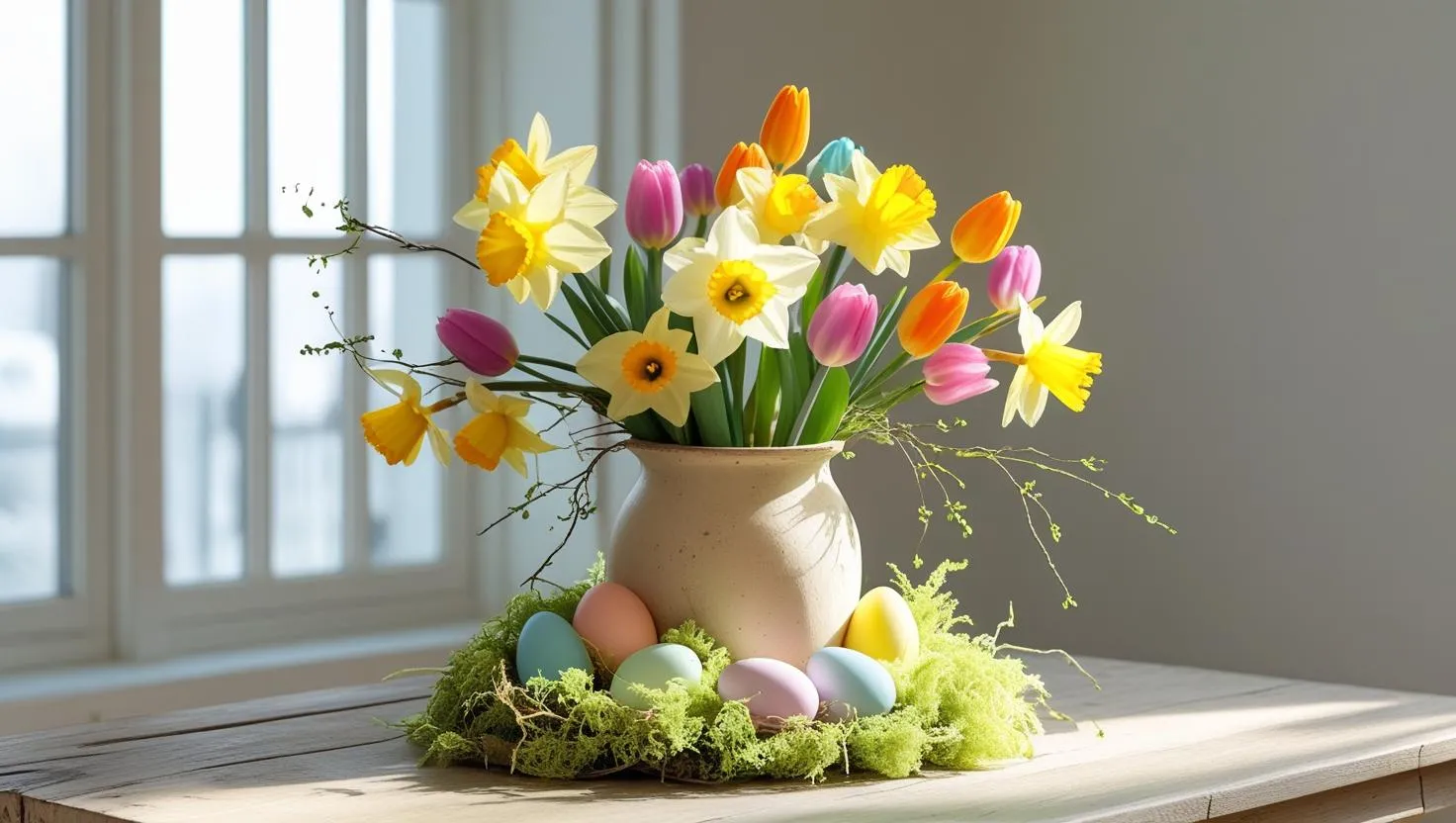
Easter needs a table centerpiece that feels warm, fresh, and inviting. With over twenty years of experience preparing tables for family meals, I’ve seen what works—and what wastes time and money. This guide gives simple, actionable steps to create a centerpiece that looks beautiful, lasts through the meal, and suits your home. Every tip below is practical and easy to use today.
Why a strong focal point matters
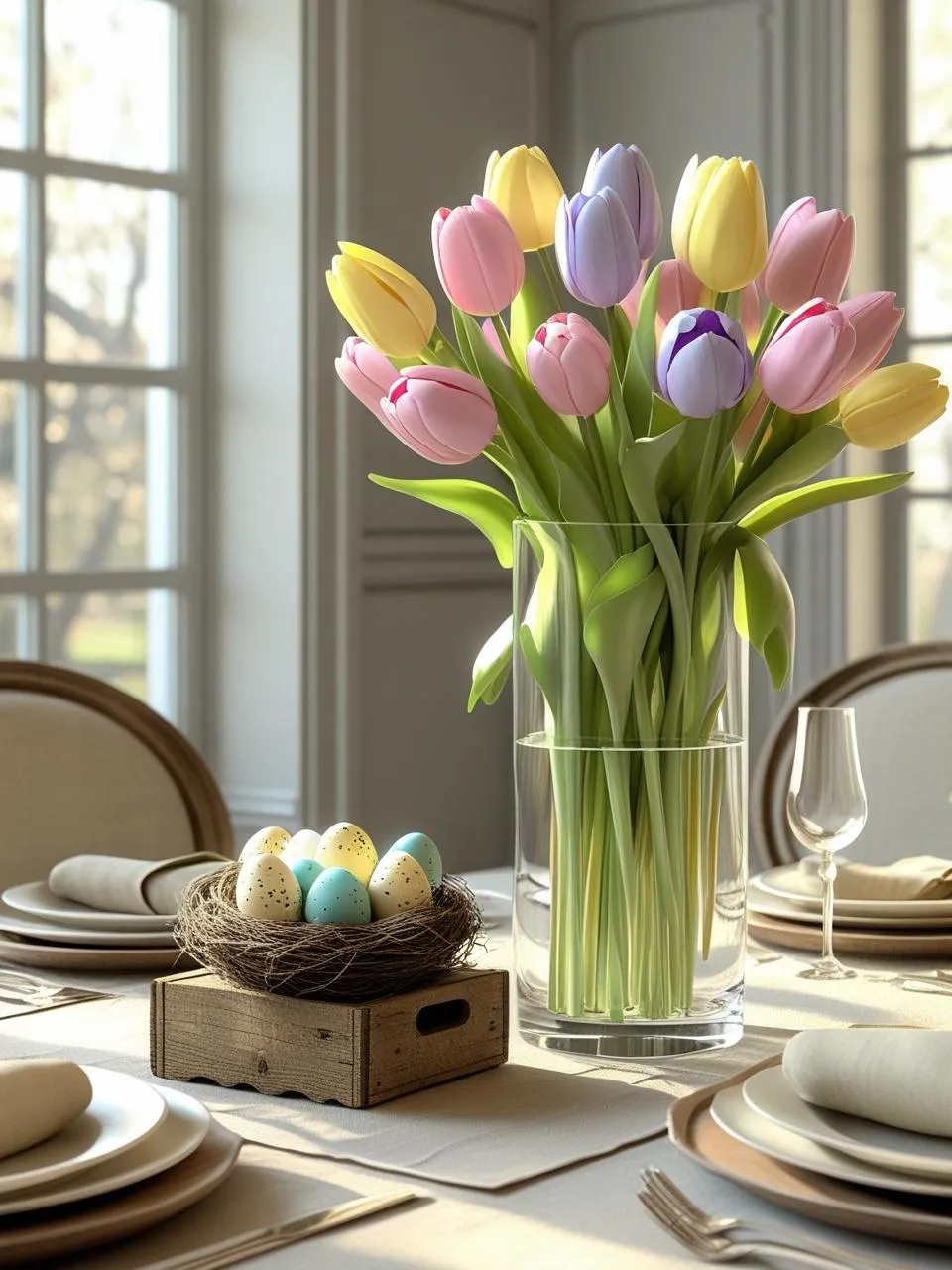
A centerpiece needs one main item to hold the eye. Without it, the table looks scattered and unfinished. Choose something taller or bolder than everything else—like a tall vase of tulips or a small wooden crate with a nest on top. Place it in the center, or slightly off-center if the table is often used, so it guides the eye naturally. Supporting pieces should complement the focal point, not compete with it, making the table feel calm and balanced.
Choose containers that tell a story
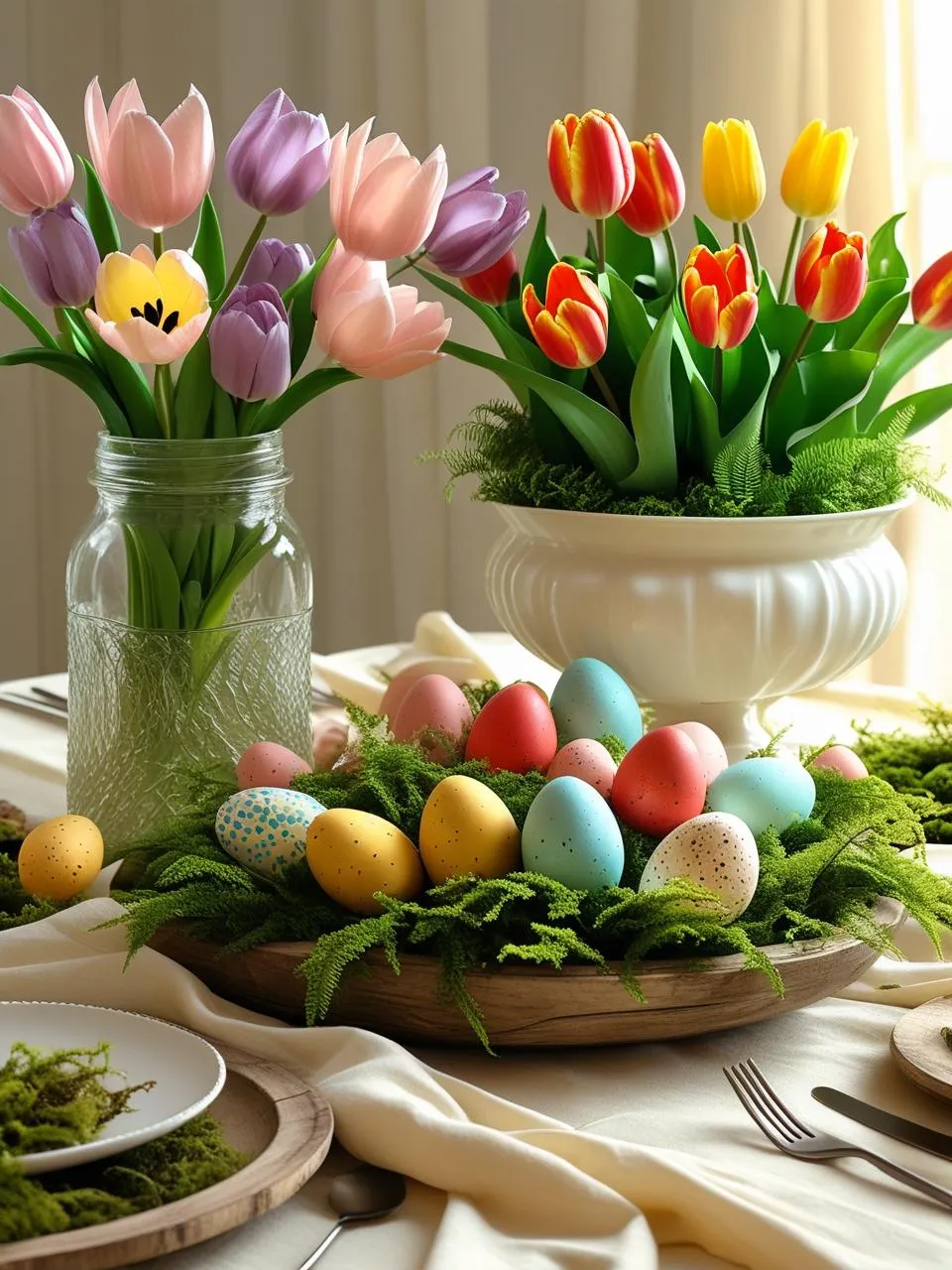
The container sets the tone before the flowers are even added. Clear glass feels light and fresh, ceramic bowls feel warm and homey, and wooden trays read rustic. Pick containers that fit your home’s style and are the right size for your table—too tall blocks conversation, too small looks sparse. Modern spaces suit simple shapes, while cozy rooms welcome textured or handmade pottery. A pretty container ensures the centerpiece feels complete from the start.
Mix fresh and faux for longer life
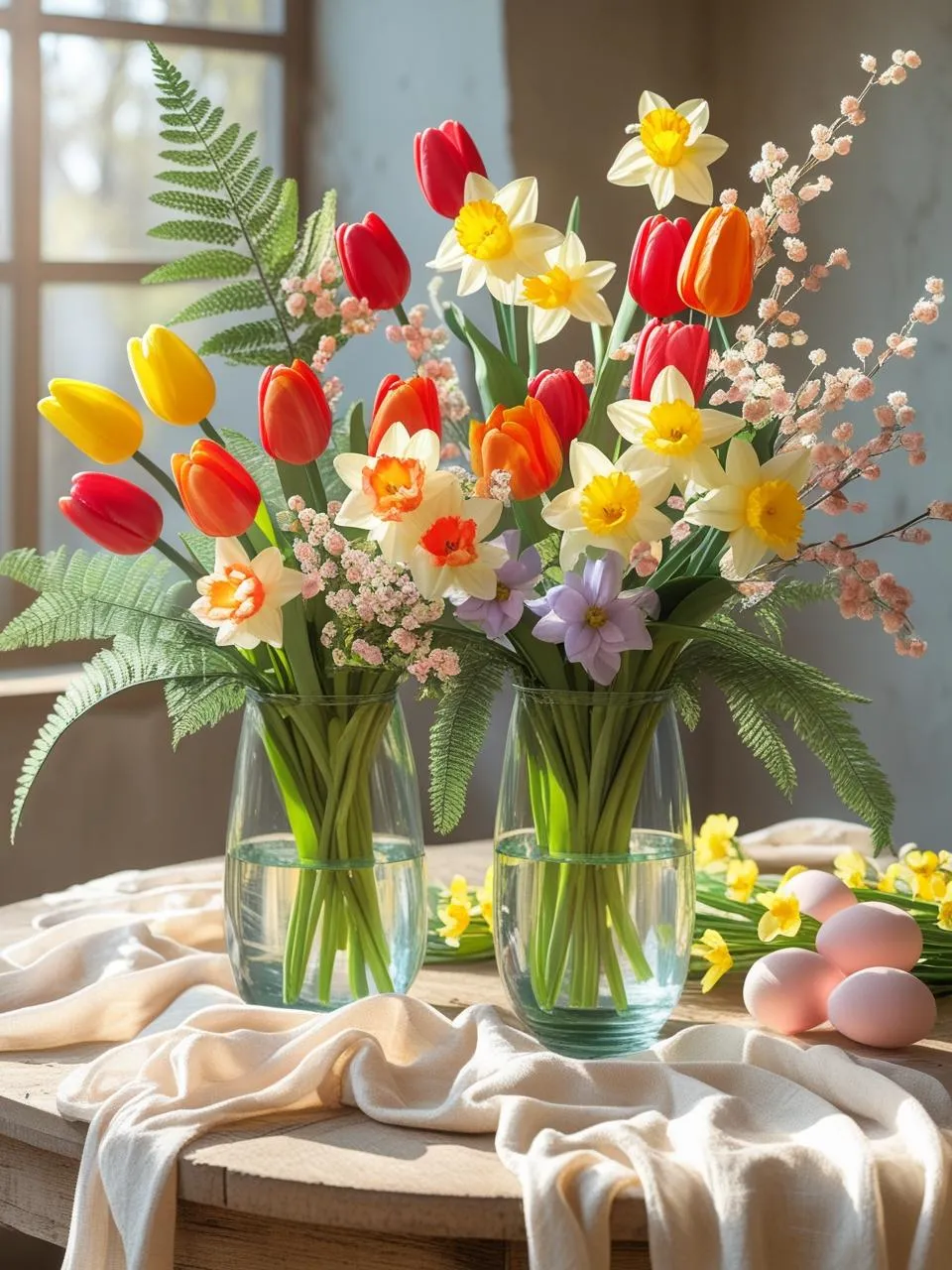
Fresh flowers are beautiful but can wilt quickly. Faux stems last and let you plan ahead. Mixing both gives volume, shape, and staying power. Keep real stems in water where they matter most and fill in with faux greens to maintain fullness. When choosing faux stems, pick ones with natural texture and color to avoid a plastic look. Tuck them in strategically for a lush, lasting arrangement.
Pick flowers for color, shape, and staying power
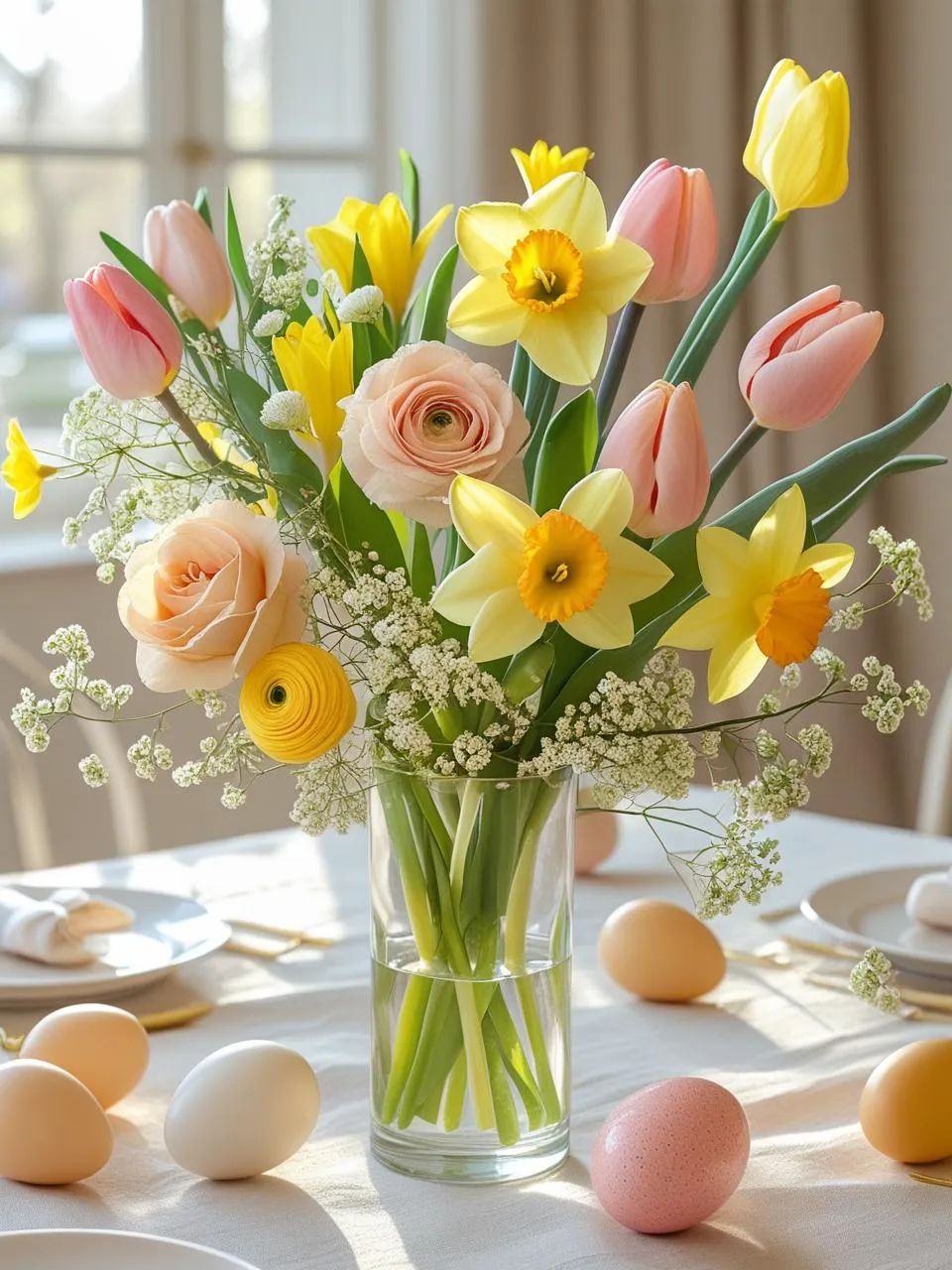
Not all flowers hold up the same way. Tulips, ranunculus, daffodils, and spray roses are classic Easter choices. Lilies can be strong in scent, so avoid them if guests are sensitive. Use blooms with sturdy stems if the table will be bumped often, and mix shapes—round blooms for softness, spiky blooms for lift, and small filler flowers to knit the arrangement together. Keep colors balanced: one strong tone with a couple of softer hues creates a calm, cohesive look.
Work with texture and scale, not just color
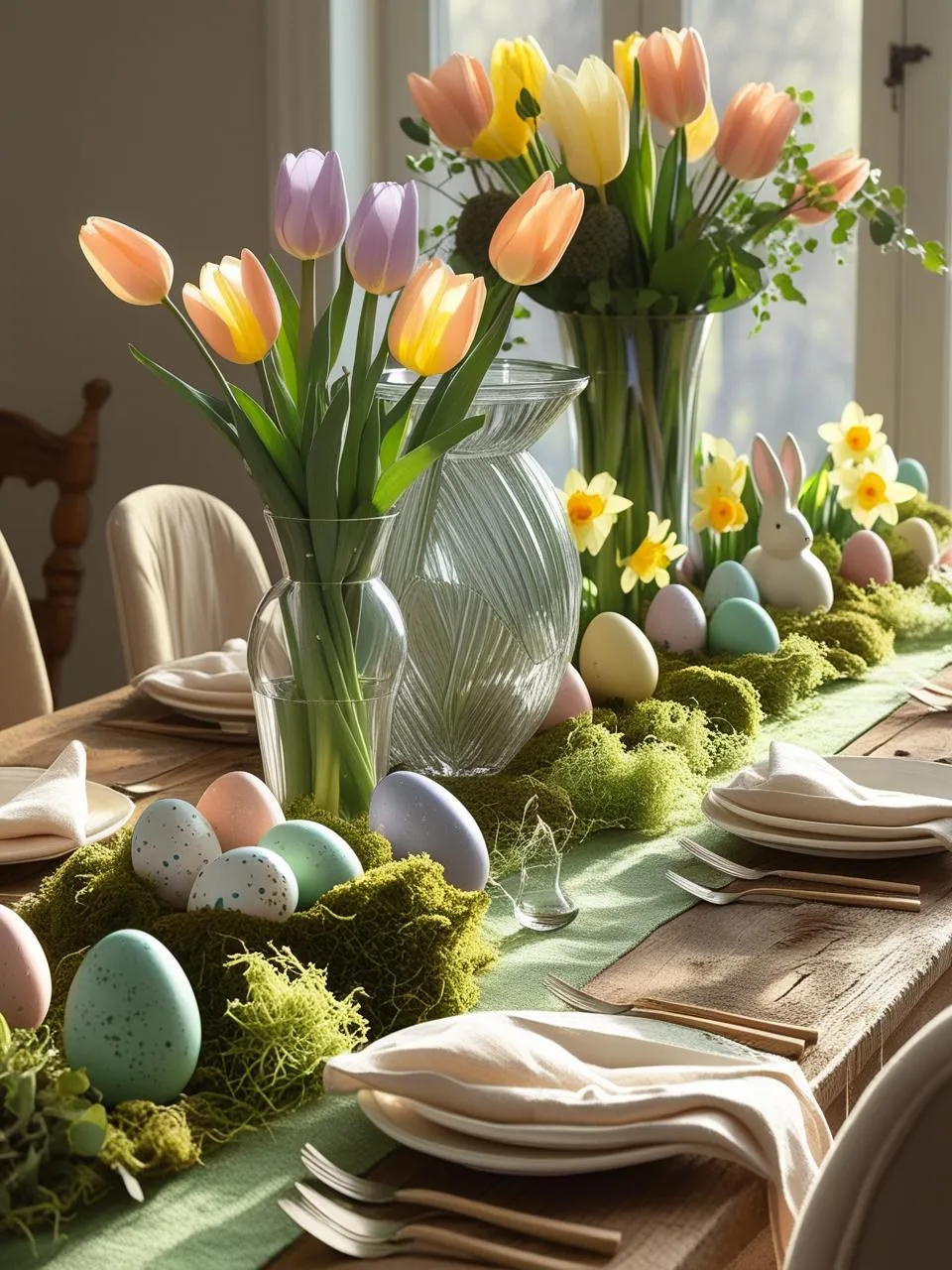
Color catches the eye, but texture and scale keep it there. Combine smooth petals with rough leaves, shiny vases with matte napkins, and hard eggs with soft moss. Vary the heights: one tall piece, a few medium ones, and small accents add depth. A low runner of greenery or moss grounds the taller pieces. Texture and scale create a table that feels rich and intentional rather than flat or monotonous.
Create balance without symmetry
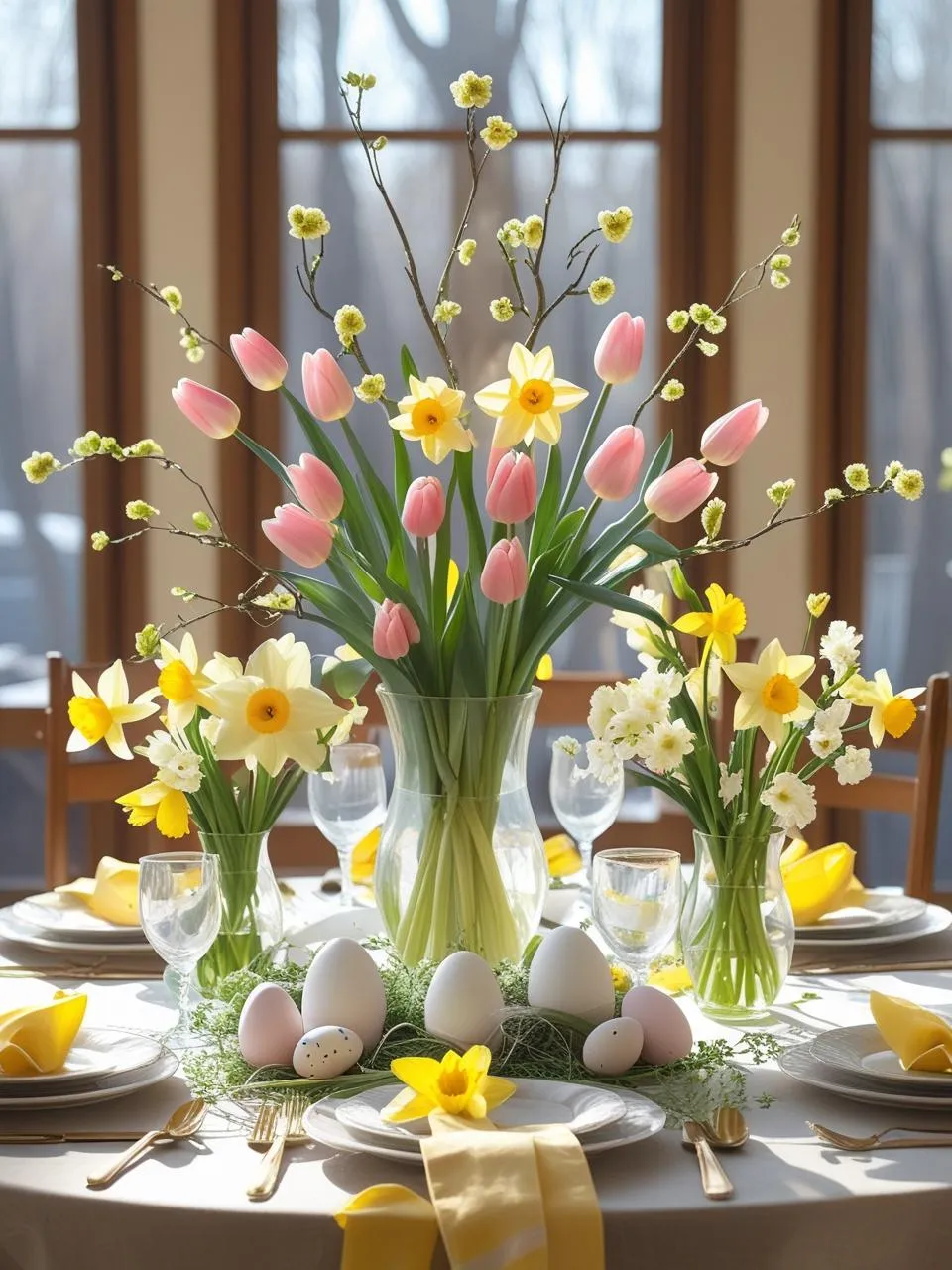
Perfect symmetry can feel stiff. Balance means the table feels even without mirroring everything. Place the largest piece near the center and balance it with medium items at opposite ends, or use groups of three to guide the eye. Leave some empty space for plates, glasses, and serving dishes. A balanced table looks thoughtful and relaxed, not forced.
Use seasonal touches that read like Easter, not overdone
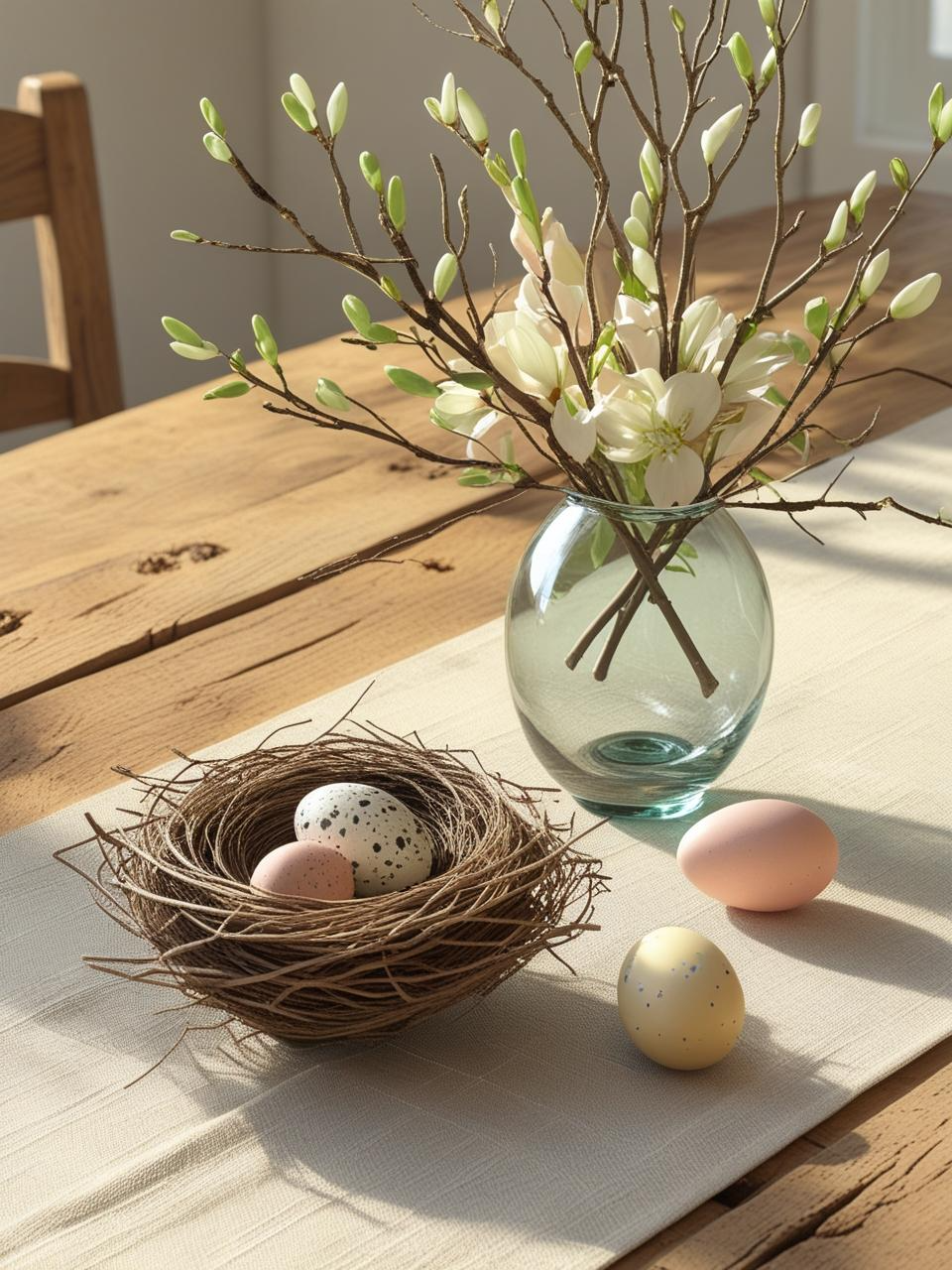
Easter is about spring light and new life. Small accents—a few eggs, a tiny nest, or sprigs of budding branches—say “Easter” without overwhelming the table. Stick to natural materials like straw, unpolished wood, or ceramic eggs for a gentle, welcoming look. One or two well-placed themed items is plenty.
Scale your centerpiece for the space and guest count
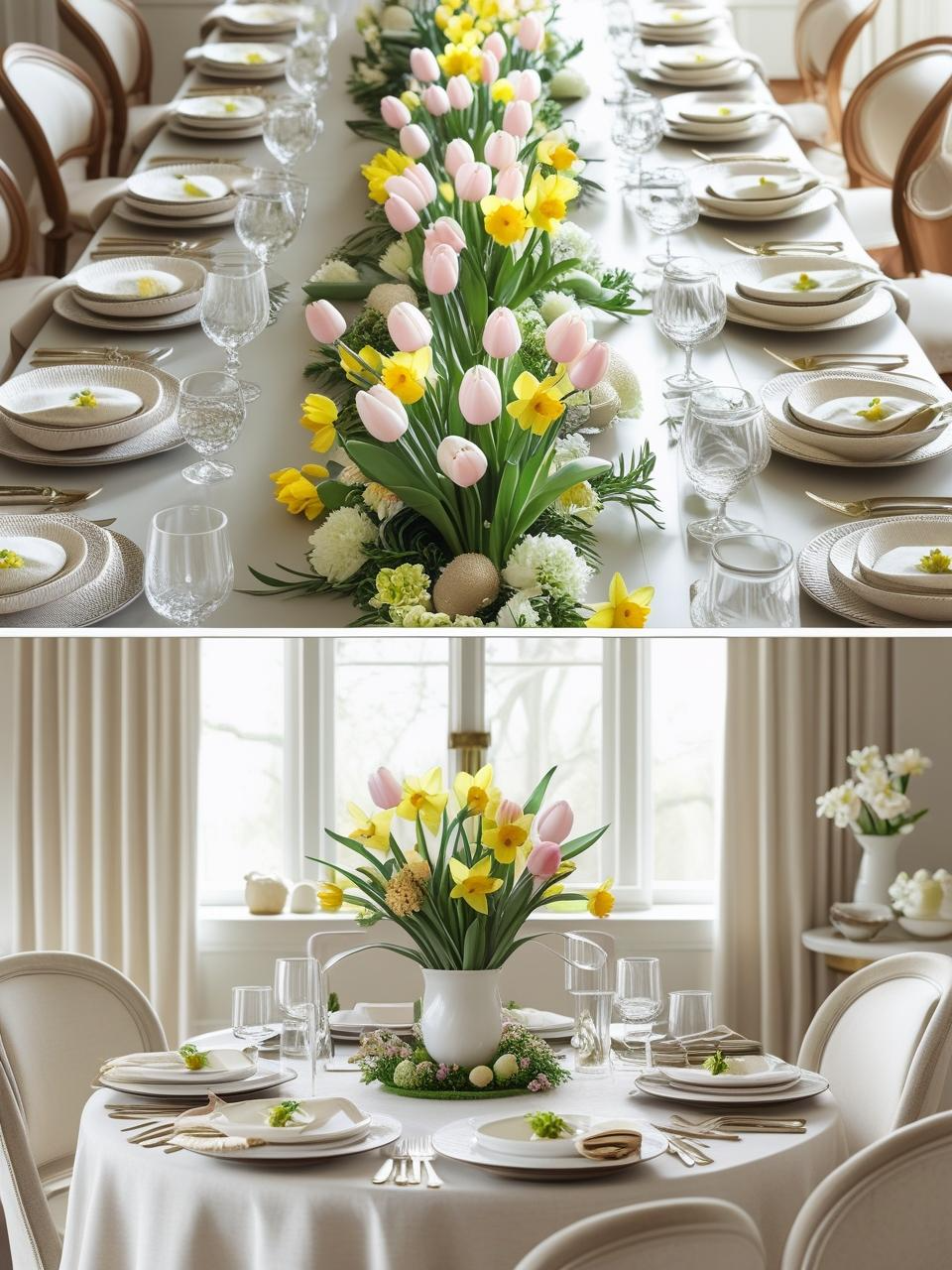
A centerpiece for a small breakfast table differs from a long dining table. On long tables, use a line of low arrangements so everyone can see each other. On small round tables, one compact arrangement works best. Consider clearance for serving dishes and make sure the centerpiece doesn’t block conversation or passing plates.
Make a centerpiece that’s kid and pet friendly
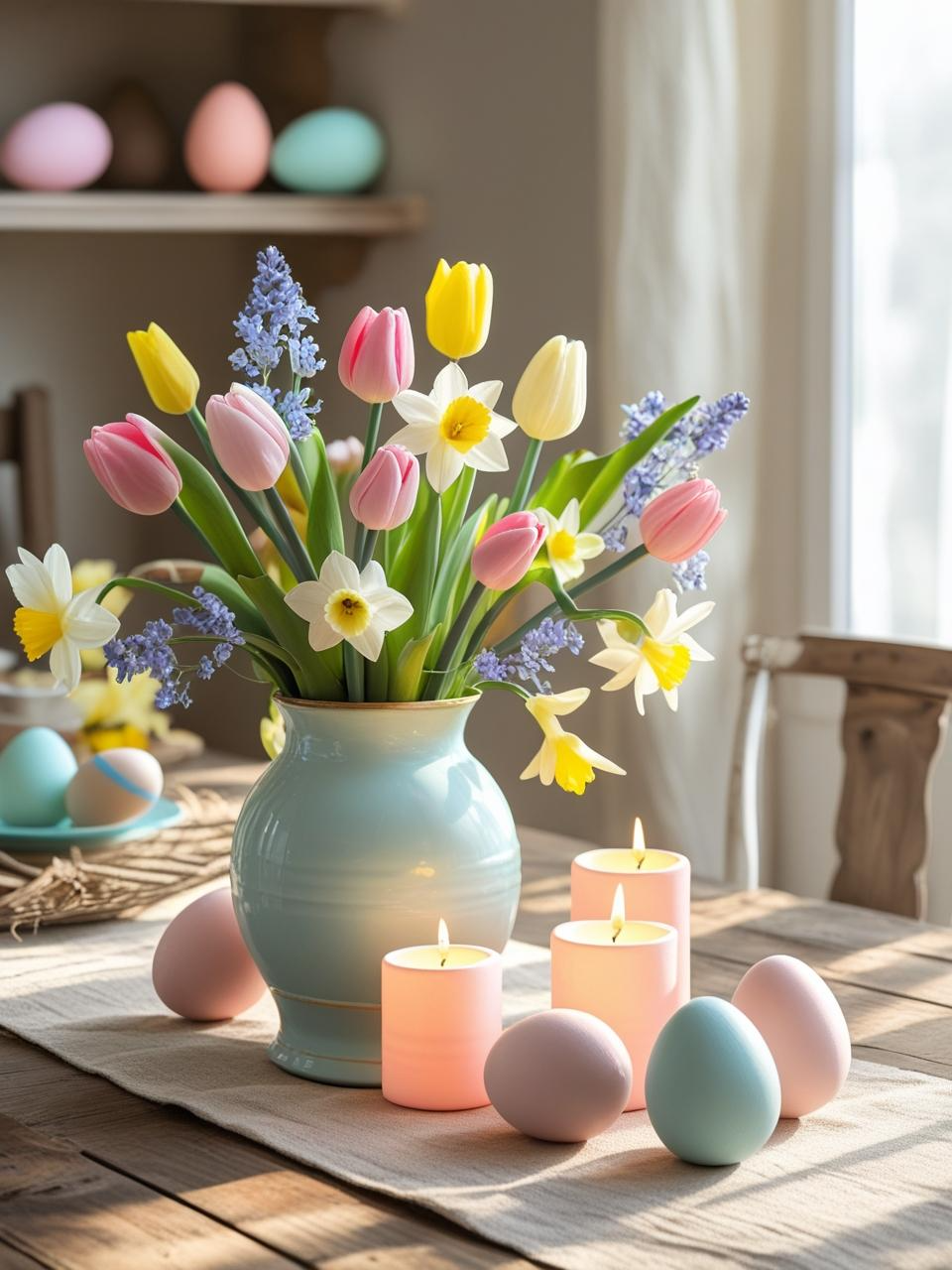
Avoid small, fragile, or sharp items within reach. Use sturdy containers and tuck delicate accents out of reach. For candles, choose LED or battery-operated options. Even with safety in mind, the table can look charming and thoughtfully designed.
Save time with smart prepping
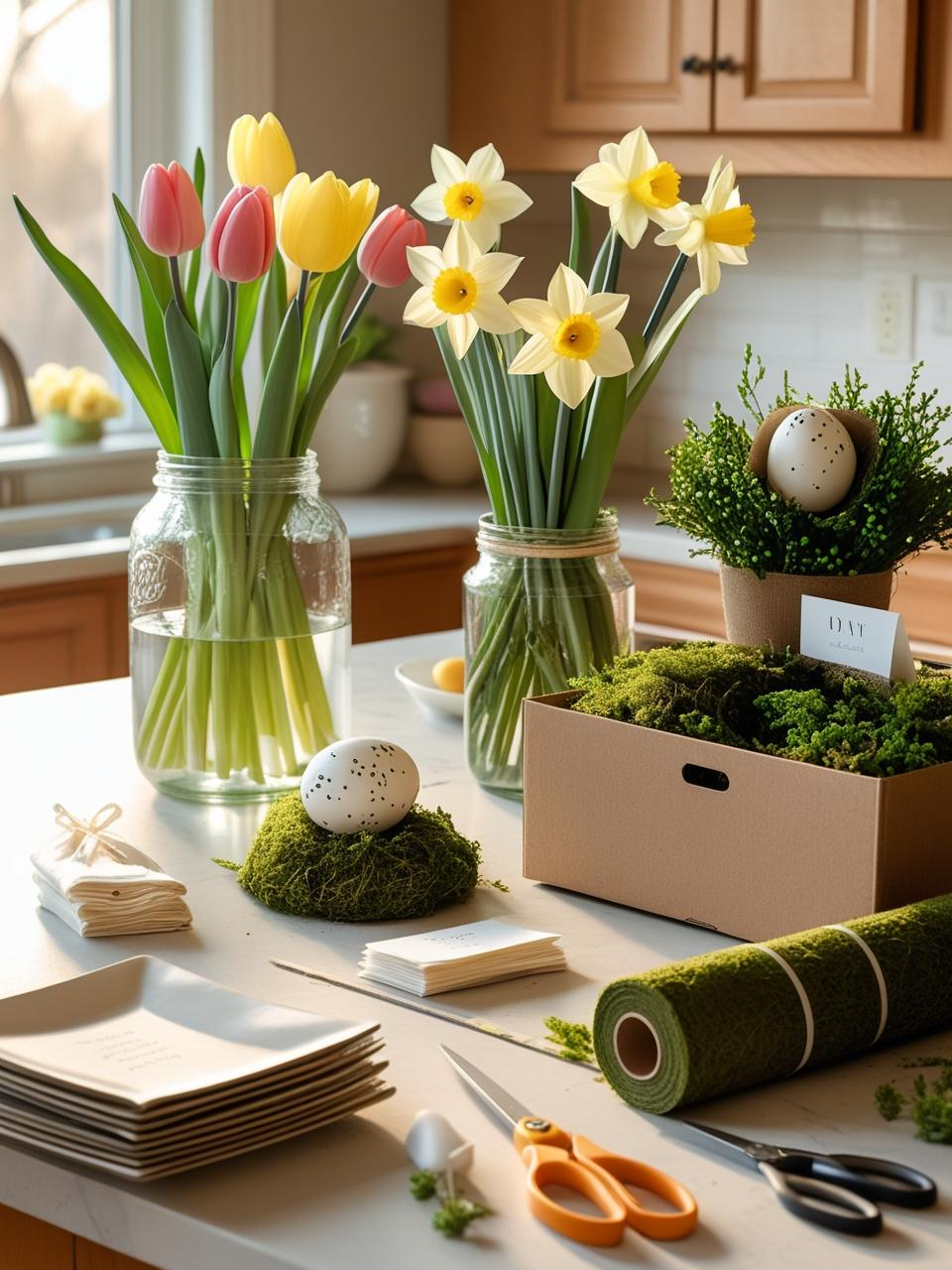
Trim stems the night before and keep them in water. Group faux elements in a box ready to tuck in. Lay out napkins, place cards, and measure moss or runners in advance. Prep tools—scissors, floral tape, spare jars—so setup is calm and efficient. This planning lets you focus on design rather than scrambling.
How to layer pieces for depth
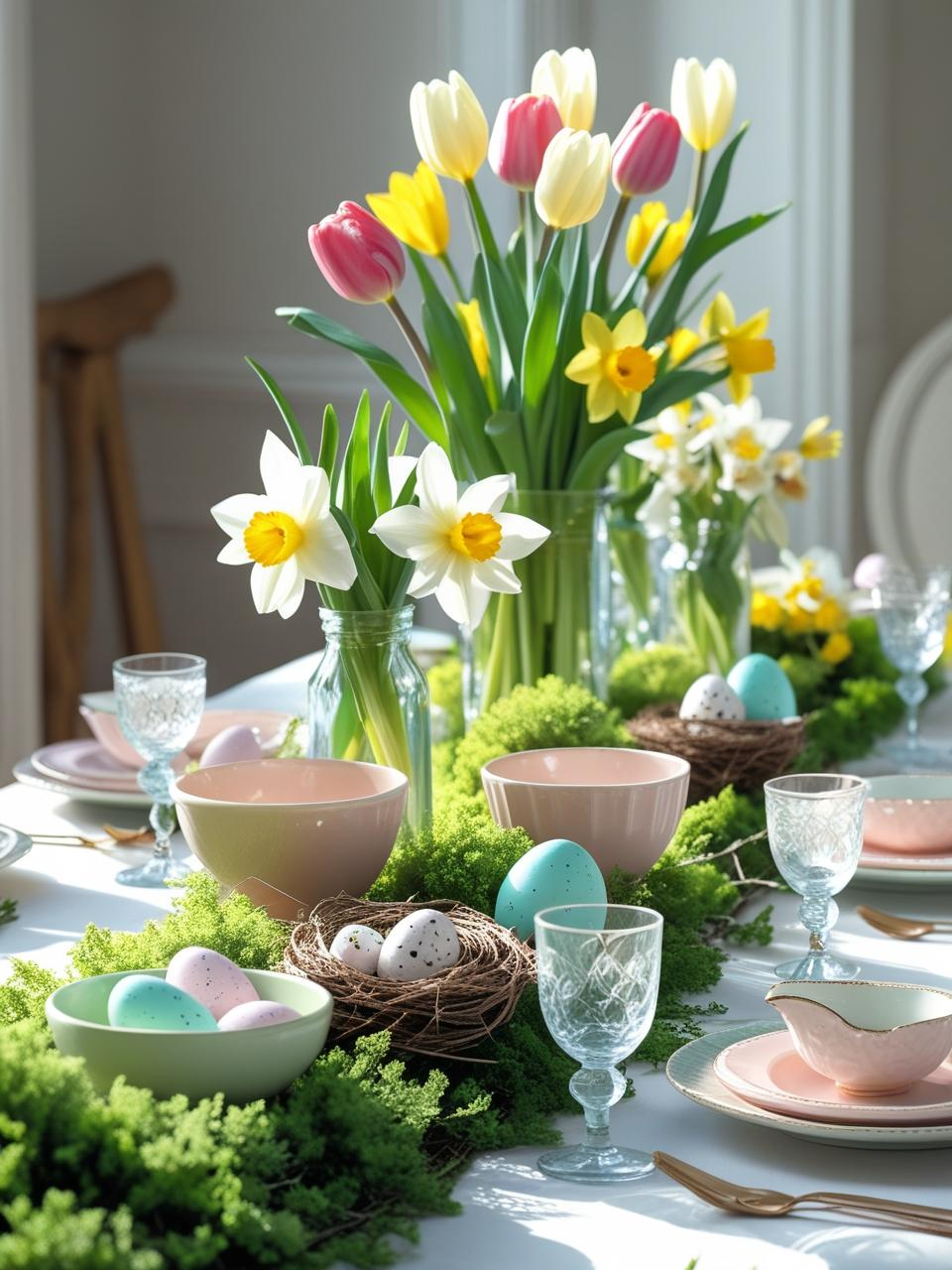
Layering adds dimension. Start with a base of greenery or a runner, add medium pieces like small vases, and finish with the focal flowers and tiny accents. Low containers in front ensure taller items behind remain visible. Layering hides mechanics like floral foam and makes the table feel abundant without looking crowded.
Candlelight: choose size and scent with care
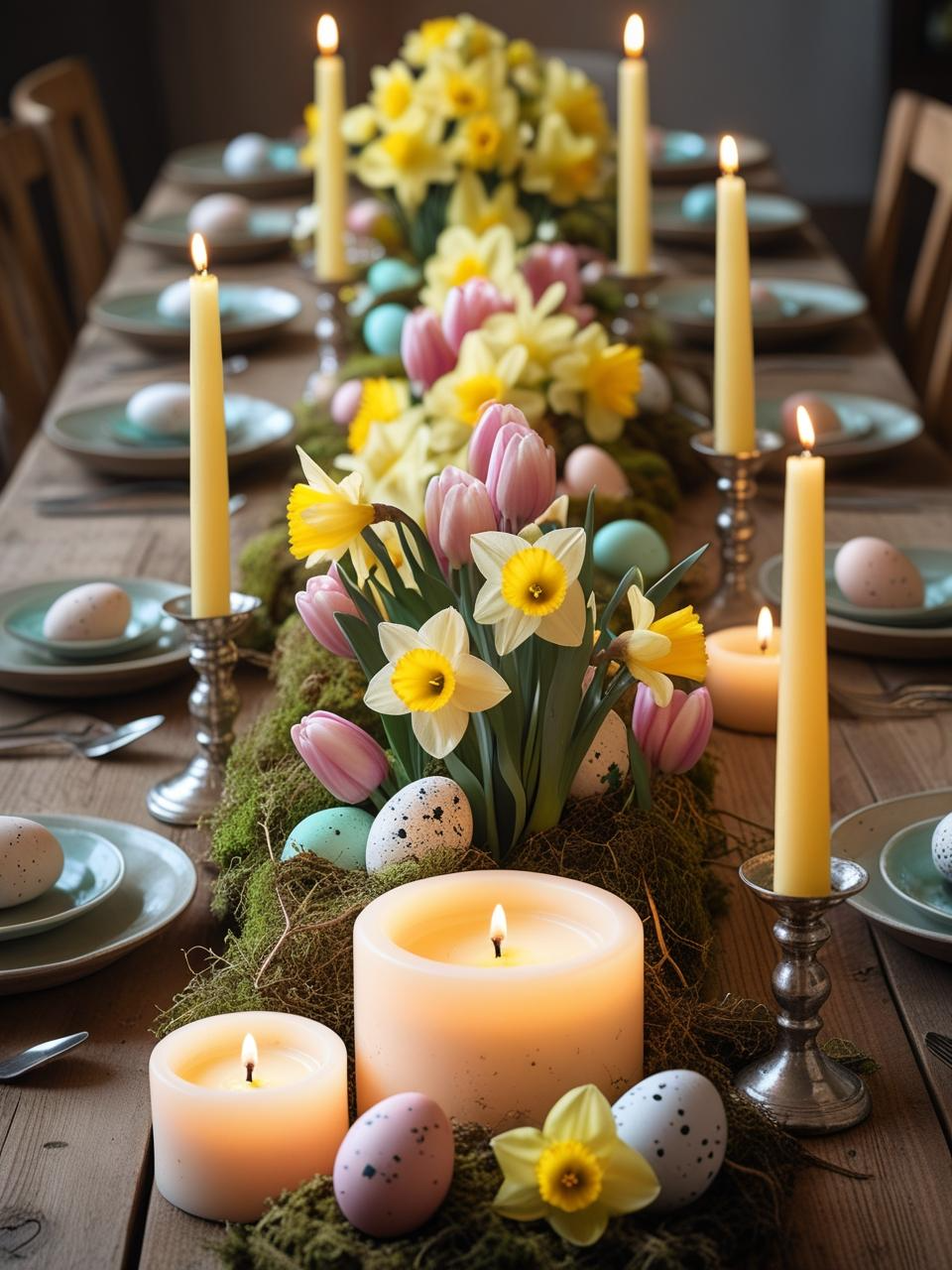
Candles add glow but should not overpower the meal. Use unscented or lightly scented candles. Low, wide candles work best for long tables, while tapers should be stable in secure holders. For families with kids or pets, battery-operated candles provide safe, even light.
Make it reusable and budget friendly
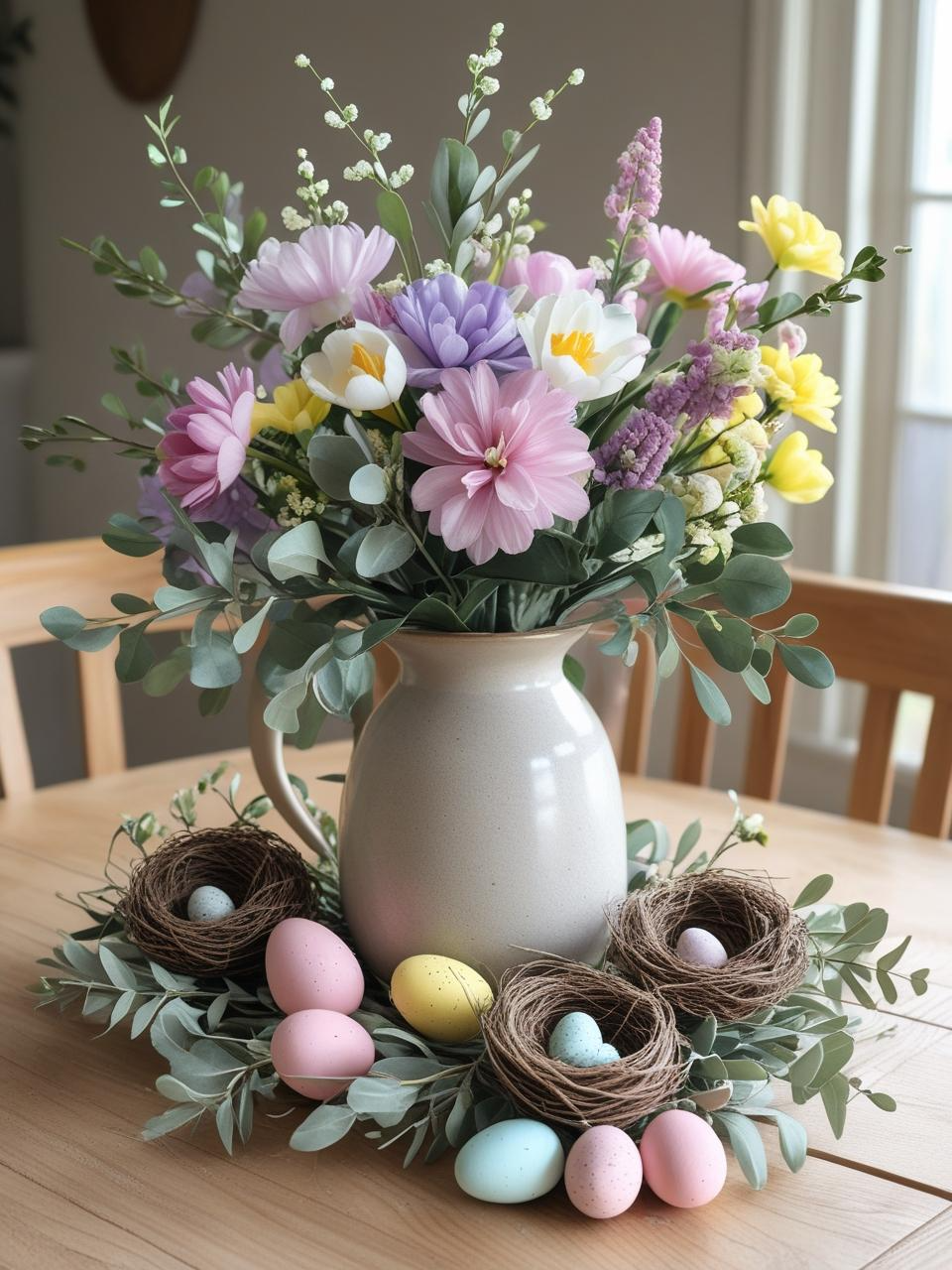
Choose containers that work for multiple seasons. Swap flowers for new colors later and use faux greens to extend the arrangement’s life. Repair or repaint old containers for a polished look at minimal cost. Investing in versatile basics saves money over time.
Photos and social sharing: simple tips to make it pop
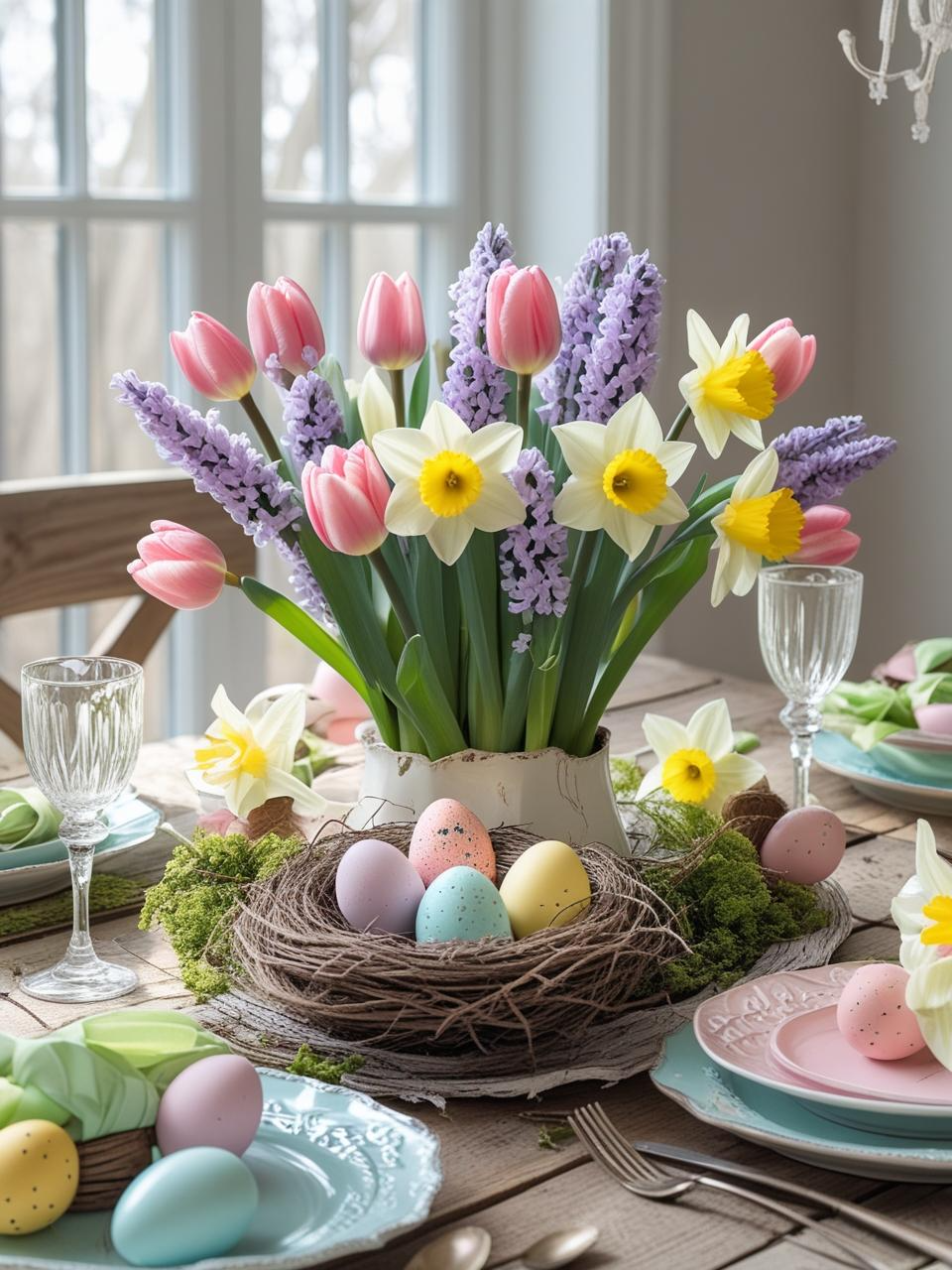
Shoot in natural light near a window before the sun dips too low. Remove clutter and focus on your centerpiece. Take one hero shot and a few detail shots to highlight textures like nests, ribbon, or blooms. These images look professional and capture the table’s story.
Personal touches that mean more than price
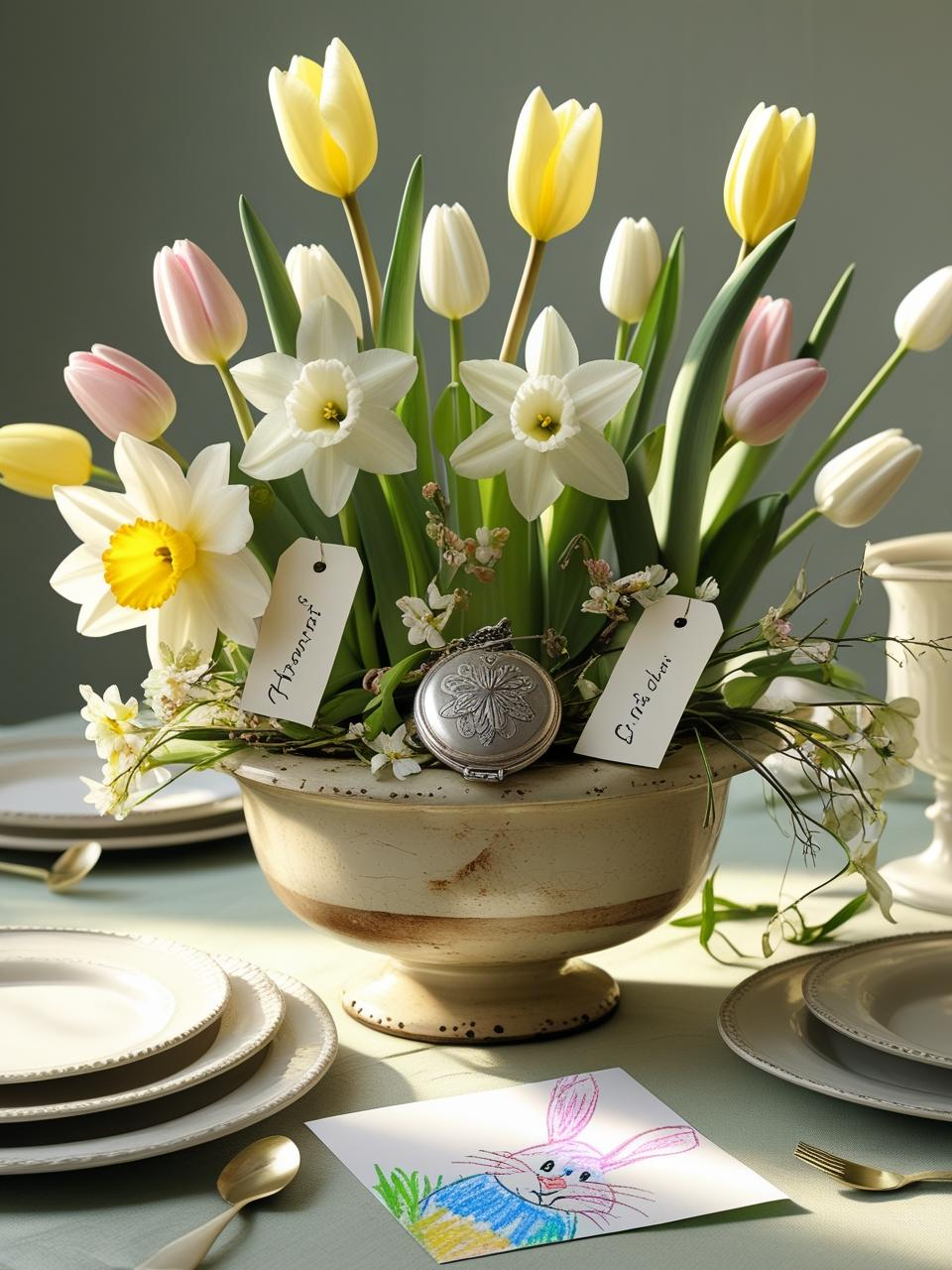
Small, meaningful details—handwritten name tags, family heirlooms, or a simple note—make guests feel seen. Even a child’s drawing tucked under a plate adds warmth. These touches create lasting memories without spending a lot.
Eco-friendly choices that look modern
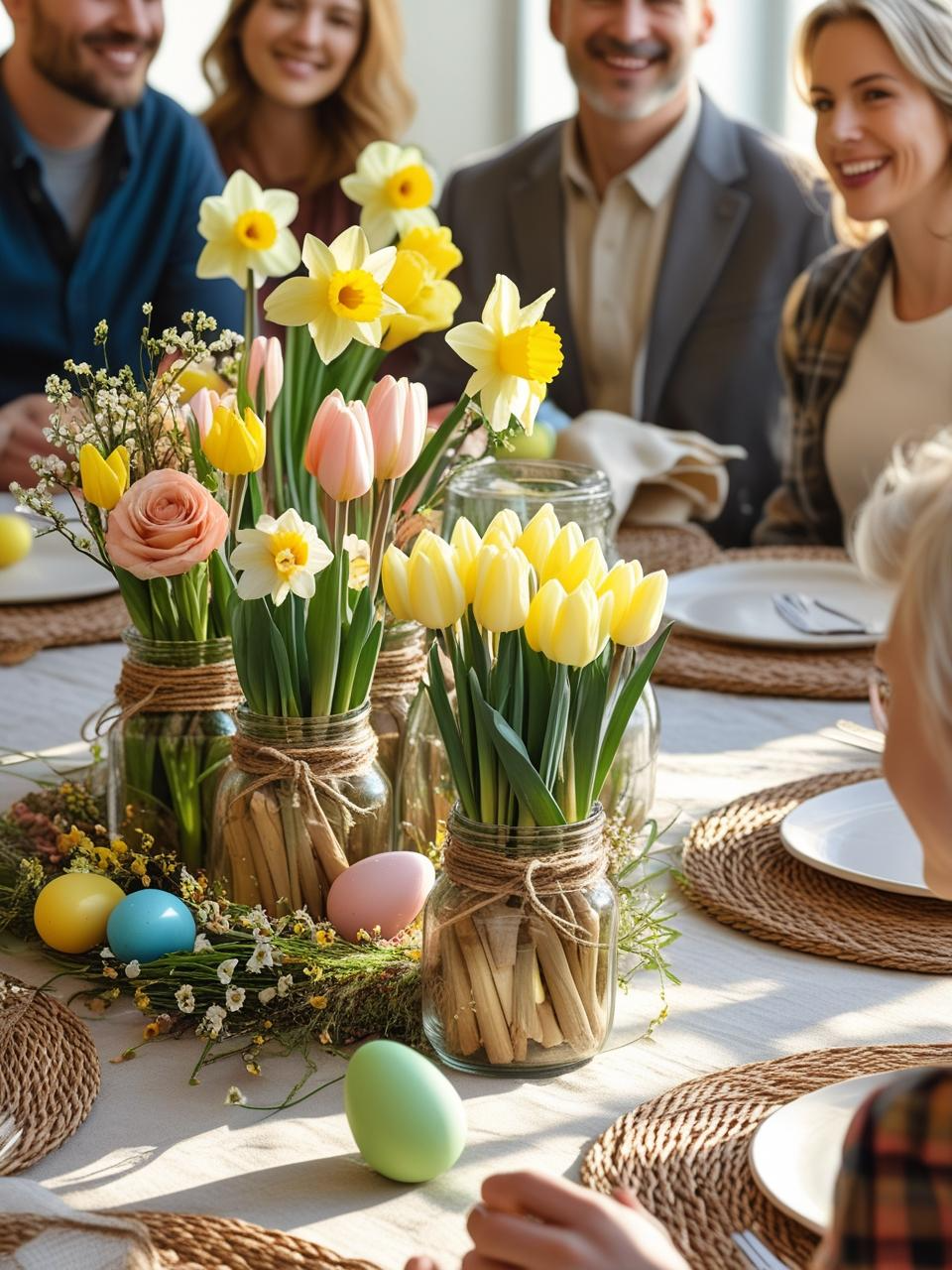
Use potted bulbs guests can plant later. Choose local flowers, reuse glass jars, and compost leftover stems. Sustainable materials often bring richer textures and a more authentic feel, enhancing your table naturally.
Troubleshooting common mistakes
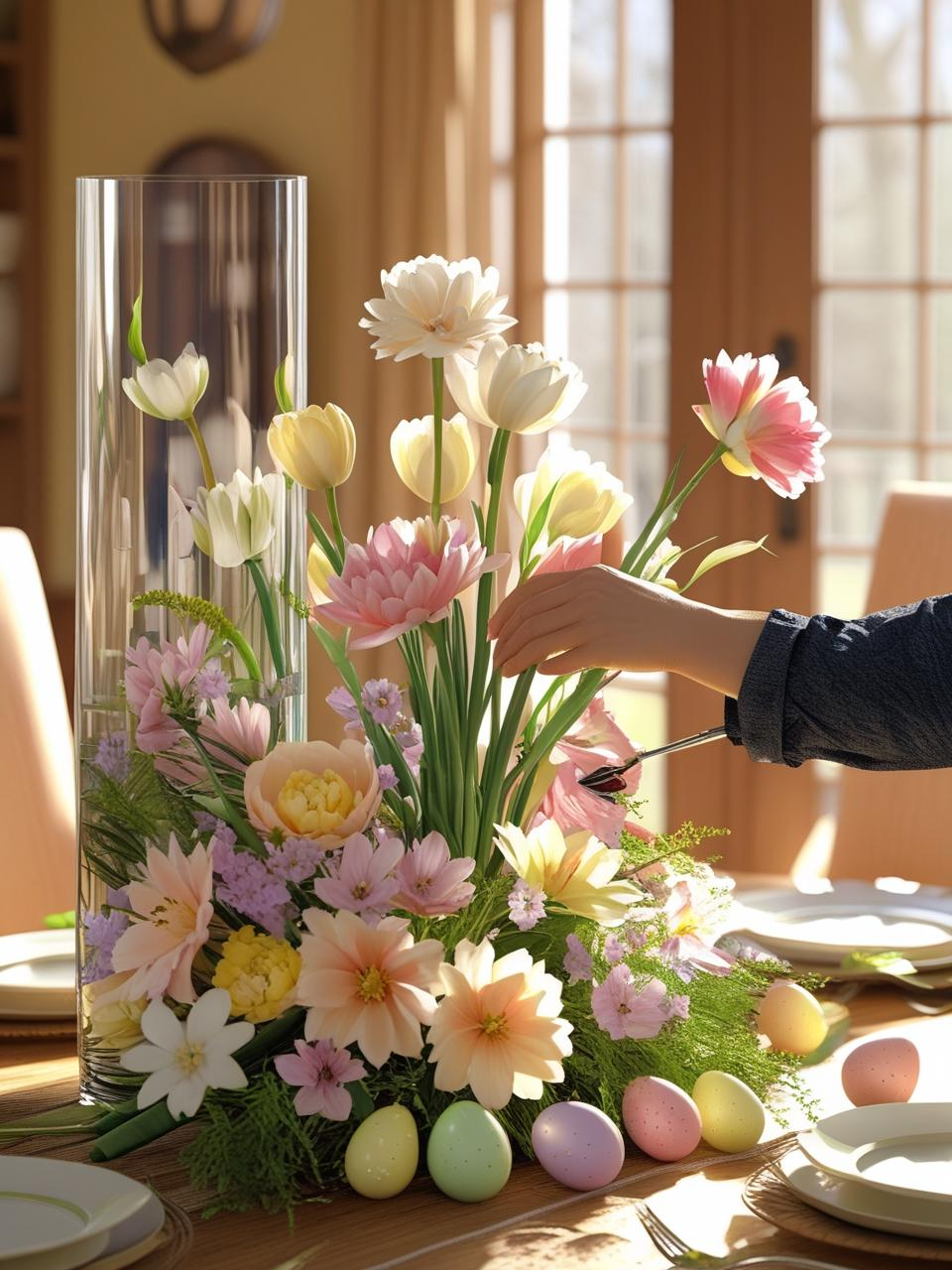
Drooping flowers? Check water and trim stems again. Lopsided arrangements? Remove crowded pieces and balance with smaller accents. Clashing colors? Use the boldest hue elsewhere, like napkins or a runner. Blocked sightlines? Lower tall items or spread height across low vases. Small adjustments make a big visual difference.
Ideas for themes that feel fresh
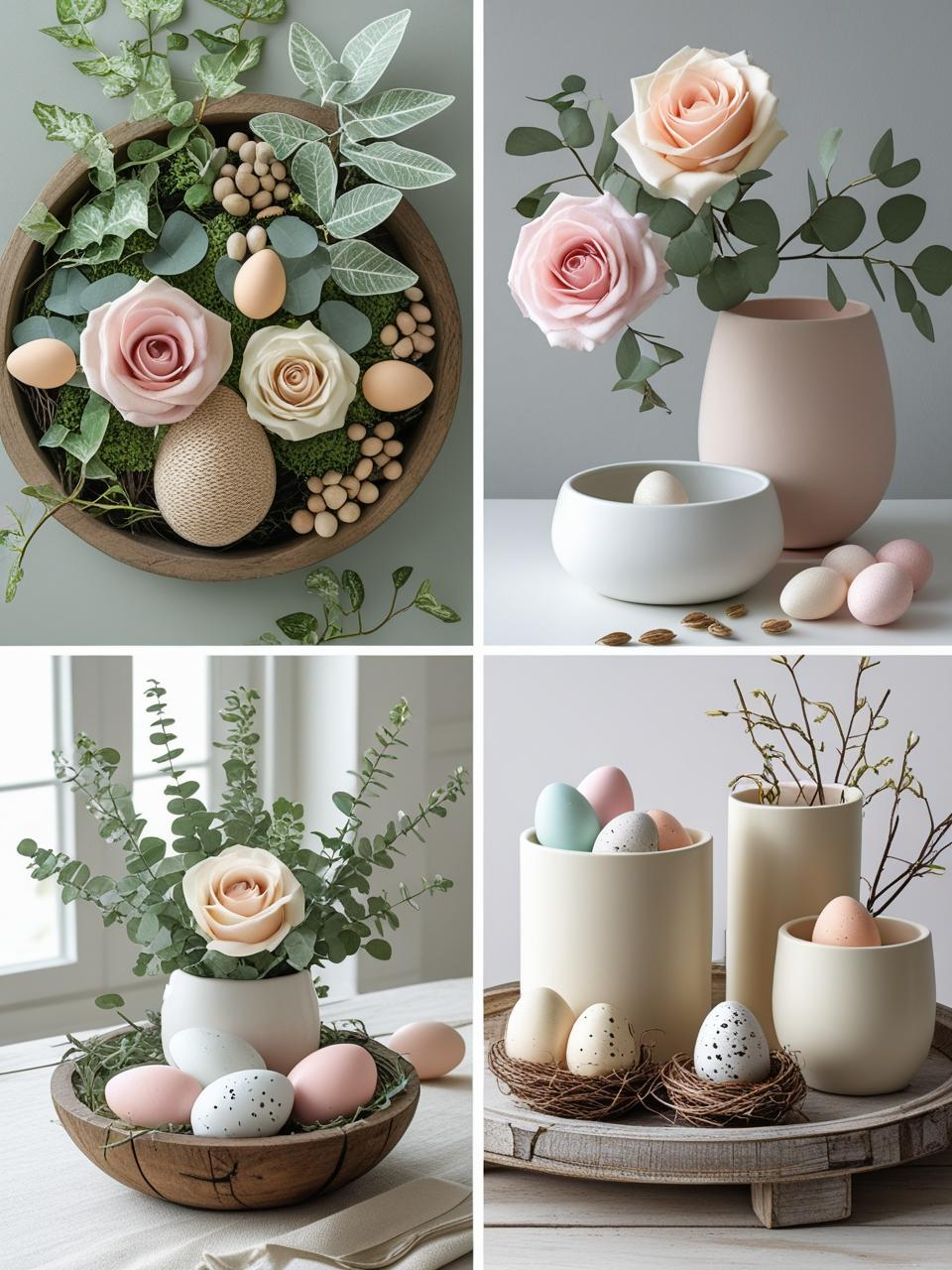
Themes don’t have to shout. Garden themes: greens, seed pods, tiny roses. Modern: single-color palettes, clean containers, minimal accents. Farmhouse: wood, simple ceramics, nests or eggs. Pick one guiding word—like “light,” “gather,” or “garden”—to keep the table cohesive and calm.
Quick DIY centerpiece anyone can do
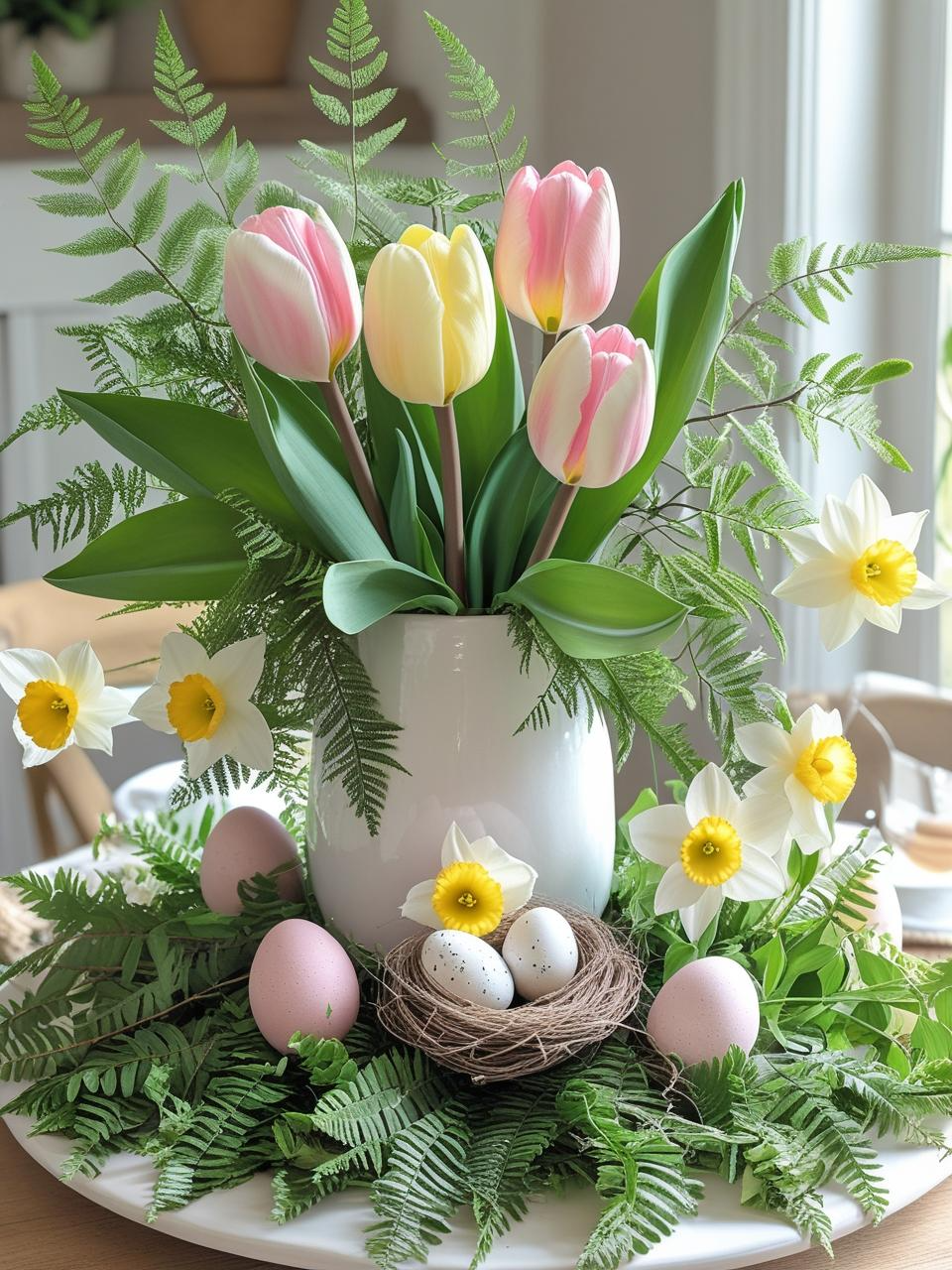
Start with greenery for a base. Add 3–5 larger blooms in a loose triangle. Tuck in filler flowers and an accent like a nest or candle. Step back, adjust for sightlines, and you have a balanced centerpiece in under twenty minutes.
Saving and storing leftover materials
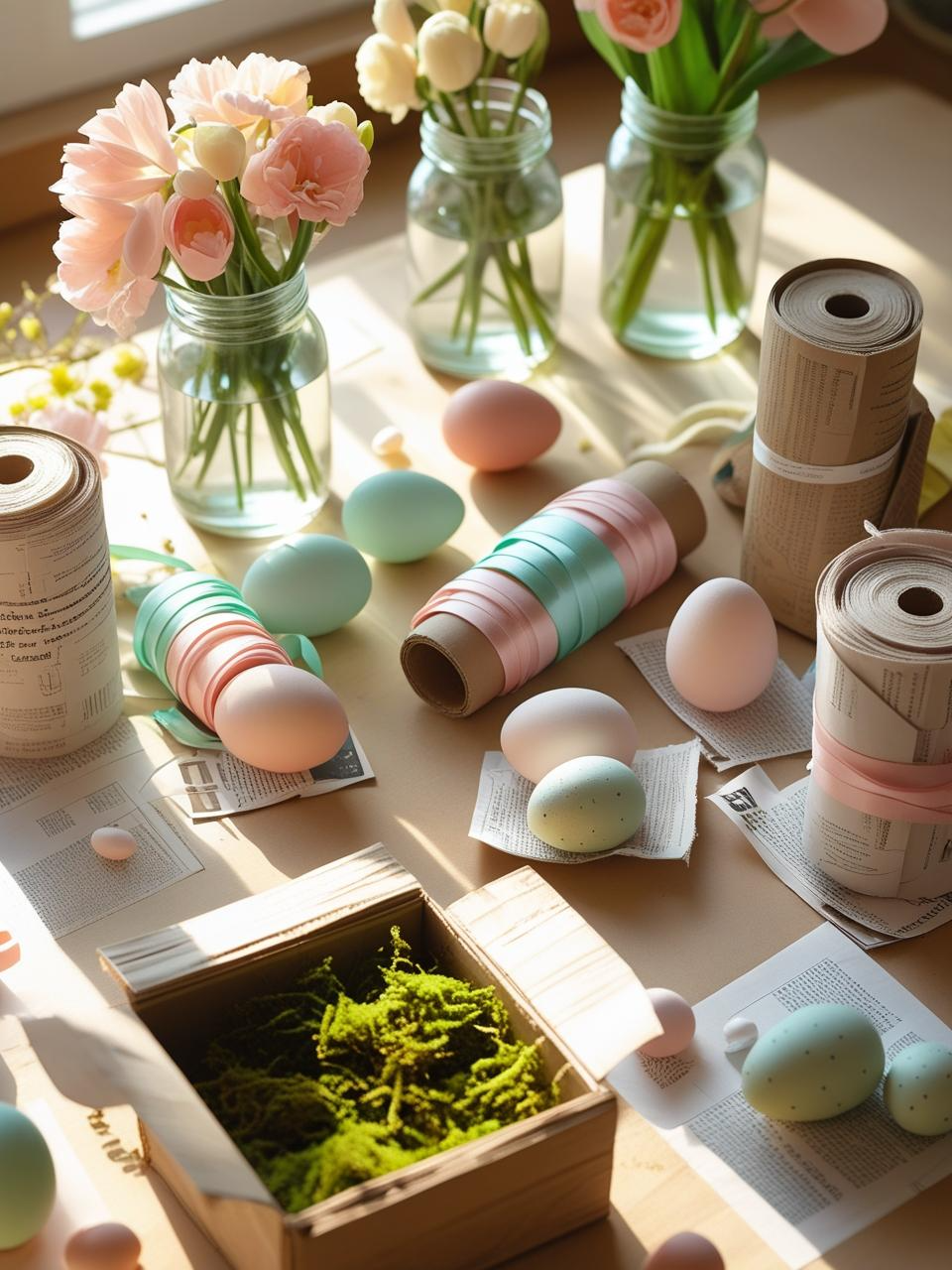
Keep extra flowers in water and cool, wrap ribbons loosely, and store fragile items in newspaper. Leftover moss or greenery can be pressed in a shallow box. Proper storage extends the life of your materials for future use.
Closing thoughts: make it your own
A beautiful Easter centerpiece doesn’t need to be complicated. Focus on a strong focal point, good scale, calm colors, and safe, stylish choices. Mix fresh and faux, plan ahead, and add one personal touch. A well-thought-out table invites gathering, conversation, and lasting memories—the heart of every celebration.
FAQ: quick answers from twenty years of practice
What size should my centerpiece be for a long table?
Use a line of low arrangements instead of one tall piece so people can see each other and pass dishes easily.
How long can I prepare real flowers?
Trim and hydrate stems the night before, but place the final arrangement a few hours before guests arrive.
Are faux flowers okay for Easter?
Yes. Mixing fresh and faux keeps the centerpiece full and lasting for the entire meal.
How do I keep the centerpiece child-friendly?
Avoid small, breakable items and use battery candles or place fragile items out of reach.
What’s an easy container that works for many styles?
A clear glass jar or low ceramic bowl adapts to multiple themes and can be reused year-round.