10 Small Shared Kids Bedroom Ideas

When two kids share a small bedroom, the room has to work harder than most spaces in the home. It has to hold sleep, play, learning, storage, and quiet moments, all inside a few walls. That can feel overwhelming for parents and frustrating for kids. Over the past twenty years, I’ve helped families solve this exact problem in apartments, older homes, and small houses where space was limited and sharing was not optional.
What I’ve learned is this: a shared kids bedroom doesn’t fail because it’s small. It fails when the space doesn’t feel fair, flexible, or calm. Kids don’t need a big room. They need a room that works. They need places for their things, a sense of ownership, and a layout that supports how they live every day.
The ideas below are not showroom ideas. They are real solutions that work in real homes with real kids. Each one focuses on balance. Balance between storage and open space. Balance between shared areas and personal space. Balance between function and comfort. When that balance is right, even the smallest shared bedroom can feel peaceful and welcoming.
1. Choose the Right Bed Setup
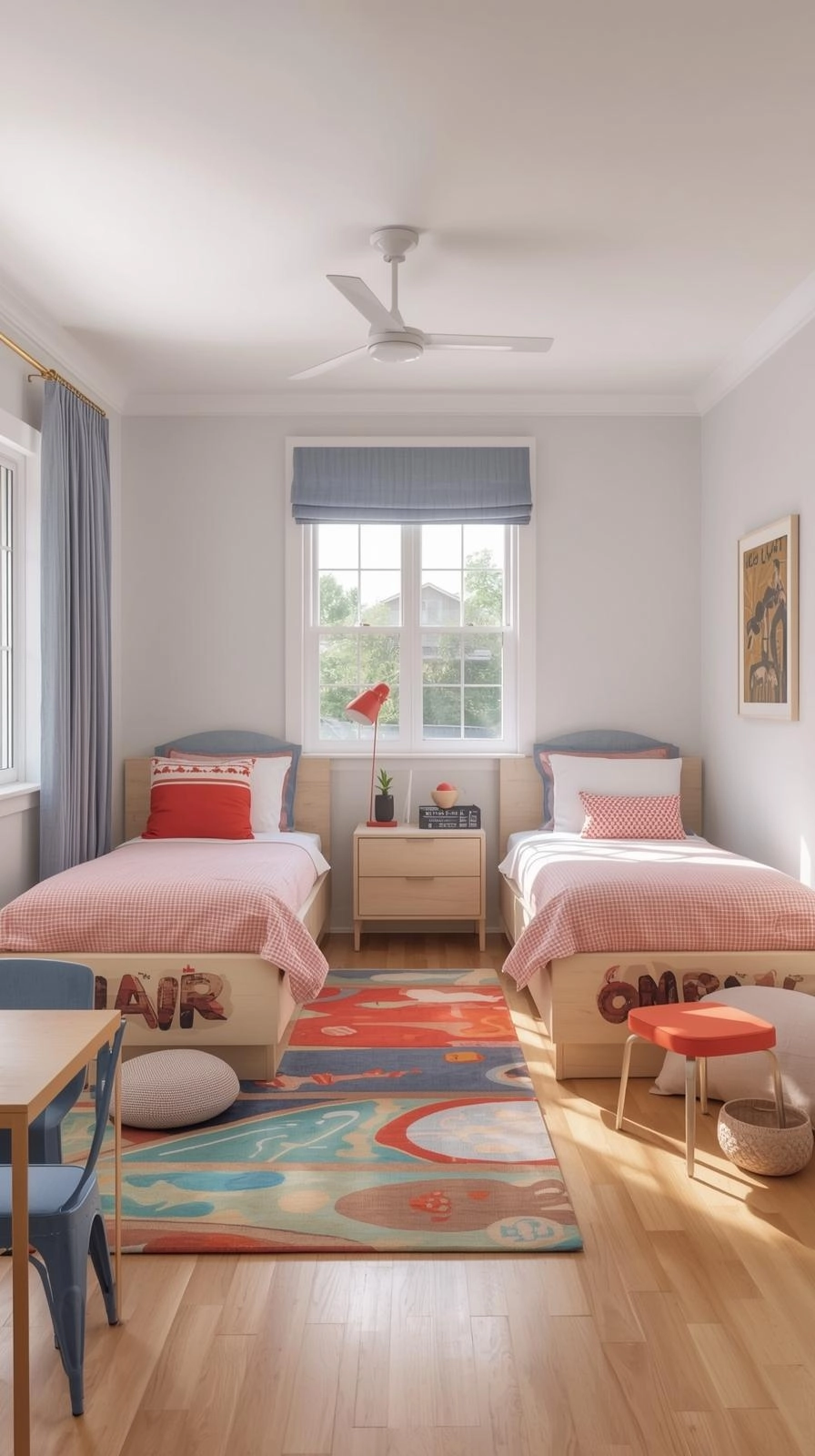
The bed setup is the most important decision in a shared kids bedroom. Beds take up the most space, and once they are placed, everything else must work around them. In small rooms, the wrong bed layout can make the space feel crowded and stressful. The right one can open the room and make it easier to live in.
Bunk beds are popular for a reason. They use vertical space instead of floor space, which instantly makes a small room feel larger. But they only work if both kids feel safe and comfortable using them. Ceiling height matters, and so does age. Younger kids may need guardrails or lower bunks, while older kids may prefer more headroom.
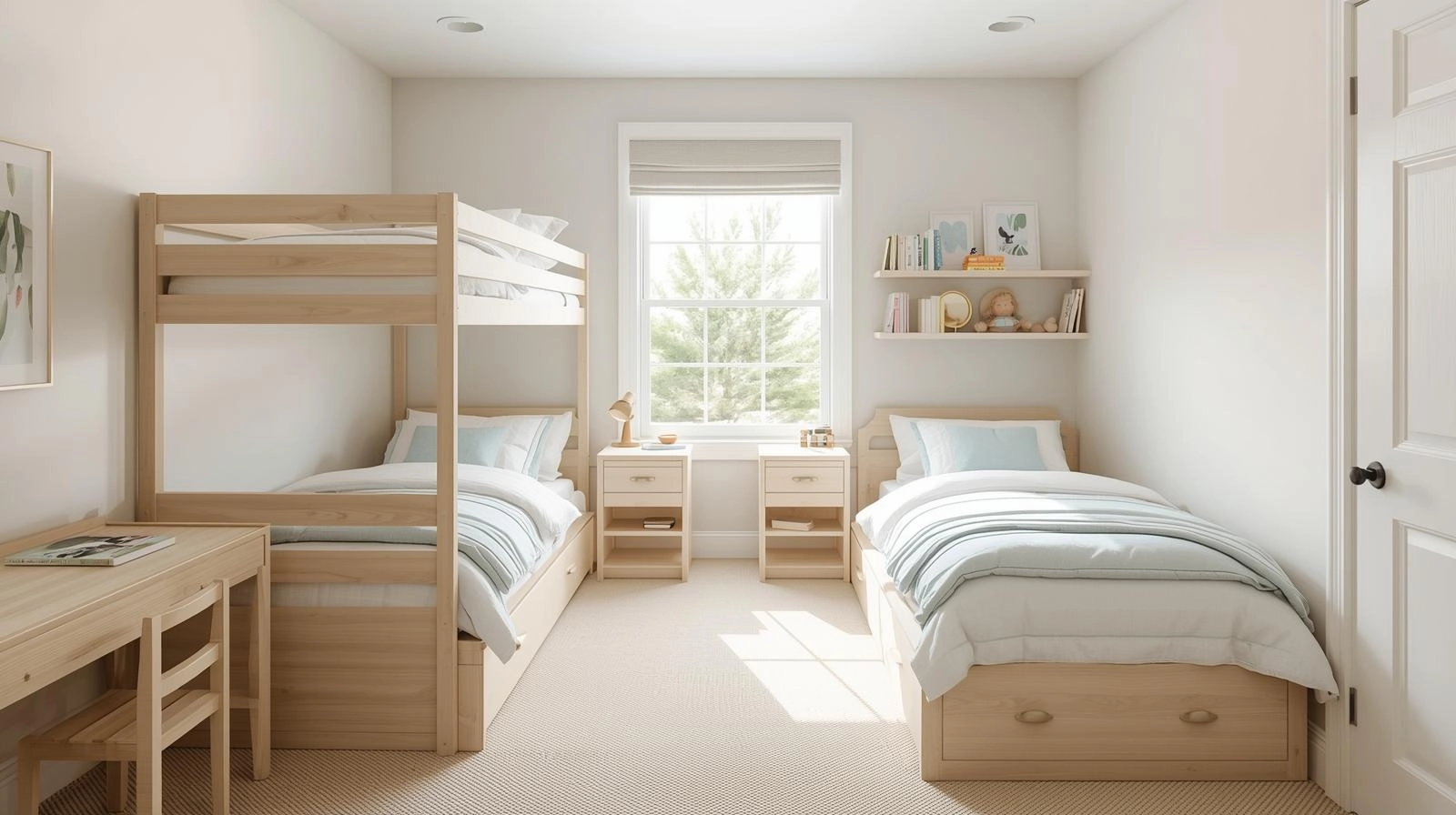
If bunk beds are not the right fit, placing two beds in an L-shape often works well. This setup keeps the center of the room open and gives each child a clear sleeping area. Trundle beds are another strong option for tight rooms. One bed stays tucked away during the day, which keeps the room open for play.
In some homes, a loft bed paired with storage or a desk underneath makes sense, especially when one child is older. The key is choosing a setup that supports daily routines, bedtime comfort, and safety. When the bed layout works, the rest of the room becomes much easier to organize.
2. Use Neutral Walls as a Starting Point
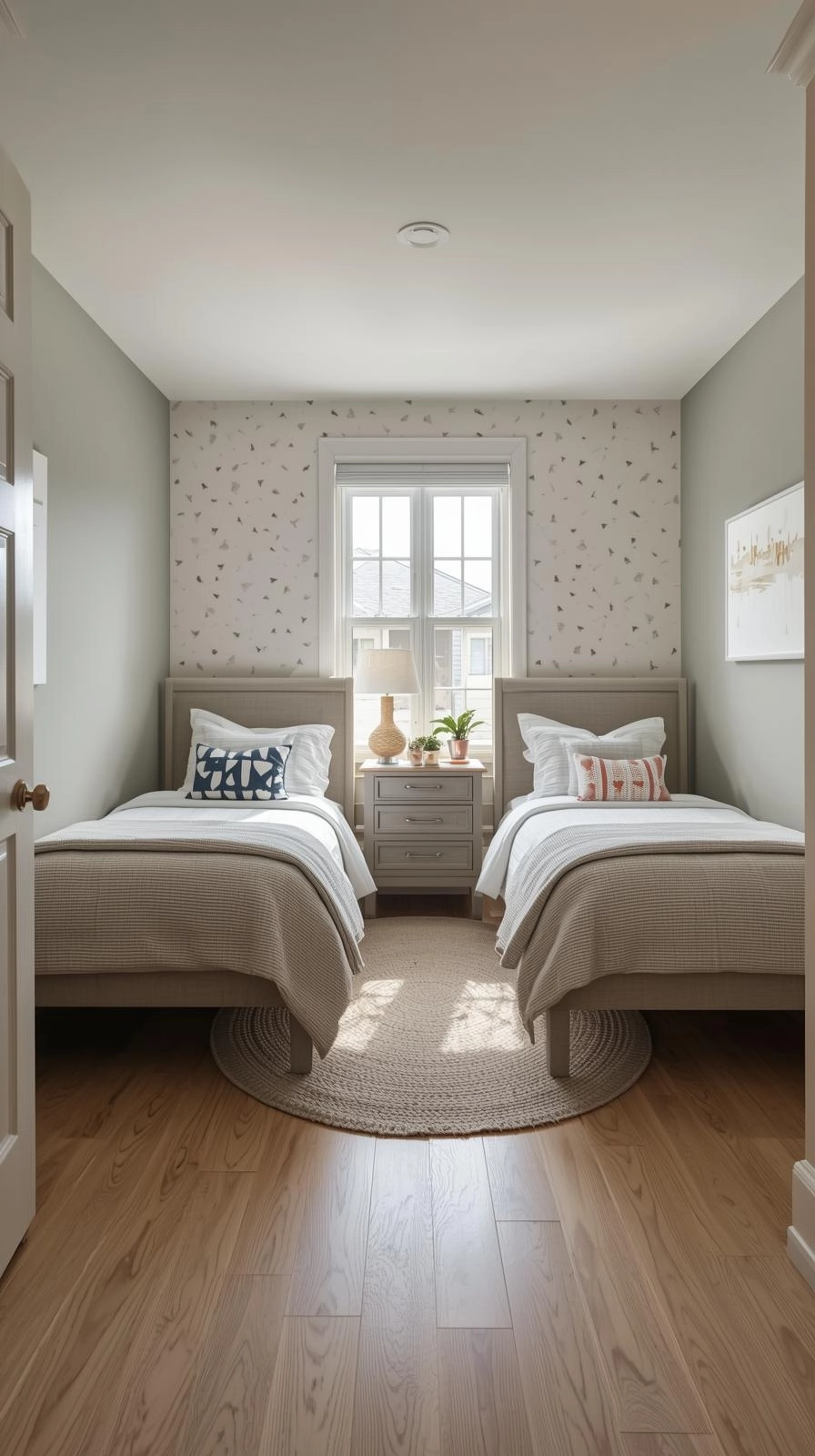
Wall color has a big impact on how a small room feels. In shared bedrooms, neutral walls are one of the smartest choices you can make. Soft, light colors help the room feel open and calm, even when it’s filled with furniture and toys. They also reduce visual noise, which is important when two kids with different tastes share one space.
Neutral does not mean boring. Colors like warm white, light gray, pale beige, or soft blue create a clean base that works with almost any decor. These tones reflect light well, making the room feel brighter and larger. They also make it easier to change the room over time without repainting.
Using neutral walls allows each child’s personality to come through in other ways. Bedding, wall art, and personal items stand out more against a calm background. This keeps the room from feeling chaotic while still letting both kids express themselves.
Paint finish matters too. In kids’ rooms, walls need to handle fingerprints and marks. A washable finish makes daily life easier and keeps the room looking fresh longer.
3. Give Each Child a Personal Zone
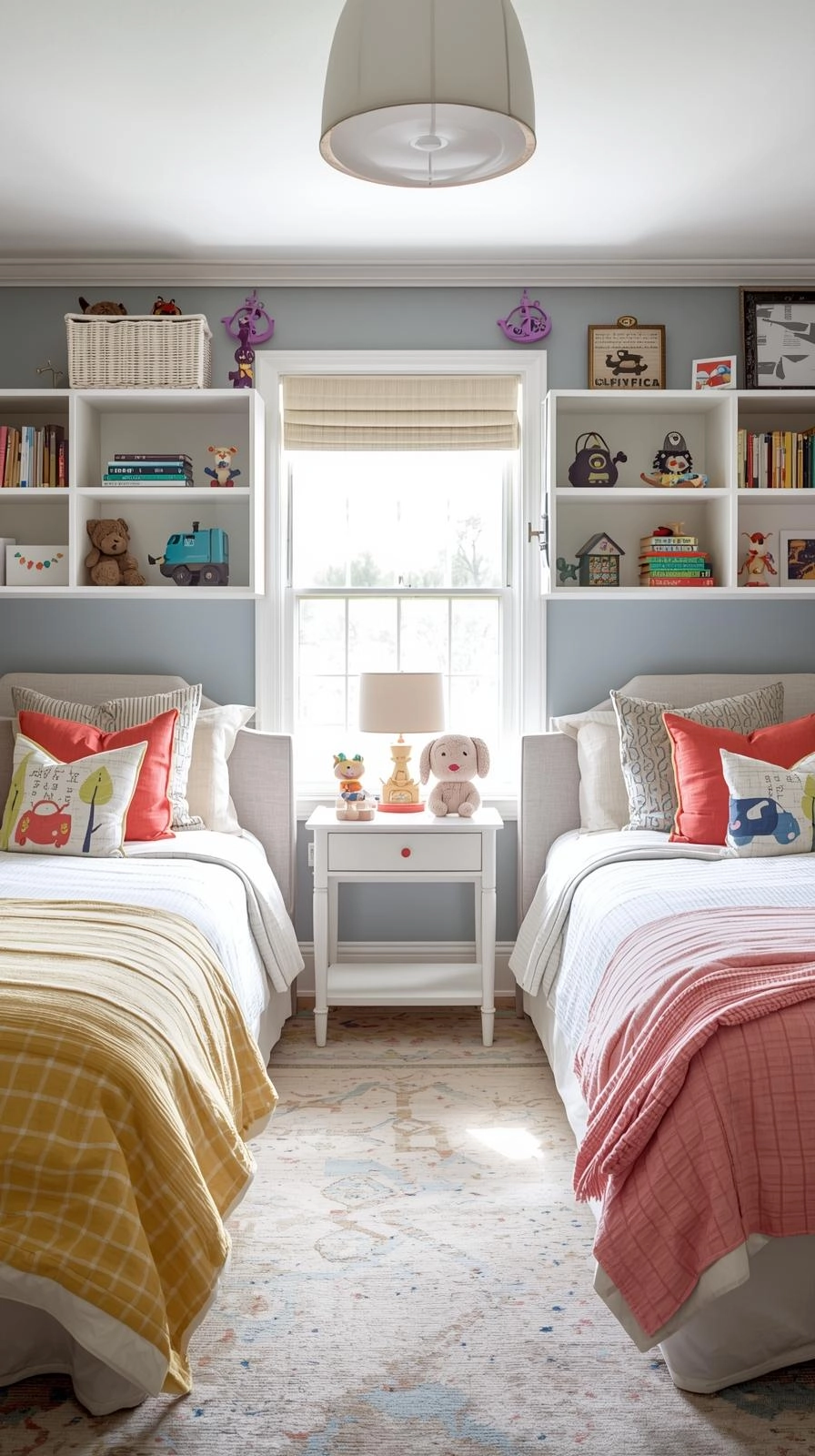
Even in a small shared bedroom, each child needs to feel like they belong. Personal zones help make that happen. These zones don’t require walls or large dividers. They are created through thoughtful placement of furniture, storage, and decor.
Each child should have their own spot for sleeping and storing personal items. This could be a set of shelves, a nightstand, or a drawer space that clearly belongs to them. Visual cues, like different bedding or wall art above each bed, help define these areas without closing the room in.
For older kids, small dividers can help create a sense of privacy. A low bookshelf or curtain can offer separation while still keeping the room open. The goal is not isolation but respect. When kids feel their space is recognized, they are more likely to respect their sibling’s space too.
Personal zones reduce conflict and increase comfort. They help kids feel secure in a shared environment.
4. Build Storage Into the Bed
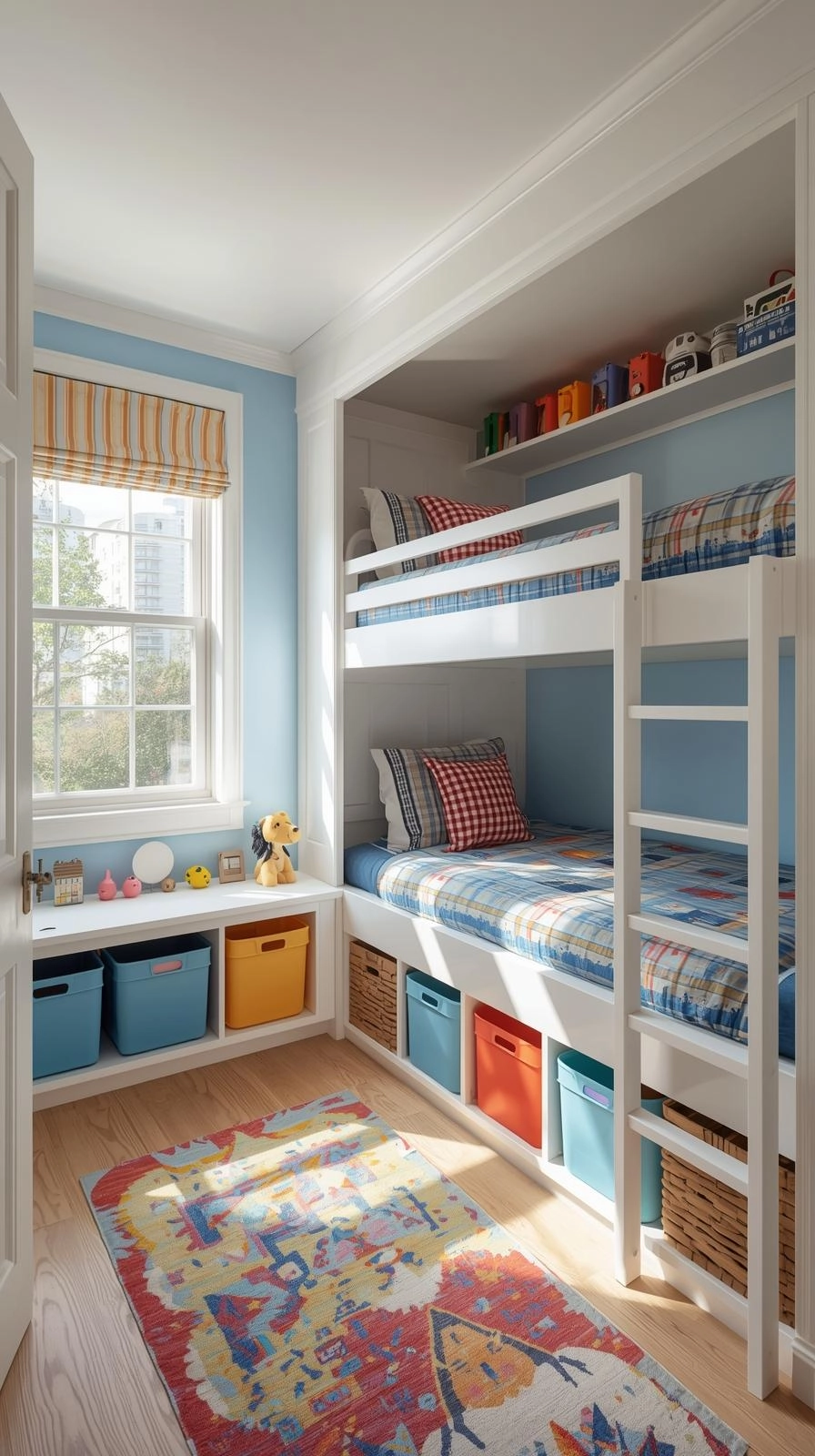
Storage is often the biggest challenge in small shared bedrooms. Built-in bed storage is one of the most effective ways to solve it. Under-bed drawers and hidden compartments make use of space that would otherwise go unused.
Beds with built-in drawers are ideal for storing clothes, toys, or extra bedding. Lift-up beds offer deep storage for items that are not used every day. In shared rooms, assigning specific drawers to each child helps keep things organized and fair.
Using the bed for storage reduces the need for bulky dressers that take up valuable floor space. It also keeps clutter out of sight, which helps the room feel calmer and more open.
When storage is easy to access, kids are more likely to use it. That makes cleanup faster and daily life smoother.
5. Keep Furniture Low and Lightweight
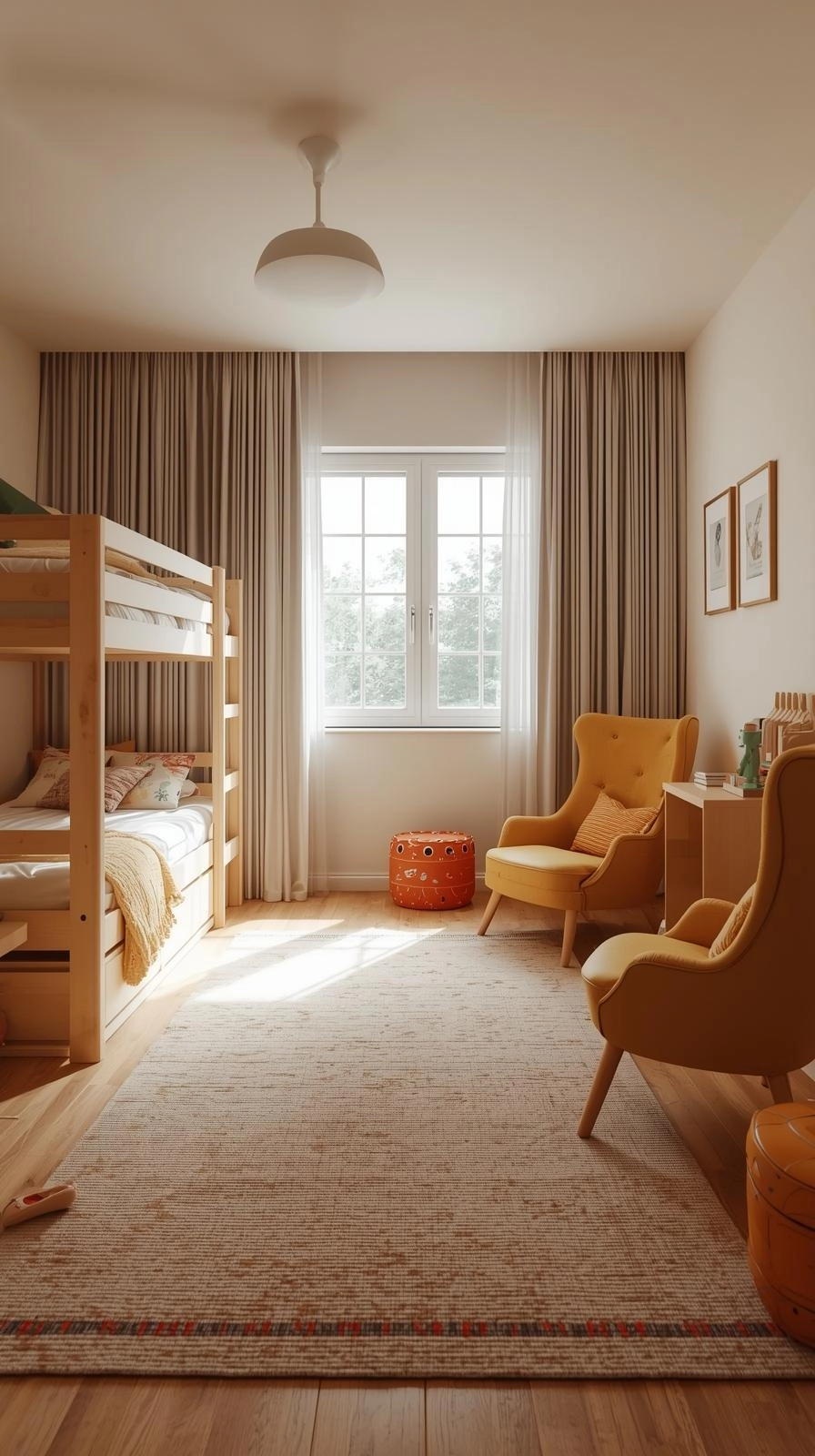
Furniture scale matters in small rooms. Large, heavy pieces can make a shared bedroom feel crowded and hard to move around in. Low and lightweight furniture keeps the space feeling open and flexible.
Low beds, short dressers, and small bookcases allow light to travel through the room. This makes the ceiling feel higher and the room feel larger. Lightweight furniture is also easier to rearrange as kids grow and needs change.
Flexibility is key in shared bedrooms. What works for toddlers will not work for school-age kids. Choosing furniture that can move and adapt saves time and money in the long run.
Kid-friendly furniture should feel sturdy but not overwhelming. When kids can reach and use their furniture easily, they become more independent.
6. Maximize Wall Space for Storage
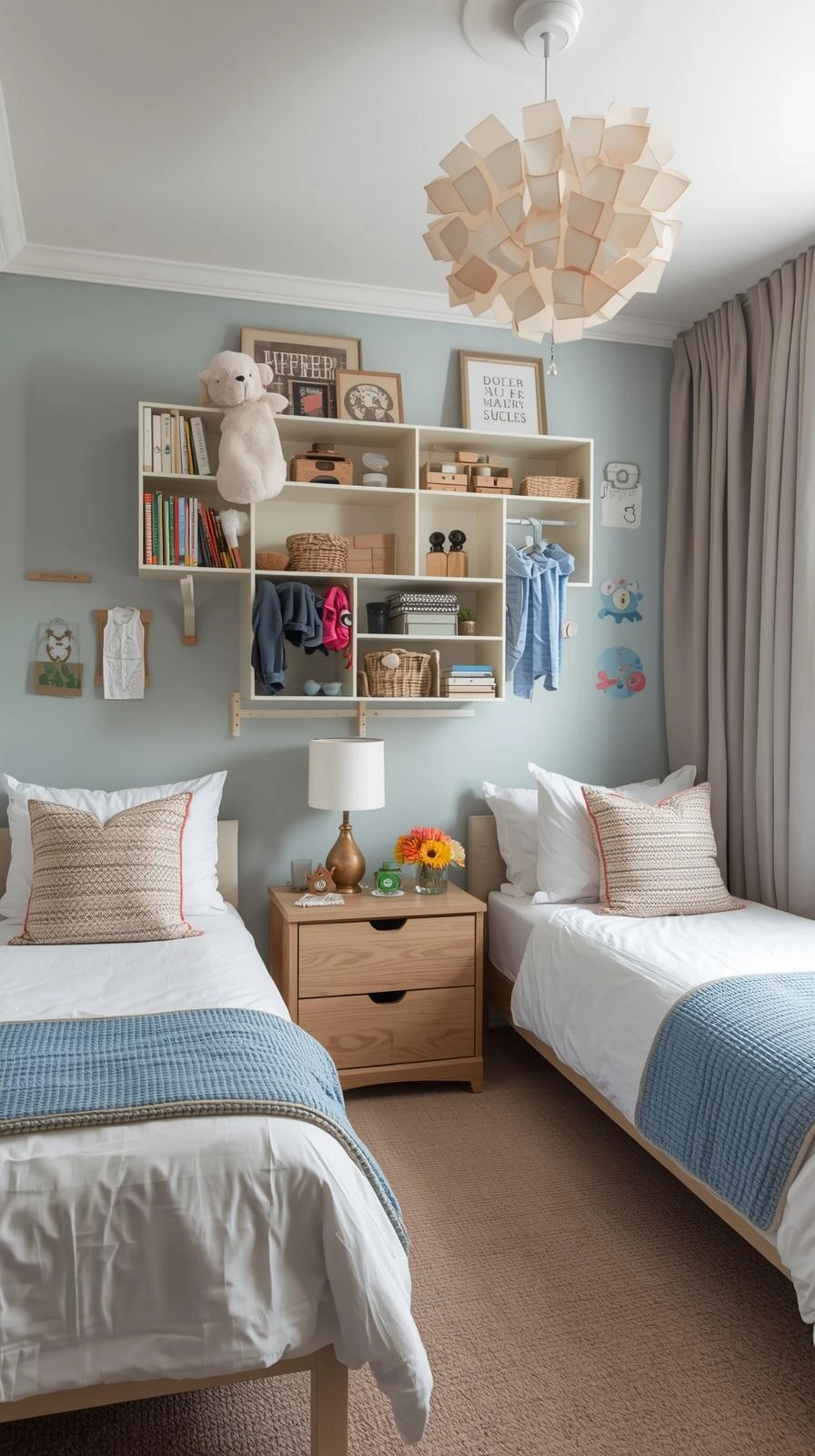
In small shared bedrooms, wall space becomes one of the most valuable assets. Moving storage off the floor creates more room to play and move. It also keeps the space feeling organized instead of crowded.
Wall shelves are perfect for books, small toys, and decor. Hooks near the door or bed help keep backpacks, jackets, and hats off the floor. Wall-mounted cubbies work well for shared storage while still keeping items visible and accessible.
Using vertical space helps define zones and reduces clutter. When everything has a place on the wall, the room feels lighter and easier to manage.
Wall storage also teaches kids how to organize their belongings in a simple, visual way.
7. Use Lighting to Define Spaces
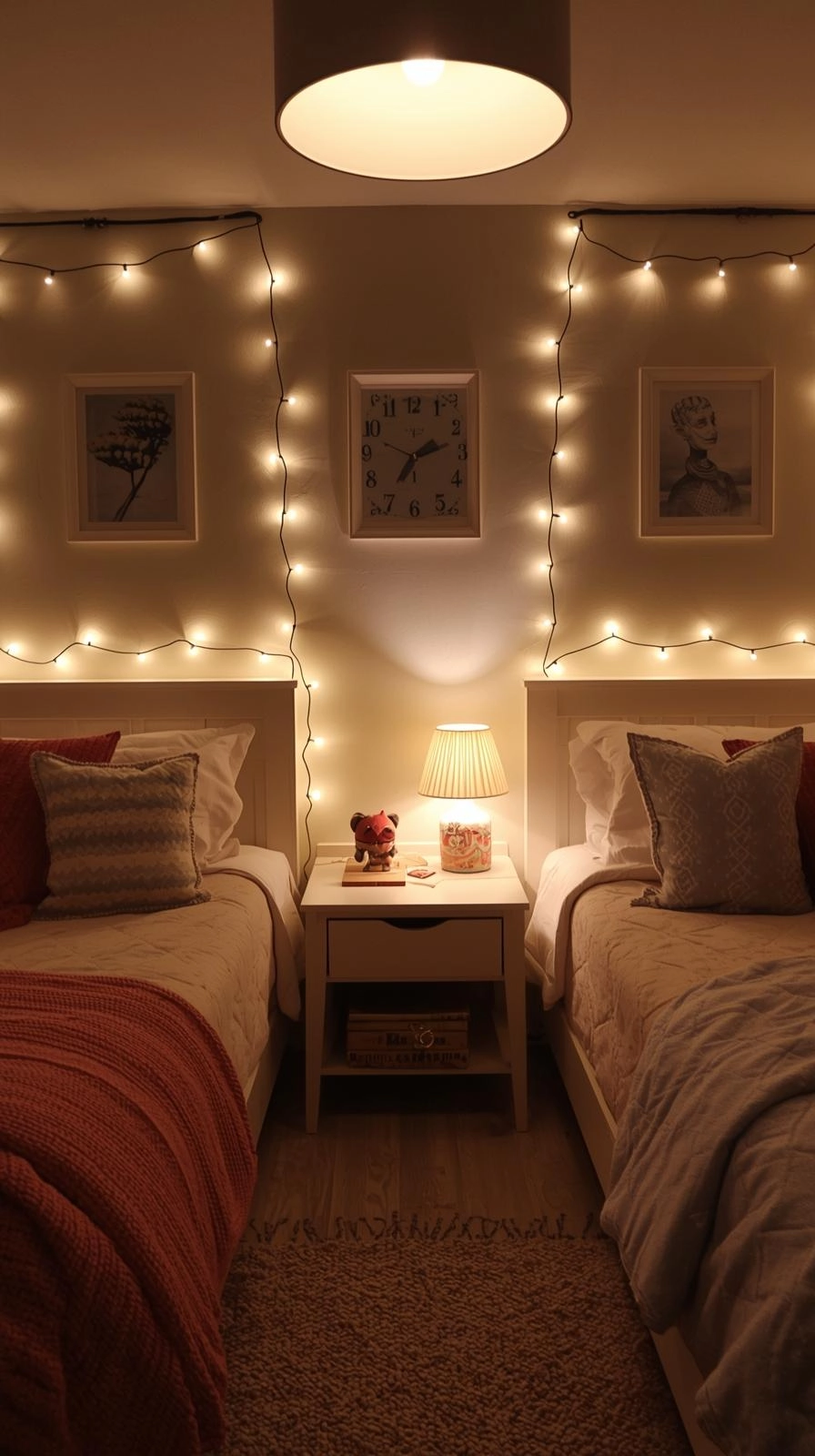
Lighting plays a big role in how shared bedrooms function. One overhead light is rarely enough. Different light sources help define zones and reduce disruption between siblings.
Each child benefits from having their own reading or bedside light. This allows one child to read while the other sleeps. Wall-mounted lights save space and keep cords off the floor.
Soft, warm lighting helps the room feel calm, especially at night. Task lighting near desks supports homework and focus. Gentle night lighting helps younger kids feel safe without waking everyone.
When lighting supports how kids use the room, daily routines become smoother.
8. Create One Shared Play or Study Area
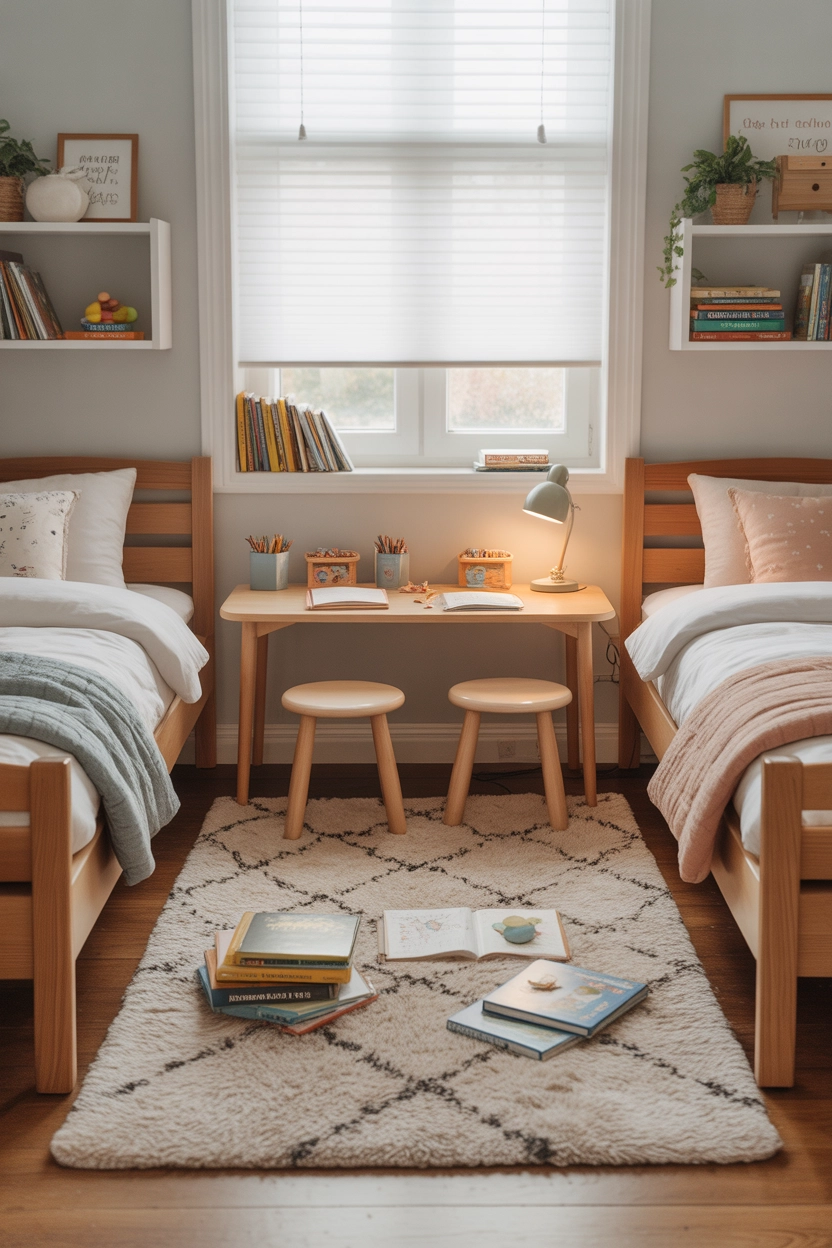
A shared bedroom works best when it includes a shared activity space. This area can be used for play, art, reading, or homework. It gives kids a place to interact positively instead of competing for space.
A small table, desk, or clear floor area works well for this purpose. A rug helps define the space and adds comfort. Keeping this area simple makes it easier to clean and reset.
Shared spaces teach cooperation. When kids help maintain a shared area, they learn responsibility and respect.
9. Use Multi-Functional Pieces
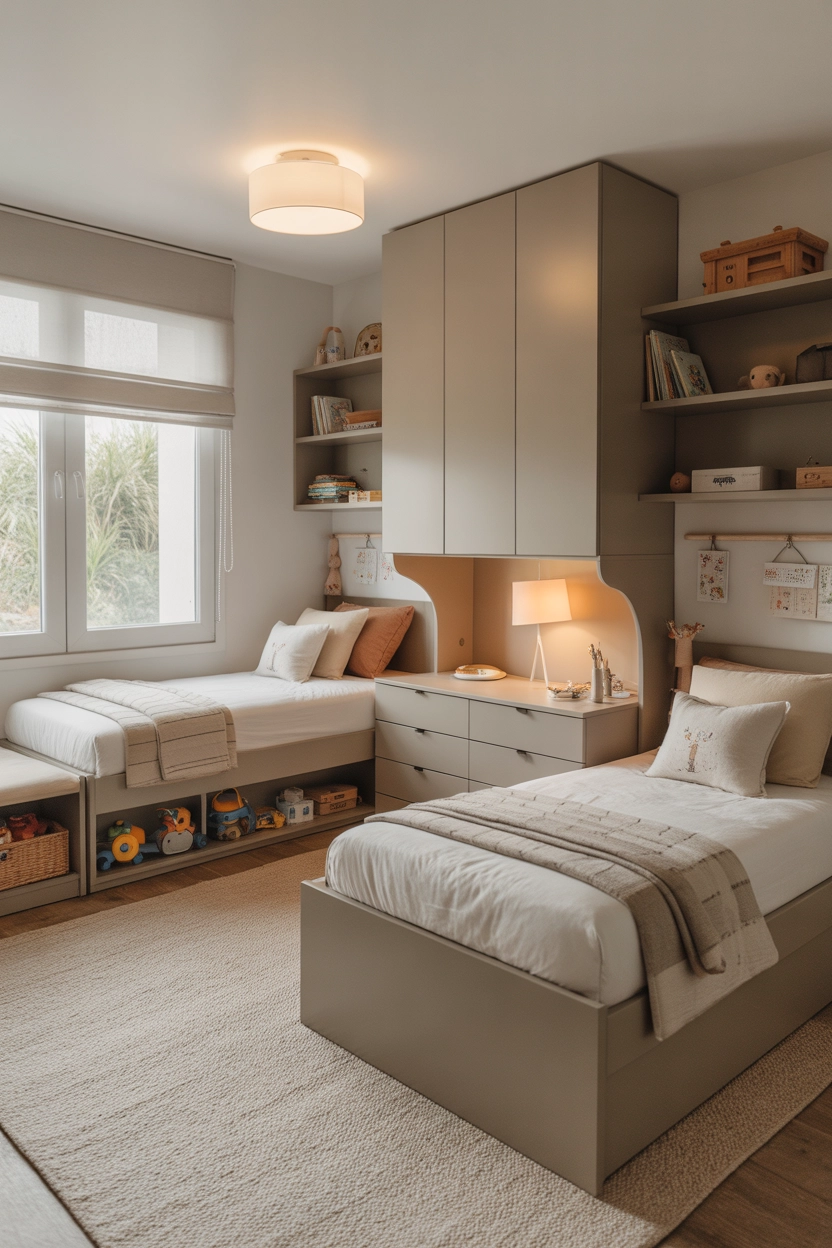
In small shared bedrooms, every item should work hard. Multi-functional furniture saves space and adds flexibility. A bench that opens for storage, a desk that folds away, or a shelf that doubles as a nightstand all help the room do more with less.
These pieces reduce clutter and make it easier to adapt the room as needs change. When furniture serves more than one purpose, the room stays organized without feeling crowded.
Choosing multi-functional items is one of the smartest ways to future-proof a shared bedroom.
10. Keep the Room Easy to Maintain
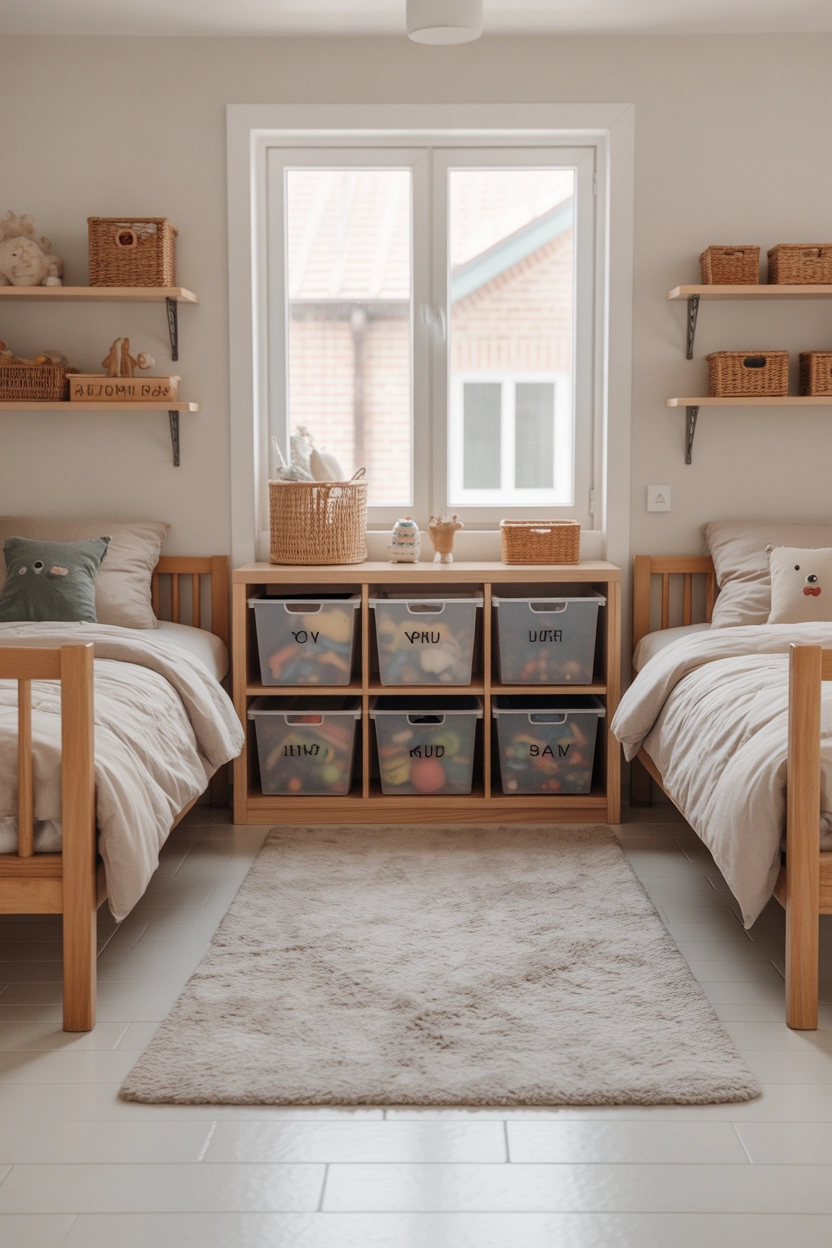
A room that is hard to clean will never stay organized. Simple storage systems help kids take responsibility for their space. Low shelves, labeled bins, and easy-to-open drawers make cleanup part of daily life.
When kids can see where things go, they are more likely to put them away. Clear systems reduce arguments and save time.
A room that stays tidy feels calmer and more comfortable for everyone.
Expert Advice for Long-Term Success
Shared bedrooms work best when they can change over time. Kids grow fast, and their needs shift. Furniture that adjusts or separates later adds long-term value.
Shared rooms also teach important life skills. Kids learn compromise, respect, and communication. A well-designed room supports those lessons instead of creating stress.
Revisiting the layout every year helps keep the space working well. Small changes often make a big difference.
Final Thoughts
A small shared kids bedroom can be a place of comfort, growth, and connection. Size is not the deciding factor. Design choices are. When the room balances function, storage, and personal space, kids feel secure and supported.
These twelve small shared kids bedroom ideas are built on real experience and real results. With thoughtful planning and flexible design, even the smallest shared room can become a place where kids rest well, play freely, and grow together.
A shared bedroom done right does more than save space. It builds harmony.