11 Small Office with Daybed Layout Ideas

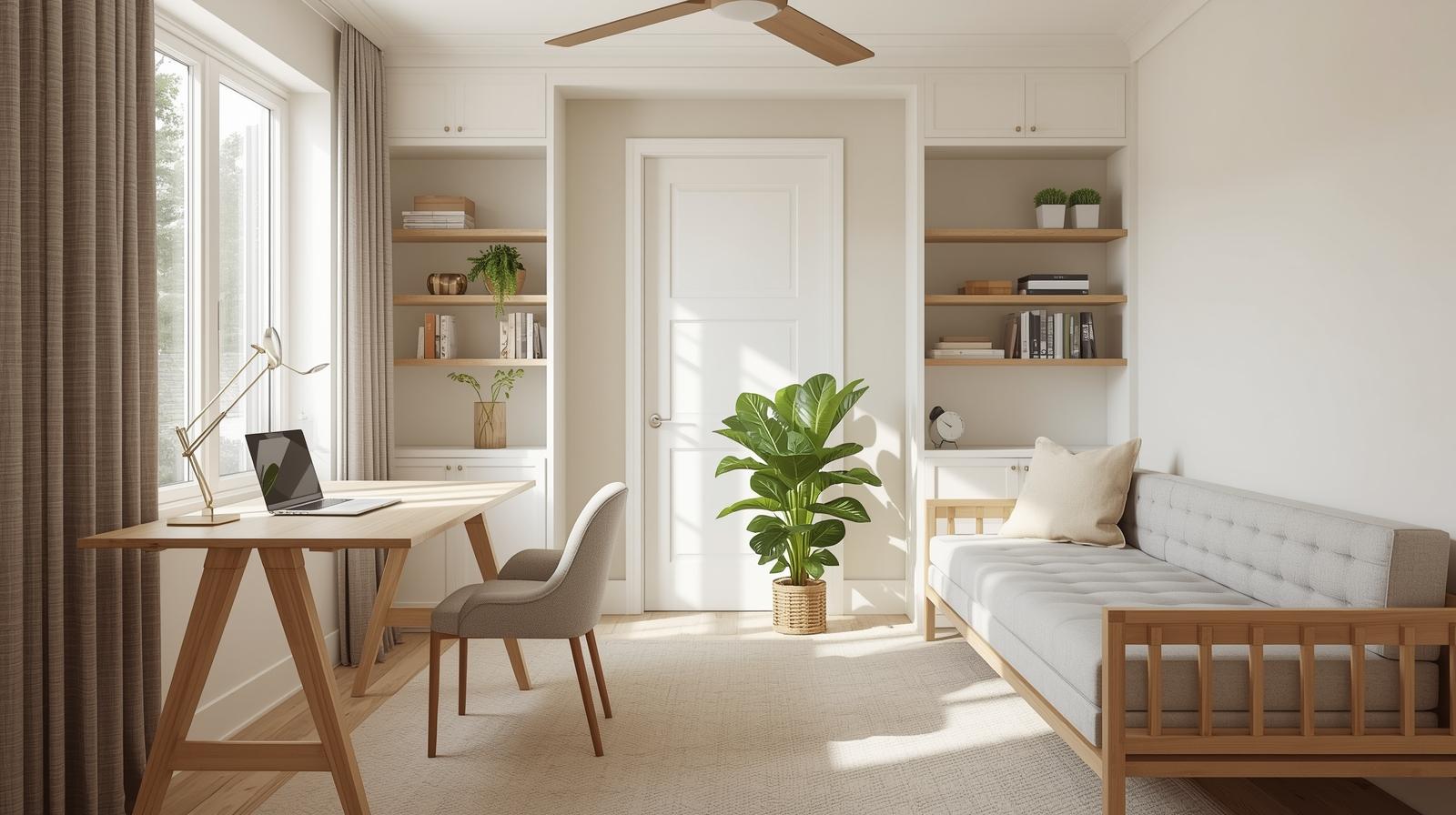
Designing a small office that includes a daybed is not about squeezing furniture into a tight space. It is about planning how the room will actually be used every single day. Over the past twenty years, I have seen many home offices fail because the layout looked good on paper but did not support real life. A daybed adds comfort and flexibility, but only when it is placed with intention. When done right, the room feels calm, organized, and useful instead of crowded or confusing.
A small office with a daybed usually serves more than one purpose. It may be a work-from-home space during the week, a reading room in the evening, and a guest room when family visits. Because of this, the layout must respect both focus and rest. The desk cannot feel like an afterthought, and the daybed should not feel like it was pushed in at the last minute. Balance is what makes the room successful long term.
This guide walks through eleven proven layout ideas that have worked in small rooms for decades. These are not trend-based ideas. They are built on how people move, sit, rest, and focus in limited space. Each layout is explained in a way that helps you understand why it works, not just how it looks.
1. Placing the Daybed Against the Longest Wall
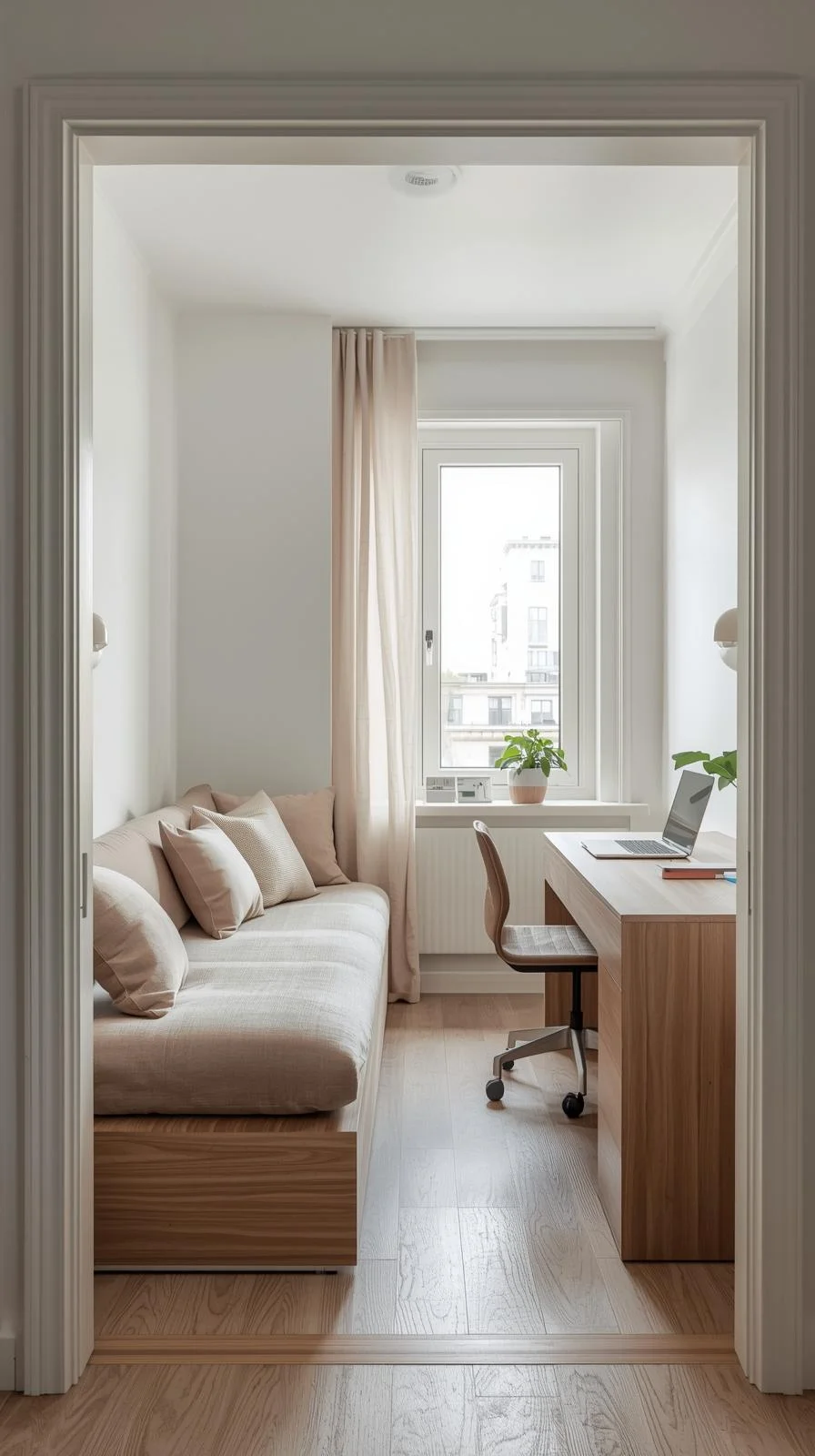
In most small rooms, one wall is slightly longer or less interrupted than the others. That wall is often the best place for the daybed. When the largest piece of furniture sits along the longest wall, the room feels calmer and more open. The eye naturally follows the line of the wall instead of stopping at an obstacle.
A daybed placed this way works well as a sofa during the day and a bed at night. It feels intentional instead of bulky. The desk can then be placed on the opposite wall or near a window, keeping work and rest clearly defined. This layout supports focus because the desk has its own zone, and it supports comfort because the daybed does not dominate the room.
Over time, this arrangement stays practical. It allows easy movement, simple cleaning, and flexible use without rearranging furniture. That is why this layout has remained a reliable choice in small homes for years.
2. Using a Corner Layout for Desk and Daybed

Corners are often underused in small rooms, yet they offer strong structure when planned correctly. Placing the daybed in one corner and the desk in the opposite corner creates a clear sense of purpose for each area. The room feels balanced, not divided, because each corner carries its own function.
This layout is especially helpful for people who need mental separation while working. When the desk faces away from the bed, the mind stays in work mode more easily. The daybed becomes a quiet retreat rather than a distraction.
From long-term use, this setup holds up well because it avoids overlap. The room never feels like one function is invading the other. Each corner earns its place, which keeps the space feeling intentional instead of improvised.
3. Floating Desk with Daybed Along the Window
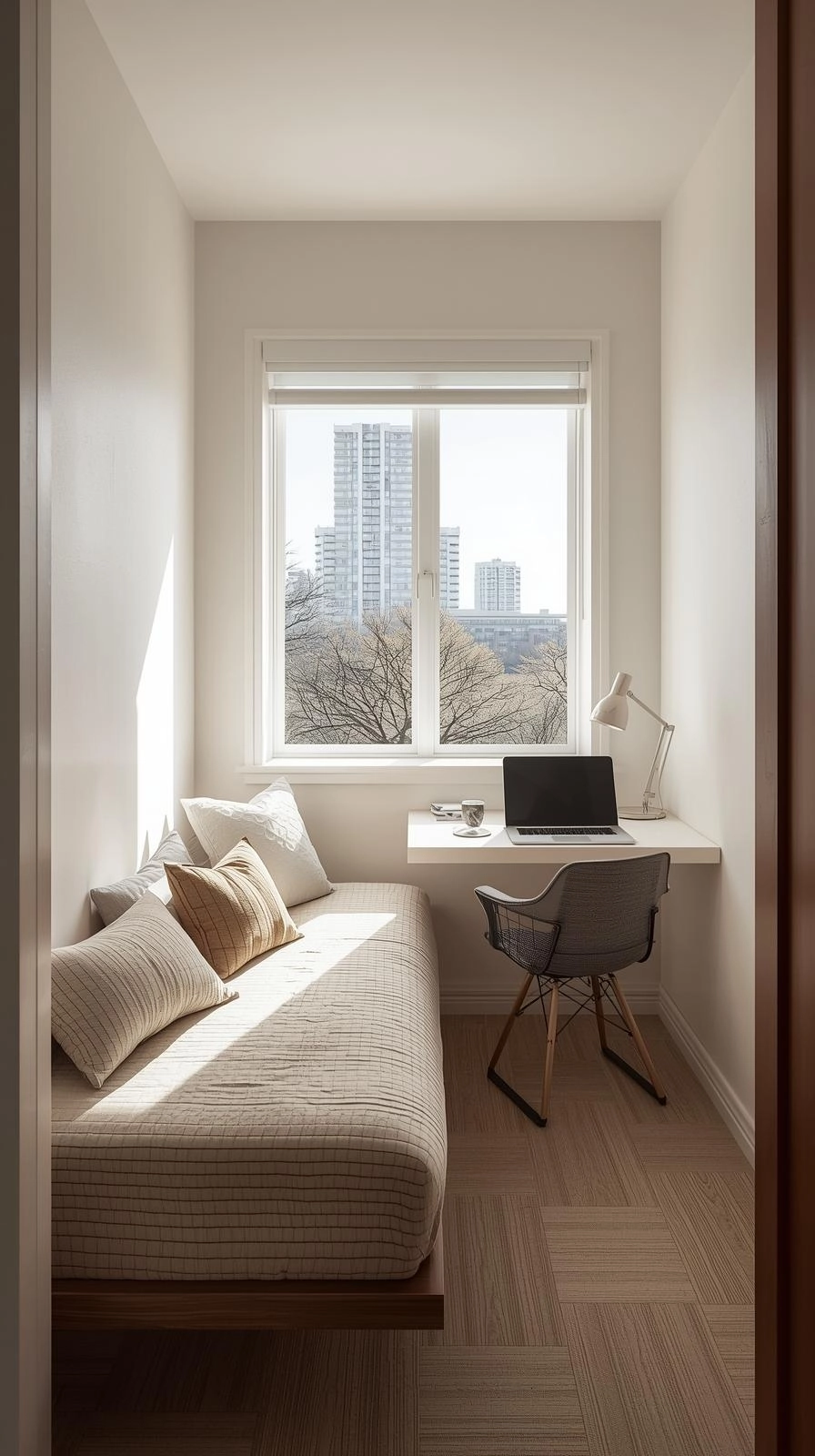
Windows bring life into small rooms. Placing a daybed under a window allows natural light to soften the space and make the bed feel inviting rather than heavy. This placement also keeps the walls open for other uses.
A floating desk placed nearby, often at a right angle, creates a light workspace without blocking the window. Because the desk does not touch the floor, the room feels more open. This layout works especially well in narrow rooms where floor space is limited.
What makes this layout successful is how it uses light. The bed benefits from daylight during rest hours, and the desk benefits during work hours. Over time, this balance supports both energy and comfort without changing the layout.
4. Built-in Daybed with Overhead Storage

In very small rooms, built-in furniture often performs better than freestanding pieces. A built-in daybed can include storage below and shelves above, turning one wall into a complete solution. This reduces the need for extra furniture, which keeps the room feeling open.
When the daybed feels like part of the wall, it stops looking like a guest bed and starts looking like a design feature. The desk can sit beside or across from it, creating a clean and organized layout that feels permanent rather than temporary.
This type of design works well long term because storage is built into the layout. Clutter stays hidden, which is critical in small offices. Over years of use, built-in layouts tend to feel calmer and more reliable than flexible setups.
5. Parallel Layout for Easy Flow

In rectangular rooms, placing the daybed on one wall and the desk directly across from it creates a strong sense of order. The room feels balanced because both sides carry equal visual weight. This layout is simple, clear, and easy to maintain.
Walking space stays open in the center, which helps the room feel wider. The desk and bed never compete because they mirror each other rather than overlap. This is a good option for people who like structure and routine.
From experience, this layout holds up well for daily work. It keeps distractions low and movement easy. The room always feels predictable, which supports focus over time.
6. L-Shaped Arrangement in the Corner

An L-shaped layout places the desk and daybed along two connecting walls. This creates a compact zone where everything is within reach without feeling tight. It works best when both pieces have simple lines and similar finishes.
This arrangement frees up the rest of the room for movement or storage. It allows shelves or cabinets to be placed elsewhere without crowding the work or rest areas.
The strength of this layout is efficiency. Nothing feels wasted. Over time, it adapts easily if needs change because the core zone stays organized.
7. Desk Facing Window with Daybed at the Side
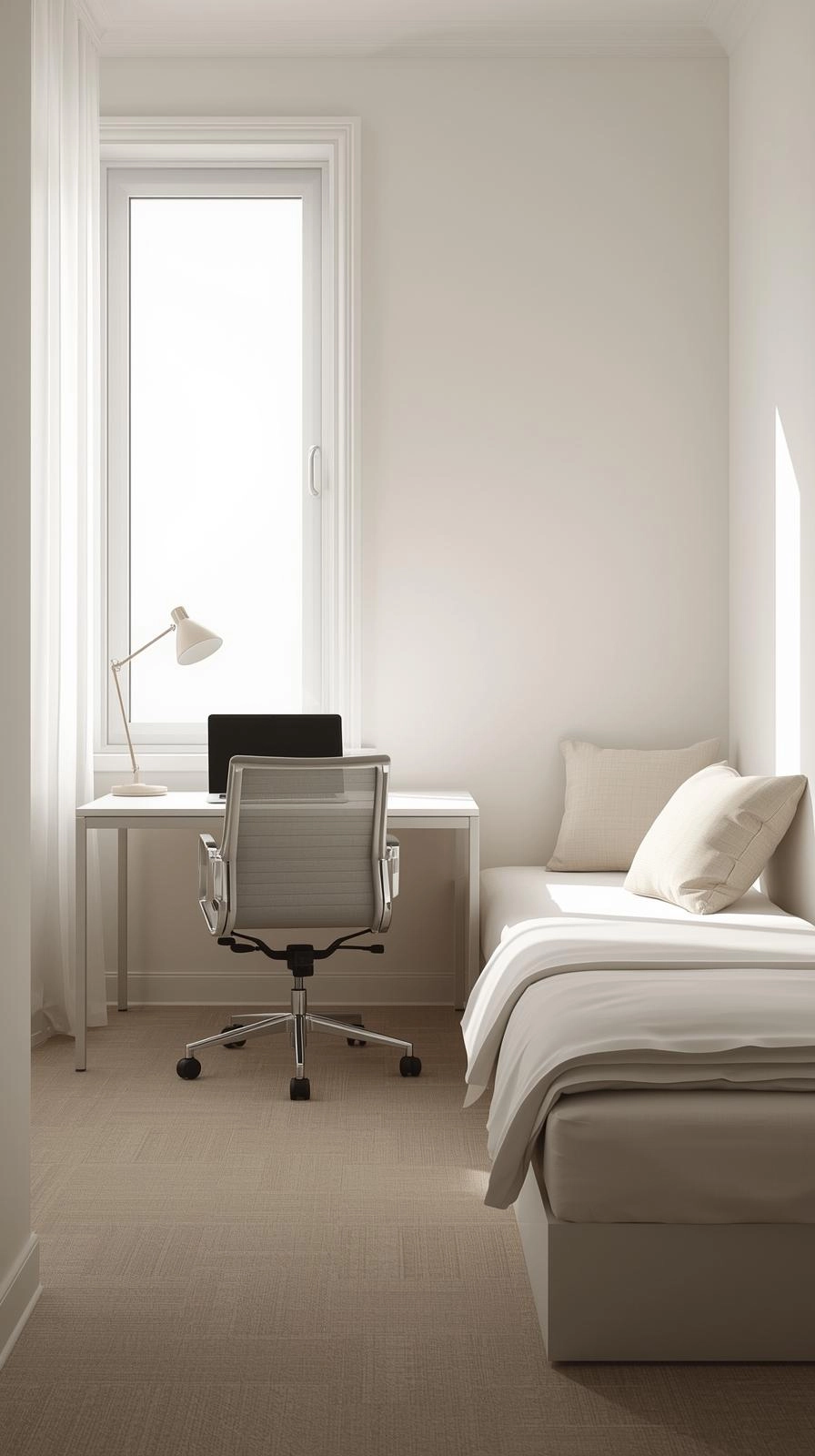
For people who work long hours, desk placement matters more than bed placement. Facing the desk toward the window supports focus, mood, and energy. Natural light improves alertness and reduces eye strain.
The daybed placed along the side wall stays accessible without pulling attention away from work. It becomes a secondary feature during the day and a primary one at night.
This layout works well because it respects how the brain works. Work comes first when needed, and rest is available without interfering.
8. Studio-Style Layout with Daybed Divider
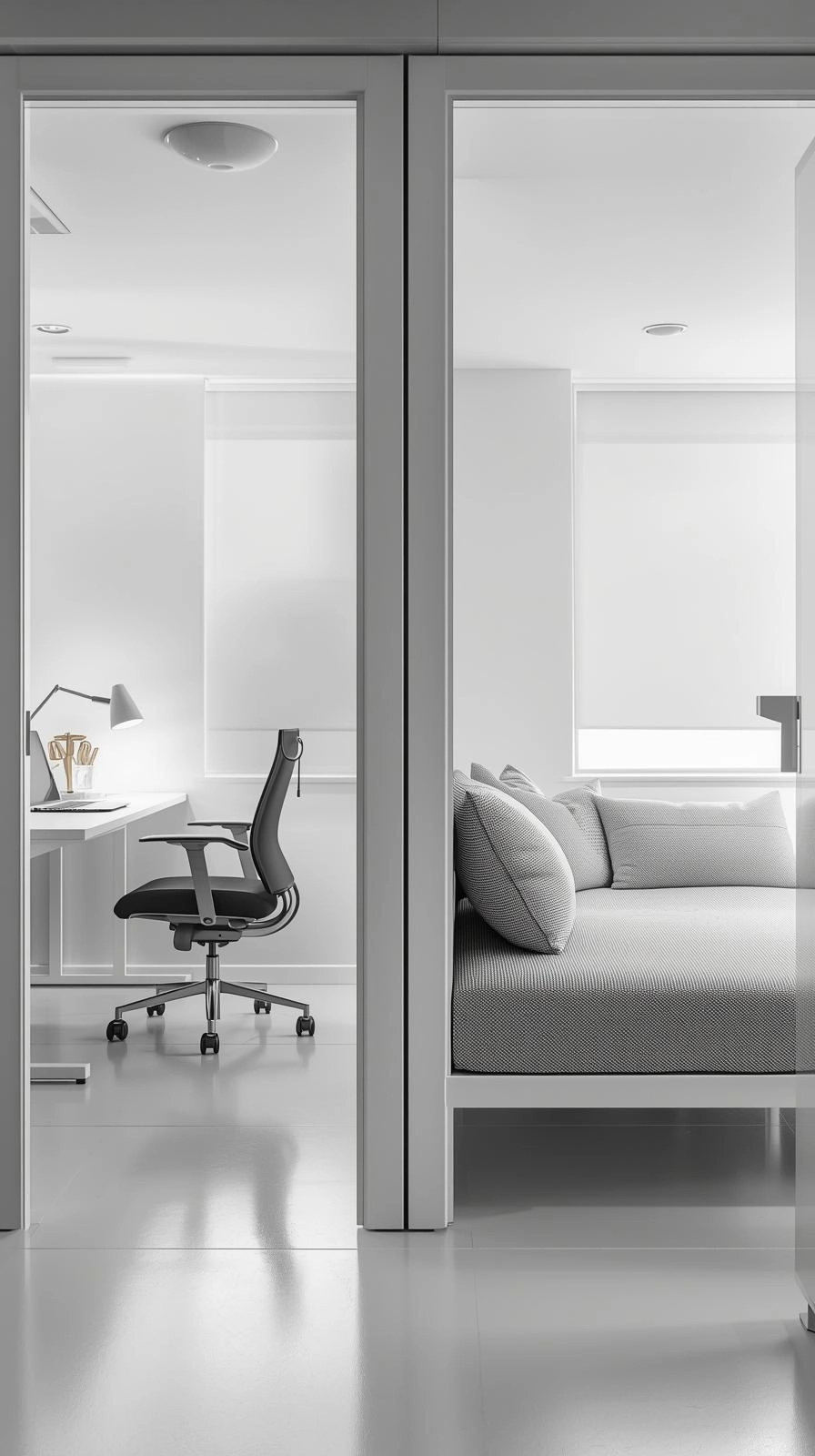
In very small spaces, traditional walls are not always possible. A daybed placed lengthwise in the room can act as a visual divider without blocking light or movement. The desk can sit on the opposite side, creating two clear zones.
This layout works well when the back of the daybed faces the desk or another area. It creates separation without building walls, which keeps the room flexible.
Over time, this studio-style approach feels intentional. The room has flow, but each area feels defined. That balance is hard to achieve in small spaces, which is why this layout remains effective.
9. Compact Desk at the Foot of the Daybed

When wall space is limited, placing a slim desk at the foot of the daybed uses the room’s length instead of its width. This keeps pathways clear and reduces visual clutter.
This setup works best with a narrow desk and simple chair. The goal is to keep the line clean so the room does not feel blocked. It is a practical choice for tight rooms where every inch matters.
From long-term use, this layout works well for light work. It keeps everything close without feeling cramped.
10. Daybed with Fold-Out Desk Option

Not every home office needs a desk all day. Fold-out desks allow the room to function as a guest space most of the time while still supporting work when needed.
When the desk is folded away, the room feels open and calm. When work begins, the desk appears without moving furniture. This flexibility supports changing routines.
This layout is ideal for multipurpose homes. It adapts easily without permanent commitment.
11. Centered Daybed with Desk on Both Sides

In slightly wider rooms, placing the daybed in the center of one wall creates balance. Desks or storage on either side frame the bed and make it feel intentional.
This layout works well when the room needs to look polished for guests while still functioning as an office. Everything feels planned rather than added later.
Over time, this arrangement stays visually strong. It supports both work and hospitality without compromise.
Making a Small Office with Daybed Work Long-Term
Layout alone is not enough. Storage must be planned early to prevent clutter. Drawers under the daybed, shelves above the desk, and cabinets in unused corners keep the room functional.
Lighting should support both tasks. Strong desk lighting improves work focus, while softer lighting near the daybed supports rest. Using both allows the room to shift easily between roles.
The daybed itself should match the office style. Sofa-like frames blend better during the day, while clean bedding keeps the bed guest-ready. Neutral colors allow flexibility as needs change.
Most importantly, the room should reflect how you actually live. A layout that looks perfect but feels uncomfortable will not last. Comfort and ease always win in the long run.
Final Thoughts
A small office with a daybed can be one of the most useful rooms in a home when designed with care. The right layout supports focus during the day and comfort at night without compromise.
Each layout shared here has proven itself over time because it respects space, movement, and daily habits. With thoughtful planning, even the smallest room can feel balanced, welcoming, and easy to use.
A good layout does more than save space. It supports real life, year after year.