10 Minimalist Small Bathroom Ideas with Shower

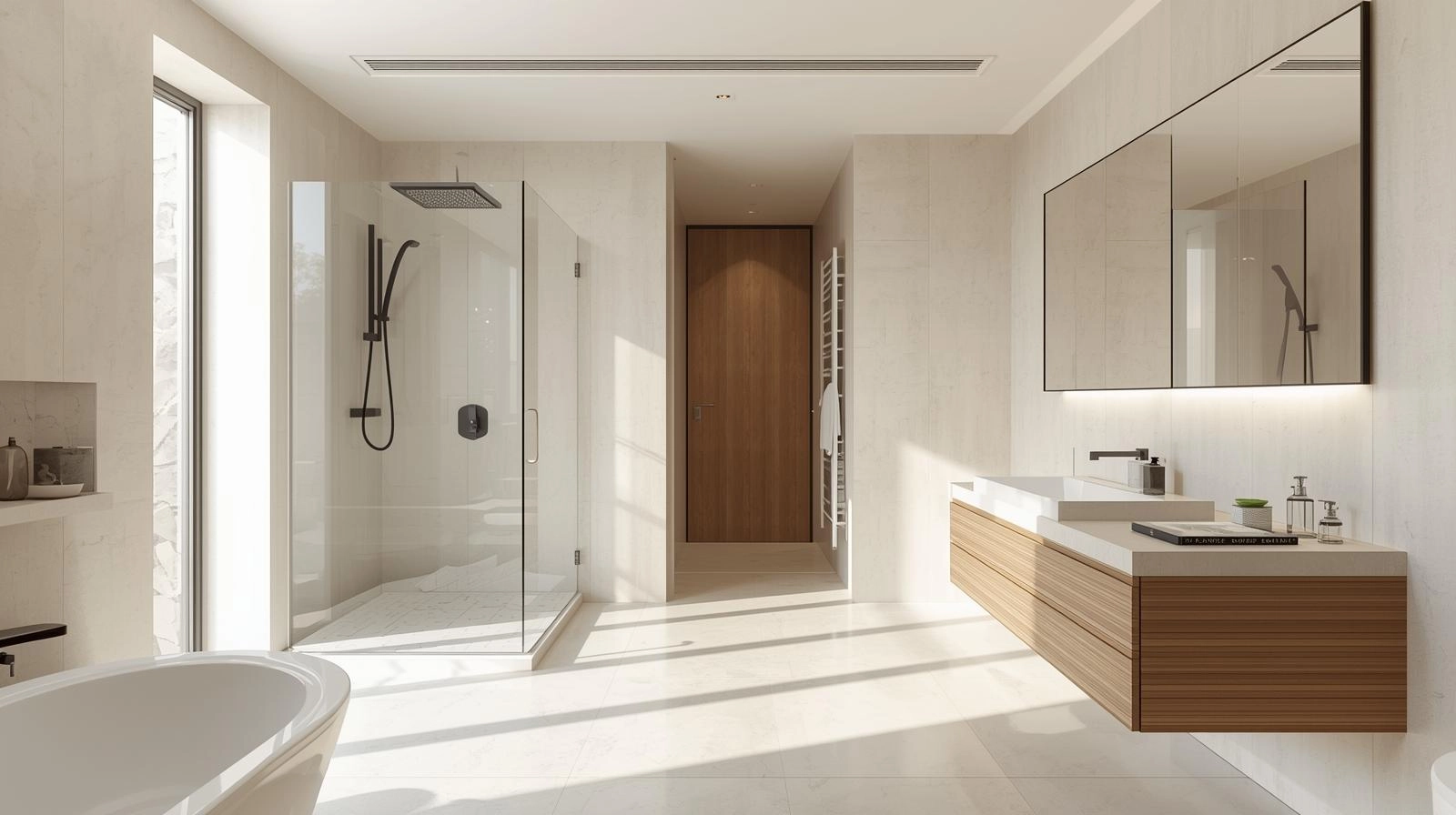
Designing a small bathroom is one of the hardest tasks in home design. Every choice shows. Every mistake feels bigger than it is. Over the last twenty years, I have worked on hundreds of small bathrooms in apartments, older homes, and new builds. What I’ve learned is simple. Small bathrooms demand clarity. When too many ideas fight for attention, the room feels tight, messy, and stressful. Minimalist design solves that problem better than any other approach.
Minimalism does not mean empty or cold. It means intentional. It means every surface, fixture, and material has a reason to be there. In a small bathroom, this mindset becomes even more important when adding a shower. A shower can either steal space or help the room feel open. The difference comes down to layout, light, and restraint.
The ideas below are not trends pulled from magazines. They come from real projects, real homes, and real people who need their bathrooms to work every single day. These minimalist small bathroom shower ideas focus on function first, then beauty, so the space feels calm, open, and easy to live with.
1. Glass Showers That Open the Room
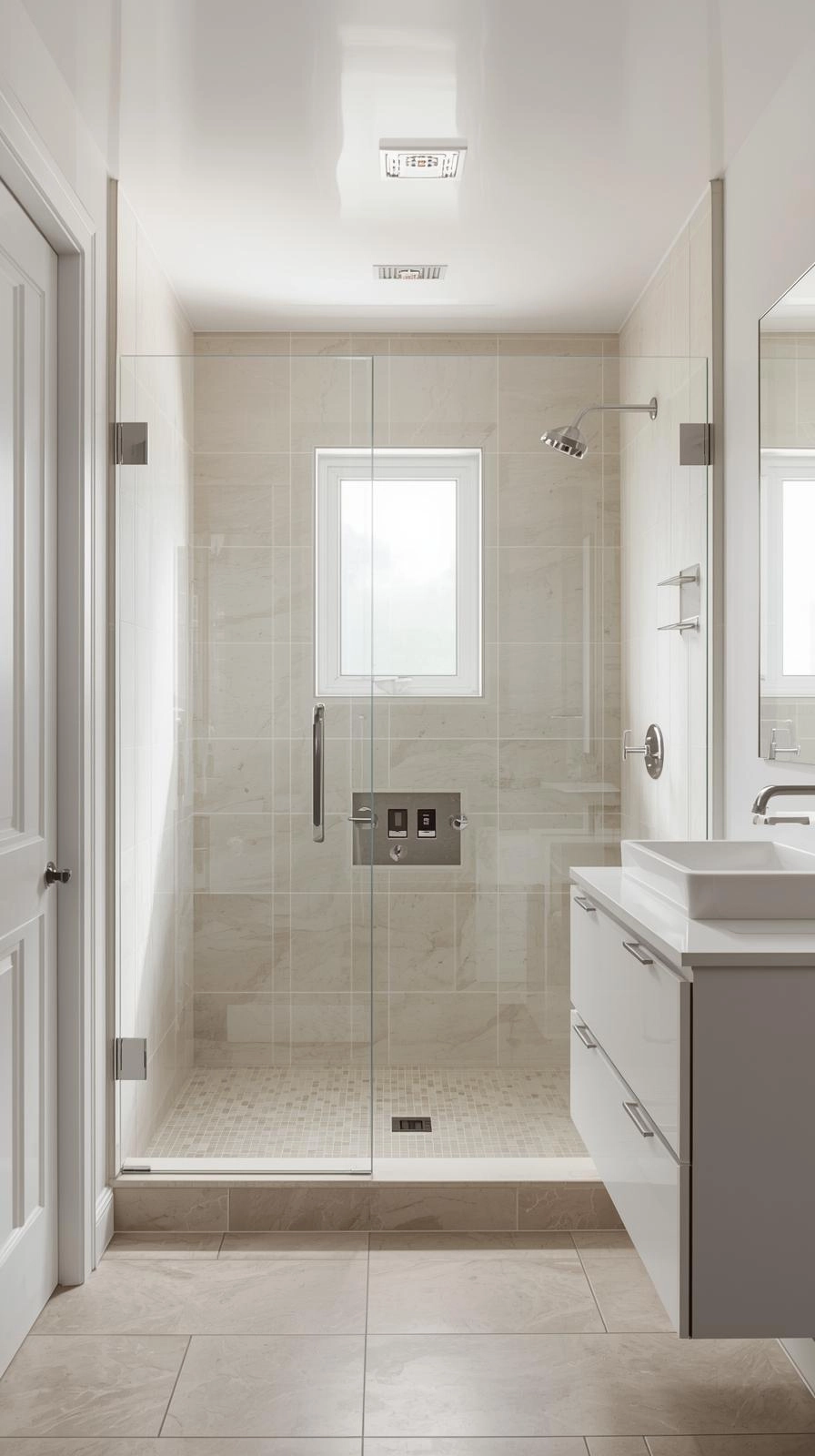
One of the fastest ways to make a small bathroom feel boxed in is by adding solid walls or heavy shower frames. Over time, I’ve learned that glass is one of the most powerful tools in minimalist bathroom design. Clear glass removes visual barriers. It allows the eye to travel across the entire room without stopping. This alone can make a small bathroom feel larger.
A frameless glass shower works best. Thick metal frames add weight and break up sight lines. Clean glass with minimal hardware blends into the room instead of standing out. Even in a tight corner layout, clear glass keeps the shower from feeling like a separate box.
Glass also allows tile to become part of the overall design. When tile continues behind the shower screen, the room feels unified instead of chopped into sections. For very small bathrooms, a single fixed glass panel with an open walk-in entry often works better than a full enclosure. It keeps water contained while staying simple and easy to clean.
2. Walk-In Showers with No Step
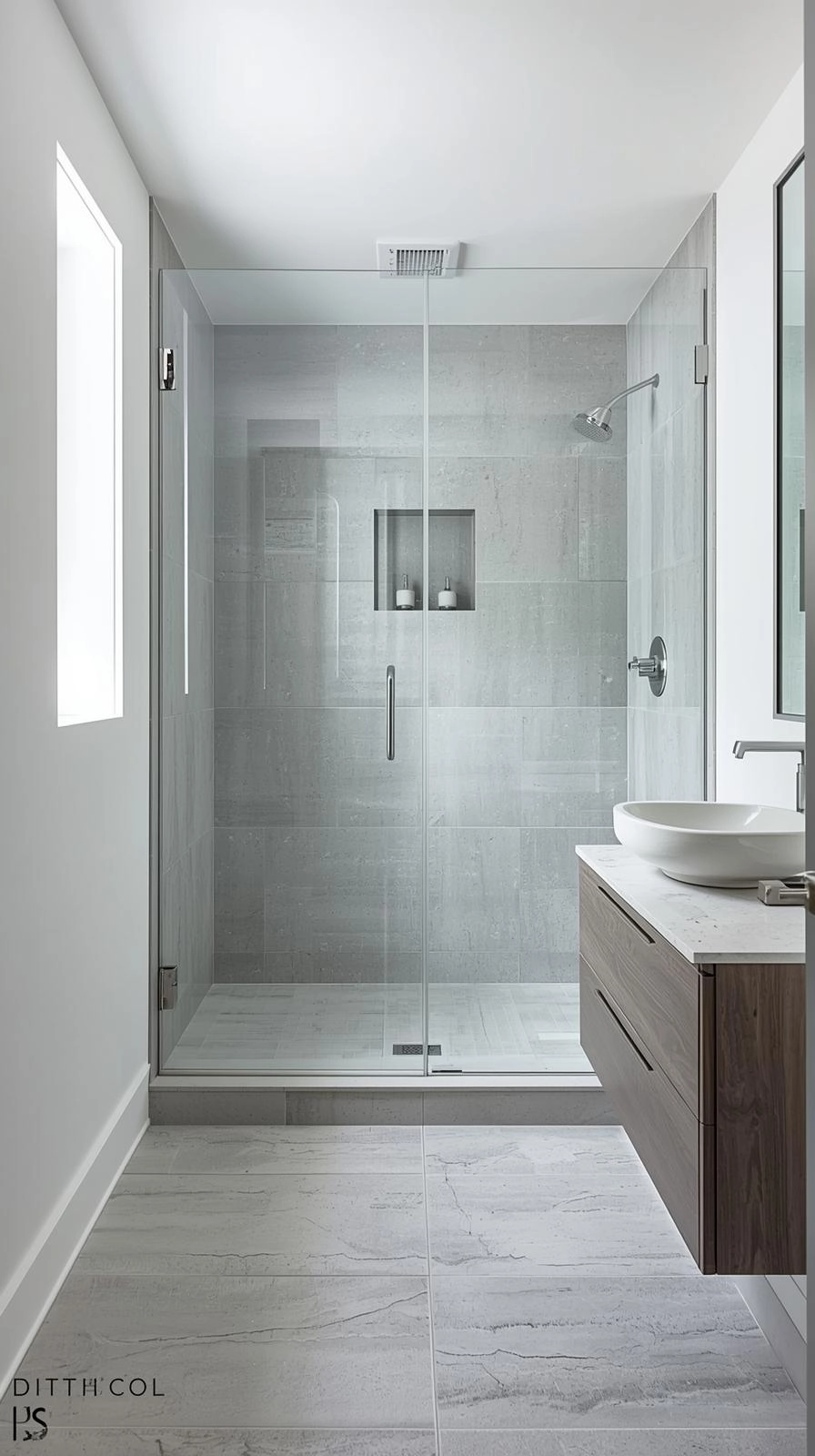
Steps and curbs are small, but they have a big impact on how a bathroom feels. In small spaces, even a low shower curb breaks the flow of the floor and makes the room feel divided. A walk-in shower with a flush entry removes that problem completely.
When the bathroom floor continues straight into the shower, the space reads as one surface. This creates a calm, open feeling that traditional showers cannot match. The room feels wider, longer, and more relaxed. This design also improves safety and accessibility, which matters more as homes age.
To make this work, drainage must be planned carefully. A linear drain along the back wall or side wall helps guide water without visible slopes. Large tiles or seamless finishes help hide transitions. When done right, the shower feels like it belongs to the room instead of competing with it.
3. Light Colors That Reflect Space
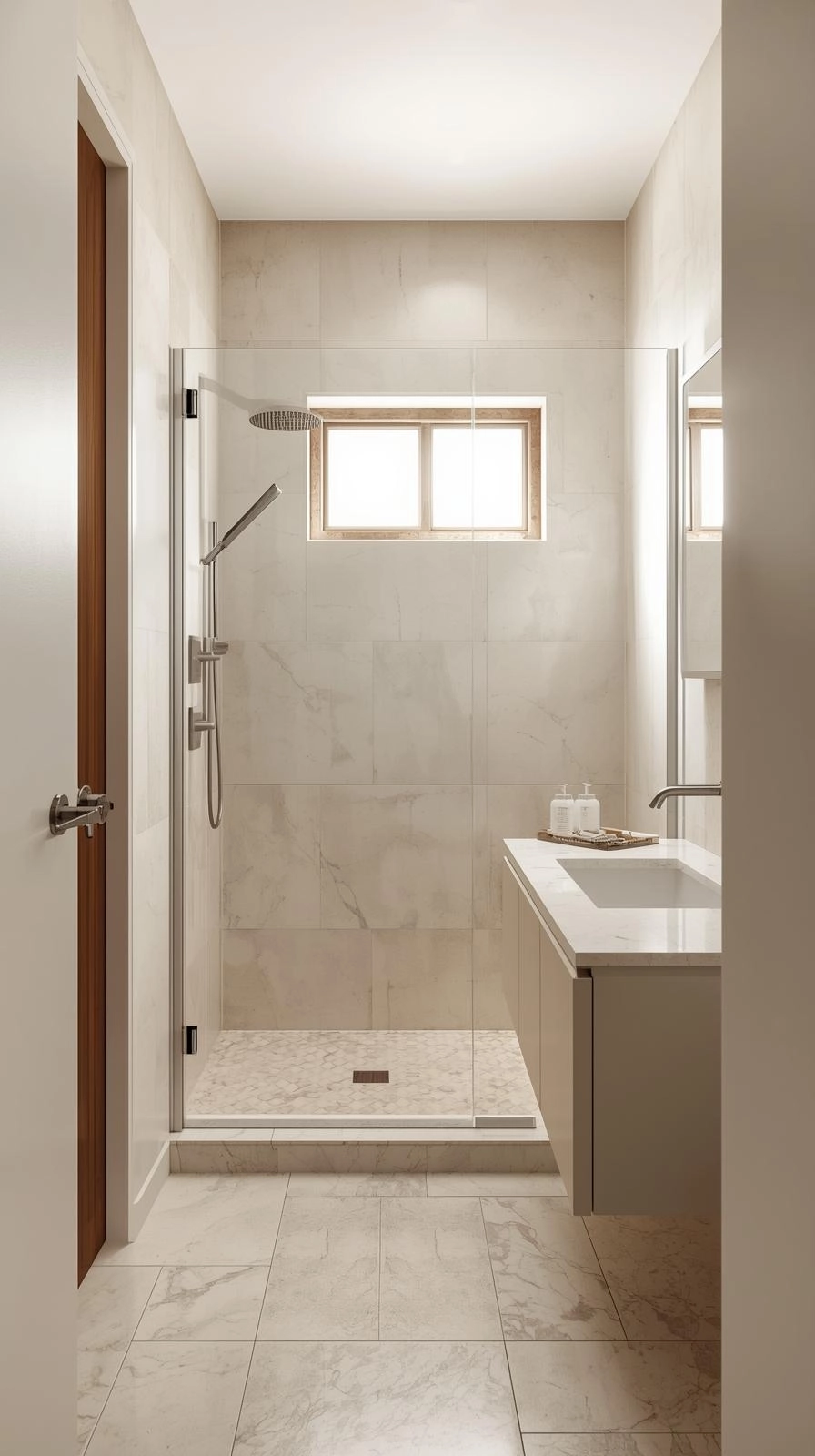
Color plays a major role in how a small bathroom feels. Dark or busy colors absorb light and make walls feel closer. Light colors do the opposite. They reflect light and help the room feel open. In minimalist bathrooms, light does the heavy lifting.
White is often the first choice, but it is not the only one. Soft neutrals like cream, pale beige, or light gray add warmth without visual noise. These colors create a calm base that supports simple lines and clean forms. They also age well, which matters in bathrooms meant to last.
Texture replaces color in minimalist design. Subtle variations in tile finish, stone pattern, or surface sheen add depth without clutter. Natural light strengthens this effect, so windows should be kept as open as privacy allows. The goal is not to decorate the space, but to let it feel larger than it is.
4. Floating Vanities That Free the Floor
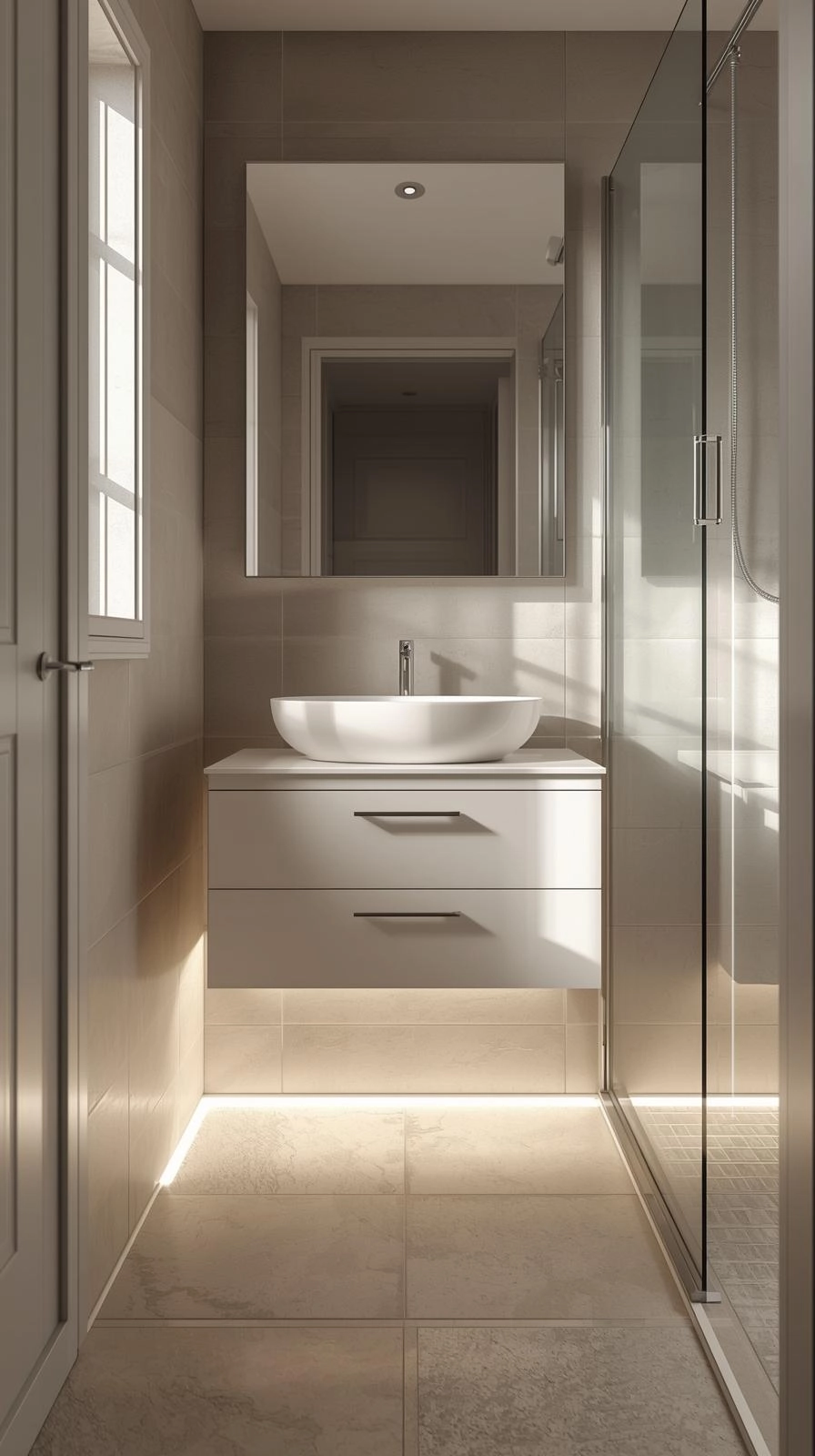
Floor space is precious in small bathrooms. When cabinets sit directly on the floor, they block visual flow and make the room feel heavier. Floating vanities solve this problem by lifting storage off the ground and revealing more floor.
Seeing more floor instantly makes a bathroom feel larger. It also makes cleaning easier and keeps the space feeling lighter. From a minimalist point of view, floating vanities reduce visual weight without removing function.
Simple drawer fronts, hidden pulls, and clean edges keep the vanity from stealing attention. Wall-mounted faucets free up counter space and reduce clutter. Even in very small bathrooms, a slim floating vanity provides enough storage when paired with smart internal organization.
5. Hidden Storage for a Clean Look
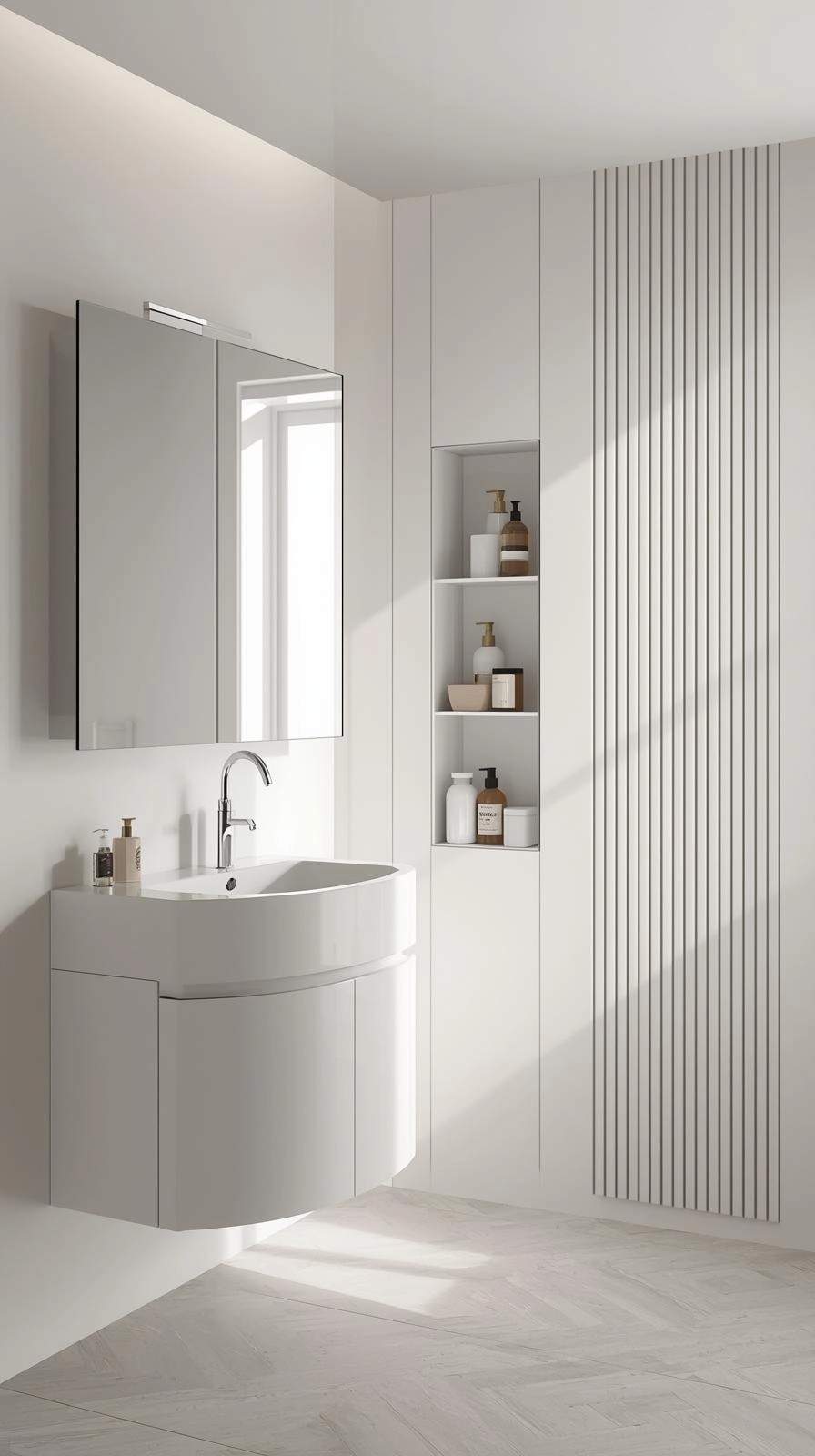
Minimalist bathrooms only work when clutter is controlled. In small spaces, clutter shows fast. Bottles, tools, and towels left in sight quickly overwhelm the room. The solution is storage that disappears into the design.
Recessed medicine cabinets behind mirrors provide storage without taking wall space. Shower niches built into the wall hold essentials without adding shelves. Tall, narrow cabinets can fit into unused corners and blend into the background.
The goal is to keep surfaces as empty as possible. Clear counters and clean shower walls allow the room to breathe. When storage is hidden but easy to access, the bathroom stays functional without looking busy.
6. Natural Materials That Add Warmth
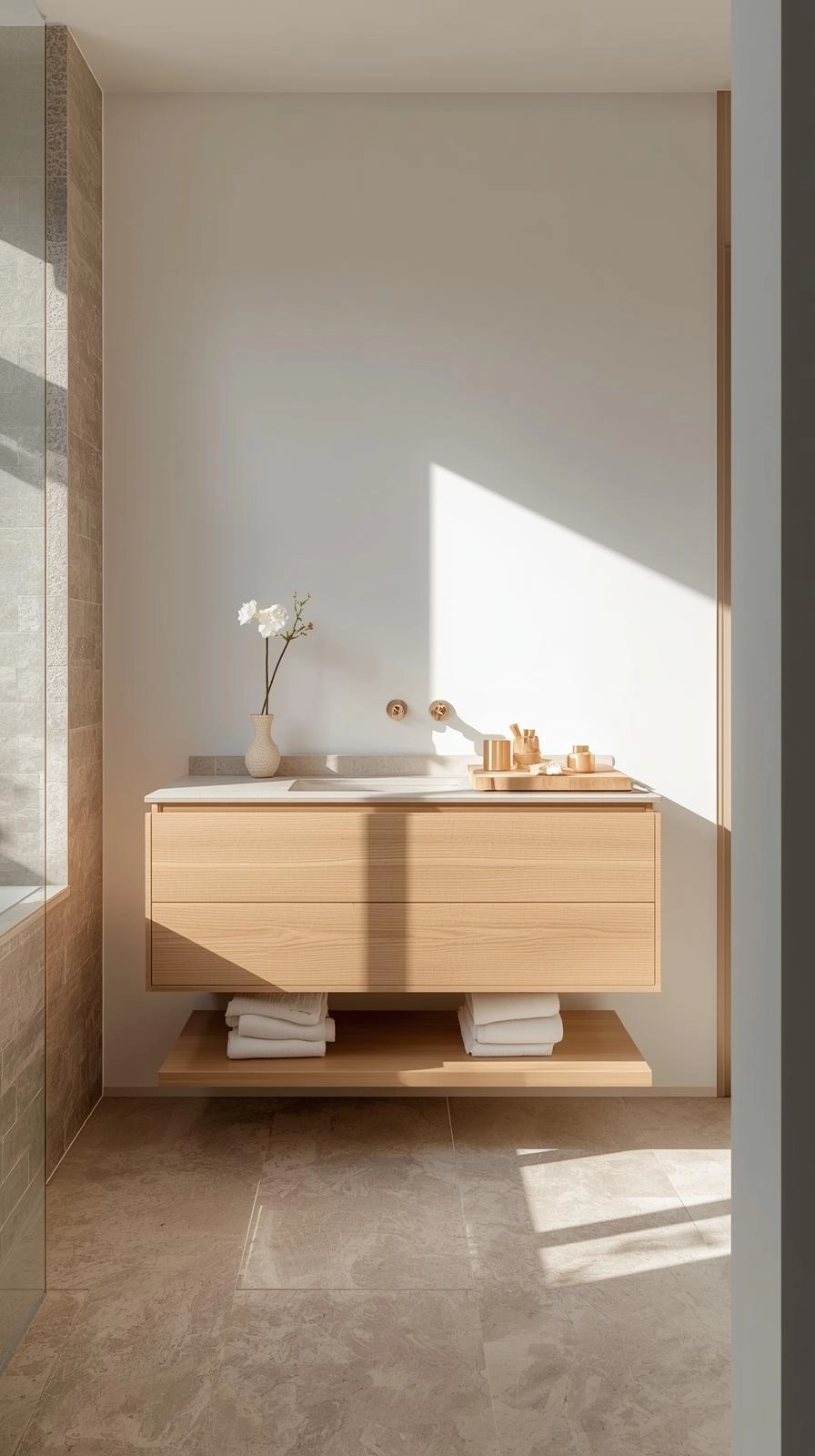
Minimalist bathrooms can feel too sharp if everything is smooth and bright. Natural materials help balance this. Wood, stone, and textured surfaces add warmth and comfort without clutter.
In small bathrooms, restraint matters. One or two natural elements are enough. A light wood vanity, a stone shower floor, or natural fiber accessories bring softness to the space. These materials also age well and feel familiar, which helps the room feel lived in rather than staged.
Natural textures work especially well with light color palettes. They catch light in subtle ways and add depth without pattern overload. When used sparingly, they make minimalist bathrooms feel calm instead of cold.
7. Large Mirrors That Expand the View
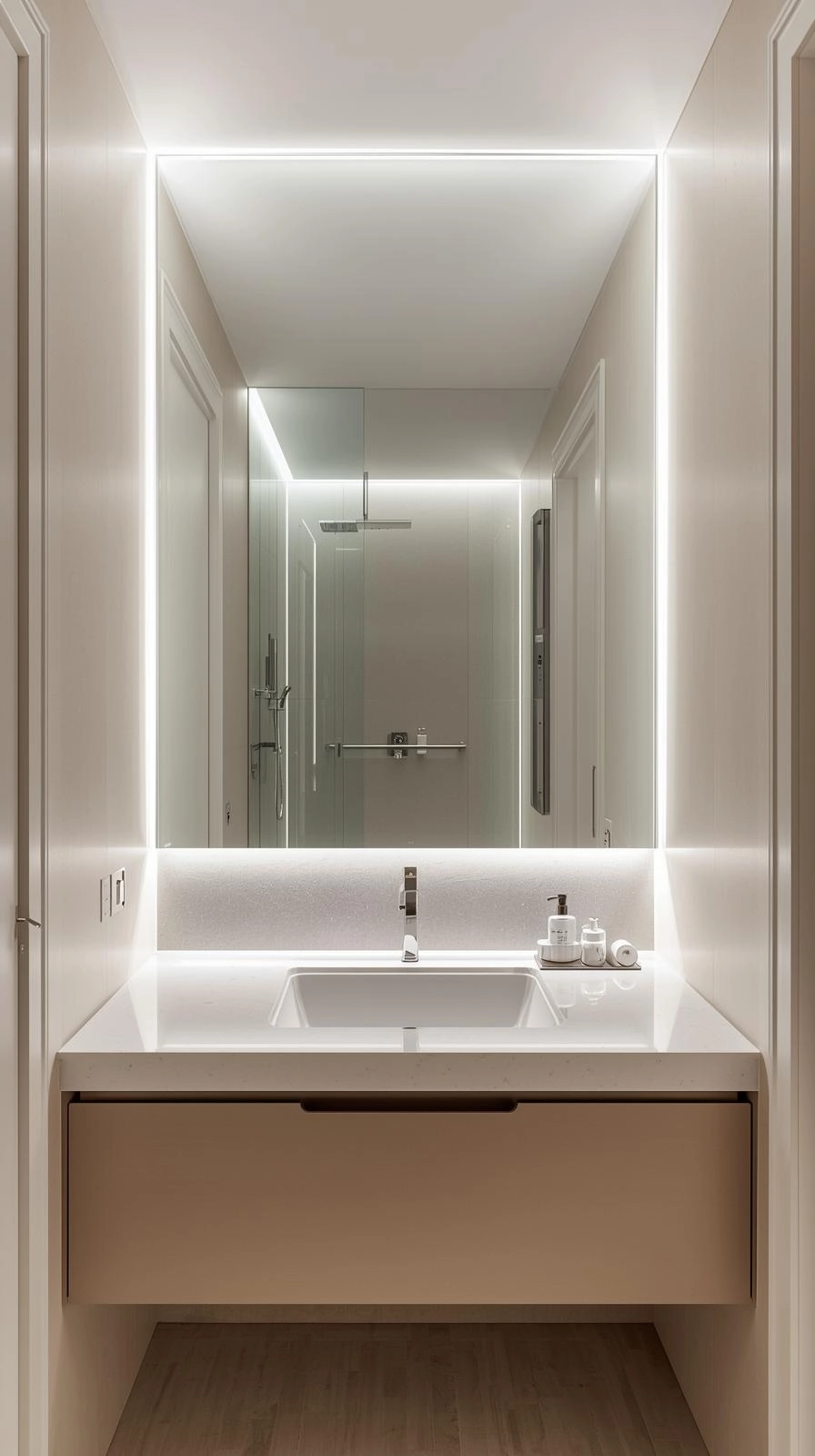
Mirrors are essential in small bathrooms, but in minimalist design, they do more than reflect faces. They reflect space. A large mirror without a heavy frame visually doubles the room and spreads light across surfaces.
Running a mirror wall to wall above the vanity removes visual breaks. The bathroom feels wider and more open. When mirrors reflect the shower, the room gains depth without adding square footage.
Hidden lighting behind mirrors adds softness and avoids extra fixtures. This keeps walls clean while improving function. The mirror becomes both a tool and a design feature, without calling attention to itself.
8. Compact Fixtures That Save Space
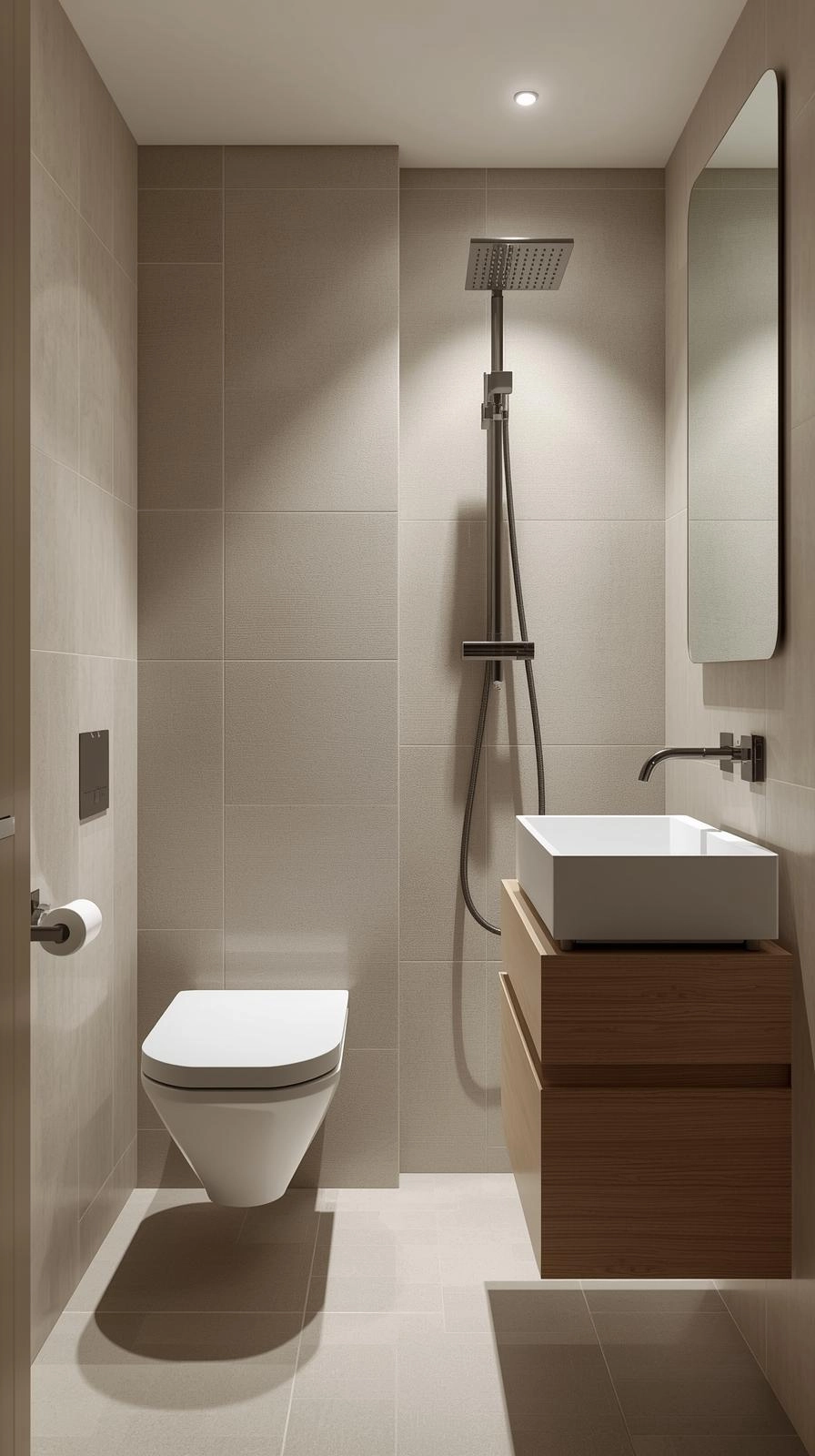
In small bathrooms, oversized fixtures quickly overwhelm the space. Minimalist design depends on scale. Every piece should feel right for the room, not borrowed from a larger bathroom.
Compact toilets, shallow sinks, and slim shower fixtures keep proportions balanced. Wall-mounted toilets free up floor space and improve flow. Smaller basins with clean lines work better than deep, bulky sinks.
In the shower, fixtures should stay close to the wall. Ceiling-mounted showerheads remove visual clutter and keep lines clean. Controls that sit flush with the wall avoid extra shapes. When fixtures respect scale, the room feels balanced instead of crowded.
9. Smart Lighting That Sets the Tone
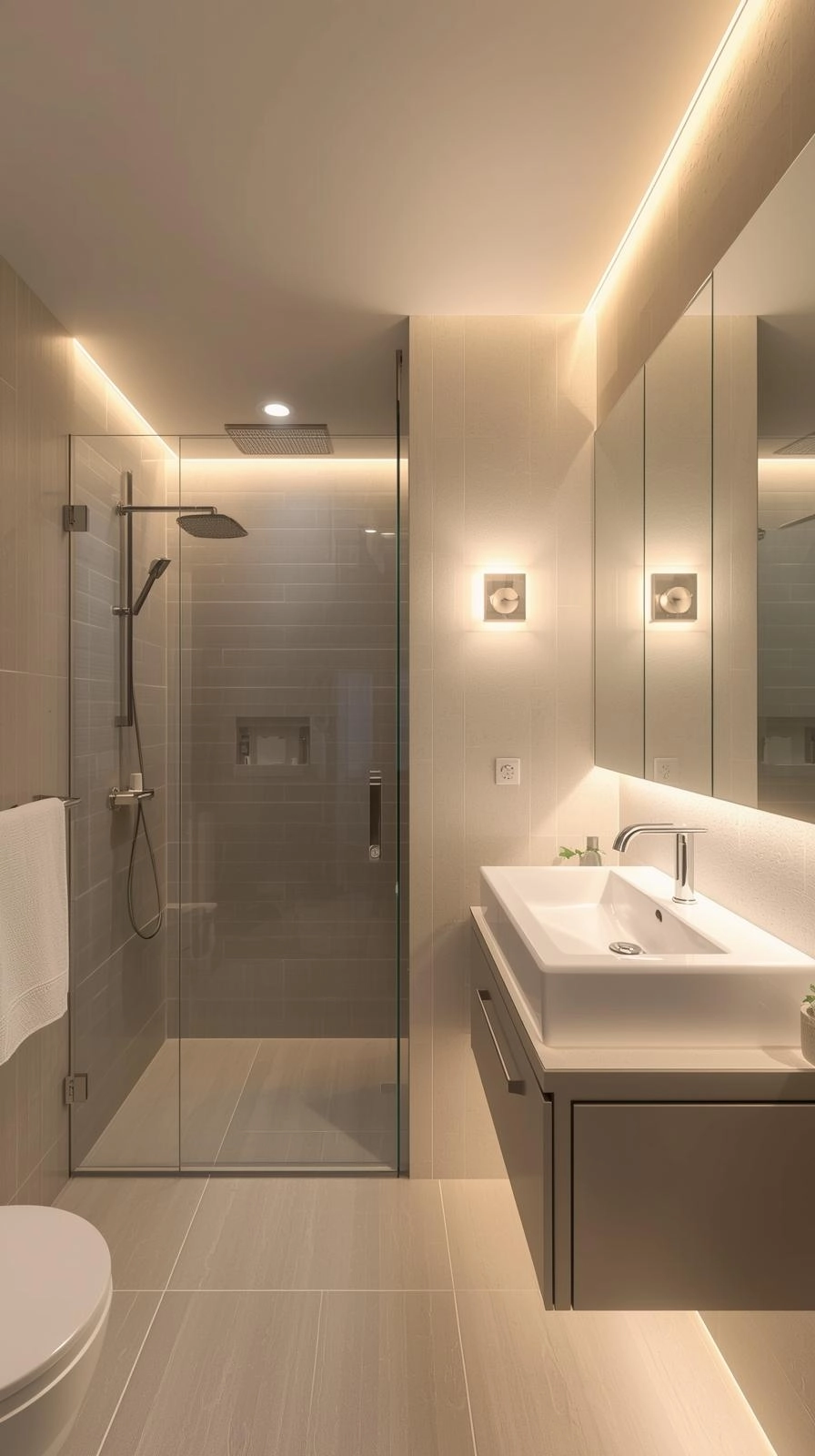
Lighting in small bathrooms should support both function and mood. Single overhead lights often create harsh shadows and flatten the space. Minimalist bathrooms benefit from layered lighting that feels soft and even.
Recessed ceiling lights provide general light without clutter. Lighting inside the shower improves safety and comfort. Hidden LED strips under vanities or behind mirrors add depth and warmth.
Lighting fixtures themselves should be simple. The light should be felt, not seen. When lighting supports the design quietly, the bathroom feels calm and usable at all hours.
10. Simple Layouts That Maximize Flow
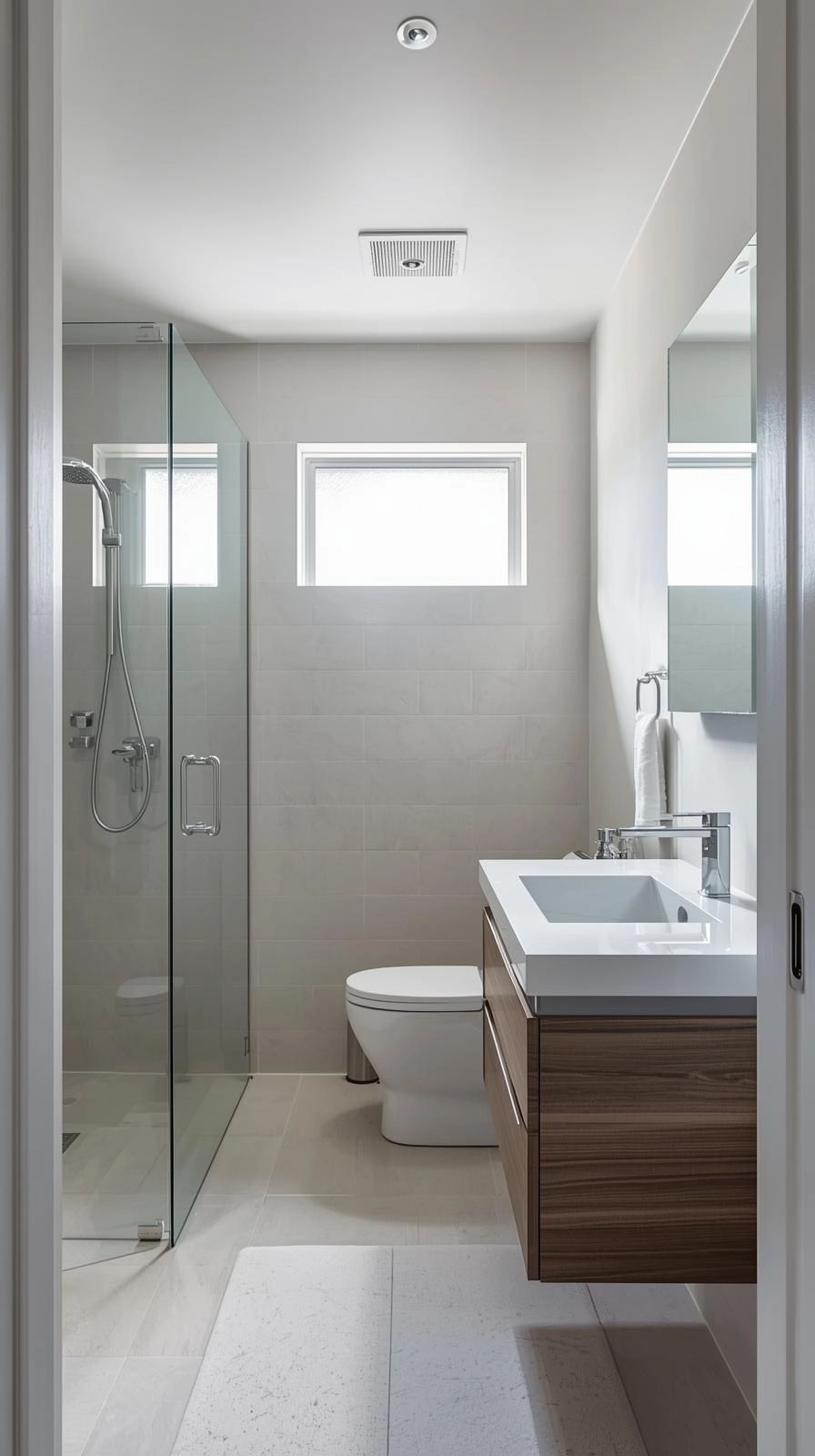
No design choice matters more than layout. In small bathrooms, a poor layout causes daily frustration. A well-planned layout makes the space feel easy and natural to use.
Keeping fixtures aligned along walls improves flow. Placing the shower at one end with clear glass allows the rest of the room to stay open. Avoiding unnecessary turns or tight clearances makes movement easier.
A good layout does not try to force too much into the room. It respects limits and works within them. When everything has room to function properly, the bathroom feels bigger even if it isn’t.
Conclusion
Minimalist design is not about removing comfort. It is about removing stress. In small bathrooms, this matters more than anywhere else in the home. When design choices are clear and intentional, the room feels calm instead of crowded.
After decades of working with small spaces, I’ve seen how minimalist showers transform bathrooms. Glass opens the room. Light colors expand it. Floating fixtures free it. Hidden storage calms it. Each choice supports the next.
A small bathroom does not have to feel tight or frustrating. With thoughtful planning and restraint, it can feel clean, open, and easy to use. Minimalism is not a trend. It is a practical approach that helps small bathrooms work better every day.