12+ Modern Small Bathroom Design Ideas

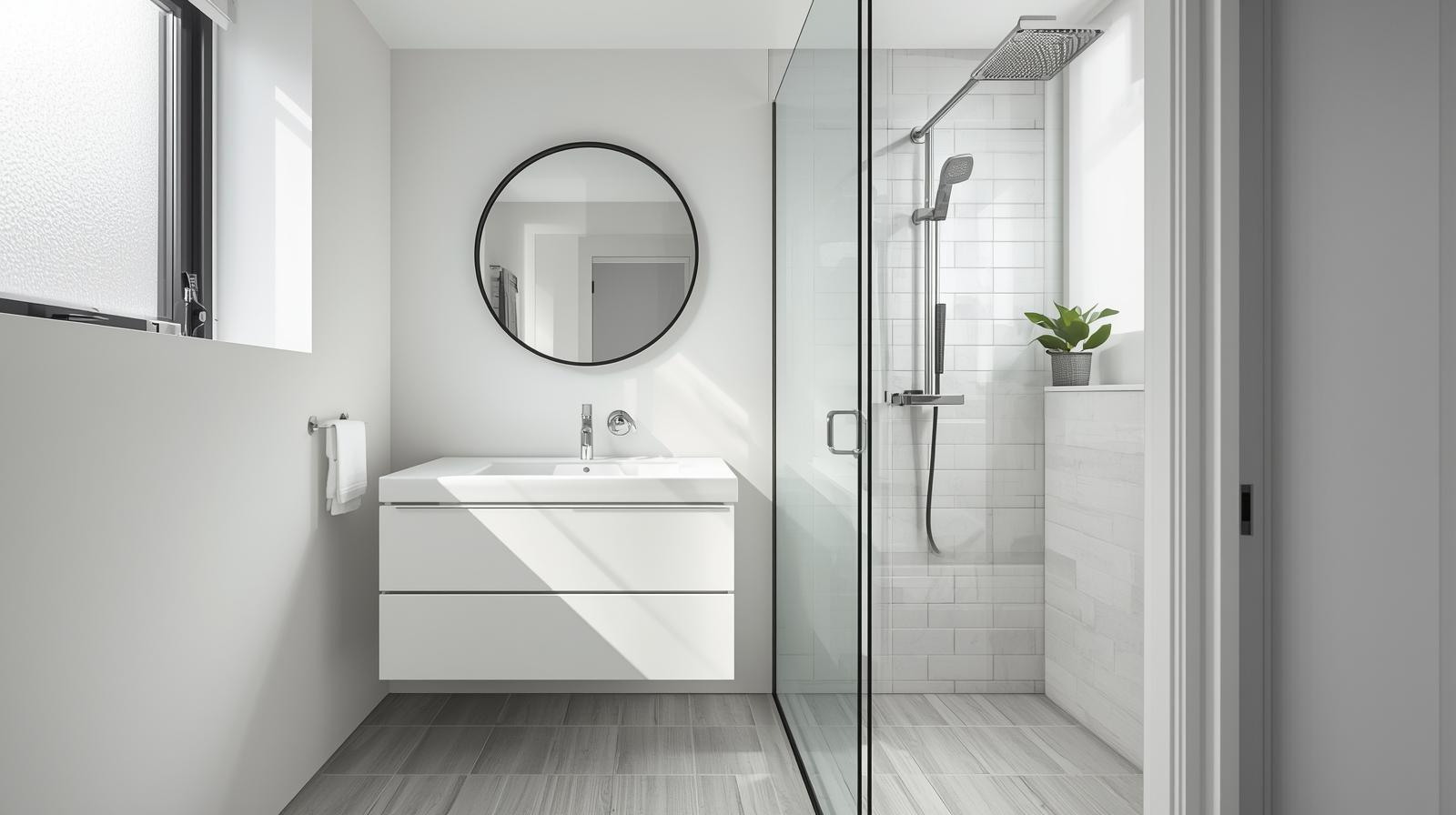
1. Modern Small Bathrooms Begin with Smart Layouts
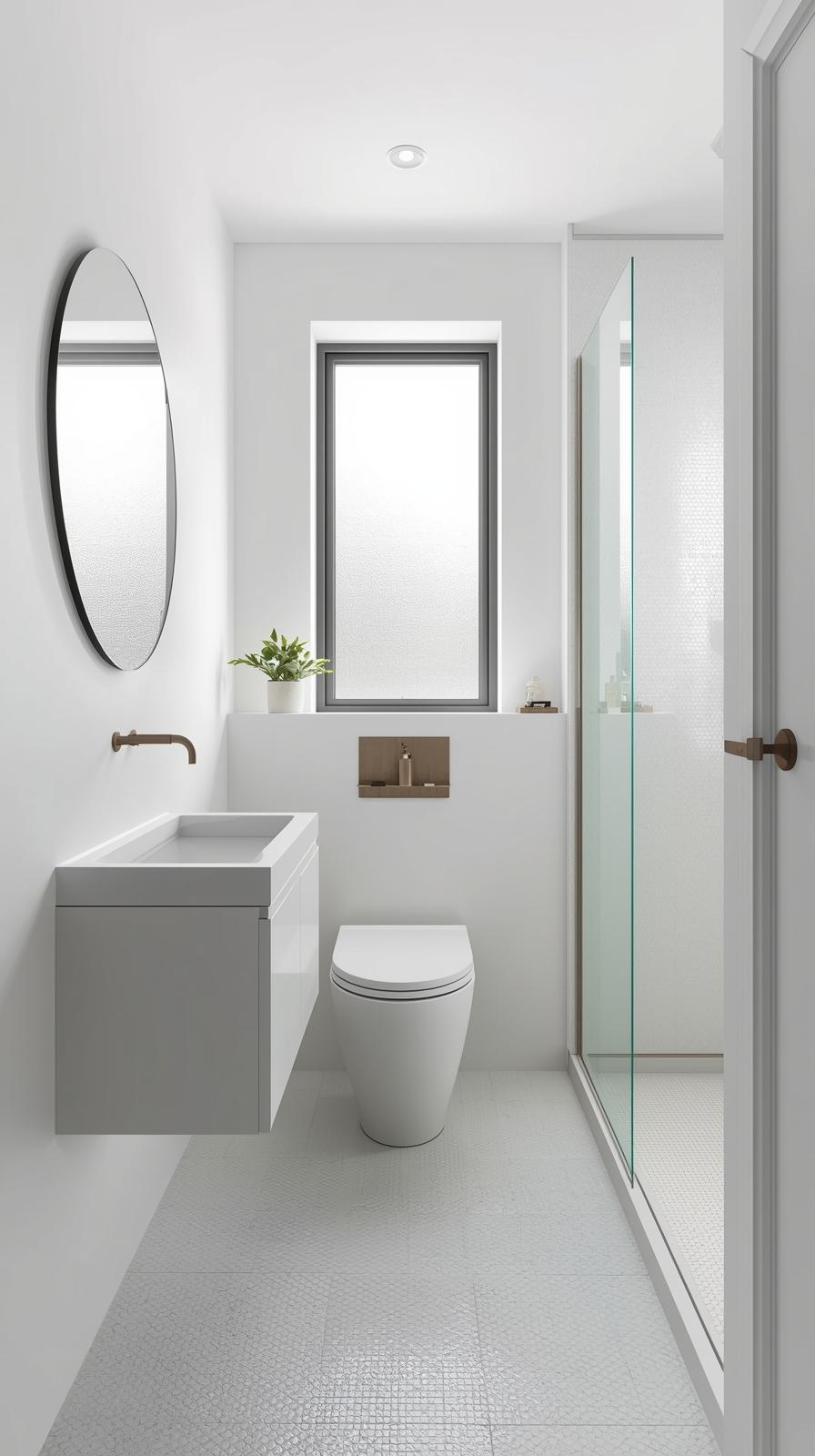
Every successful modern small bathroom starts with a smart layout. When space is limited, each inch must serve a purpose. A modern layout avoids wasted areas while keeping the room feeling open and comfortable. Placing the sink and toilet along a single wall supports efficient plumbing and creates a clear visual line, which helps the room appear larger. Corner showers are often ideal because they free up the center of the room. Instead of forcing fixtures into tight spots, it helps to focus on movement, door swing, natural light, and how the space is actually used. Once the layout feels natural and easy, the rest of the design comes together smoothly.
2. The Role of Light in a Modern Small Bathroom

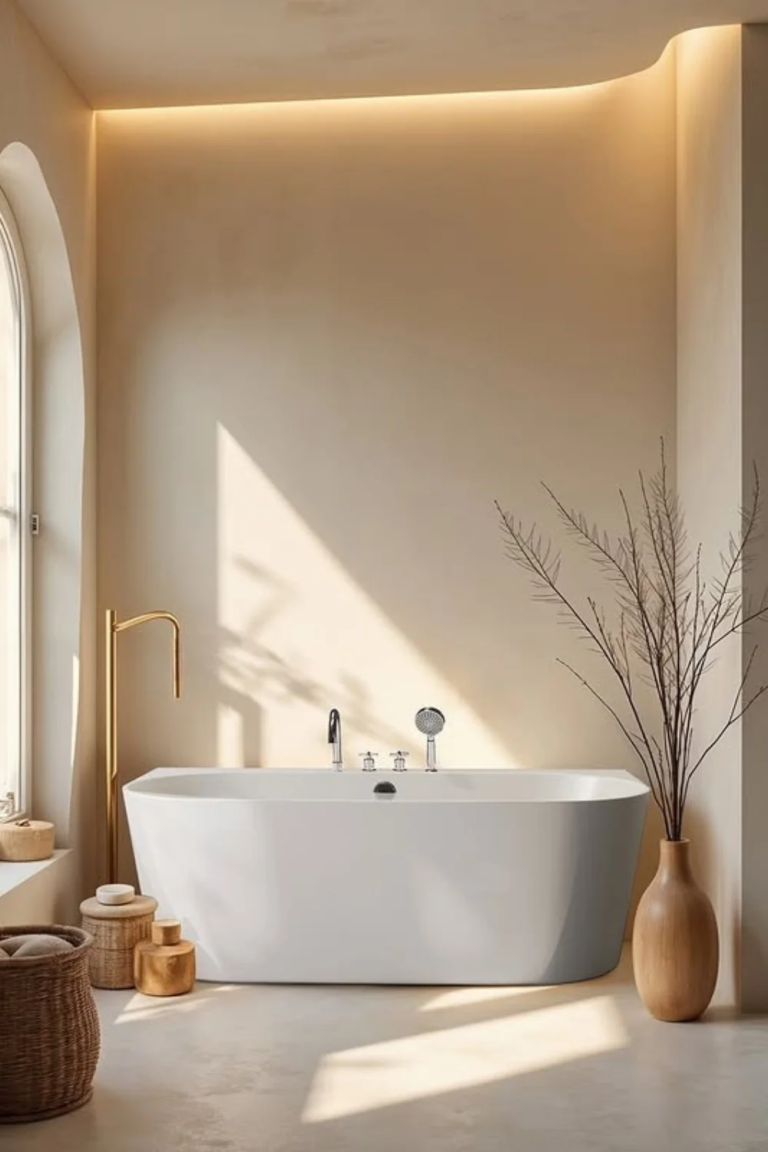
Light has a powerful effect on small bathroom. A dark room feels closed in, while a well-lit one feels open and breathable. Natural light is the most valuable element. Even a small window can make a big difference when paired with frosted glass that allows daylight while maintaining privacy. Mirrors placed opposite the light source help spread brightness throughout the room. Artificial lighting should be layered rather than relying on a single ceiling fixture. Wall lights near the mirror reduce harsh shadows, while recessed or under-cabinet lighting adds depth without clutter. In modern bathrooms, balanced lighting creates a space that feels both functional and calming.
3. Choosing Colors That Expand the Space
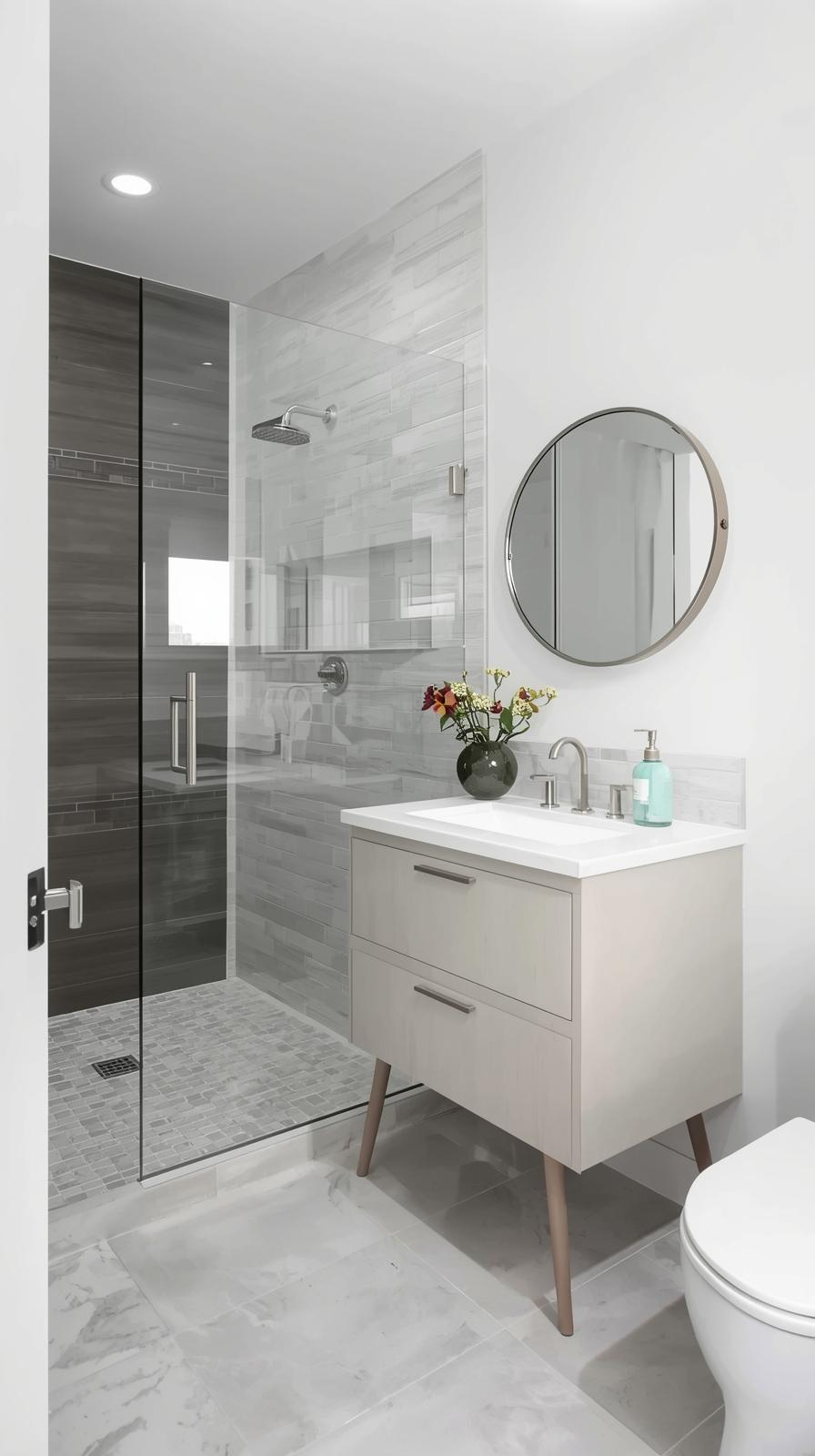
Color plays a direct role in how large a bathroom feels. Modern small bathrooms often rely on lighter tones to open up the space. Soft whites, pale grays, and gentle beige shades reflect light and visually push walls outward. This does not mean the room must feel flat or boring. A darker accent wall in shades like navy or charcoal can ground the space without making it feel smaller. Balance is key, with lighter surfaces doing most of the work and darker tones used with purpose. Even grout color matters, as lighter grout blends surfaces while darker grout adds contrast and structure. When color is treated as part of the design structure, the room gains depth and clarity.
4. The Power of Minimalist Fixtures

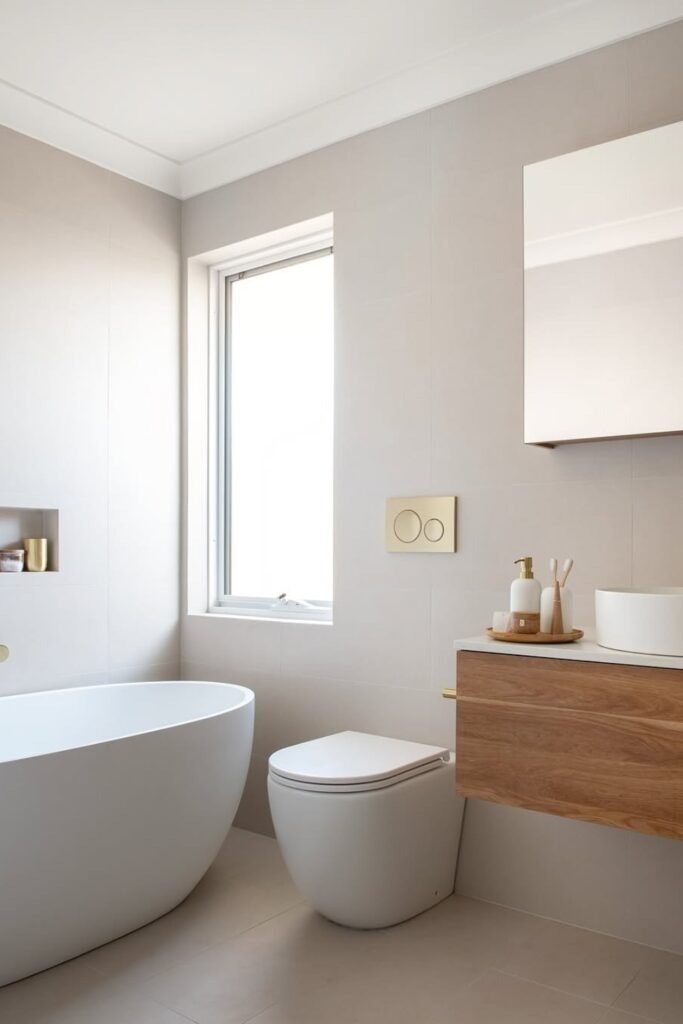
Large fixtures can overwhelm a small bathroom quickly. Modern design solves this problem through minimal, streamlined choices. Wall-mounted vanities, floating toilets, and slim-profile sinks open up the floor and reduce visual weight. While pedestal sinks can work, floating vanities offer added storage while maintaining a clean look. Glass shower doors instead of curtains continue the open feel by removing visual barriers. The result is a bathroom that feels lighter, more organized, and easier to move through. In small spaces, fewer bulky elements create a greater sense of freedom.
5. Storage That Doesn’t Steal Space
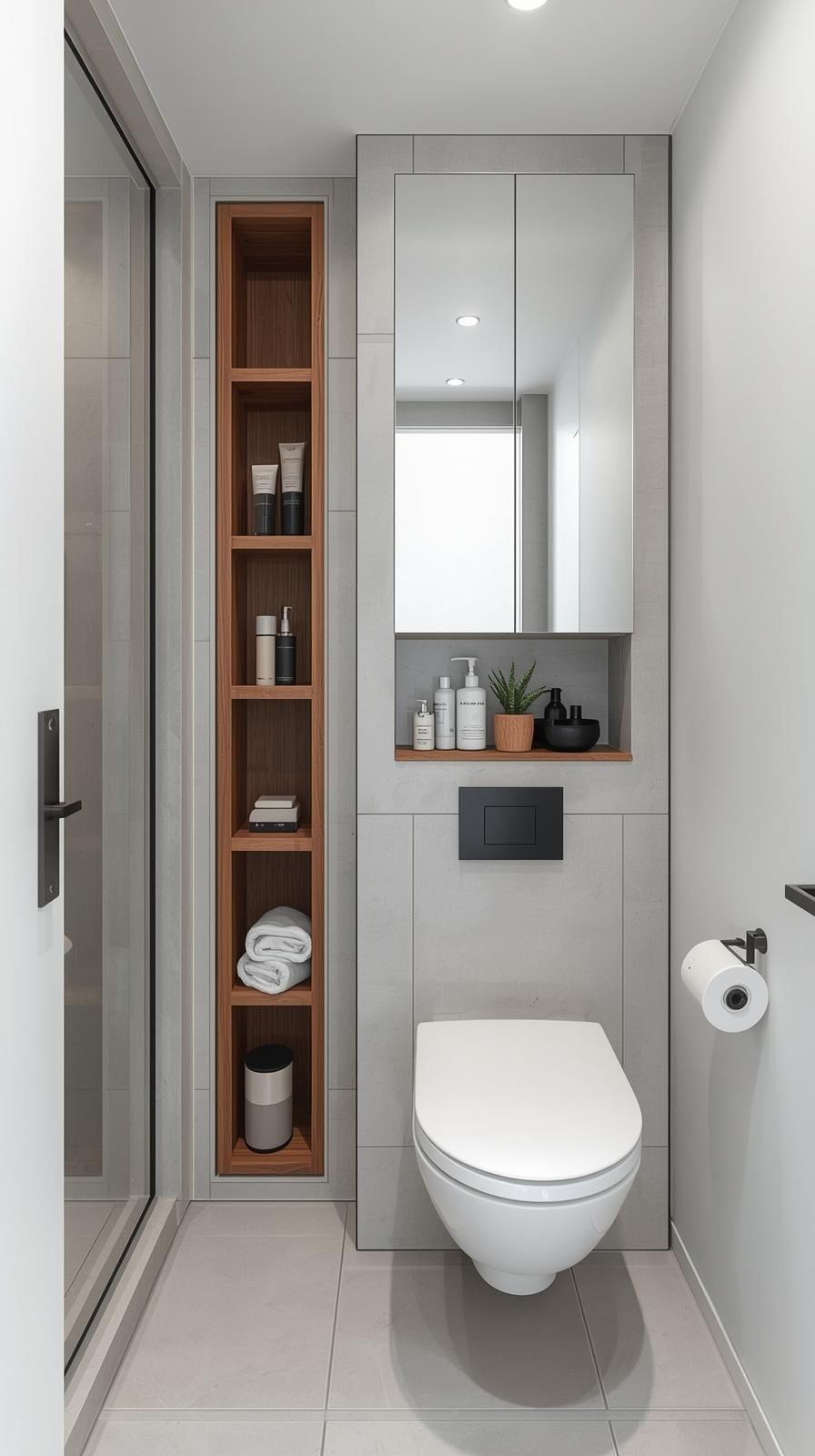
Storage is often the biggest challenge in a small bathroom. Modern design avoids heavy cabinetry that makes the room feel closed in. Vertical solutions work best, such as tall shelves, mirrored medicine cabinets, or recessed wall niches. Open shelving adds function while also serving as a design feature when kept simple. When storage is built into the walls or architecture, it feels intentional rather than added later. Even a narrow shelf above or behind the toilet can hold daily items without disrupting the flow. The goal is practical storage that blends into the space instead of competing with it.
6. Materials That Bring Modern Warmth

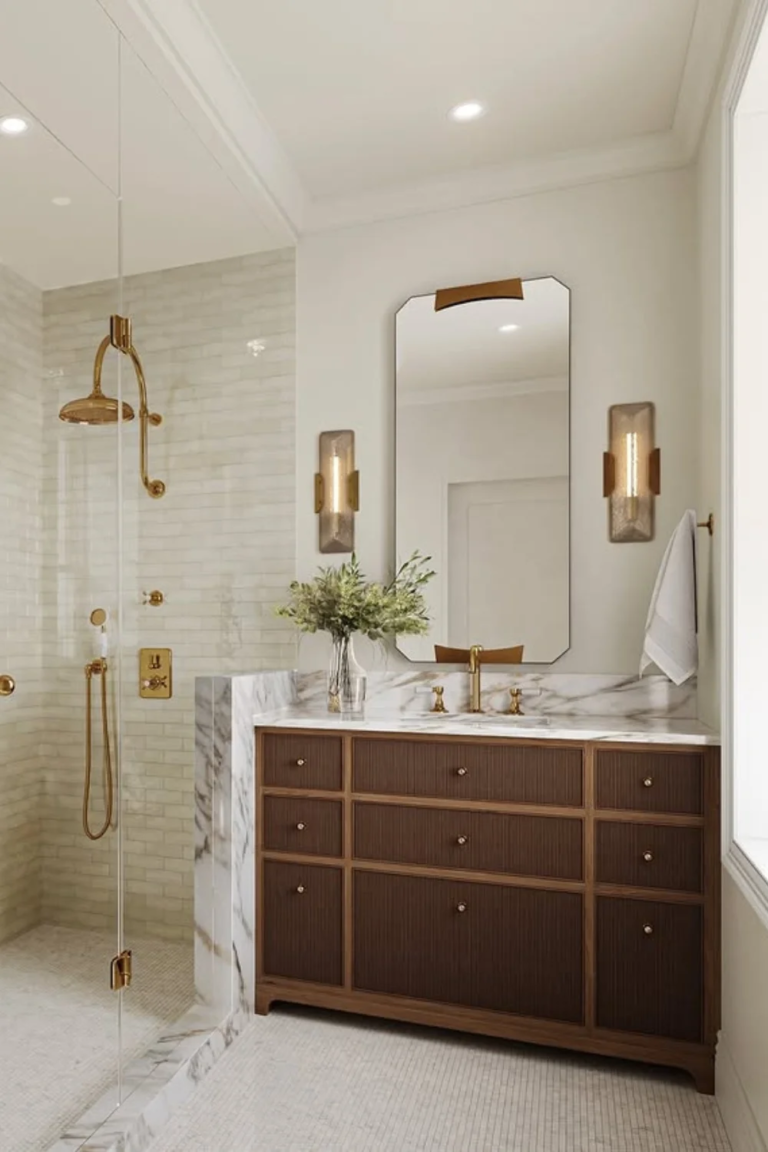
Modern small bathrooms benefit from materials that feel clean but not cold. Stone-look tiles, warm wood finishes, and soft matte surfaces create balance. Glossy finishes reflect light and brighten the room, while matte textures add calm and depth. Using the same material across walls and floors can make the space feel larger by reducing visual breaks. Wood elements on vanities or shelving bring warmth and prevent the room from feeling too sterile. Metal accents in black or brass add contrast and subtle detail. A modern bathroom should feel current while still being welcoming.
7. Showers That Feel Larger Than They Are
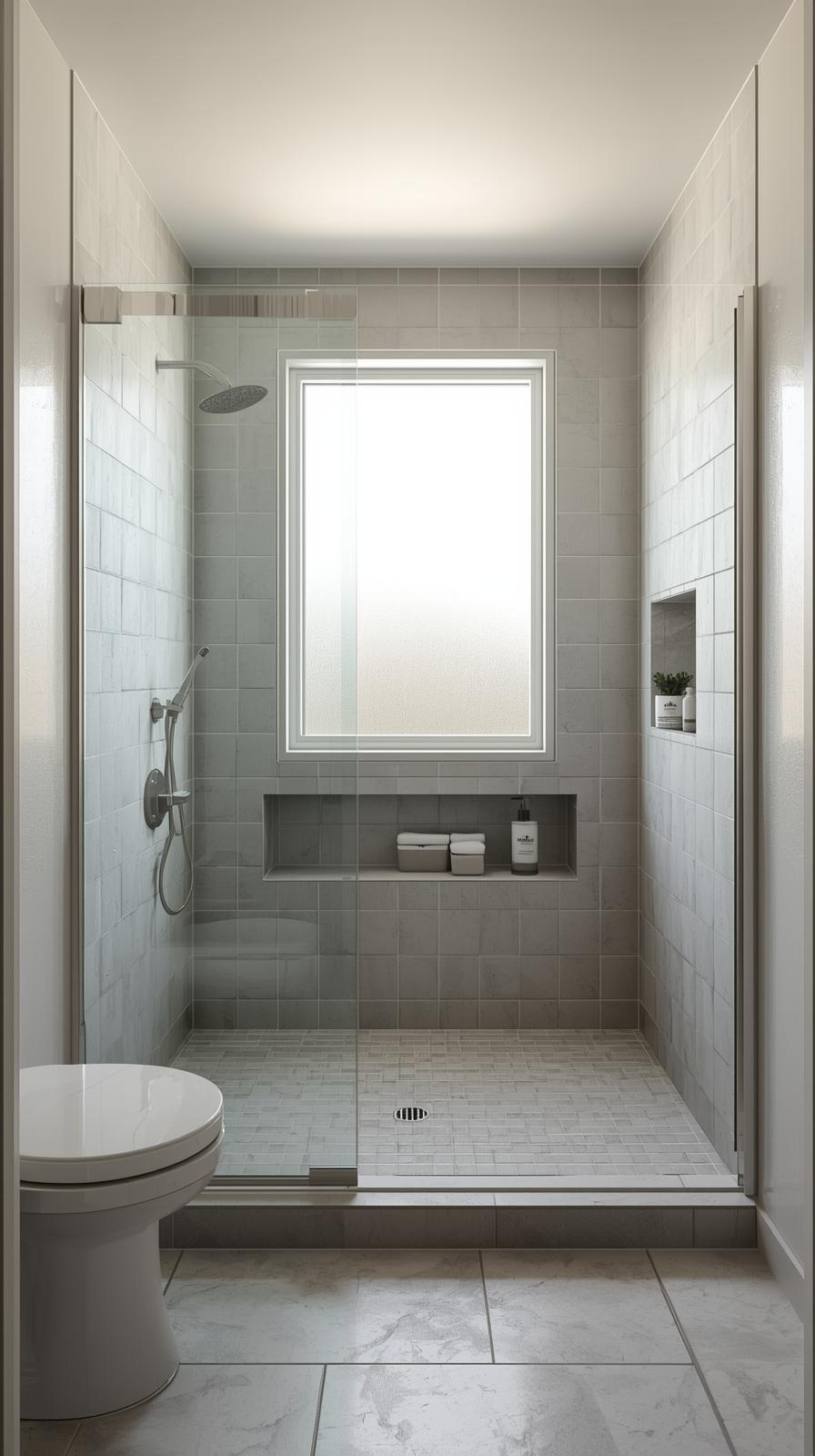
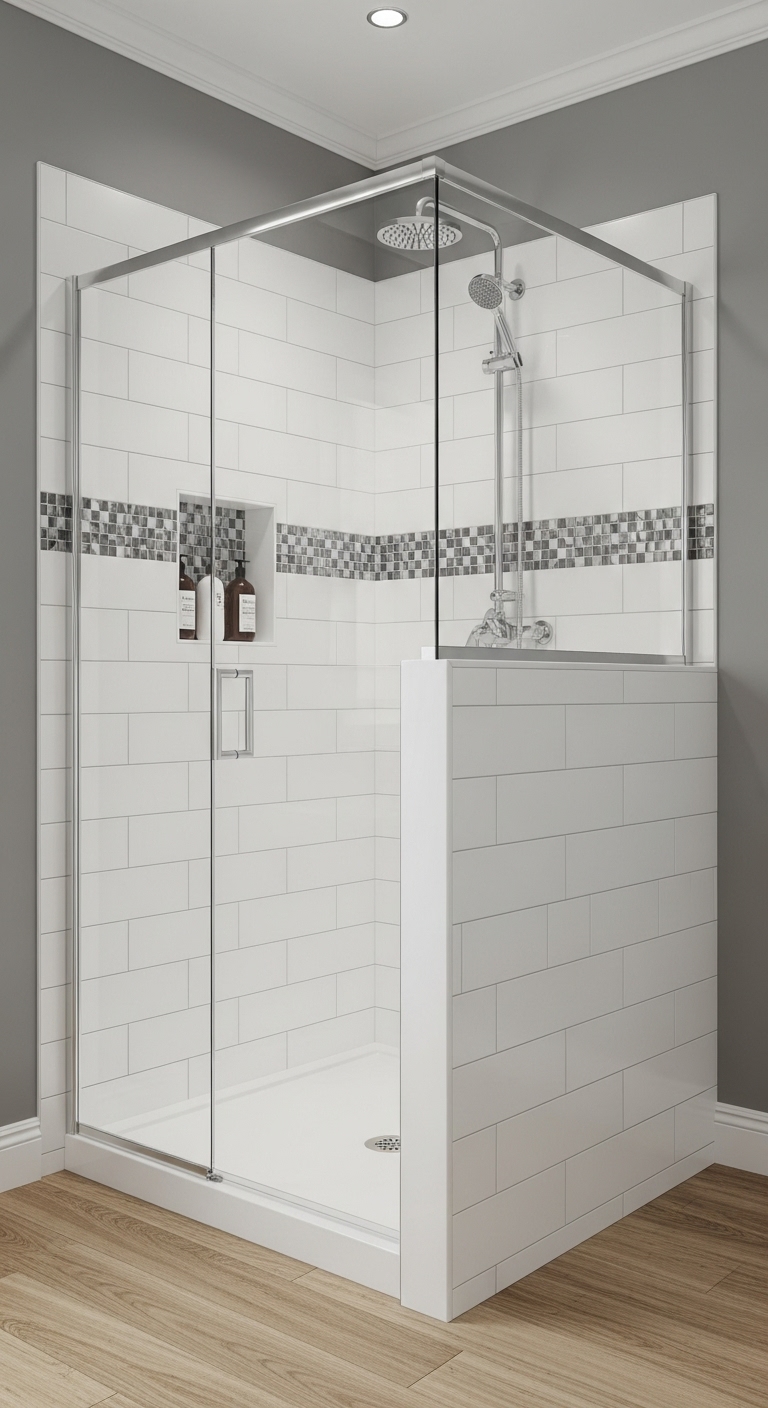
The shower often takes up the most space in a small bathroom, so modern design focuses on openness. Frameless glass enclosures remove visual barriers and allow light to flow freely. Walk-in showers without steps further increase the sense of space while also improving accessibility. Large-format tiles inside the shower reduce grout lines and create a smooth, continuous look. Built-in niches keep toiletries organized without adding bulky accessories. With thoughtful design, even a compact shower can feel open, clean, and relaxing.
8. Mirrors That Do More Than Reflect

Mirrors are one of the most effective tools in a small bathroom. They reflect light, extend sightlines, and enhance modern design. A large mirror above the vanity adds depth and makes the room feel wider. Round mirrors soften sharp lines, while rectangular mirrors emphasize structure and order. In some modern bathrooms, wall-to-wall mirrors blur boundaries almost completely. Mirrors with built-in LED lighting combine function with style. In a small space, a well-placed mirror can completely change how the room feels.
9. Floors That Work Hard in Small Spaces
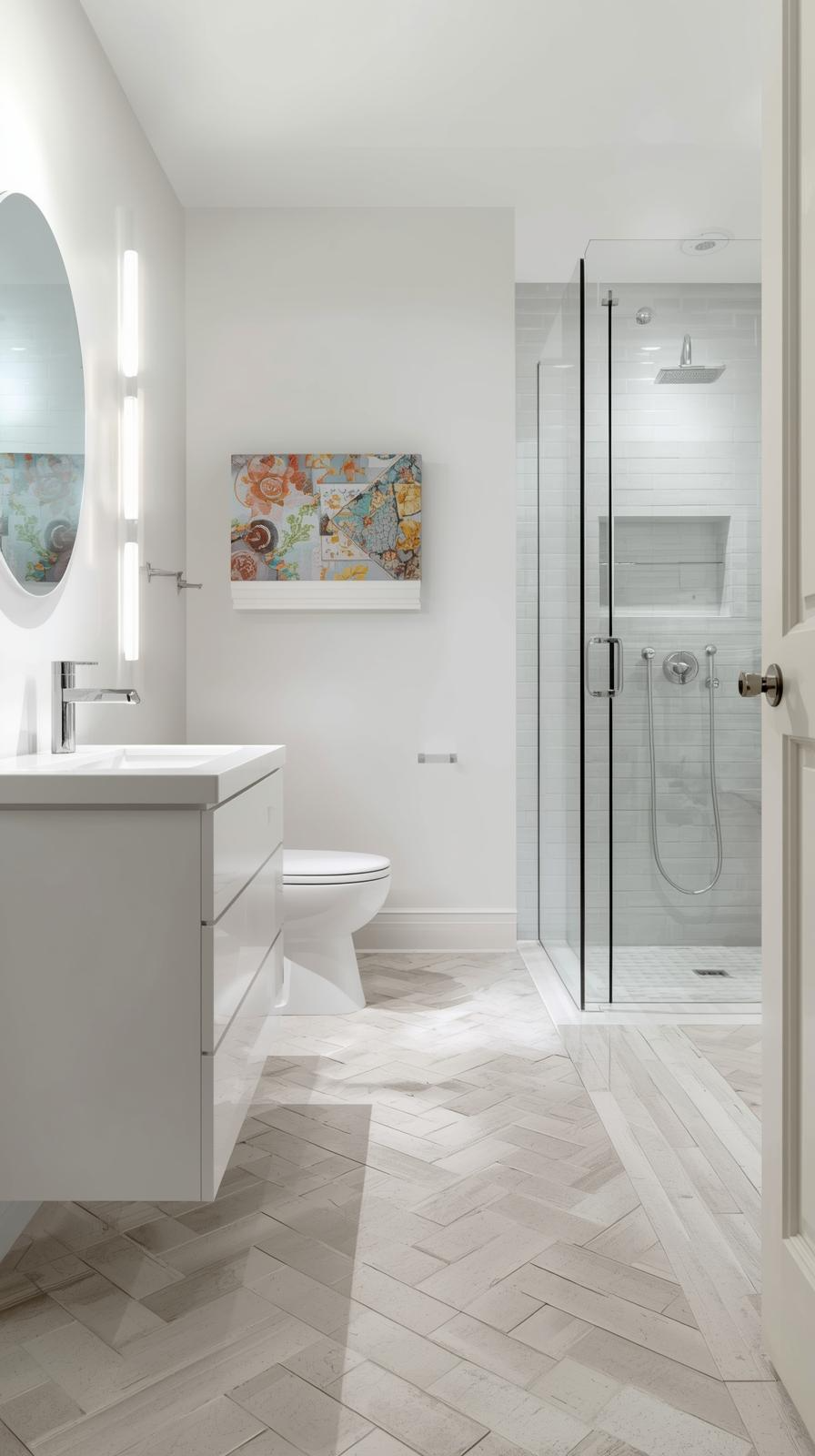
Bathroom flooring plays a bigger role than many realize. Light-colored floors help extend the walls visually, while patterned tiles add interest without clutter. Layouts like herringbone or chevron guide the eye and make the room feel longer. Large tiles often work better than small ones because they reduce grout lines and create a cleaner surface. Heated floors add comfort and luxury without taking up visible space, making them a smart choice for modern small bathrooms.
10. Bringing Nature into the Bathroom
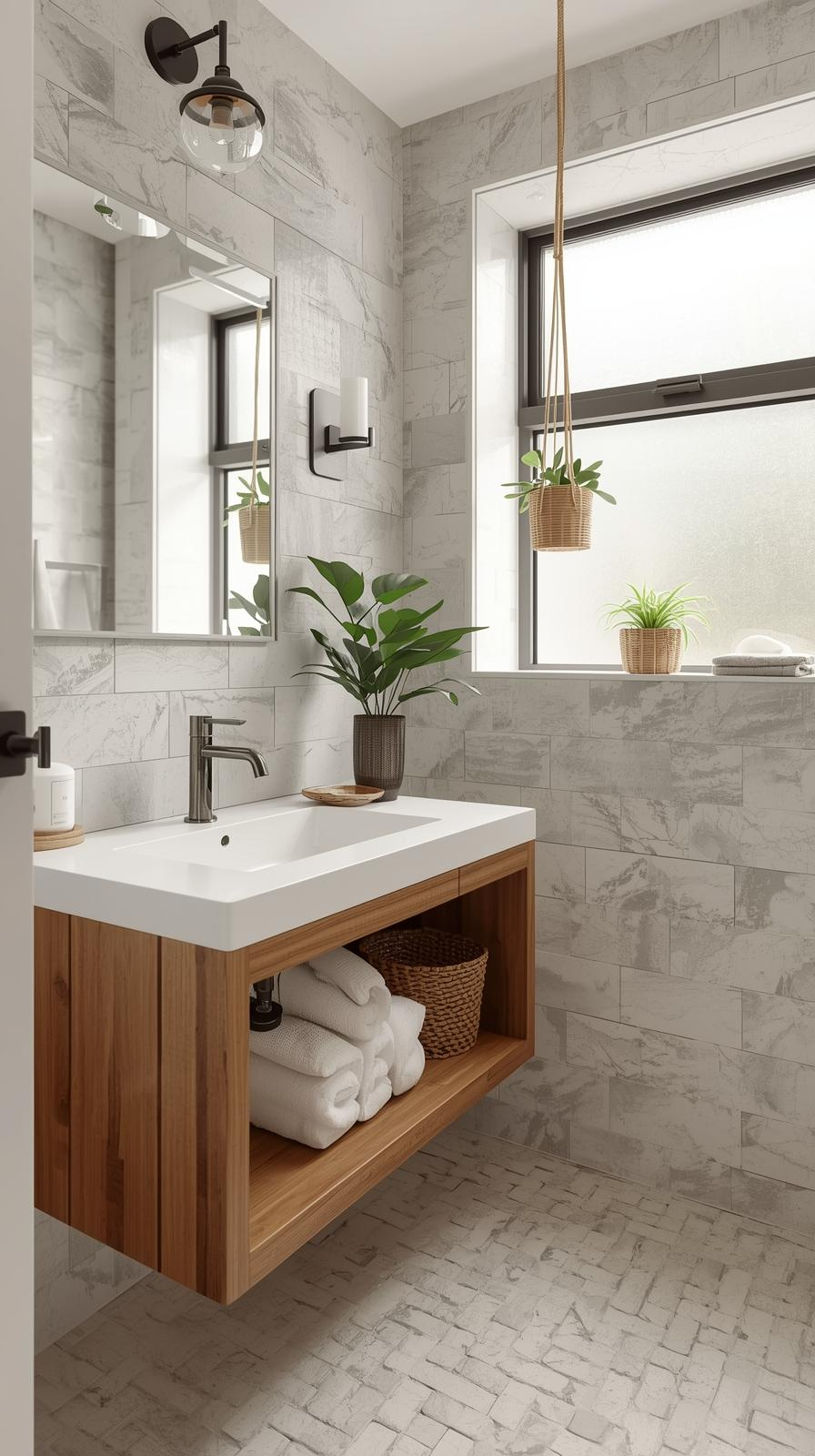
Natural elements help soften modern design in small bathrooms. Plants thrive in bathroom humidity and bring life into the space. A single plant on a shelf or a hanging planter can refresh the entire room. Natural materials like wood, stone, or bamboo accessories balance sleek fixtures and clean lines. This blend of organic and modern elements creates harmony and makes the bathroom feel more like a retreat than a utility room.
11. Personal Touches That Keep It Human
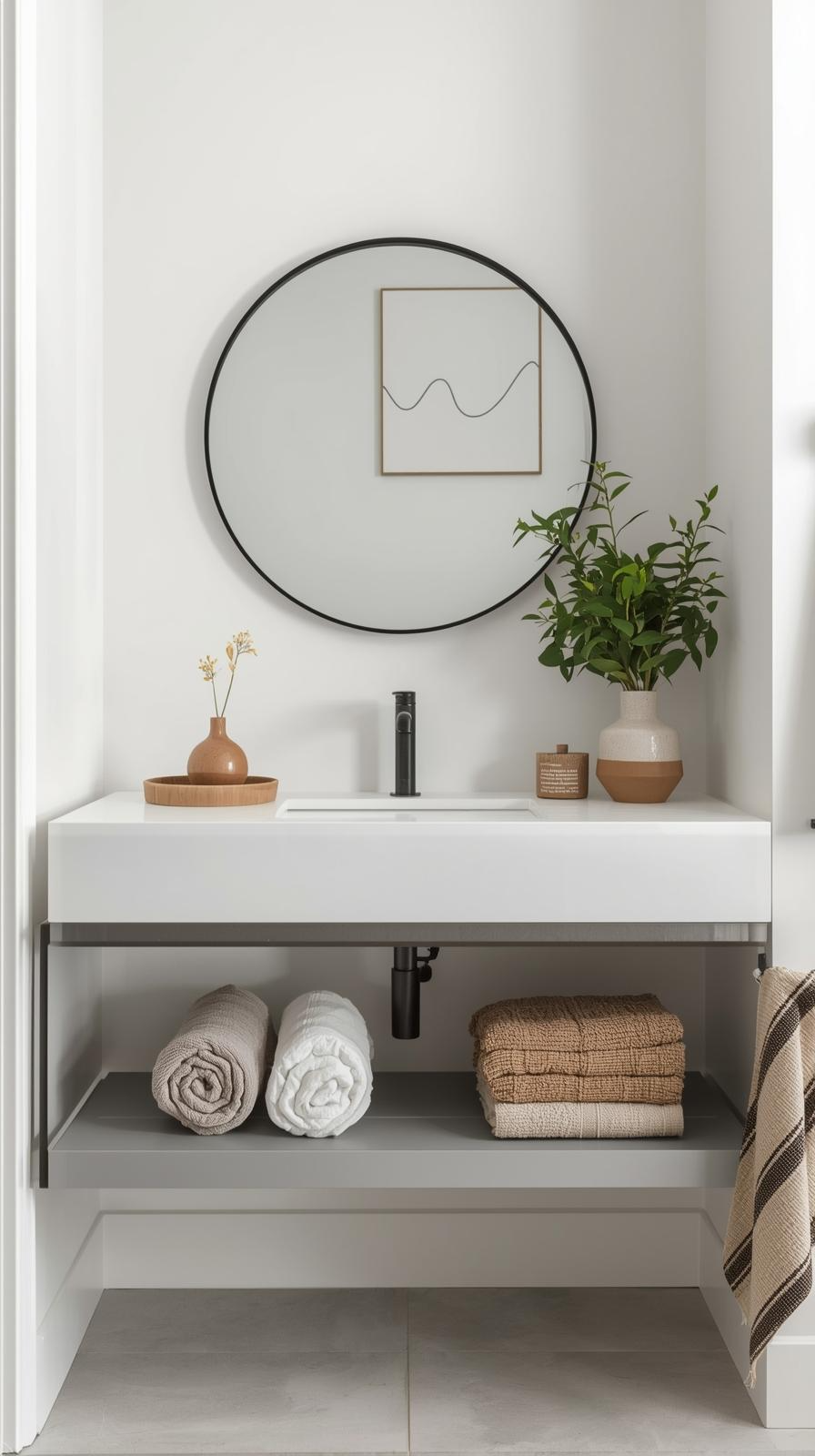
Even the most modern bathroom needs personality. Small bathrooms should feel like part of the home, not just functional spaces. Artwork, textured towels, or handmade décor add warmth and individuality. These details help the space feel lived in and comfortable. Since bathrooms are where the day often begins and ends, personal touches matter. Keeping them minimal ensures they enhance the design without creating clutter.
12. Technology in a Modern Small Bathroom
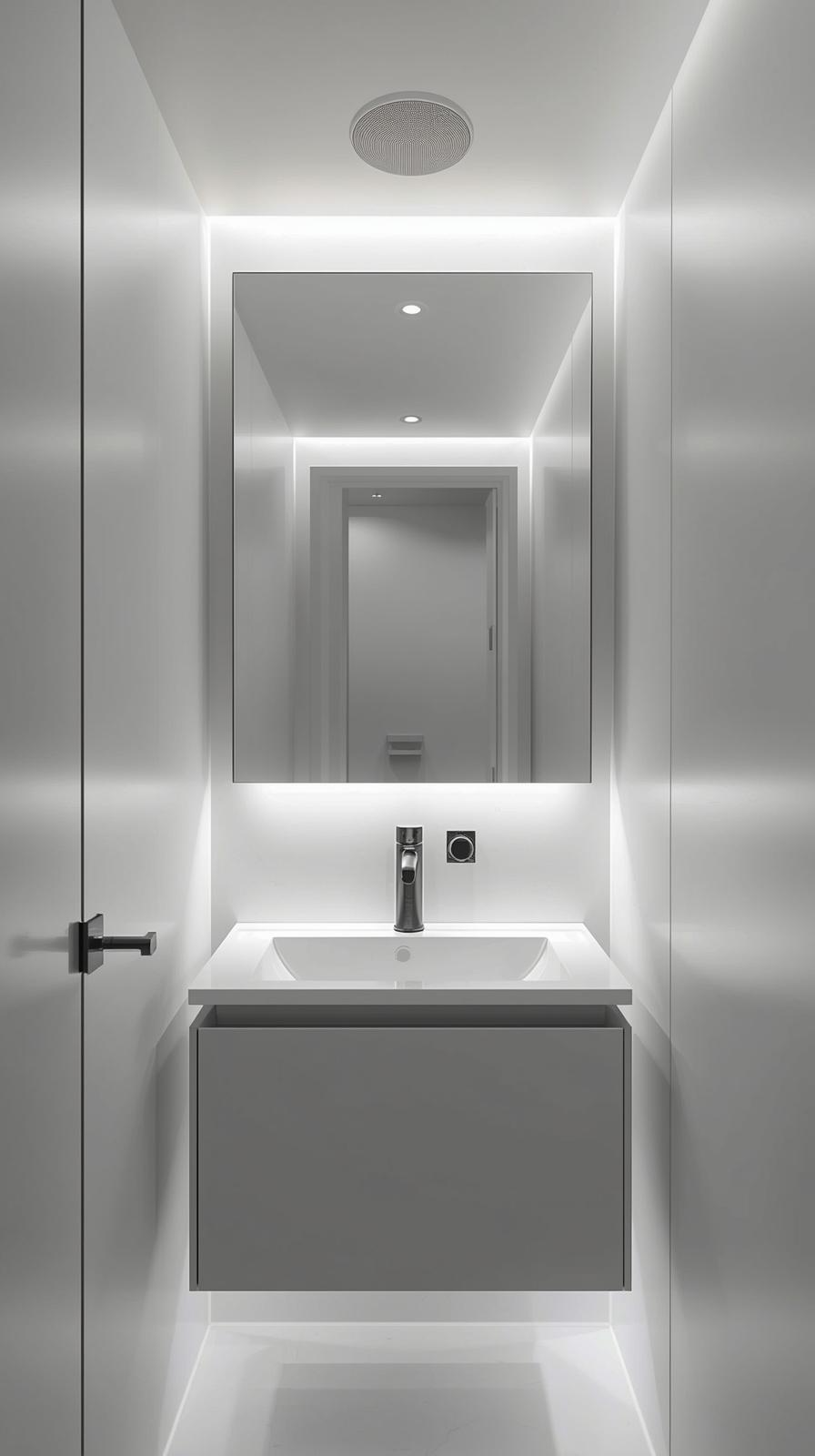
Modern bathrooms can be compact and advanced at the same time. Heated mirrors that resist fog, touchless faucets, and smart lighting systems add comfort and convenience. In small spaces, technology often replaces bulkier features. Built-in speakers, for example, save counter space while adding enjoyment. Motion-sensor lighting improves usability and efficiency. When thoughtfully integrated, technology supports both design and daily use.
13. The Importance of Cohesion
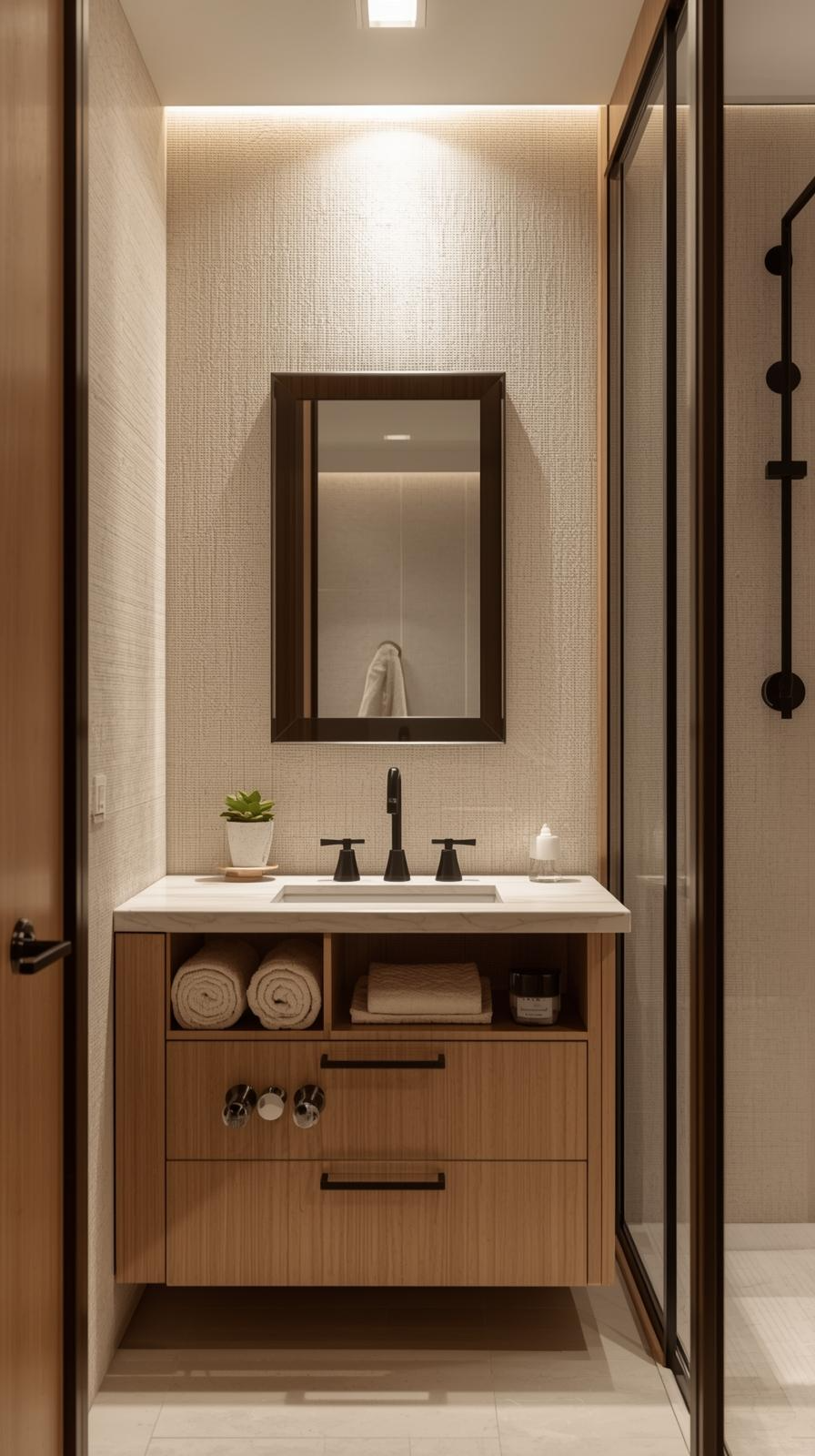
Cohesion is essential in a small bathroom. Too many styles or finishes can quickly make the space feel chaotic. Modern design relies on consistency, repeating colors, materials, and hardware finishes throughout the room. Wood tones should appear in more than one place, and metal finishes should remain consistent. This repetition creates calm and order, which is especially important in limited space. A cohesive design always feels more intentional and complete.
Final Thoughts
Designing a modern small bathroom is not about forcing everything into a tight space. It is about balance, light, and smart decisions. A strong layout, good lighting, and thoughtful color choices set the foundation. Streamlined fixtures, integrated storage, and cohesive materials add clarity. Natural elements and personal details bring warmth and life. With the right approach, a small bathroom becomes an opportunity to create a space that feels stylish, comfortable, and purposeful rather than limiting.