23 Basement Bathroom Ideas For 2026

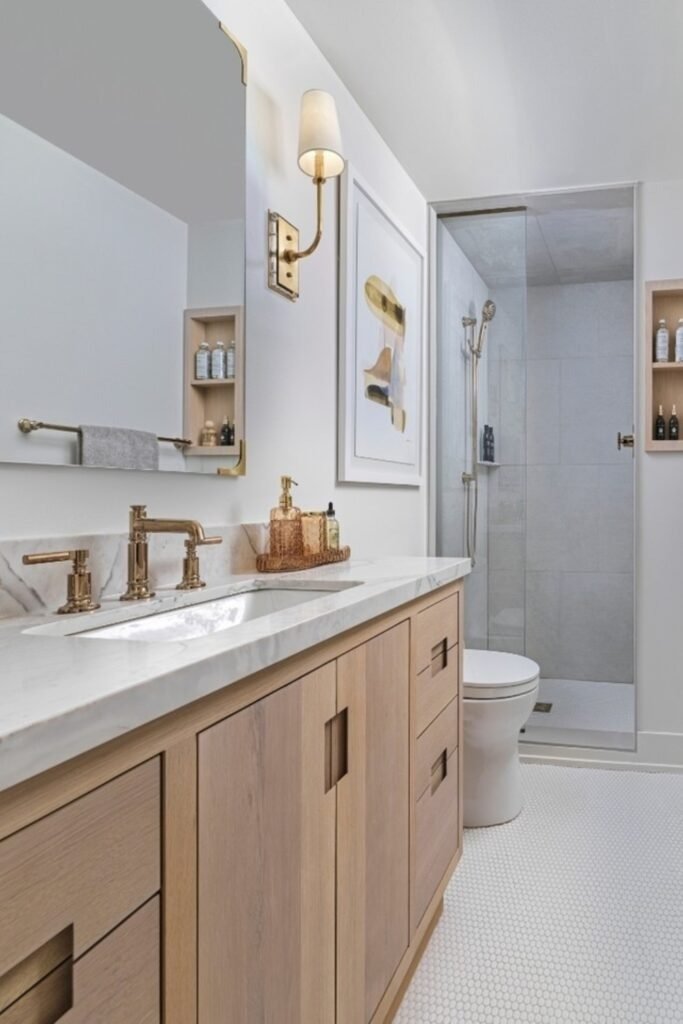
A basement bathroom used to feel like an afterthought. Today, it is part of how a home works every day. After more than twenty years of planning, fixing, and rebuilding bathrooms below ground, one thing is clear. A basement bathroom can feel calm, clean, and fully finished when it is planned with care. In 2026, smart layouts, simple finishes, and moisture-aware choices matter more than trends. This guide explains how to build a basement bathroom that feels right, works well, and lasts.
23+ Smart Basement Bathroom Ideas You Can Actually Use in 2026
Can Bathrooms Be In Basements?
Yes, bathrooms can be built in basements, and they are more common than ever. Building codes allow them as long as plumbing, drainage, and ventilation are done the right way. A basement bathroom needs careful planning because it sits below the main sewer line. This often means using a sewage ejector pump or a macerating system. When installed correctly, these systems work quietly and reliably.
Basement bathrooms also need good airflow. Without windows, moisture can build fast. A strong exhaust fan and moisture-safe materials are not optional. When these basics are handled early, a basement bathroom can feel just as solid and comfortable as one on the main floor.
Glass Shower Walls
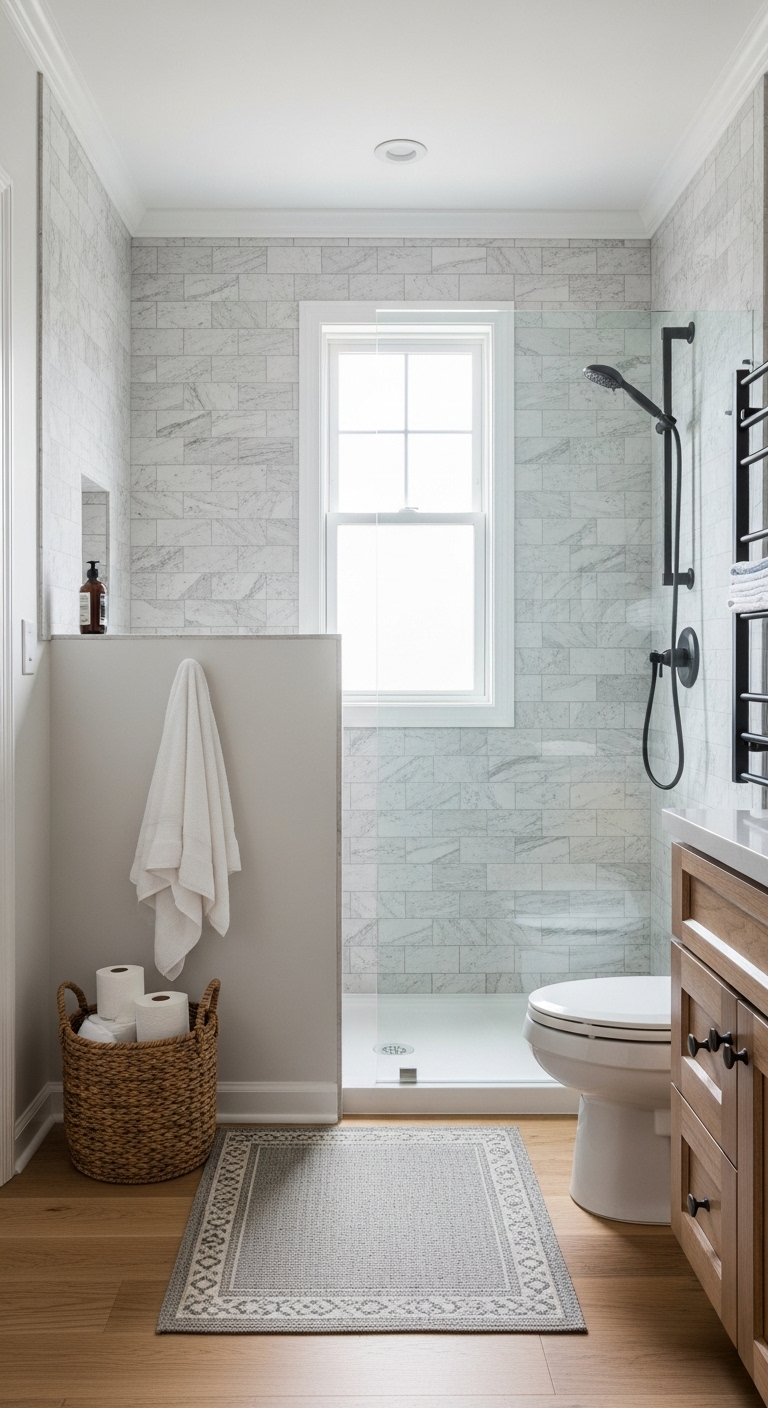
Glass shower walls help a basement bathroom feel open. Basements often lack natural light, so clear glass lets light move across the room instead of stopping it. This makes the space feel larger without changing the layout. Glass also helps show off tile work and keeps corners from feeling closed in.
For long-term use, tempered glass with sealed edges is key. It resists moisture damage and is easy to wipe clean. When paired with light wall colors, glass shower walls can change how the whole room feels.
Layered Vanity Lighting
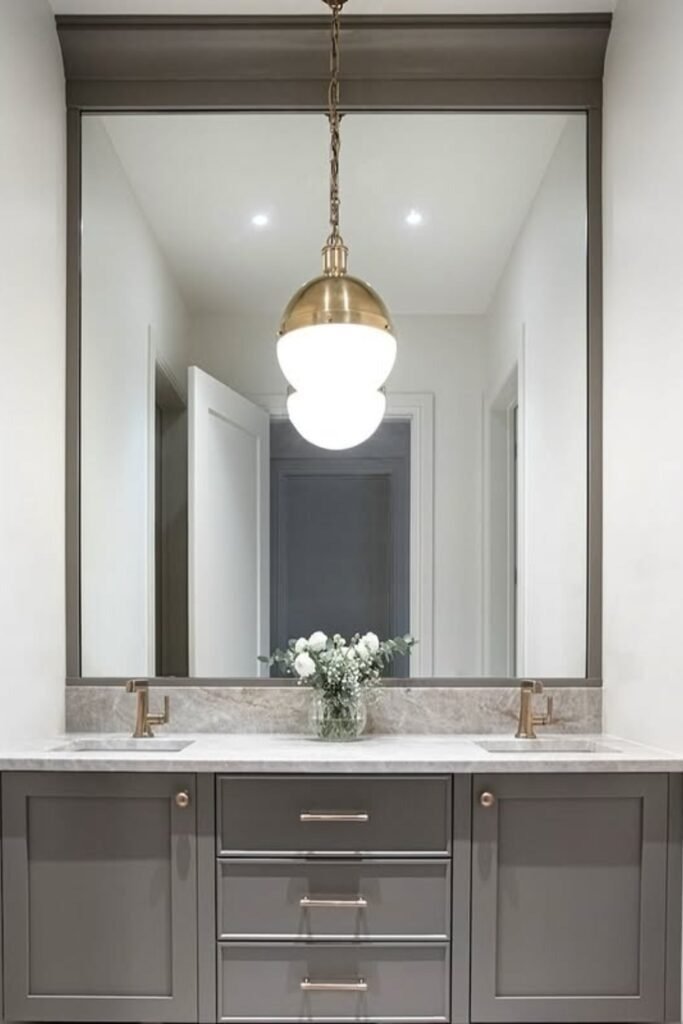
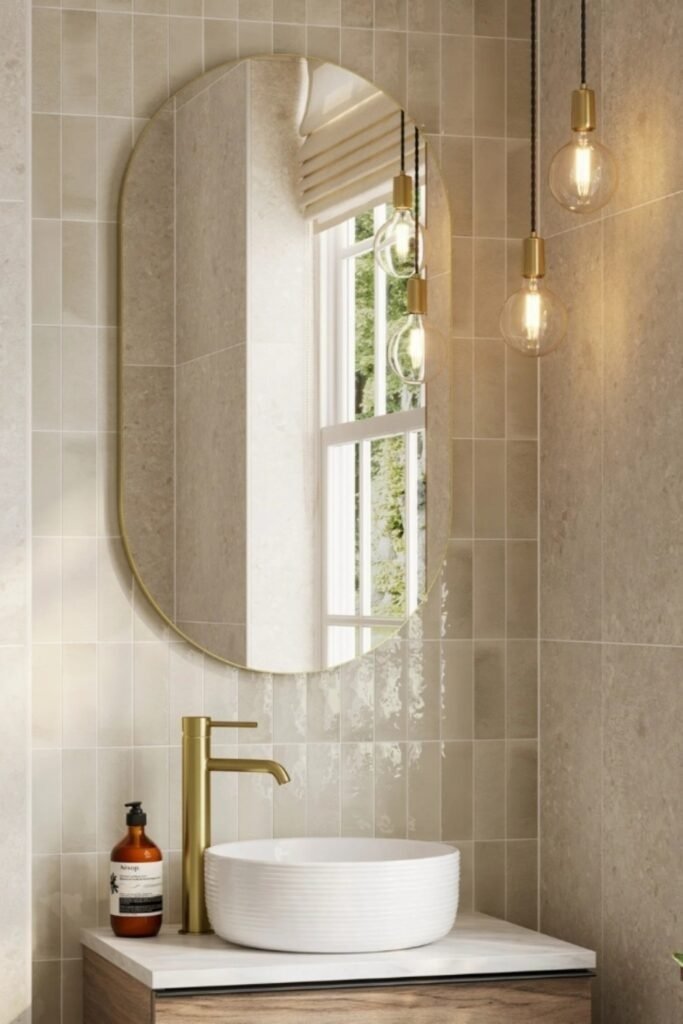
Lighting in a basement bathroom must work harder. One ceiling light is never enough. Layered vanity lighting uses light from more than one source. This includes overhead light, mirror lighting, and soft side light. Together, they remove shadows and make daily tasks easier.
Good lighting also helps the room feel clean and safe. Warm light near the mirror and neutral light overhead creates balance. This approach works well even in small basement bathrooms.
Bench Shower Seat
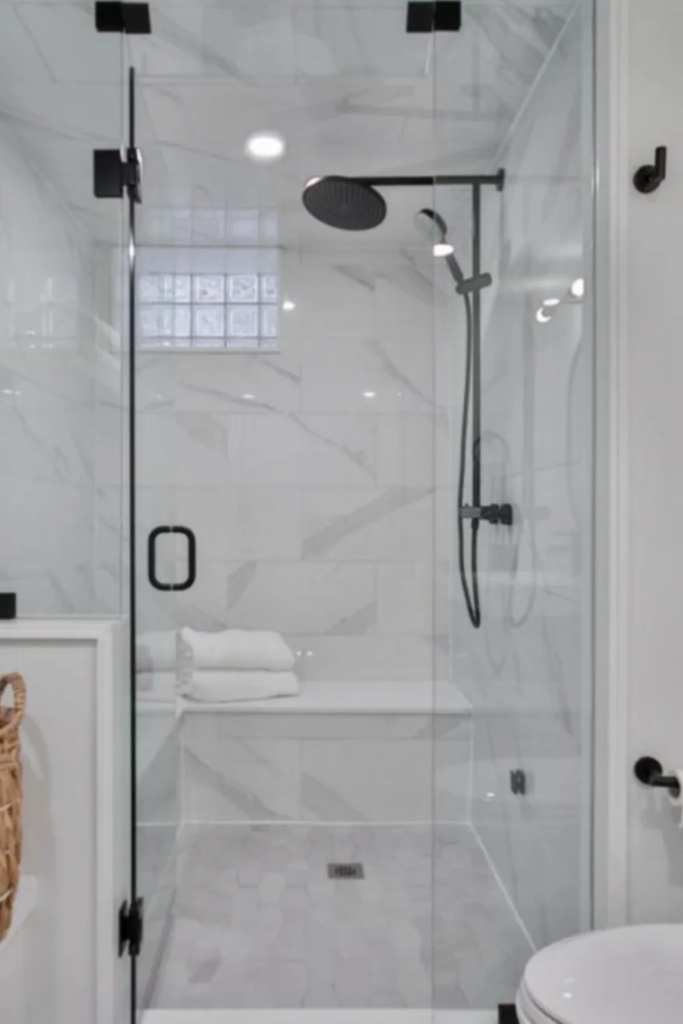
A bench seat in the shower adds comfort and safety. In basements, showers are often used by guests or family members of all ages. A bench gives support and makes the space feel planned, not rushed.
Built-in benches work best because they seal directly into the shower walls. When tiled properly, they do not trap water. This small detail adds value and makes the shower feel complete.
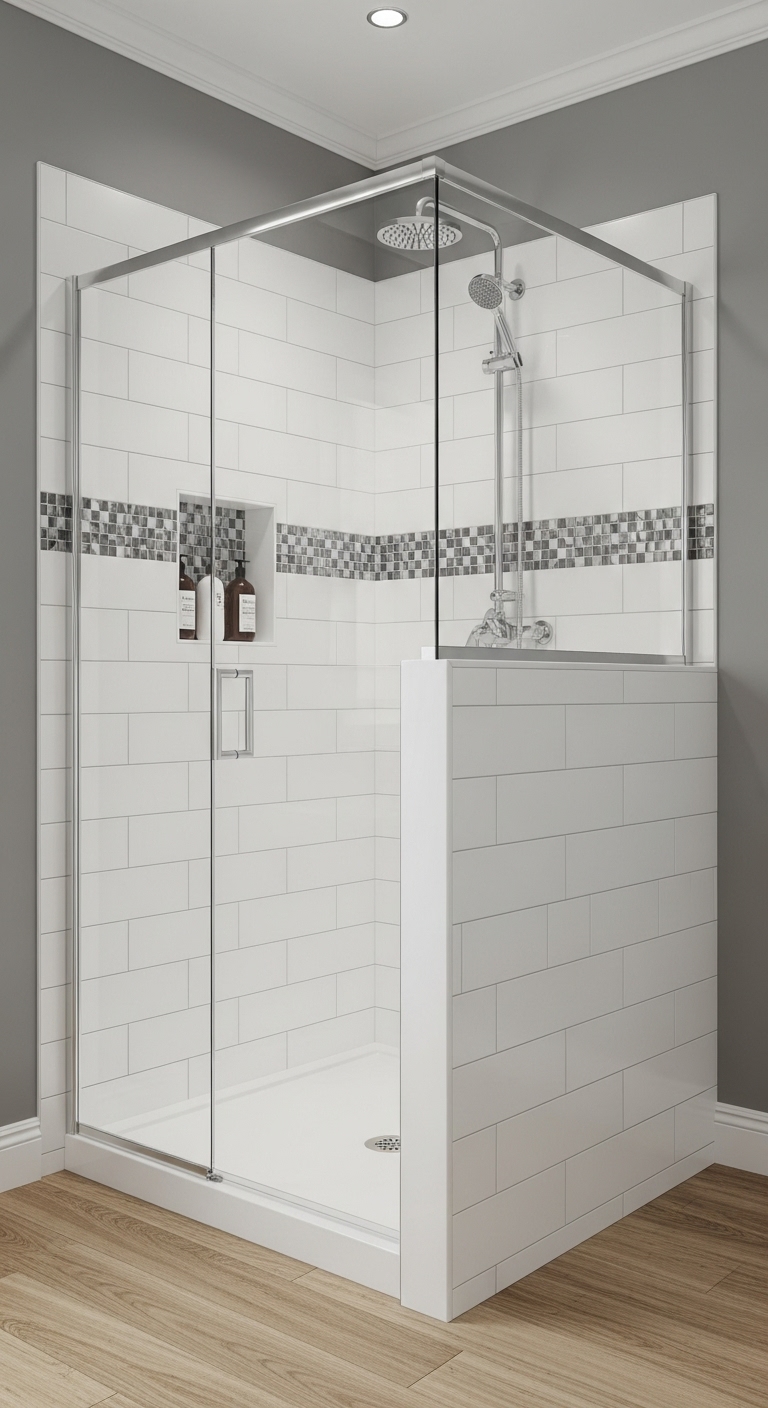
Frameless Corner Shower
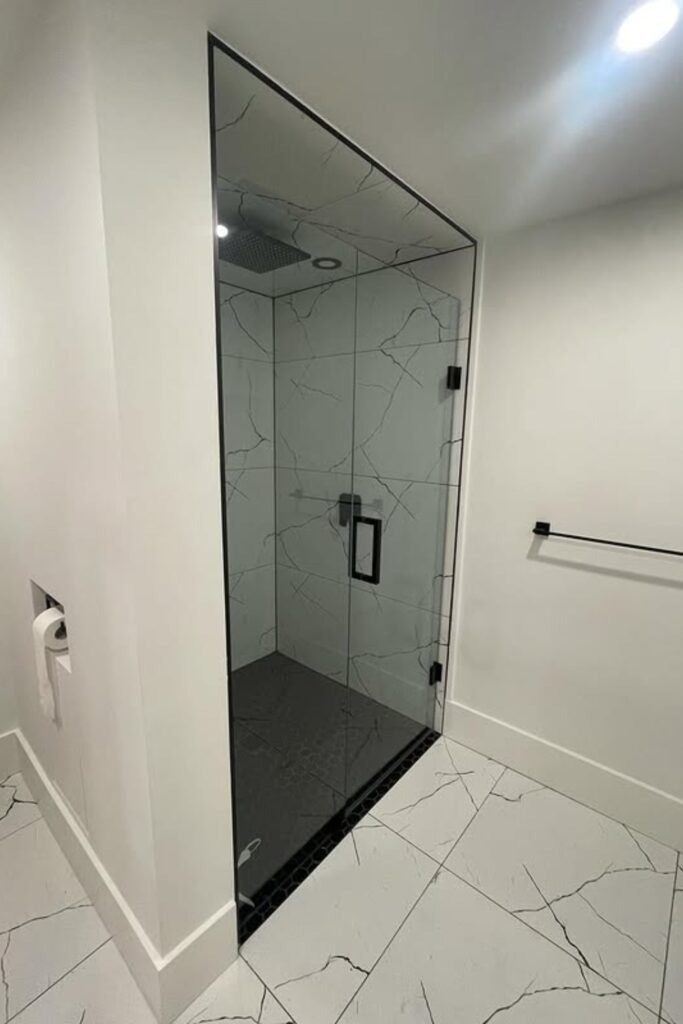
Corner showers save space without feeling tight. A frameless design removes heavy metal edges and keeps sightlines clear. This is helpful in basements where ceiling height or layout may already feel limited.
Frameless corner showers also reduce places where water can collect. With proper slope and drainage, they stay cleaner and dry faster. This makes them a strong choice for basement use.
Warm Finish Contrast
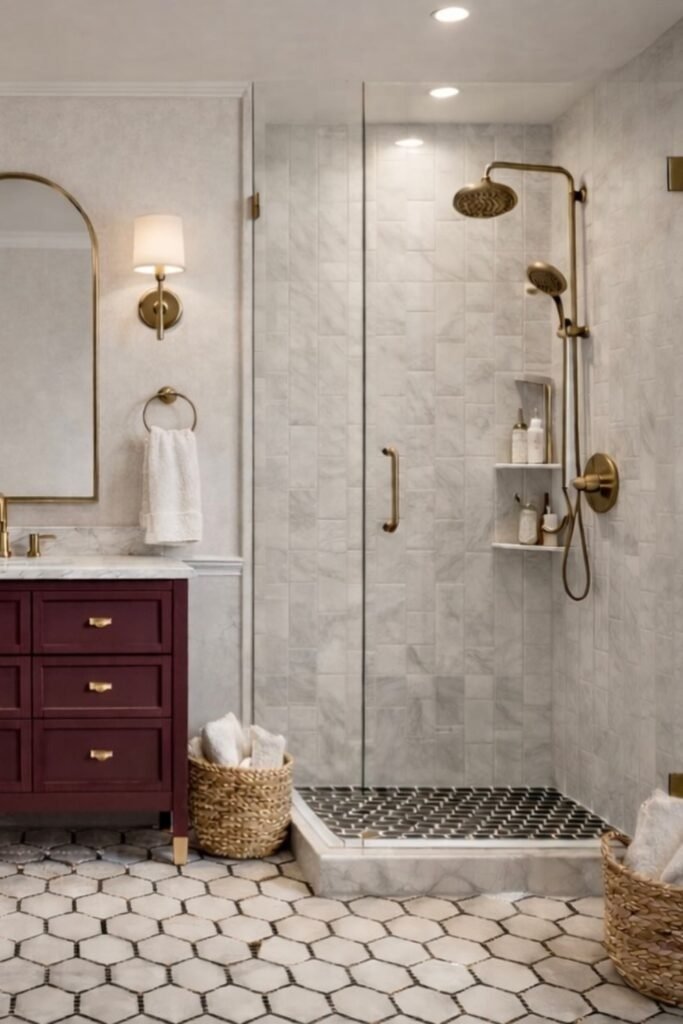
Basement bathrooms can feel cold if everything is gray or flat. Warm finishes bring balance. This can mean wood-look tile, warm metal fixtures, or soft neutral walls. The contrast between warm and cool tones keeps the room from feeling dull.
Warm finishes also help connect the basement bathroom to the rest of the home. This matters if the basement is used daily or for guests.
Basement Spa Zone
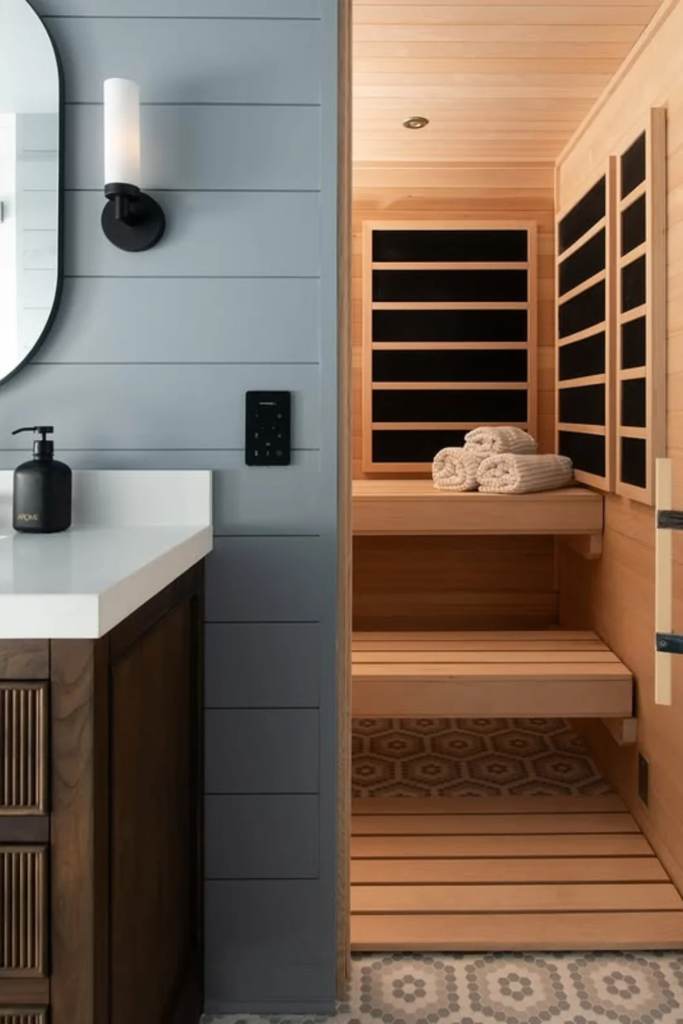
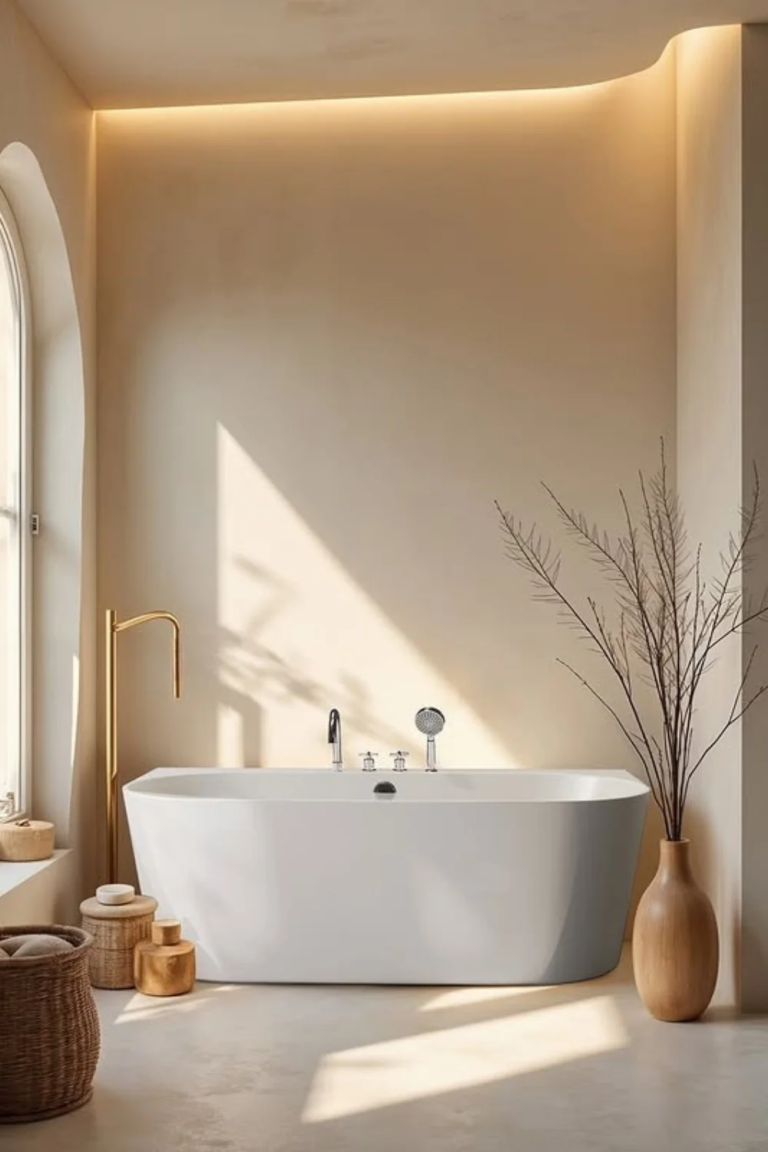
A spa-style basement bathroom focuses on calm. This does not require expensive features. Simple tile, soft lighting, and a clean layout do most of the work. A rainfall shower or deep soaking tub can turn the space into a quiet retreat.
The key is keeping the design simple. Too many features can make a basement bathroom feel heavy. A calm layout makes better use of the space.
Balanced Vanity Setup
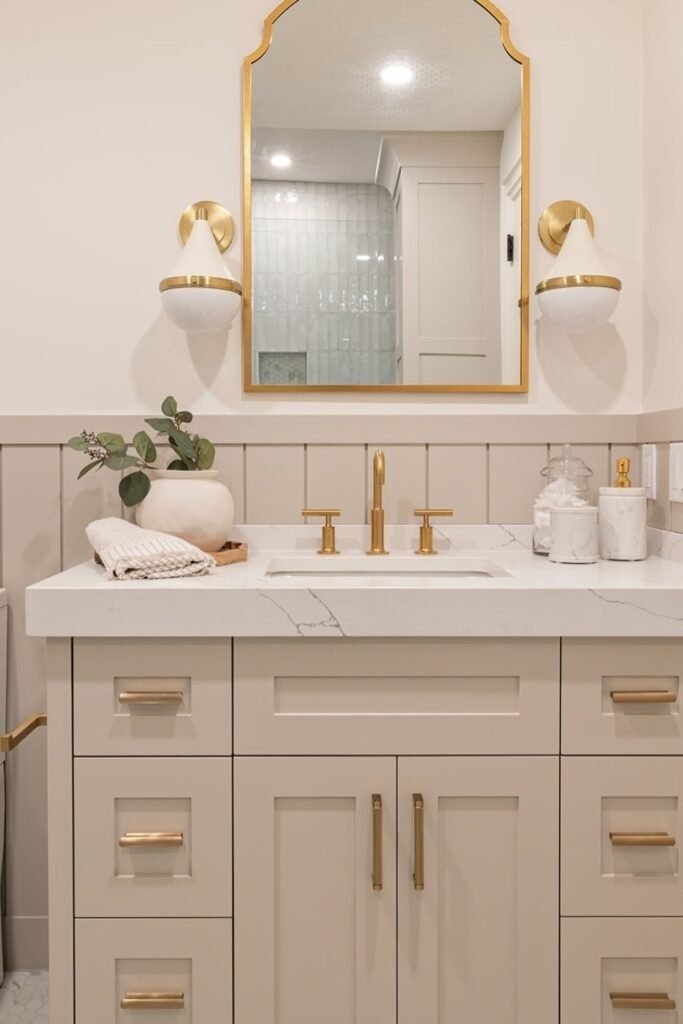
A balanced vanity setup means the sink, mirror, and storage work together. In basements, walls may not be centered or square. Planning the vanity carefully avoids awkward gaps or tight corners.
A centered mirror with even lighting and storage below keeps the space functional. Balance helps the bathroom feel stable and easy to use.
Dark Vanity Choice
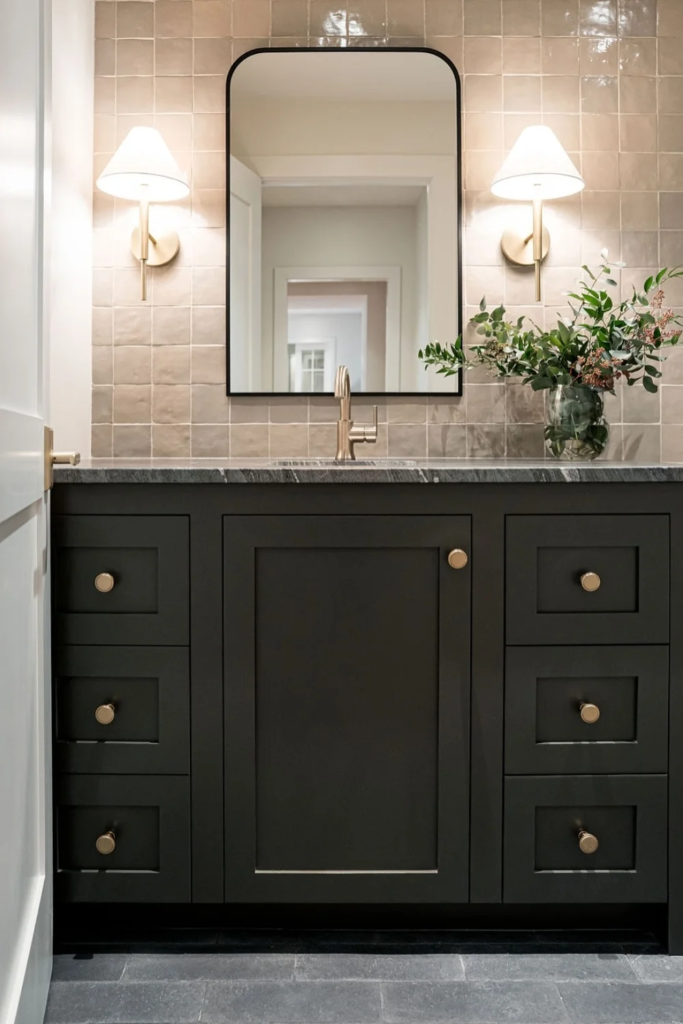
Dark vanities are becoming more common in basement bathrooms. They ground the space and hide wear better than light finishes. In a room without natural light, a dark vanity paired with light walls creates contrast without feeling heavy.
Moisture-resistant materials are important here. A sealed finish prevents swelling and keeps the vanity looking clean over time.
Double Mirror Balance
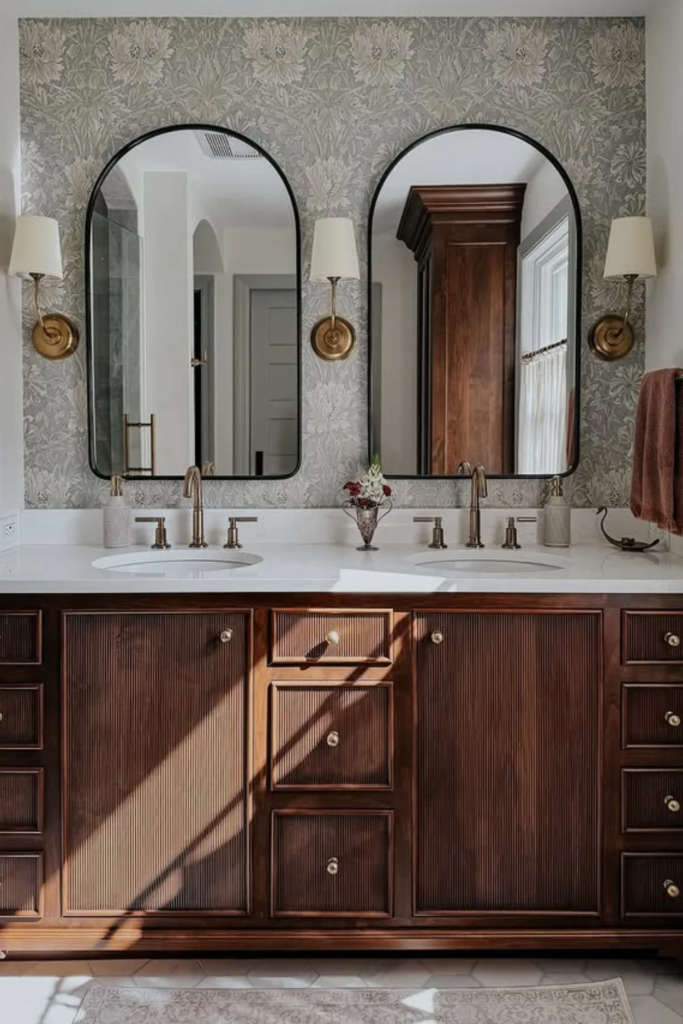
Double mirrors can work even in smaller basement bathrooms. They reflect light and create symmetry. When placed over a shared vanity or wide counter, they make the space feel planned.
Mirrors also help bounce light from fixtures. This reduces the need for extra lighting and keeps the room feeling open.
Floating Shelf Storage
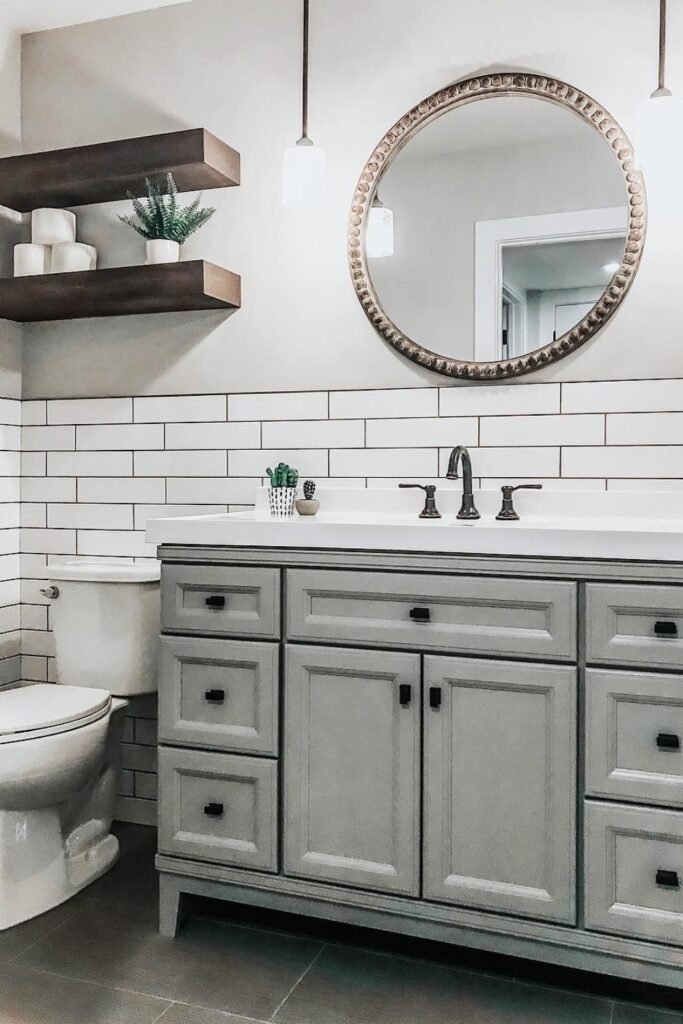
Floating shelves add storage without closing in the room. In a basement bathroom, floor space is valuable. Wall-mounted shelves keep items easy to reach while leaving the floor clear.
Using sealed wood or moisture-safe materials prevents damage. Floating shelves also make cleaning easier, which matters in below-grade spaces.
Moody Tile Design
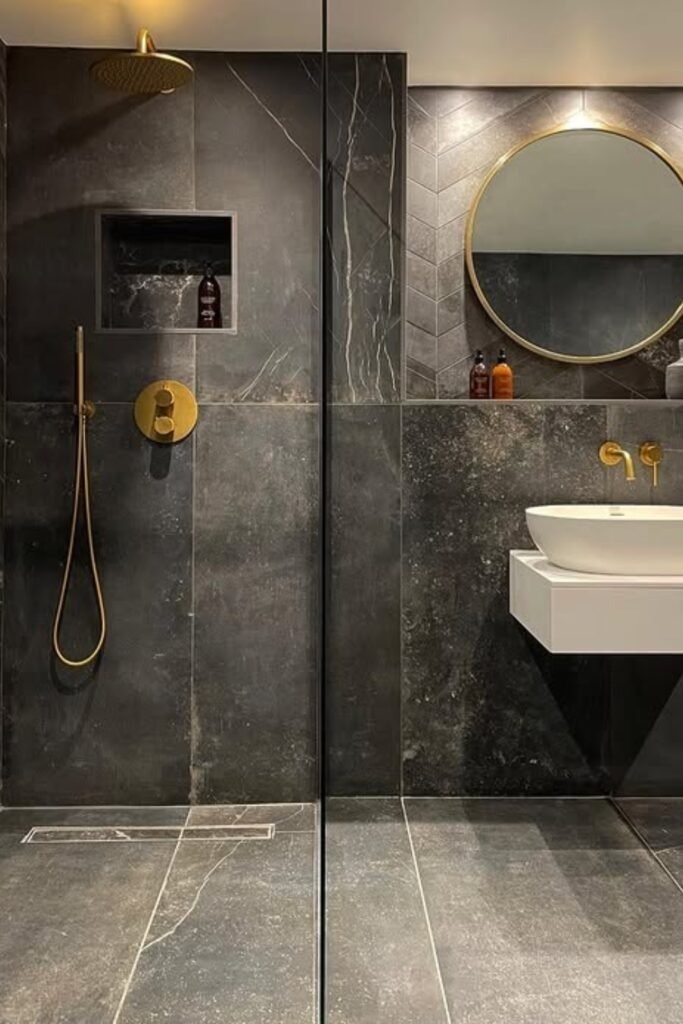
Moody tile uses darker tones to create depth. In basements, this can work when paired with good lighting. Dark tile on one wall or in the shower adds interest without making the room feel small.
Tile with a matte finish reduces glare and hides water spots. This makes maintenance easier over time.
Open Vanity Storage
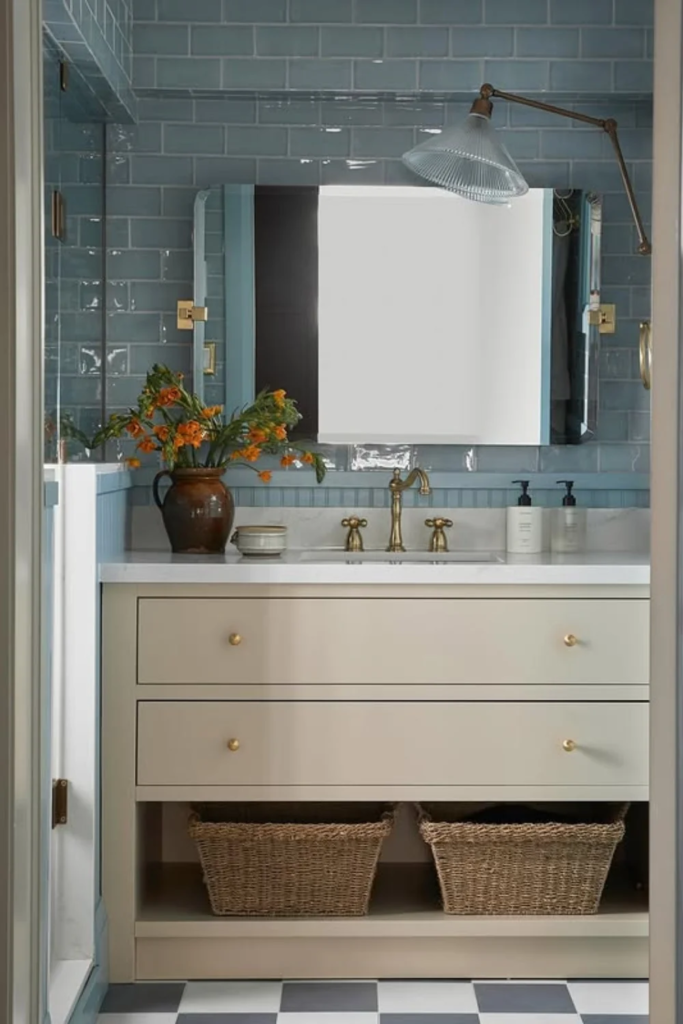
Open vanity storage works when done with care. It keeps towels and daily items visible and easy to grab. In basements, airflow is important, and open storage helps items dry faster.
This setup works best when kept tidy. Simple baskets or folded towels keep the look clean.
Clear Sightlines Layout
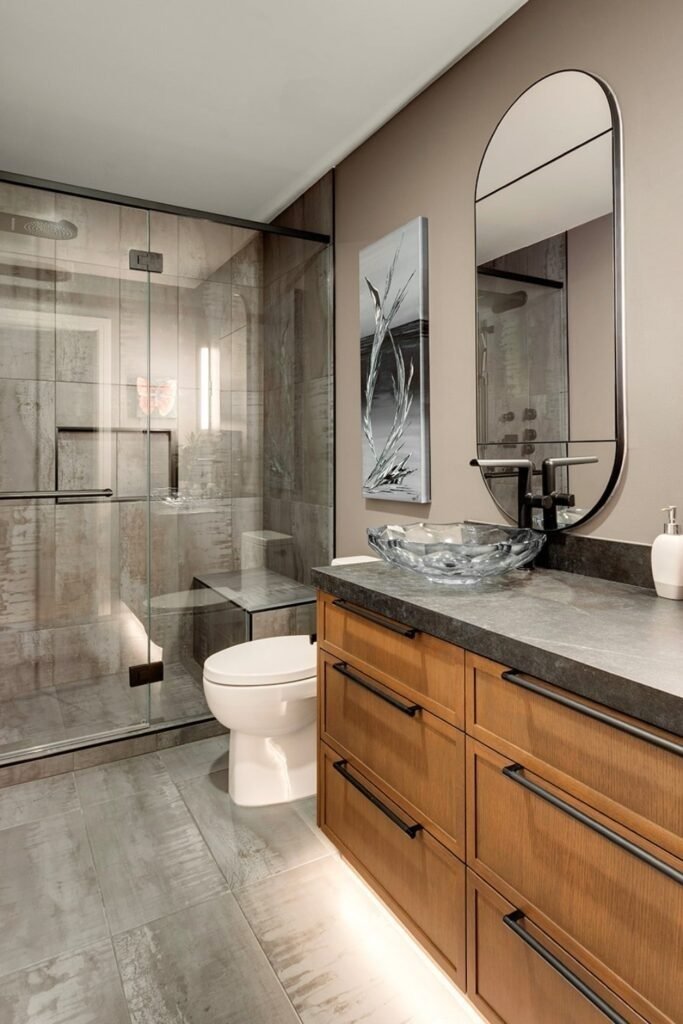
Clear sightlines mean you can see across the room without visual blocks. This makes a basement bathroom feel larger. Glass showers, floating vanities, and wall-mounted fixtures help achieve this.
A clear layout also improves safety and comfort. It reduces tight corners and makes movement easier.
Compact Half Bath
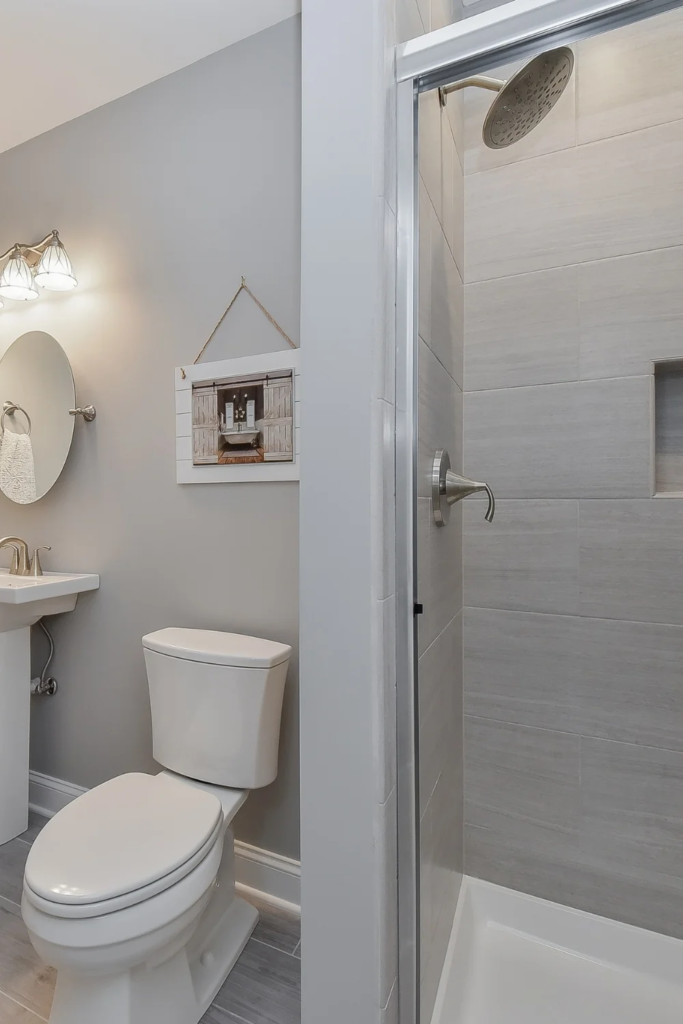
A compact half bath is ideal when space is limited. A toilet and sink can fit into a small footprint without feeling cramped if planned well. Wall-mounted sinks and toilets help save space.
This type of bathroom works well for basements used as family rooms or guest areas.
Tub Shower Combo
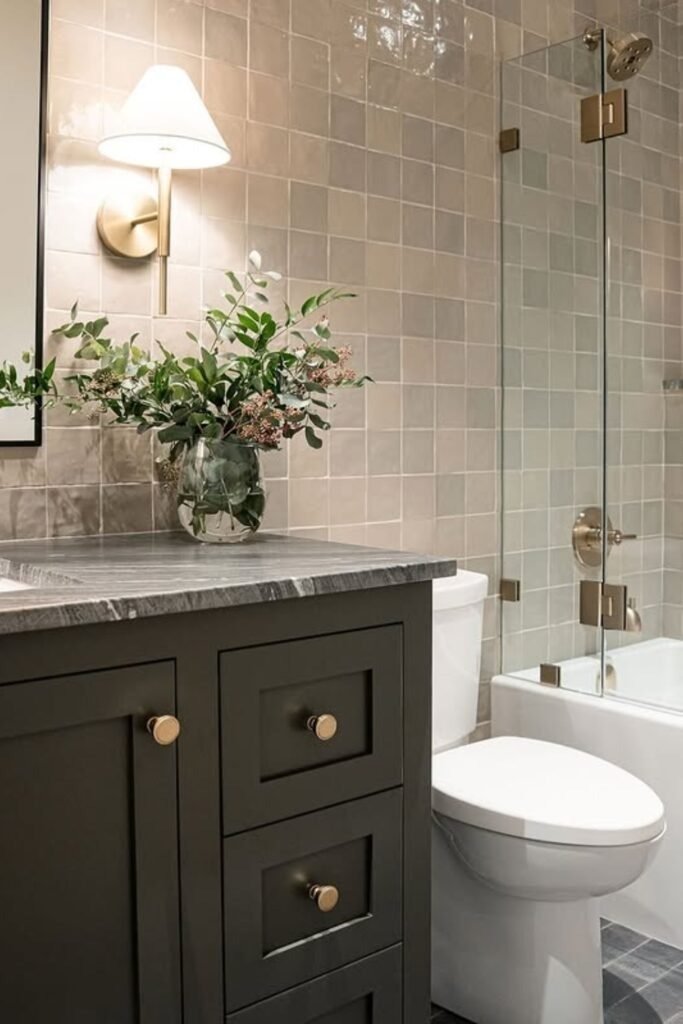
Tub and shower combos remain practical in basements. They serve guests, kids, and daily use without needing extra space. A simple tub with a tiled surround works well below grade.
Choosing materials that resist moisture and temperature changes helps the tub last longer.
Color Anchor Vanity
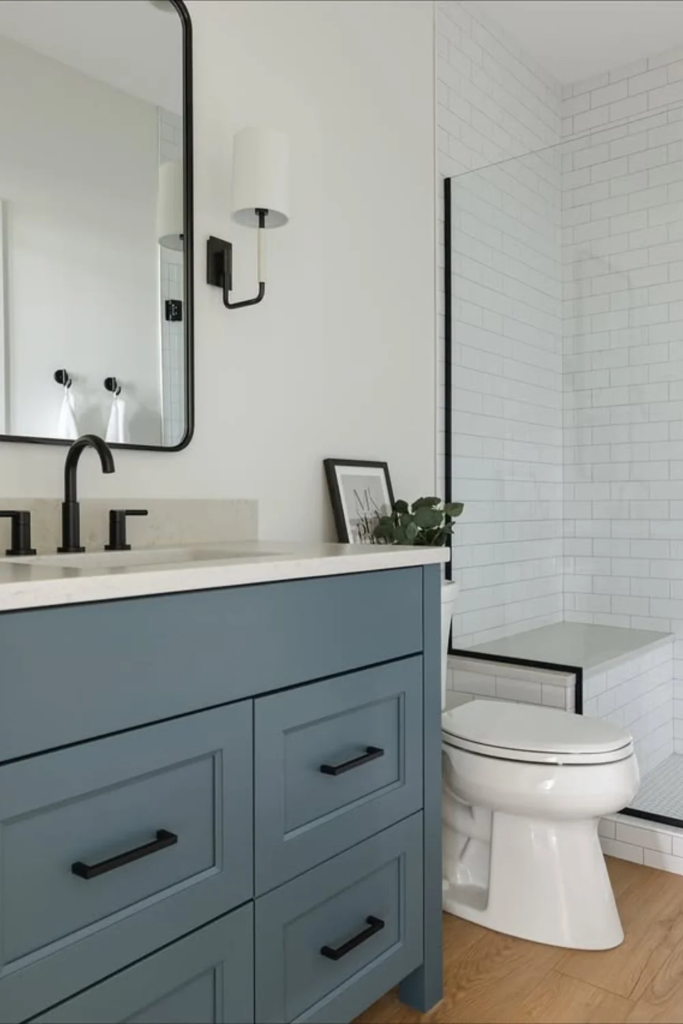
A color anchor vanity uses one strong color to ground the room. This could be deep blue, green, or charcoal. In a basement bathroom, this adds personality without needing many decor items.
The rest of the room should stay simple to let the vanity stand out.
Low-Maintenance Materials
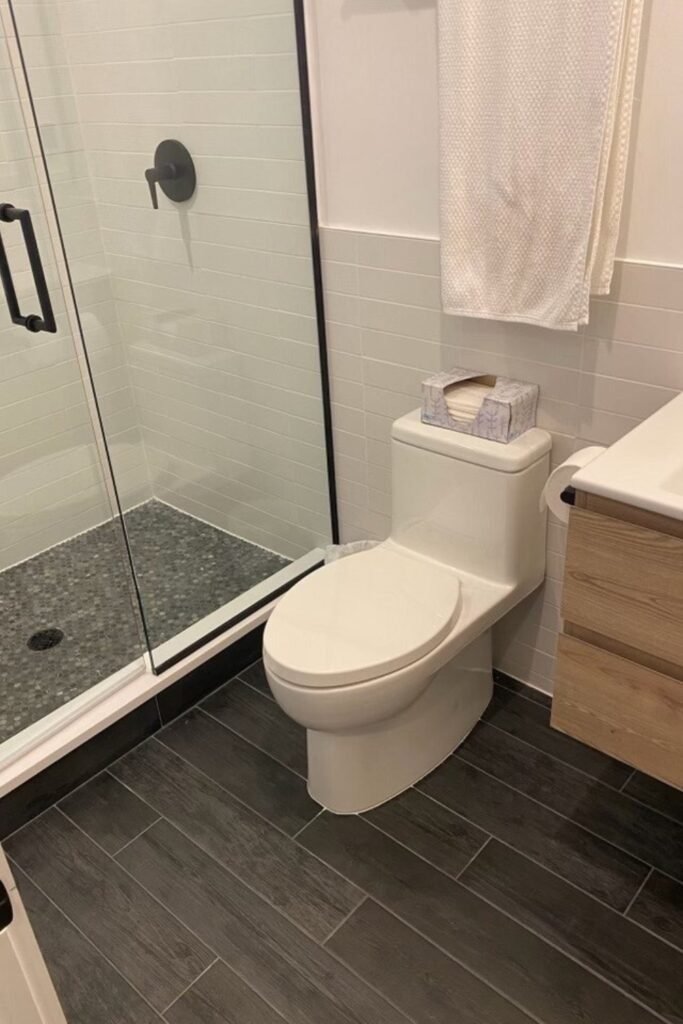
Low-maintenance materials matter more in basements than anywhere else. Porcelain tile, sealed stone, and moisture-safe paint reduce upkeep. These materials resist mold and wear.
Choosing the right materials from the start saves time and money later.
Bold Color Zone
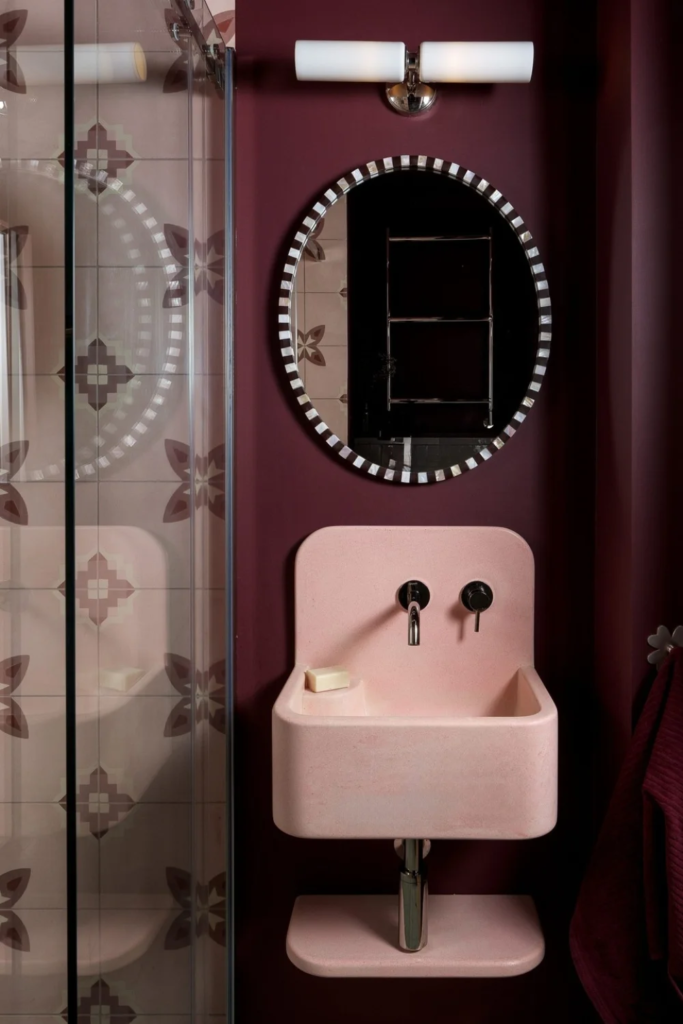
A bold color zone uses color in one area only. This could be the shower wall or vanity wall. It adds interest without overwhelming the space.
In basements, controlled color keeps the room feeling balanced and calm.
Wall-Mounted Fixtures
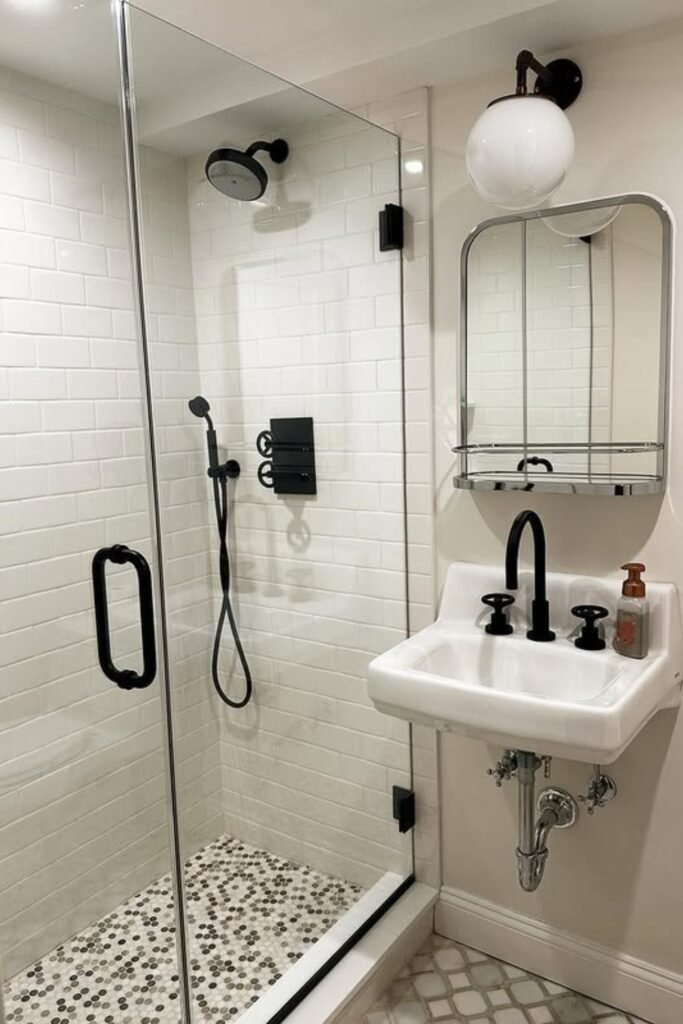
Wall-mounted toilets and vanities free up floor space. They also make cleaning easier. In basements, this helps manage moisture and keeps the room feeling open.
These fixtures must be installed correctly to support weight and plumbing needs.
Vertical Design Focus
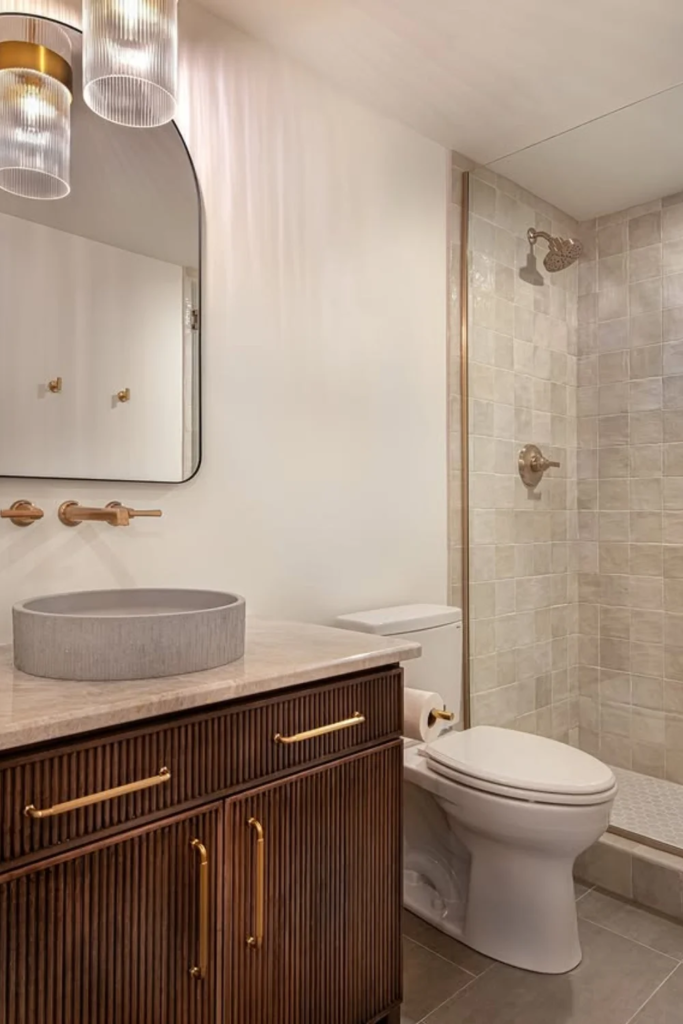
Vertical design draws the eye upward. This is helpful in basements with lower ceilings. Tall mirrors, vertical tile patterns, and higher-mounted lights all support this effect.
Vertical focus makes the room feel taller and more comfortable.
Symmetrical Vanity Layout
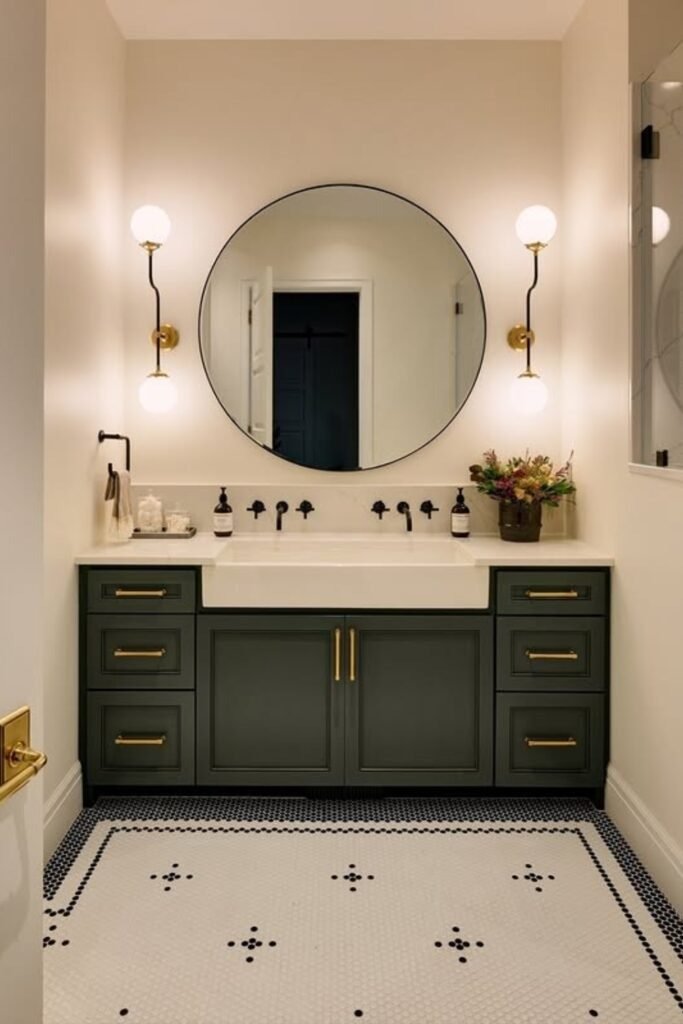
Symmetry brings order. A symmetrical vanity layout with matching lights and mirrors feels calm and intentional. This works well in basement bathrooms that lack natural features.
Symmetry also improves daily use by keeping everything easy to find.
Patterned Shower Wall
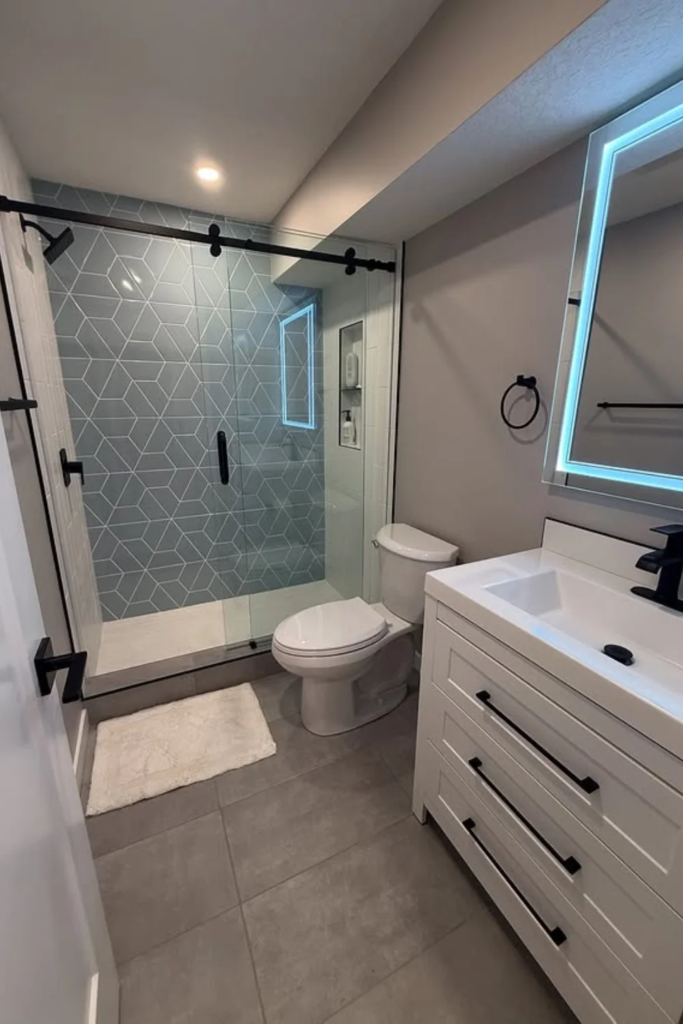
A patterned shower wall adds interest without clutter. Simple patterns work best. They add texture and help define the shower area.
Patterned tile should be limited to one surface to keep the room balanced.
Grid Glass Divider
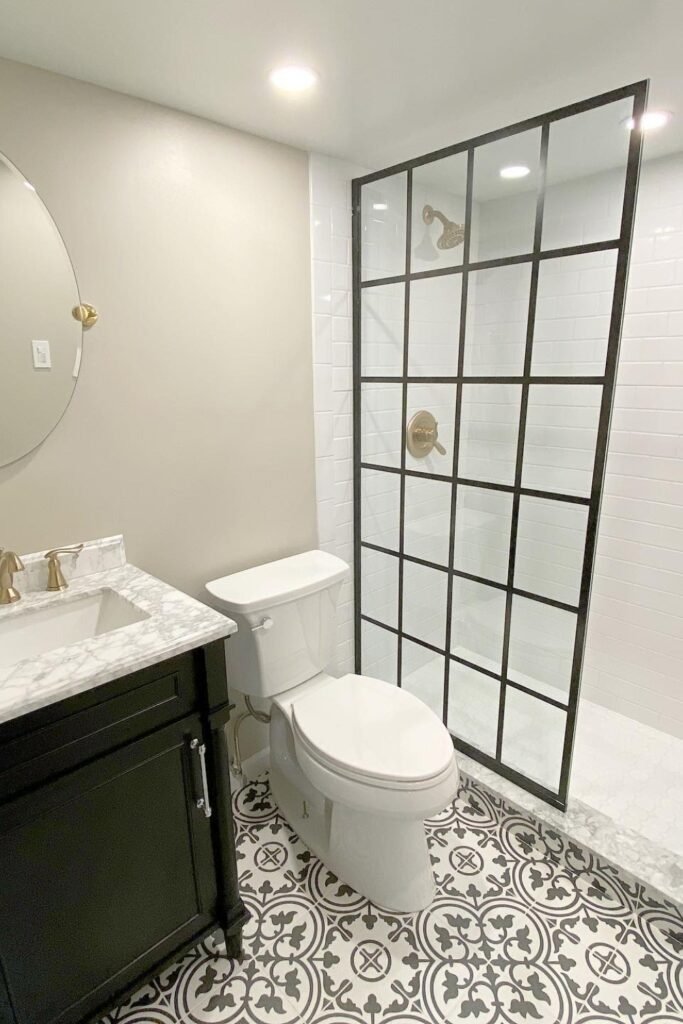
A grid glass divider separates the shower while keeping light flowing. The grid adds structure and style without closing the room off. This works well in modern basement bathrooms.
The metal grid should be sealed to prevent moisture issues over time.
FAQs
Do basement bathrooms need special plumbing?
Yes, basement bathrooms usually need special plumbing because they sit below the main sewer line. Most homes use a sewage ejector pump to move waste upward. When installed correctly, this system works quietly and safely. A licensed plumber should always handle this part of the build.
How do you prevent moisture in a basement bathroom?
Moisture control starts with ventilation. A strong exhaust fan is essential. Using moisture-resistant materials like tile, sealed grout, and proper paint also helps. Keeping the room warm and dry prevents mold and protects finishes. When these steps are followed, a basement bathroom stays clean and healthy for years.