26 Moody Living Room Ideas for 2026

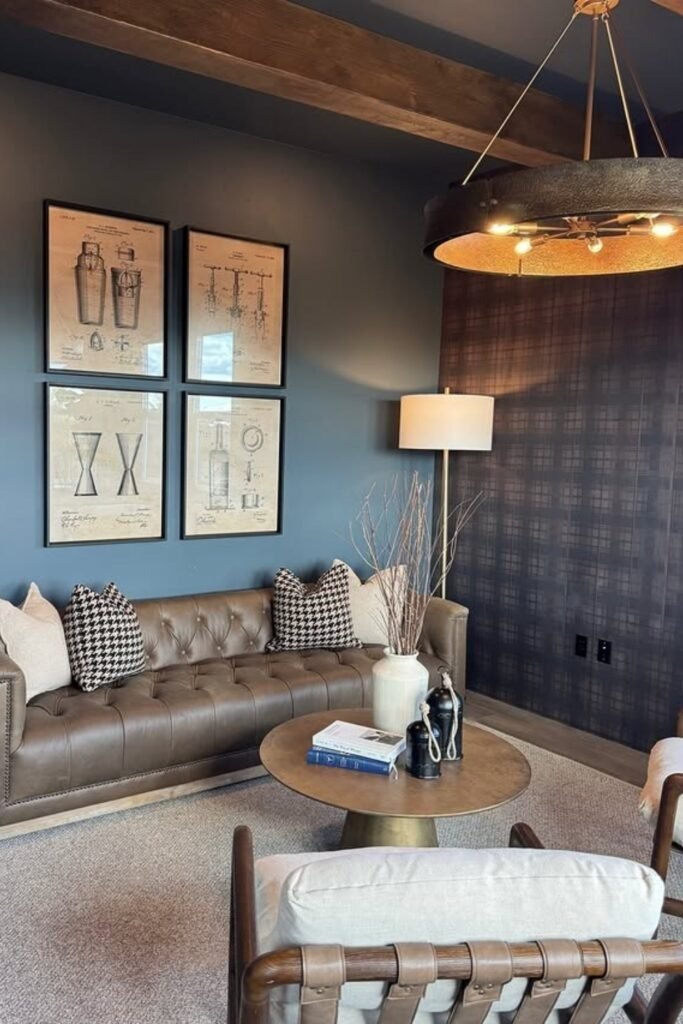
Moody living rooms have grown into a popular design trend for 2026. They are spaces that feel intimate, grounded, and thoughtfully layered with color, texture, and lighting. Unlike bright or airy designs, moody living rooms rely on deeper tones, subtle contrasts, and controlled lighting to create a calm and inviting environment. They are perfect for relaxing, hosting quiet gatherings, or simply creating a sense of personal retreat in your home. In this article, we explore 26 practical, expert-backed ideas to transform your living room into a moody sanctuary.
1. What Is A Moody Living Room?
A moody living room is defined by its depth, atmosphere, and character. It is a space that uses darker or richer shades, strategic lighting, and layered textures to feel warm and cozy rather than dull or oppressive. These rooms often mix natural materials with modern or classic design elements to create a timeless, lived-in feel. The mood is achieved through careful selection of colors, furniture, lighting, and decor, emphasizing comfort, intimacy, and a sense of balance. A moody living room can make a home feel more personal while reflecting the homeowner’s style without overwhelming the senses.
2. How To Make A Living Room More Moody?
Creating a moody living room starts with understanding how light, color, and texture interact in a space. Each choice should enhance the atmosphere without making the room feel dark or unwelcoming. From wall treatments to furniture placement, the goal is to create layers that invite comfort and focus attention on key elements. Here’s how to approach it in practical, approachable ways.
Texture adds depth
Texture is one of the most important elements in a moody living room. Smooth surfaces like leather, glass, or metal can feel sleek but cold on their own. Layering fabrics such as velvet, wool, or woven textiles on sofas, chairs, or cushions introduces tactile depth that complements darker color palettes. Even a simple rug with a subtle pattern or a textured wall covering can make the space feel more layered and intentional. By mixing textures, you keep the room from appearing flat while enhancing visual interest.
Commit to color
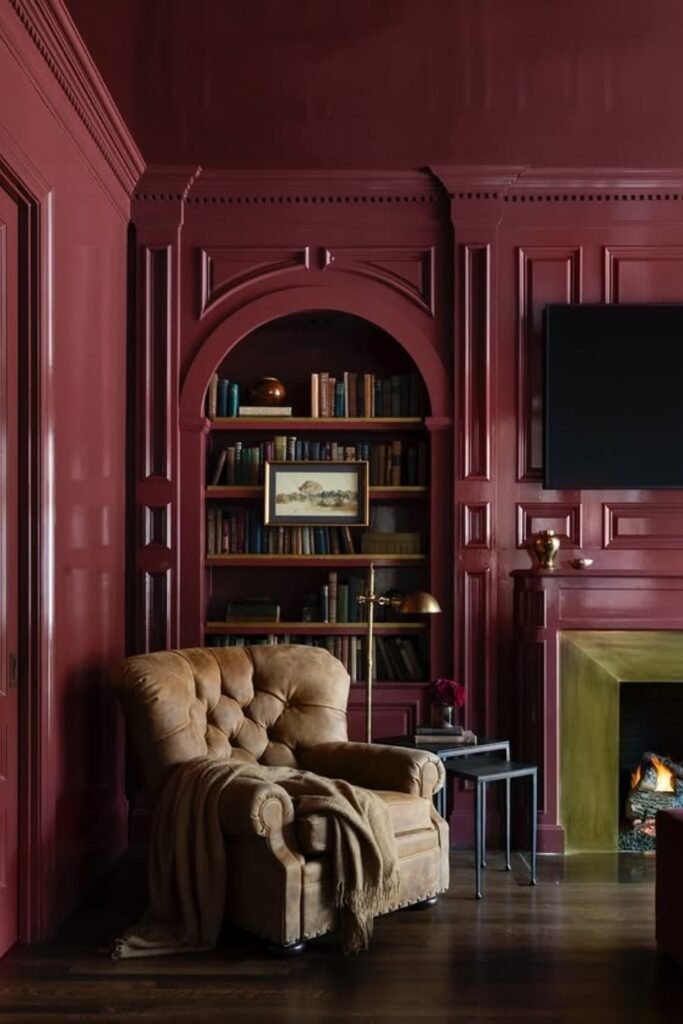
Color is central to creating mood. Moody living rooms typically use deep blues, rich greens, charcoal grays, or warm browns as dominant tones. Choosing one or two main colors and building around them creates a cohesive and calming atmosphere. Accent shades in smaller furnishings, artwork, or decor can introduce contrast without breaking the mood. Committing to color helps the space feel intentional and grounded, which is key in avoiding a chaotic or mismatched look.
Zones change everything
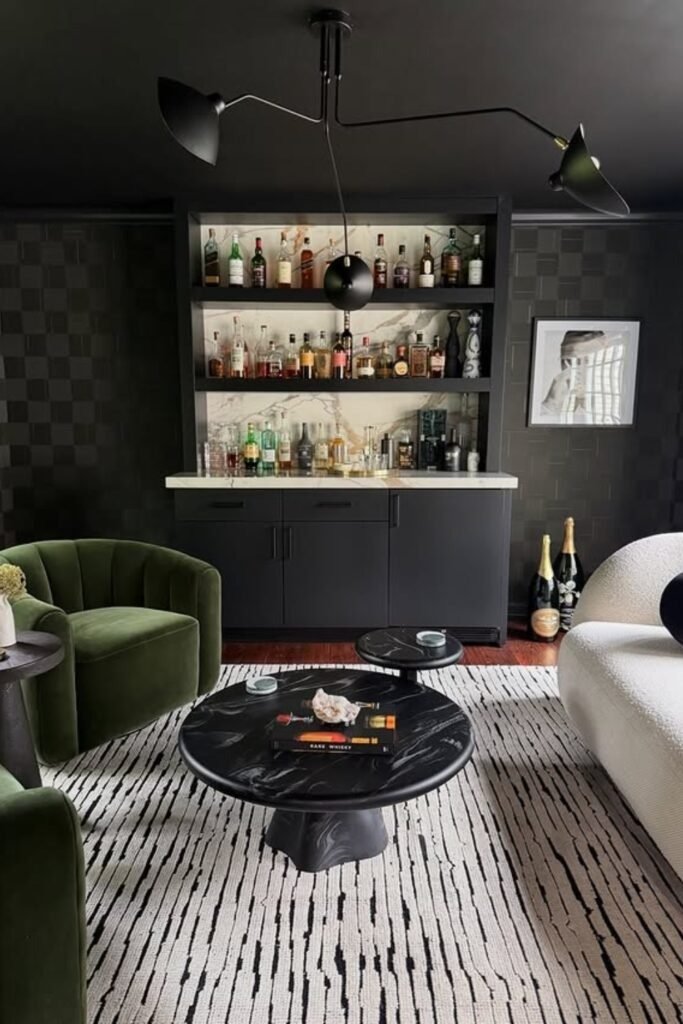
Breaking a living room into zones can elevate both functionality and atmosphere. Even in small rooms, creating a reading corner, conversation area, or media zone allows each section to feel purposeful. Zone-defining elements like rugs, furniture arrangements, or low partitions help structure the space and make a larger room feel intimate. Zones also give a moody living room layers, making it feel lived-in and thoughtfully designed rather than just dark for effect.
Light keeps control
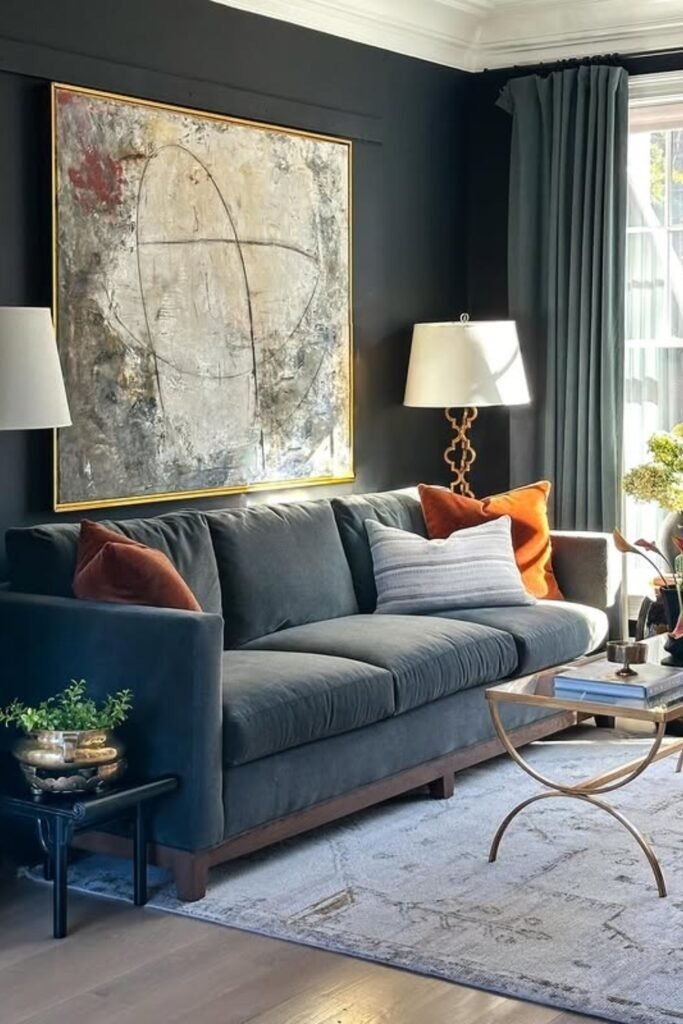
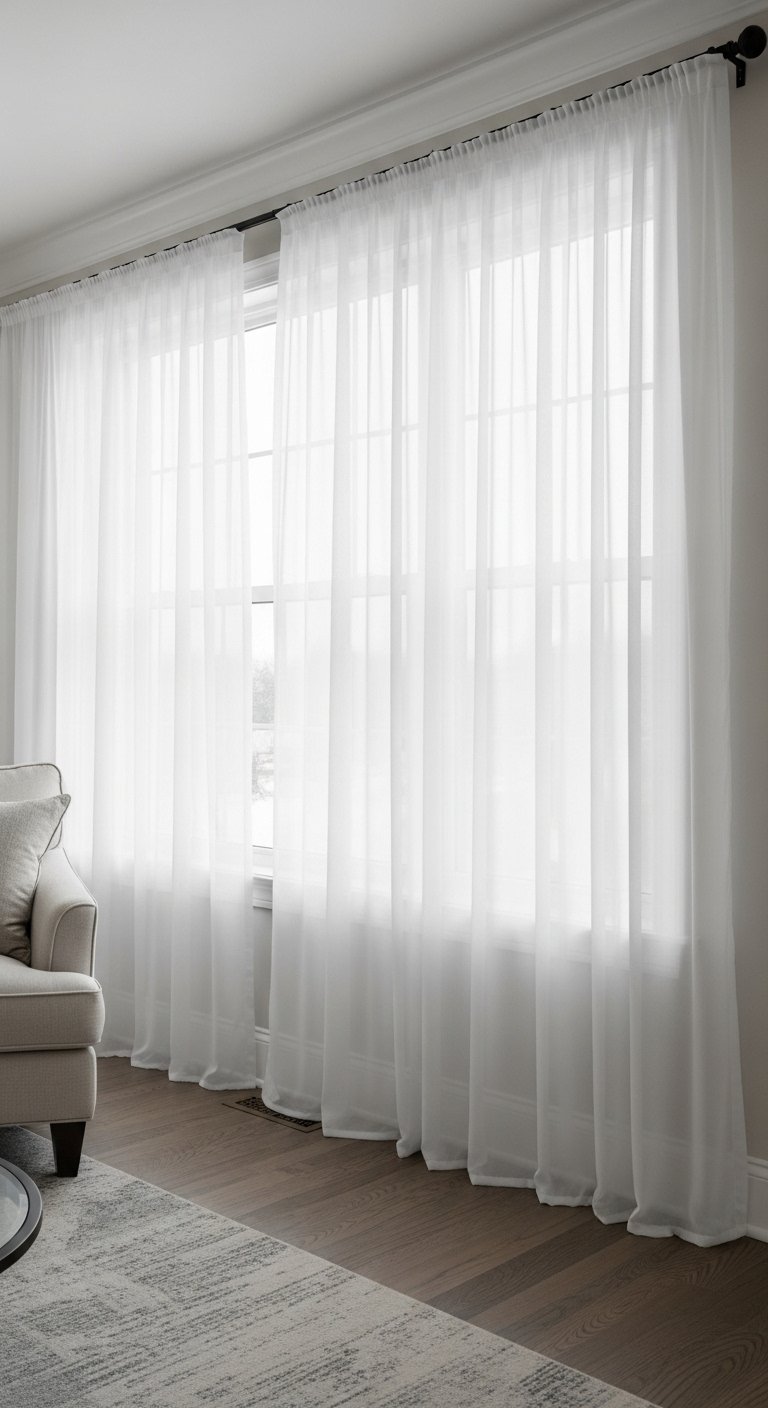
Lighting is perhaps the most critical factor in a moody living room. Overhead lights should be warm and dimmable, while floor lamps, table lamps, and wall sconces add pockets of brightness where needed. Controlling light allows you to highlight textures, colors, and focal points without washing out the mood. Natural light can also be used strategically with curtains or blinds that diffuse brightness, giving you flexibility between day and night.
Soft neutral depth
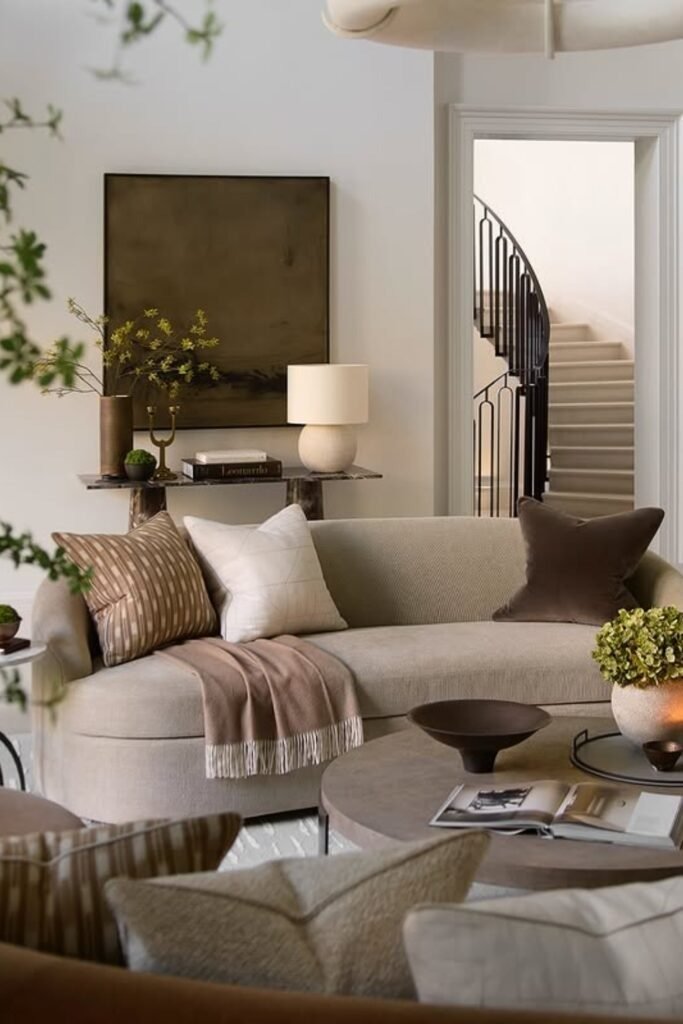
Even in moody rooms, neutrals play a key role. Soft beige, cream, or taupe can soften the intensity of darker walls and furniture while maintaining depth. These shades act as a balance, giving the eyes resting points and preventing the room from feeling heavy. Integrating neutrals in fabrics, wall treatments, or ceiling details ensures that moodiness feels intentional rather than overwhelming.
Night-first living
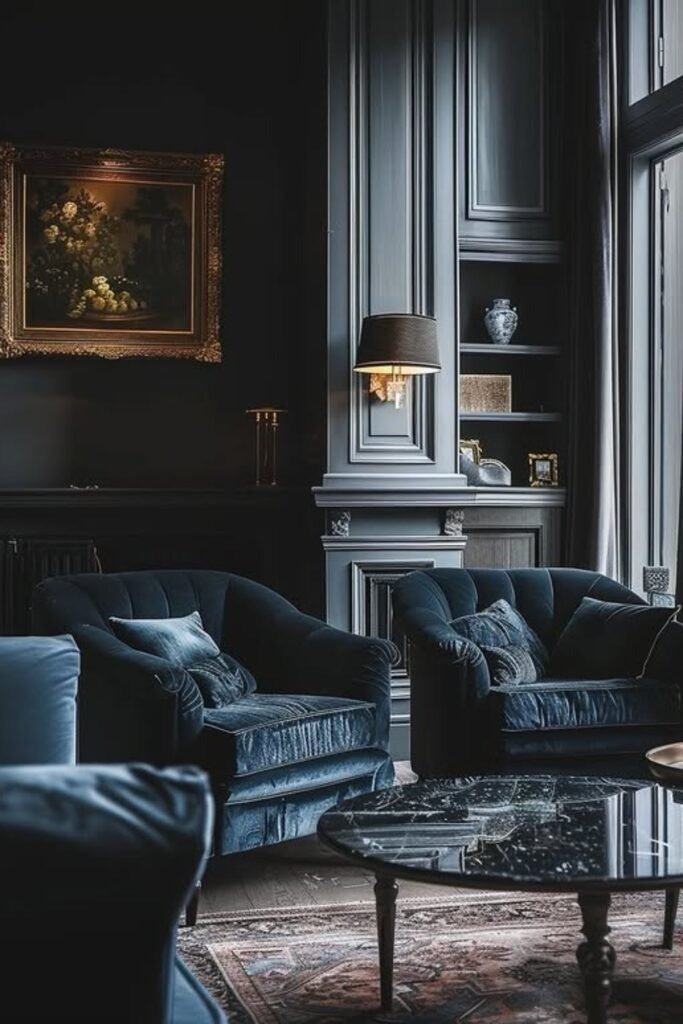
Designing a moody living room with nighttime in mind enhances its appeal. Darker tones and warm lighting work best when artificial light dominates, so consider fixtures that shine from multiple angles. Accent lamps, hidden LEDs, or sconces behind furniture can make the room glow instead of feeling shadowy. A night-focused layout gives the space a calm and inviting personality for evenings without sacrificing daytime function.
Contrast creates mood
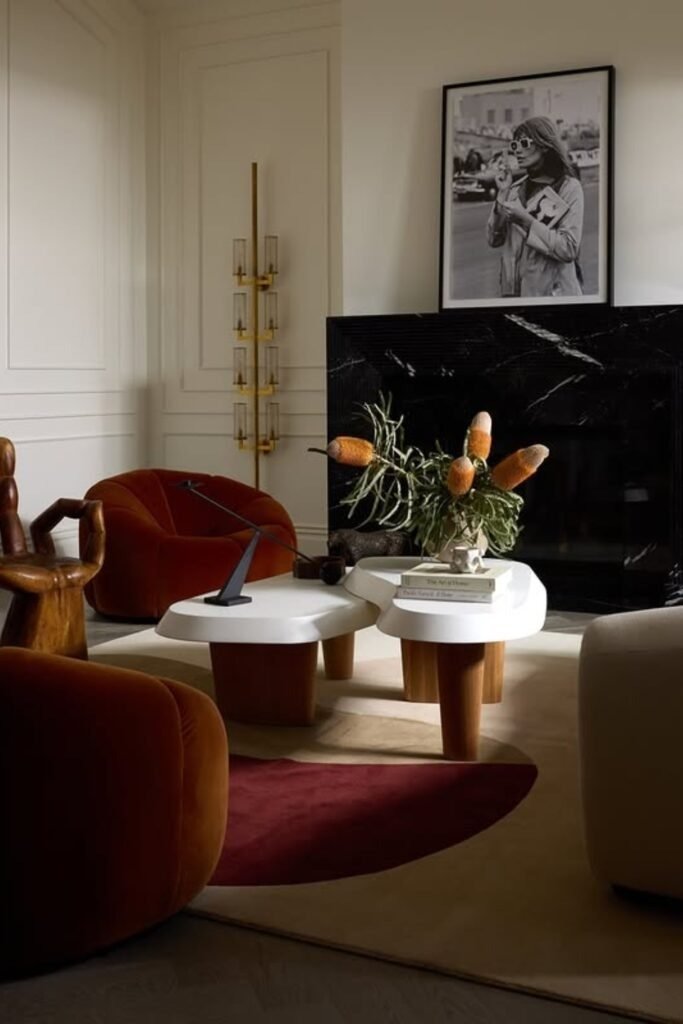
Contrast is essential for avoiding a flat, dull look. Pair dark walls with lighter furniture, or combine matte and glossy finishes to add visual interest. Even small contrasting details, like a lighter rug against a dark floor or pale cushions on a dark sofa, can emphasize depth. Balanced contrast keeps the room dynamic while maintaining the moody ambiance.
One color backdrop
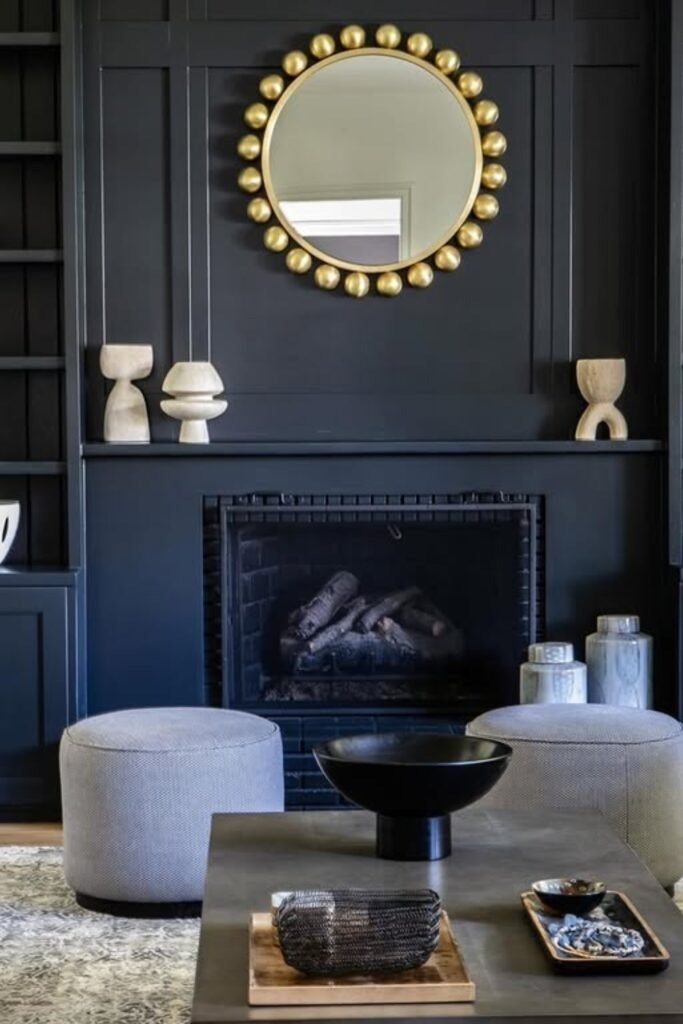
Sometimes the simplest approach is to use one dominant color as a backdrop. A single dark shade across walls, shelving, or cabinetry allows other elements like artwork, lighting, and furniture to shine. This creates cohesion and reduces visual clutter while emphasizing the mood. A monochromatic foundation also gives the space flexibility for seasonal or small decorative changes without losing the intended vibe.
Warm glow focus
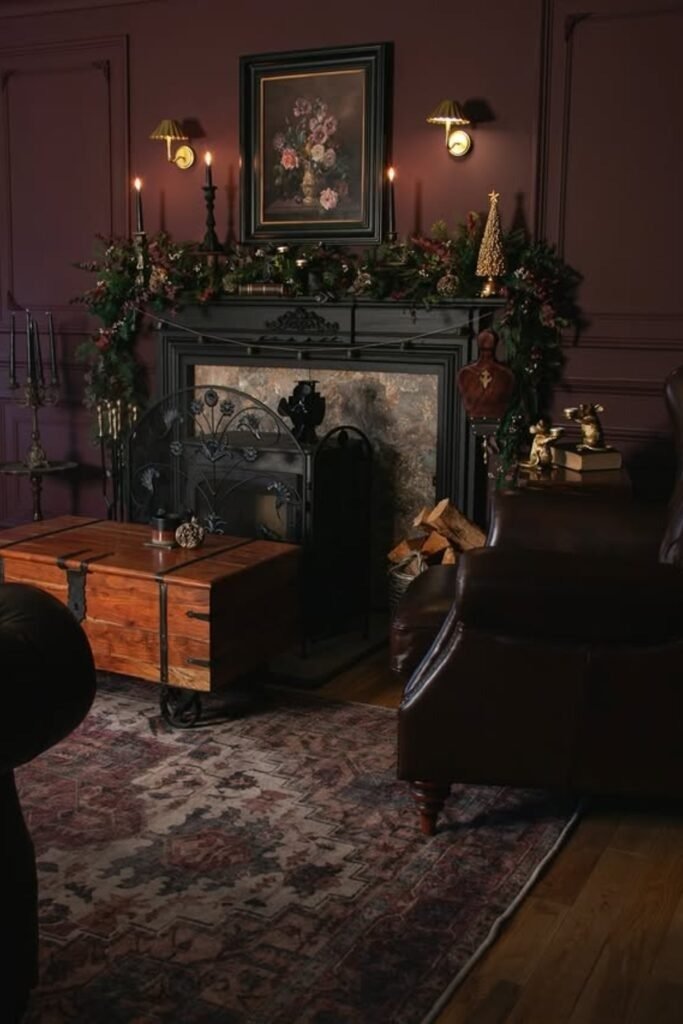
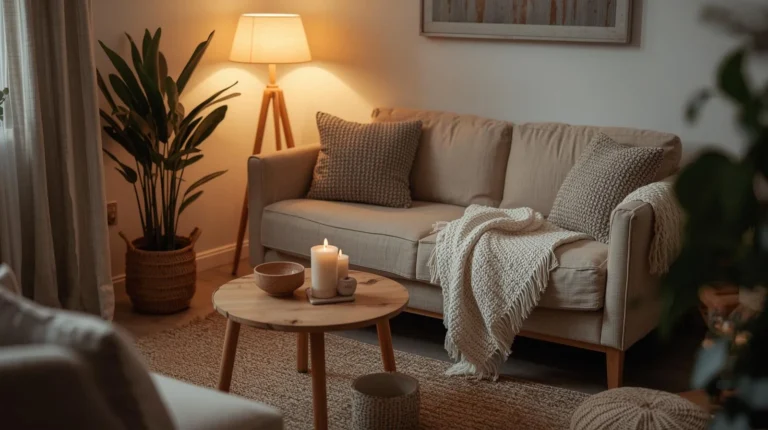
A warm glow from lighting fixtures, candles, or a fireplace enhances coziness in moody living rooms. Warm tones in bulbs or lamps mimic natural light and create an inviting atmosphere. This glow works best when paired with darker colors and textured surfaces, emphasizing softness and intimacy in contrast to harsh overhead lighting.
Sofa sets tone
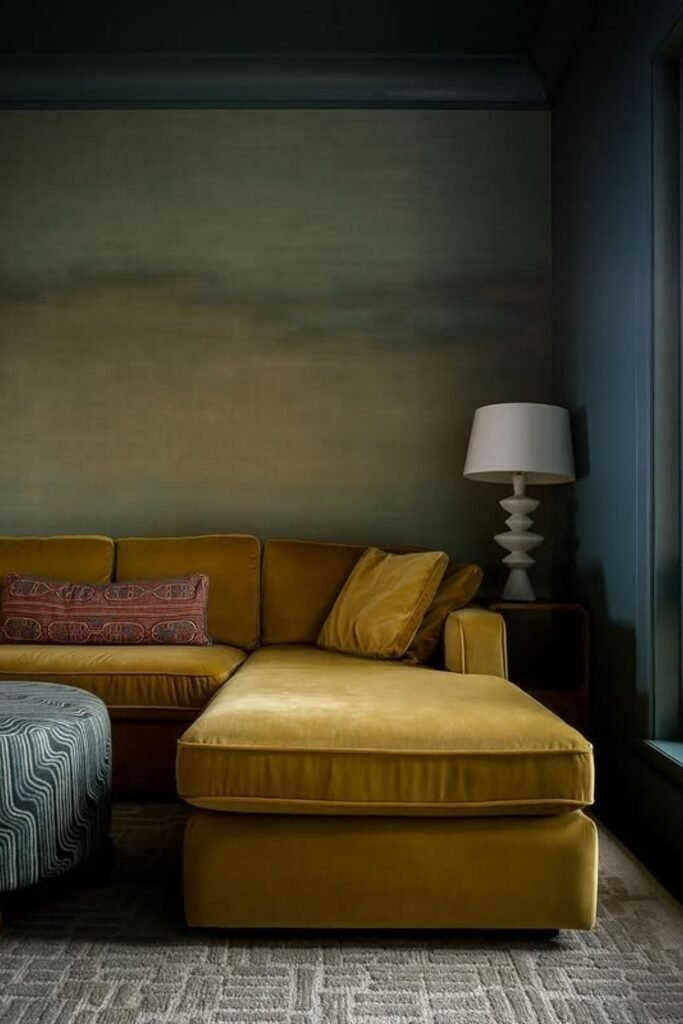
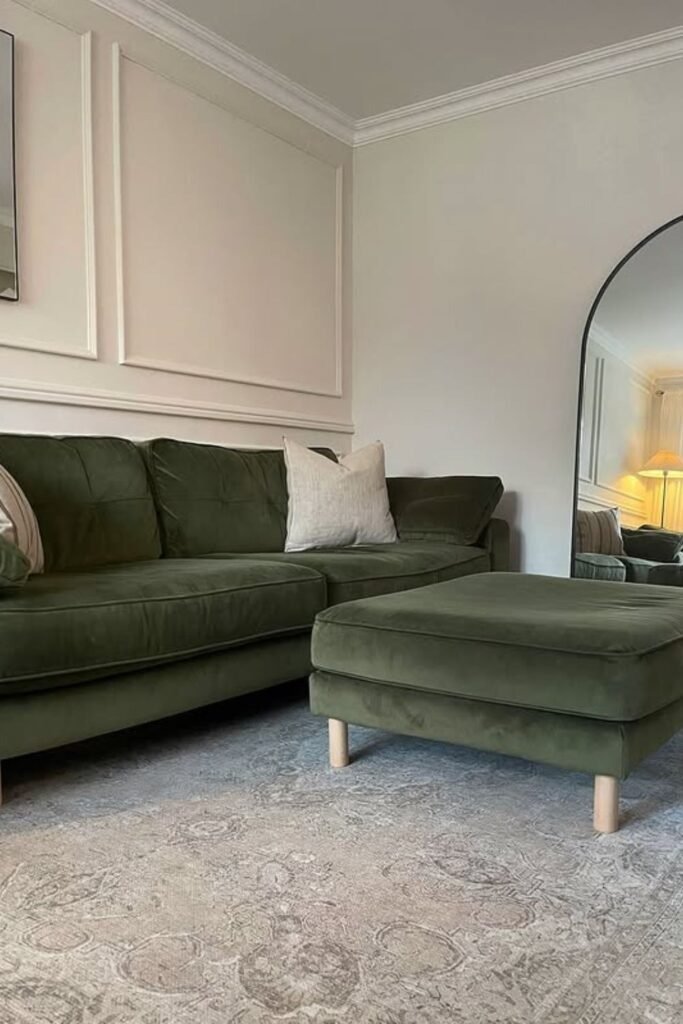
The sofa is often the anchor in a moody living room. Choosing a piece with the right color, material, and size can define the room’s overall character. Deep tones and soft fabrics like velvet or wool create visual warmth, while the style should match the intended mood—structured for sophistication or plush for relaxed comfort. The sofa can also influence other choices, from rugs to lighting, ensuring consistency throughout the space.
Comfort over contrast
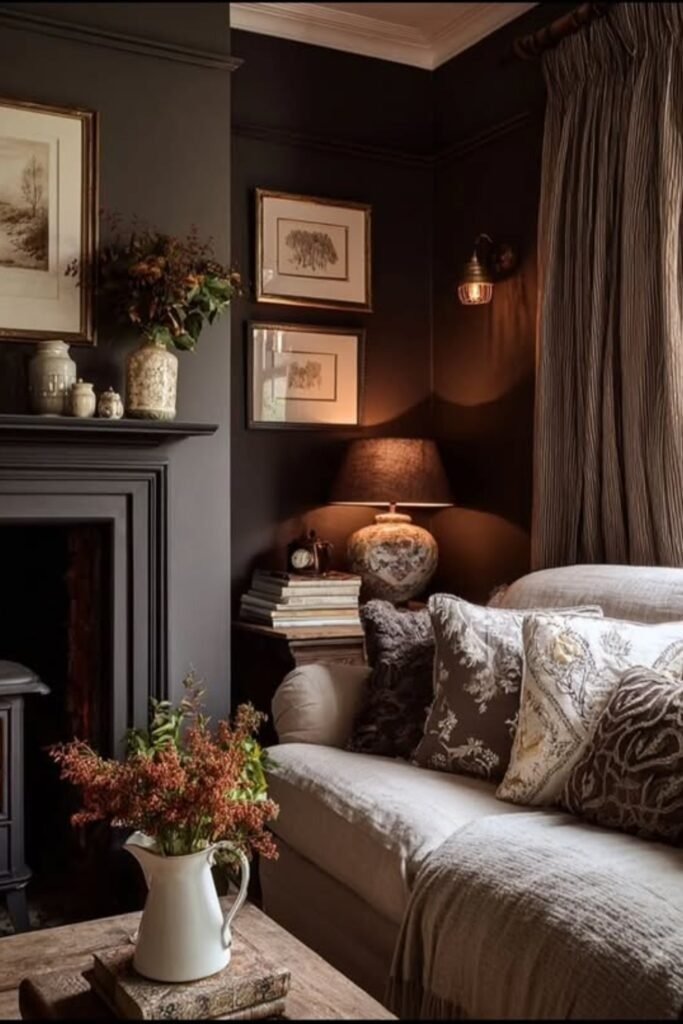
While contrast is important, comfort always takes priority in a moody living room. A well-chosen chair, cozy blanket, or supportive sofa invites people to linger. Even if the visual contrast is subtle, the physical comfort reinforces the mood, making the space feel lived-in and approachable. Prioritizing comfort ensures the room is not only visually appealing but genuinely usable.
Flow matters more
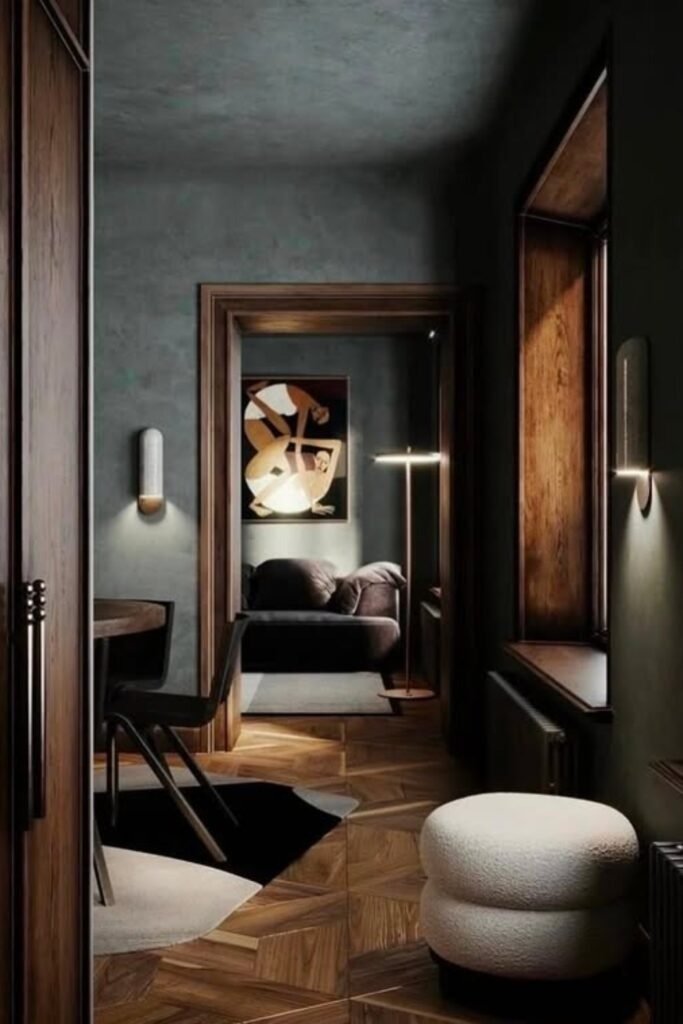
How people move through a room affects its mood. Open pathways, thoughtful furniture placement, and clear access to focal points like a fireplace or window maintain flow. A moody living room should feel intimate without feeling cramped, so arranging furniture to support movement is critical. Good flow also allows light to travel naturally, enhancing textures and tones without cluttering the design.
Quiet symmetry
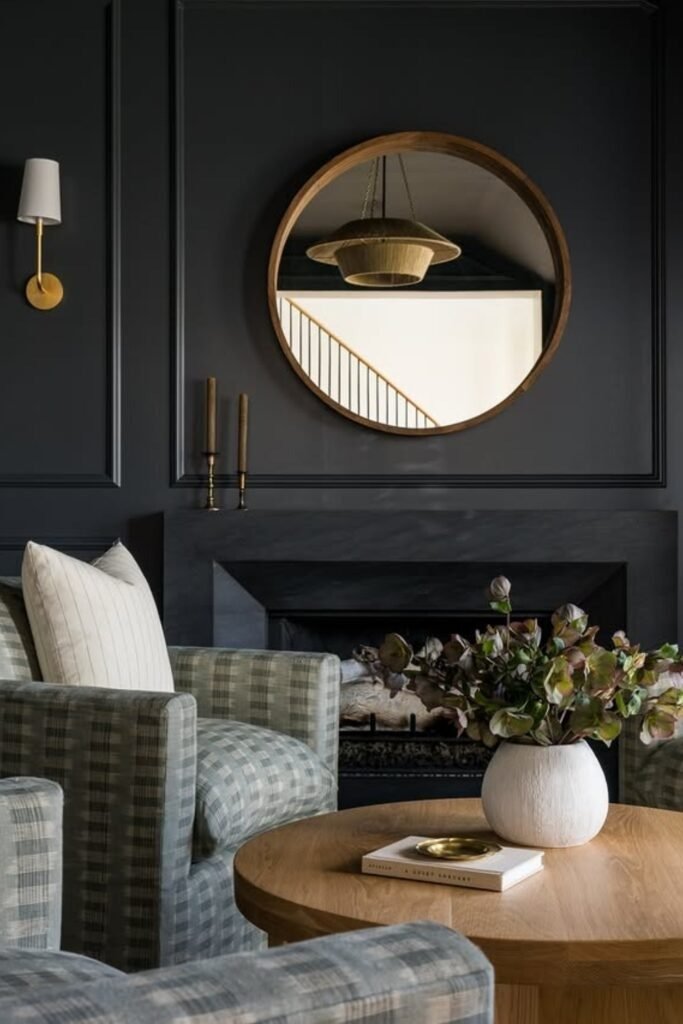
Symmetry creates calm in moody living rooms. Mirrored furniture arrangements, balanced lighting, and matched artwork introduce subtle order that feels grounding. Quiet symmetry does not need to be strict; even approximated balance across furniture and decor can foster a sense of stability. This technique allows darker tones and textures to shine without visual chaos.
Framed by contrast
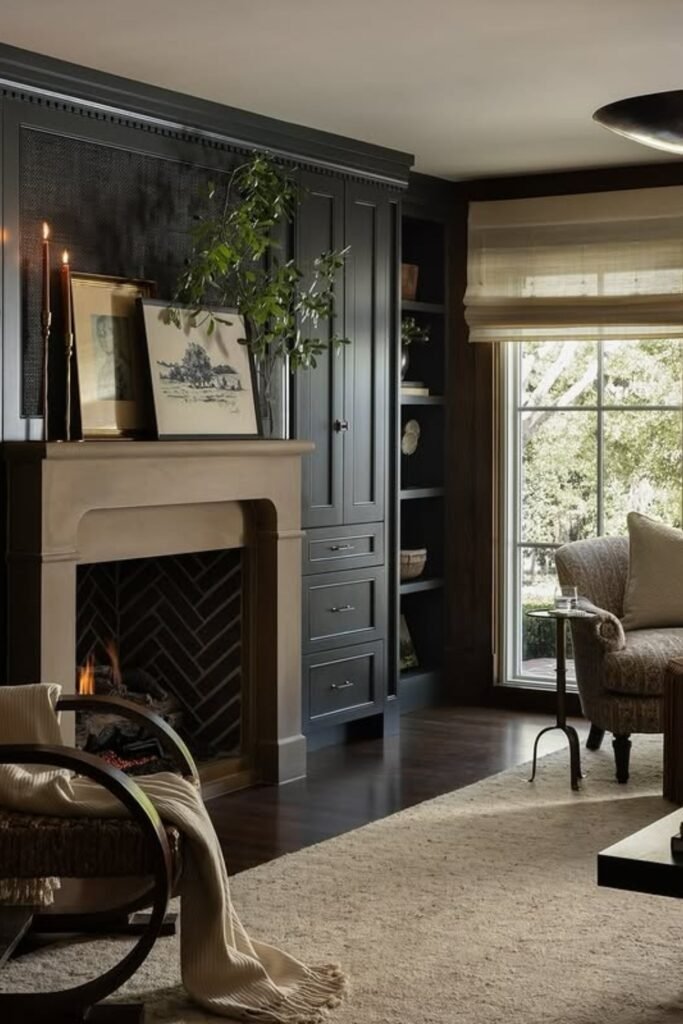
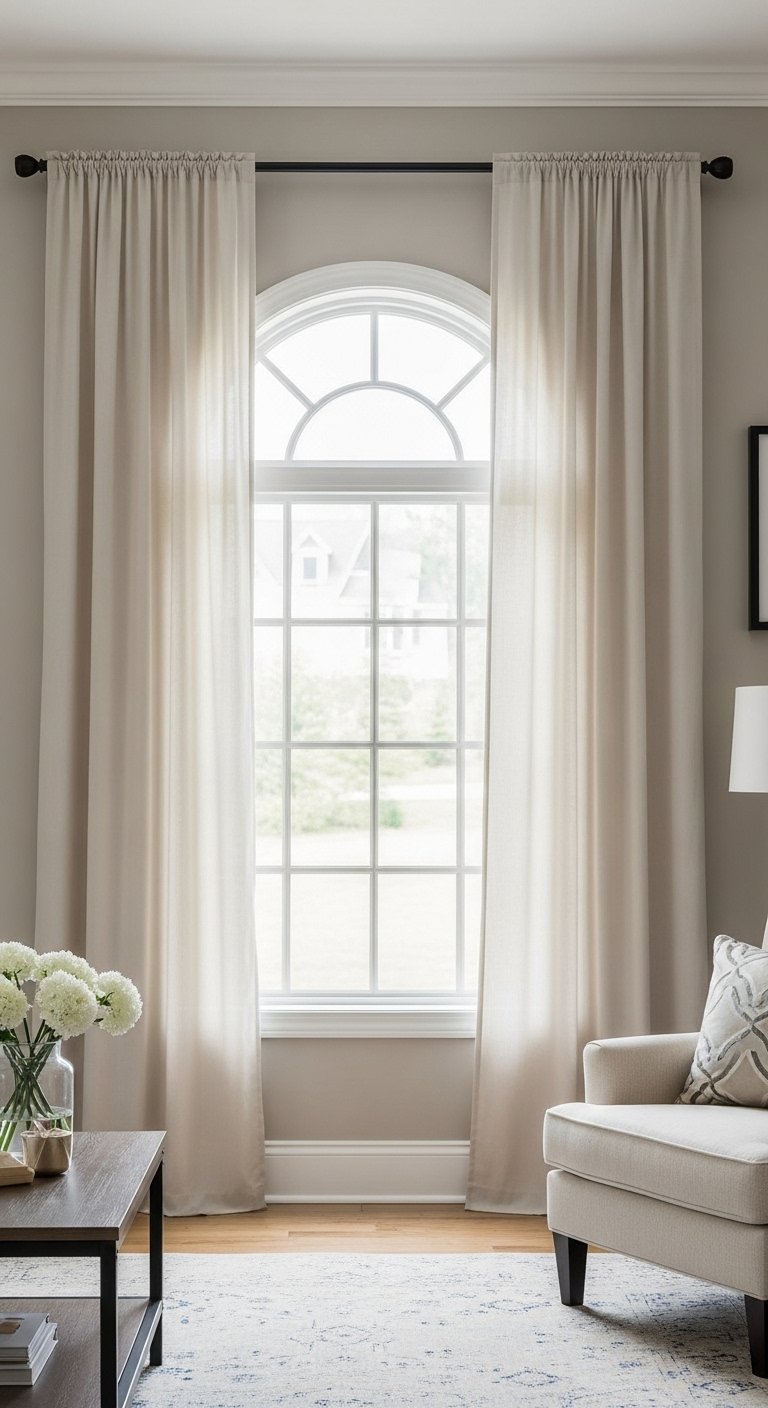
Windows and doors can be framed with contrasting curtains, trim, or wall treatments to emphasize natural light and create layers of interest. Framing light sources with dark or bold elements heightens depth and gives the room a polished look. This approach works particularly well in moody rooms, where light contrast becomes part of the mood itself.
Grounded from above
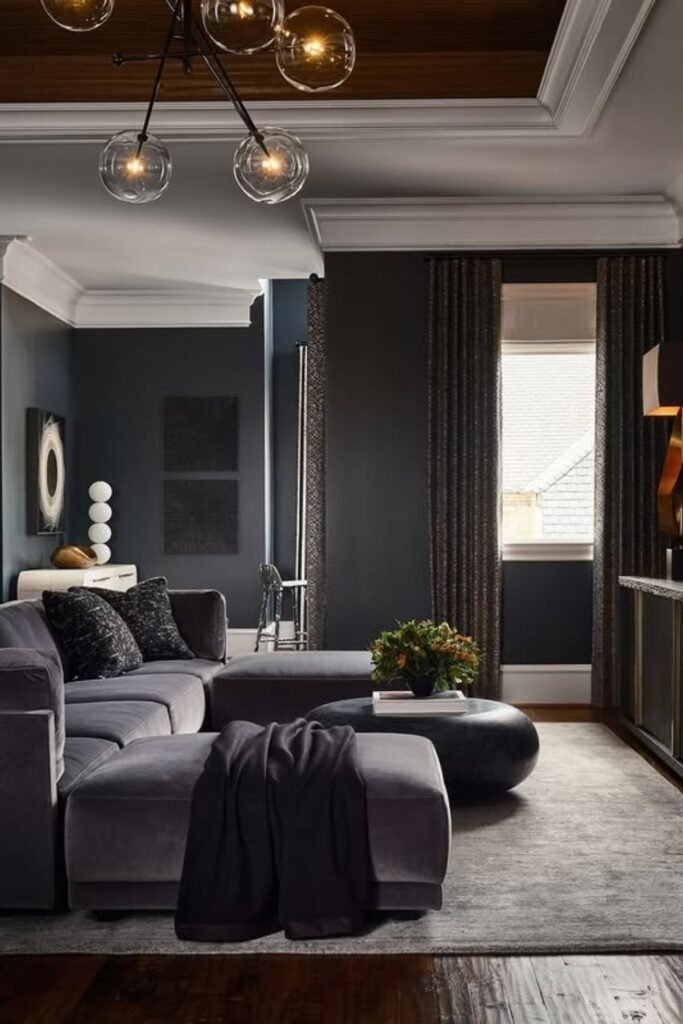
Ceilings often get overlooked in living room design. Painting or texturing the ceiling in a darker or coordinating tone can help a moody room feel grounded and intimate. Alternatively, adding beams or ceiling treatments introduces depth and visual interest. Grounding from above ensures the entire space contributes to the intended atmosphere rather than leaving empty areas that feel detached.
Library-style calm
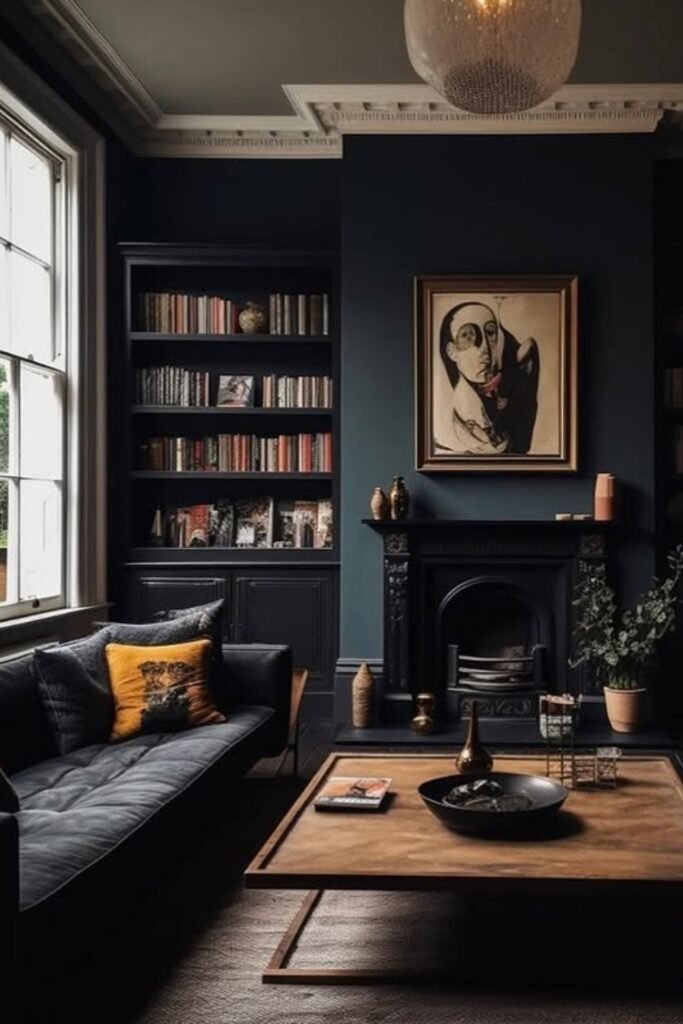
Integrating bookshelves or display units with curated items adds a library-style calm to moody living rooms. Dark wood or metal finishes, paired with soft lighting, create an intellectual and serene atmosphere. This approach combines function with aesthetics, offering storage while reinforcing depth and character. It makes the room feel lived-in, personal, and intentionally designed.
Subtle depth works
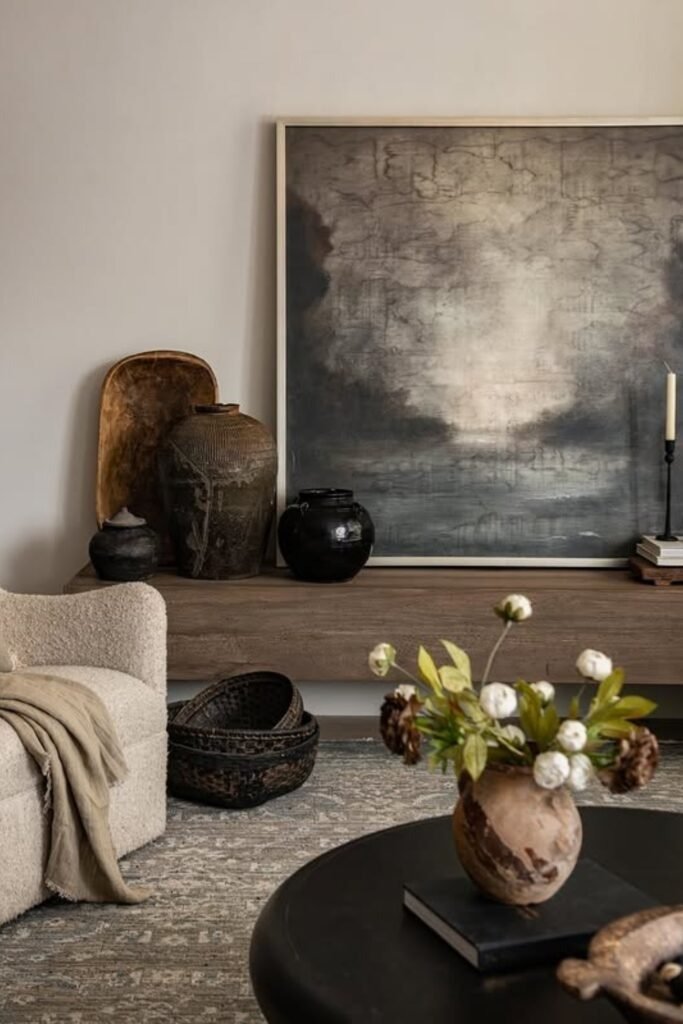
Depth does not always require bold contrasts. Subtle shifts in tone, slight texture changes, or layered furniture arrangements can create a sophisticated mood. Even minor details like trim, moldings, or rugs can contribute to layered depth. Subtlety ensures the room remains calming and cohesive rather than busy or overwhelming.
Dark walls anchor
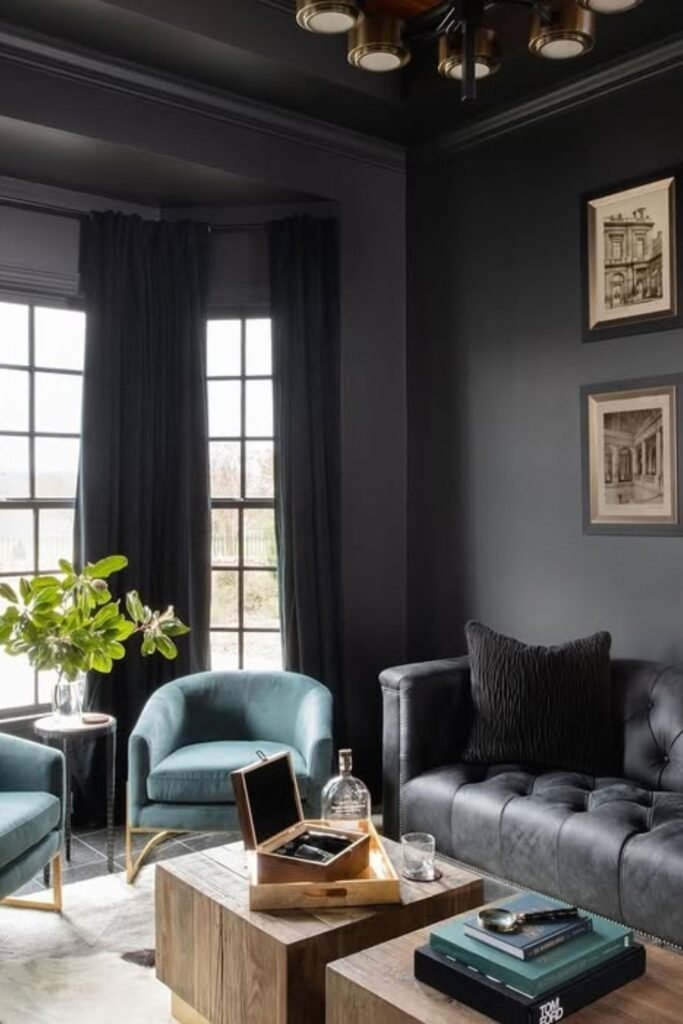
Using dark walls anchors a moody living room and defines its personality. Deep grays, blues, or greens establish a foundation that other elements can build on. Anchoring walls provide a visual stop that helps furniture, art, and lighting pop while giving the space stability. Anchored walls also make the room feel intentional and timeless.
Dark frames light
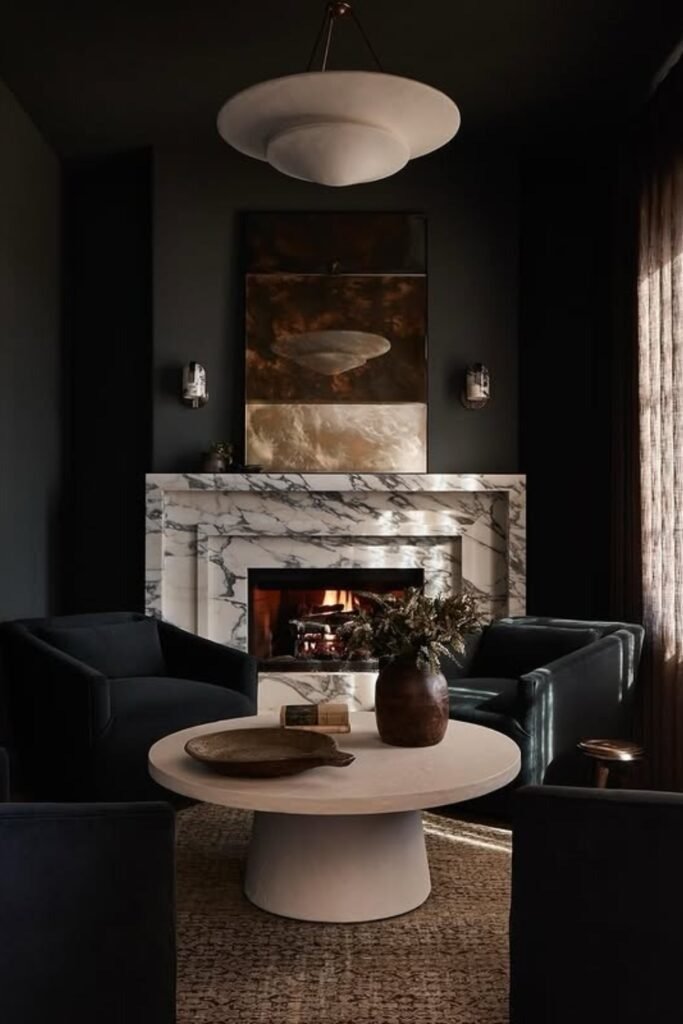
In addition to walls, darker frames for windows, doors, and furniture help highlight light sources. Dark frames act as a visual boundary that emphasizes brightness without diminishing the room’s moody character. They also add structure and clarity to layered interiors, creating balance between dark and light elements.
Dark frames daylight
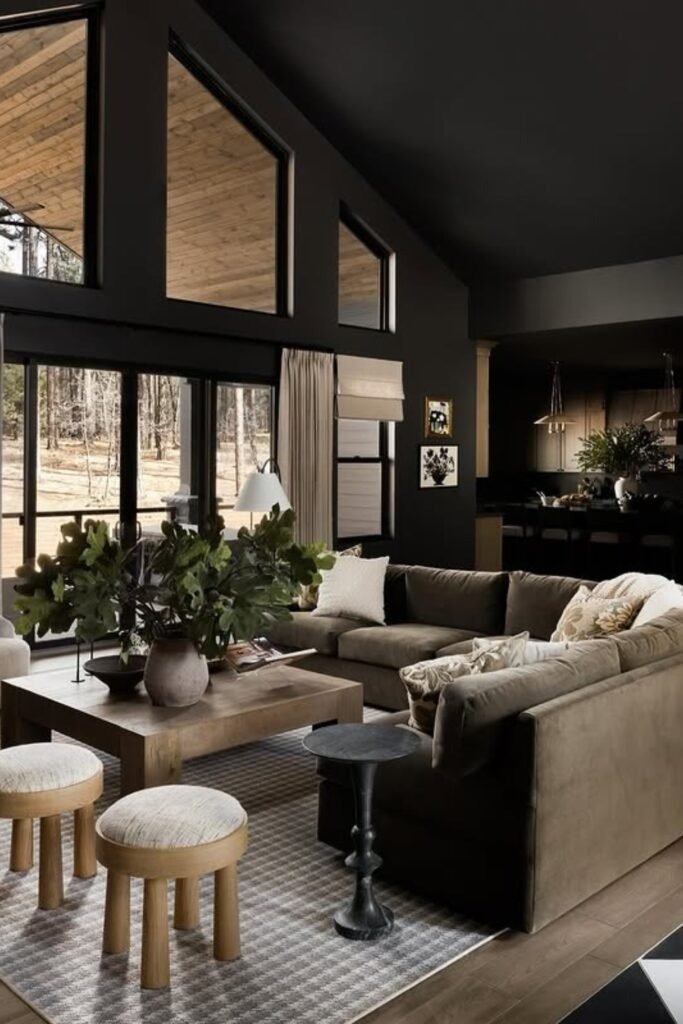
Even natural light benefits from framing. Window frames in deep colors or matte black accents enhance daylight by creating contrast that draws attention outward. This technique ensures that a moody living room remains connected to the outdoors while maintaining its intimate atmosphere.
Quiet paneling effect
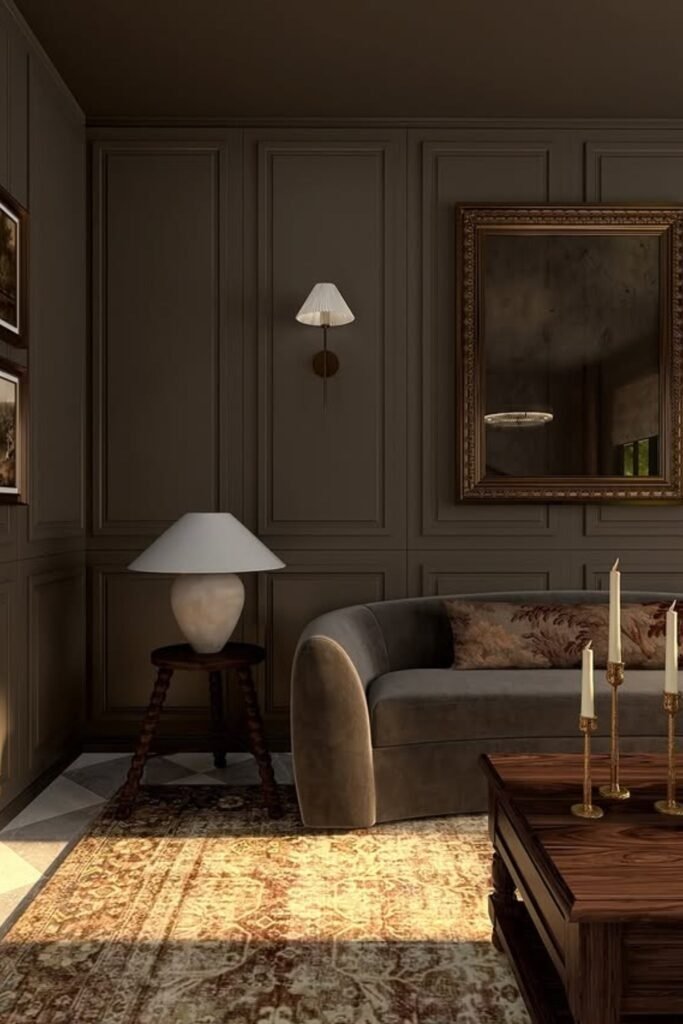
Wall paneling adds dimension and structure without overpowering a moody design. Matte or semi-gloss panels in darker tones create a quiet, sophisticated backdrop. They work particularly well with layered furniture and lighting, emphasizing depth and texture while keeping the mood controlled.
Warm tones calm
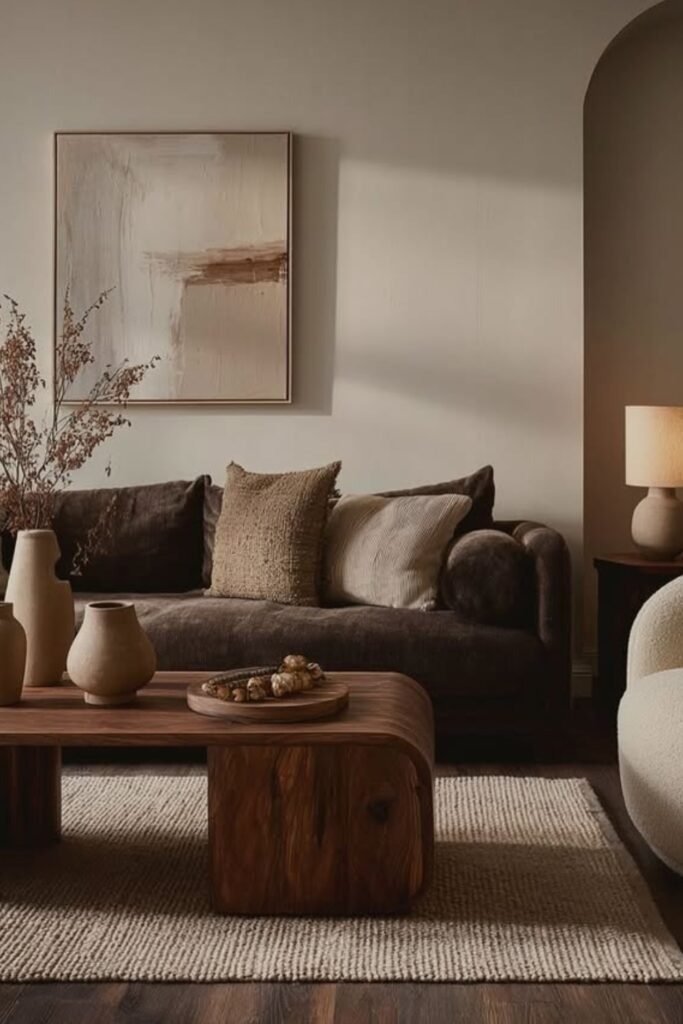
Even in predominantly dark rooms, warm tones like ochre, rust, or soft brown can soften the atmosphere. They prevent the room from feeling cold or uninviting. Warm accents in textiles, decor, or lighting introduce a natural balance that keeps the moody living room comfortable and approachable.
Green grounds space
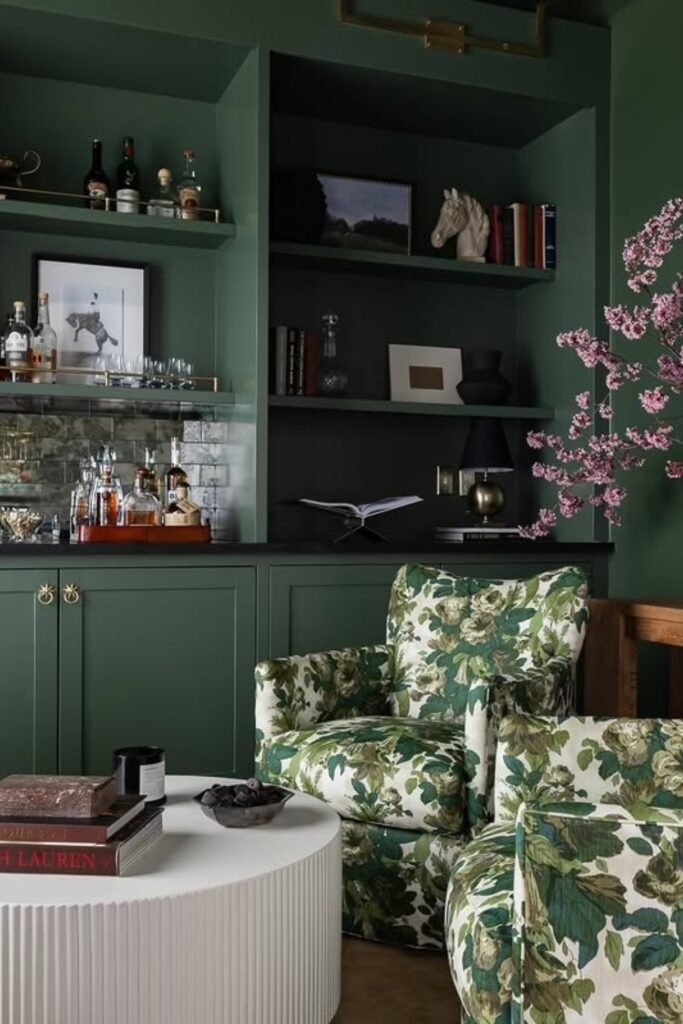
Adding greenery helps a moody living room feel alive and grounded. Plants bring texture, color, and a sense of connection to nature. Even subtle additions like a small potted plant or leafy centerpiece add visual relief and enhance mood without breaking the room’s cohesive atmosphere.
Ceiling sets mood
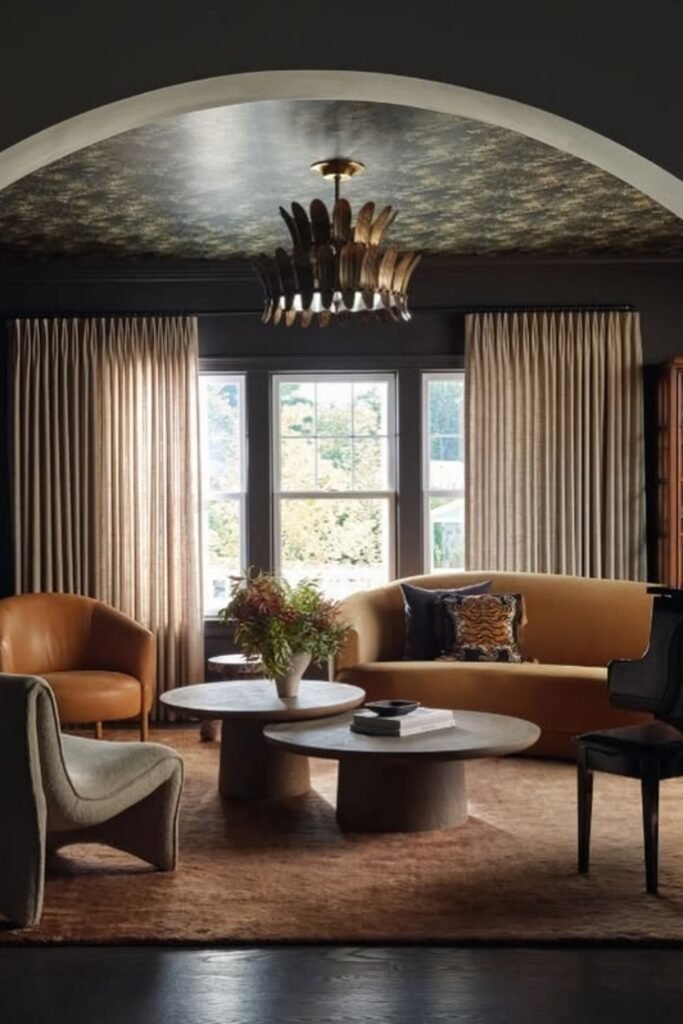
Beyond color, ceiling treatments influence mood. Coffered ceilings, textured plaster, or painted panels can add depth and draw the eye upward. Thoughtful ceiling design enhances the room’s architectural character while supporting the intimate and layered feel that defines moody living rooms.
Natural materials lead
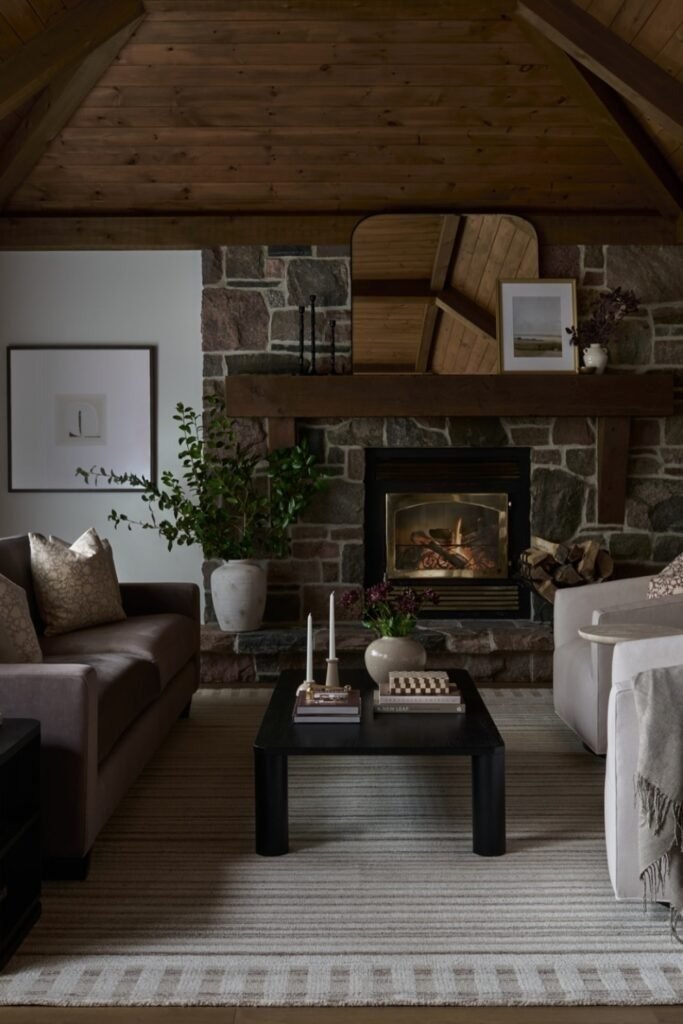
Wood, stone, leather, and metal provide authenticity and tactility in moody living rooms. Using natural materials in floors, furniture, or decor reinforces comfort and timelessness. These materials interact beautifully with layered lighting and deep colors, creating a space that feels grounded and intentional.
Old-world mood
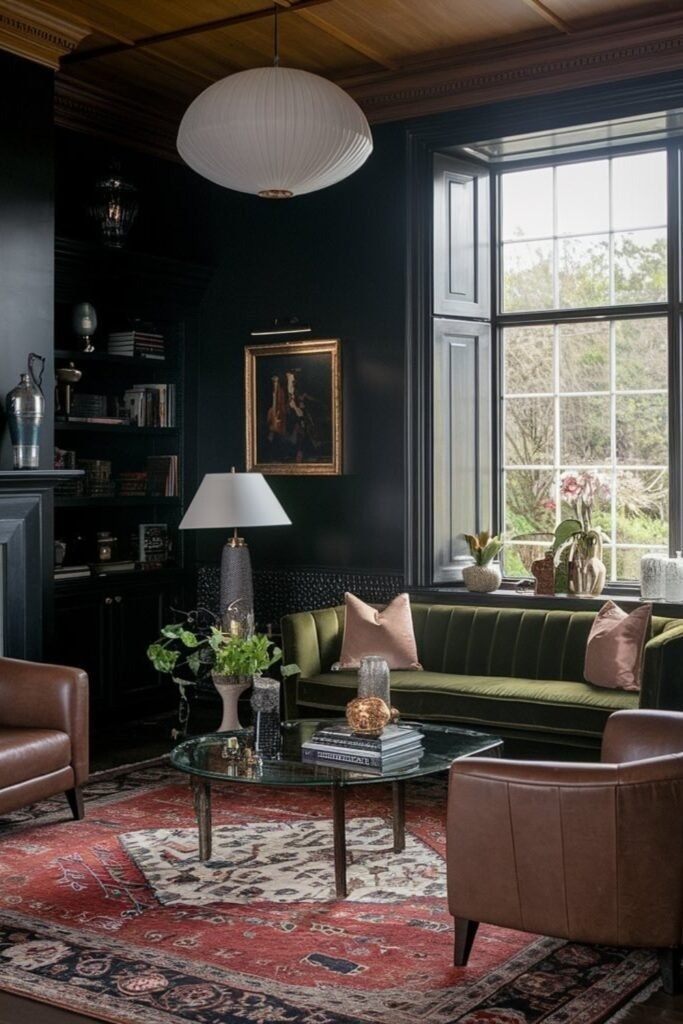
Incorporating classic or vintage elements adds old-world charm to moody living rooms. Antique furniture, framed art, or traditional textiles enrich the space with history and personality. This approach creates a balance between modern function and a timeless, intimate feel, enhancing the room’s layered mood.
3. FAQs
How do I keep a moody living room from feeling too heavy?
Maintaining balance is key. Introduce lighter textures, soft neutral accents, or subtle pops of color. Layered lighting ensures brightness where needed, and keeping pathways open prevents the space from feeling cramped. Balance between light and dark, soft and firm textures, and open and grounded spaces will make the room feel comfortable, not overwhelming.
Are moody living rooms only good for large spaces?
No. Moody living rooms work well in both large and small spaces. In smaller rooms, using dark tones on a single wall, strategic lighting, and minimal furniture helps maintain intimacy without making the space feel closed in. Thoughtful layout, layering, and light control allow moody designs to adapt to any room size.