10 Decor Ideas to Convert Your Home Office into a Moody Home Office

Creating a moody home office is more than just picking dark colors or adding a dim lamp. It is about shaping a space that helps your mind slow down and stay focused. After more than twenty years of working from home offices of every size and style, one thing is clear. The rooms that work best are the ones that feel steady, quiet, and grounded. A moody home office brings that feeling. It adds depth without pressure and comfort without distraction. When done right, it becomes a space where work feels easier and more natural instead of forced.
A moody office does not mean dark and heavy. It means thoughtful choices that support focus, calm thinking, and long work hours. Lighting, texture, sound, and comfort matter just as much as color. Each choice should support how you actually work, not just how the room looks in photos. The ideas below help you turn your office into a space that feels balanced, personal, and built for real workdays.
1. Choose Deep, Calm Wall Colors
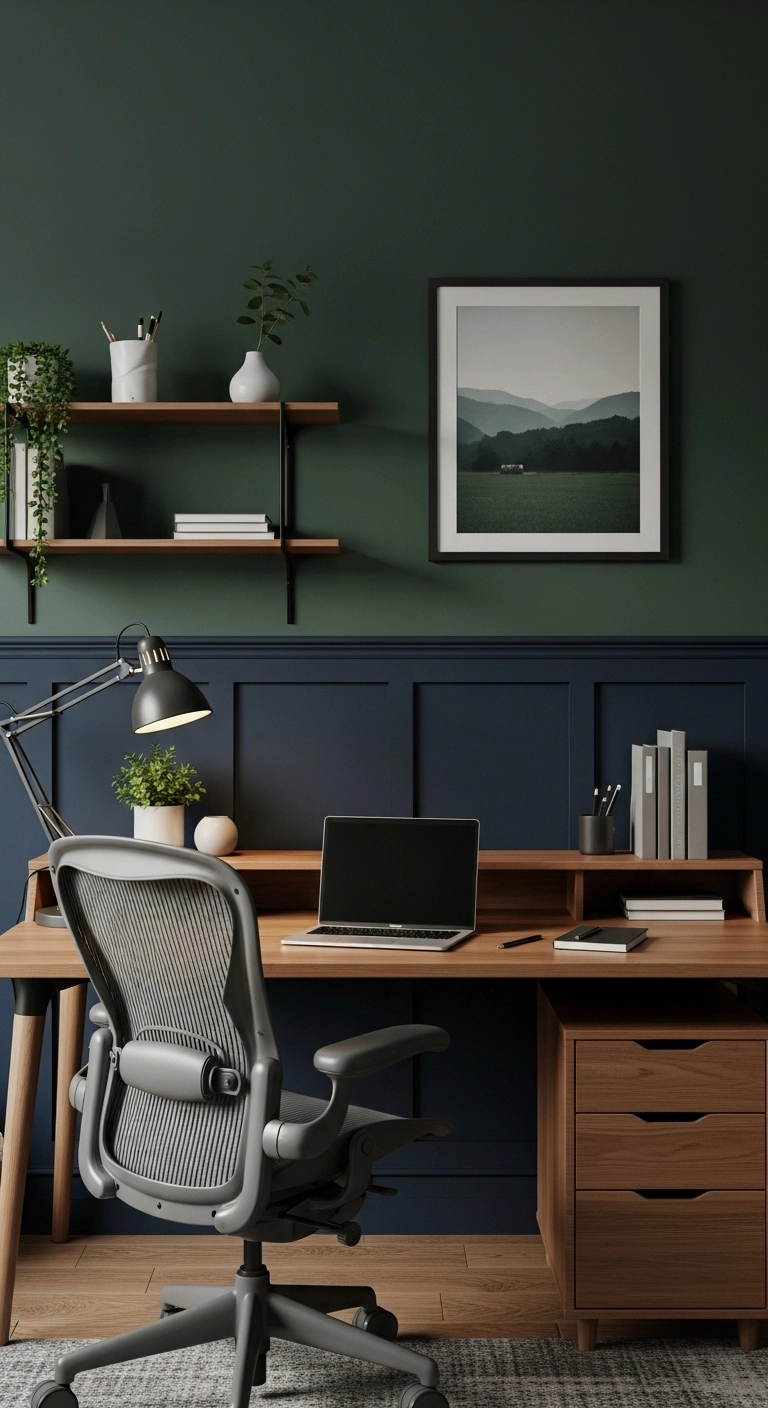
Wall color sets the emotional tone of your office more than any other detail. Deep, calm colors help the mind settle. They reduce visual noise and keep your focus from bouncing around the room. Dark green, deep blue, and soft charcoal work well because they feel steady and quiet. These colors do not shout for attention. Instead, they hold the space together and let your work take center stage.
Matte finishes are important in a moody office because they soften light rather than reflect it. This keeps the room from feeling sharp or restless. If painting the entire room feels like too much, one wall behind the desk works well. It creates depth without closing the space in. Over time, many people notice that darker walls actually feel easier on the eyes during long work hours. They reduce glare and help the room feel calm from morning to evening. Pairing dark walls with simple, lighter furniture keeps the space balanced and comfortable.
2. Invest in Strategic Lighting

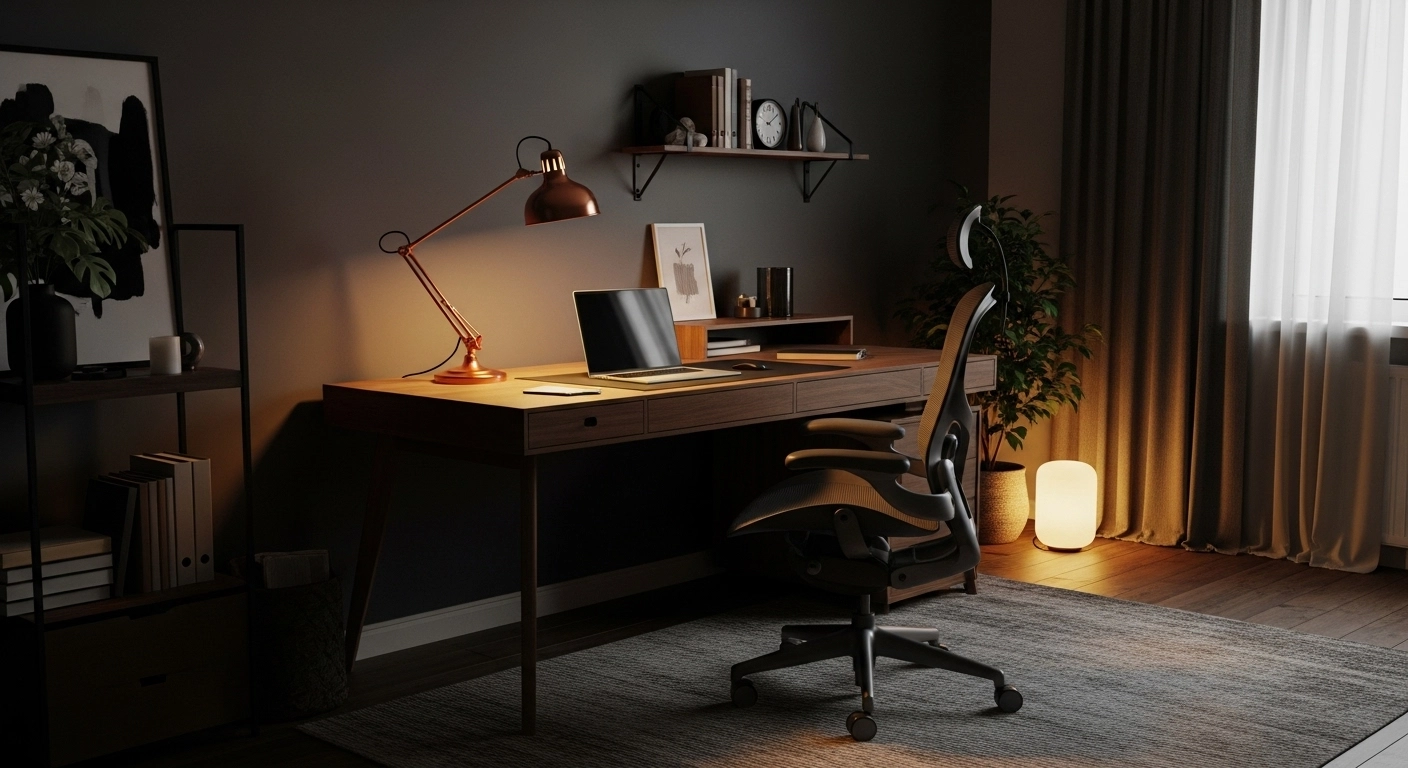
Lighting decides whether a moody office feels calm or uncomfortable. One bright ceiling light can ruin the whole effect and make the room feel harsh. A better approach is soft, layered lighting that supports how you work throughout the day. Warm light helps the eyes relax and keeps the space feeling steady instead of tense.
A desk lamp focused on your work area reduces strain and keeps shadows off your hands and keyboard. Floor lamps or wall lights add gentle background light that fills the room without overpowering it. Natural light is still important, even in a moody space. Curtains or blinds that soften daylight allow you to control brightness without losing the calm feeling. When lighting is balanced, your office feels usable from early morning to late evening without needing harsh adjustments.
3. Bring in Texture with Fabrics
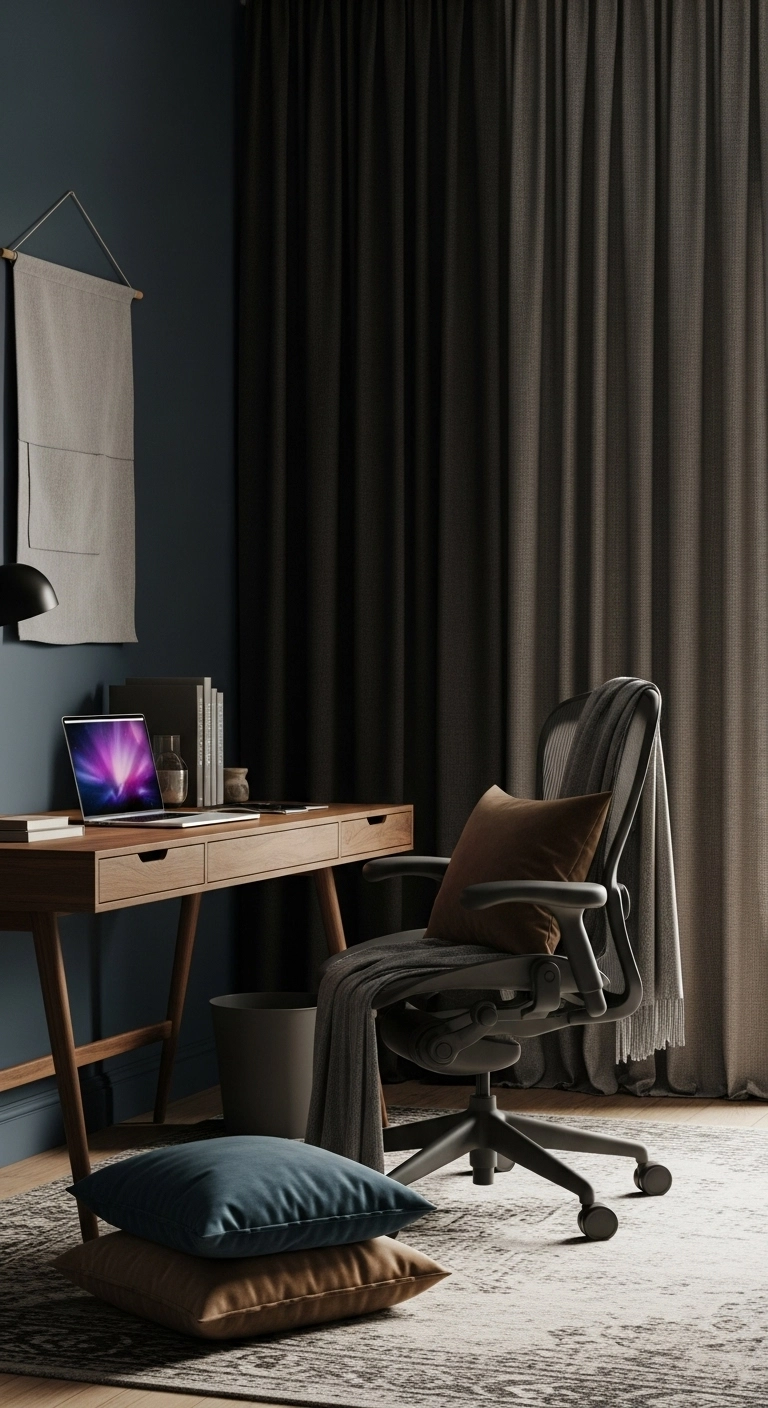
Texture keeps a dark room from feeling flat. Fabric adds warmth and comfort in a way paint alone cannot. Rugs soften sound and make the space feel grounded, especially if your office has hard floors. Curtains made from thicker fabric help control light and add depth to the walls. Even a simple cushion or throw changes how the room feels when you sit down to work.
Texture also affects how relaxed your body feels in the space. A soft surface underfoot or behind your back signals comfort, which helps you stay focused longer. Mixing textures, such as wood with fabric or smooth surfaces with soft ones, keeps the room interesting without being distracting. Over time, these small details make the office feel lived in and supportive instead of cold or empty.
4. Select Functional, Dark Wood Furniture
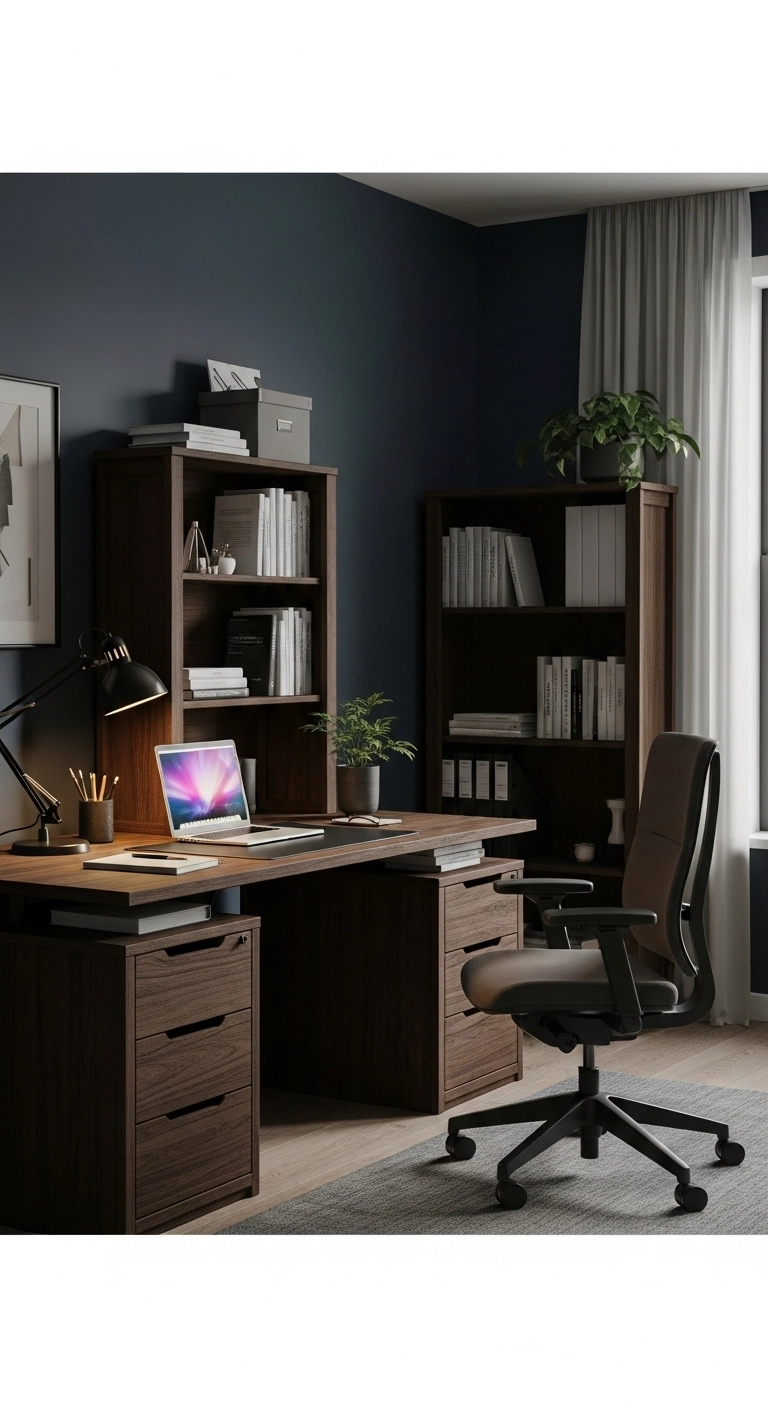
Furniture anchors a moody home office. Dark wood brings warmth and weight to the room, helping it feel stable and intentional. A solid desk creates a sense of permanence that supports focused work. Shelving in similar tones keeps the space cohesive and calm.
Function matters more than decoration here. Furniture should support your work habits, not fight them. Clean lines and simple shapes prevent visual clutter and keep your attention on the task in front of you. Dark wood ages well and works with many color palettes, which makes it a long-term choice rather than a trend. When furniture feels reliable and easy to use, it becomes part of the background, allowing your mind to stay on your work.
5. Use Minimal and Purposeful Decor
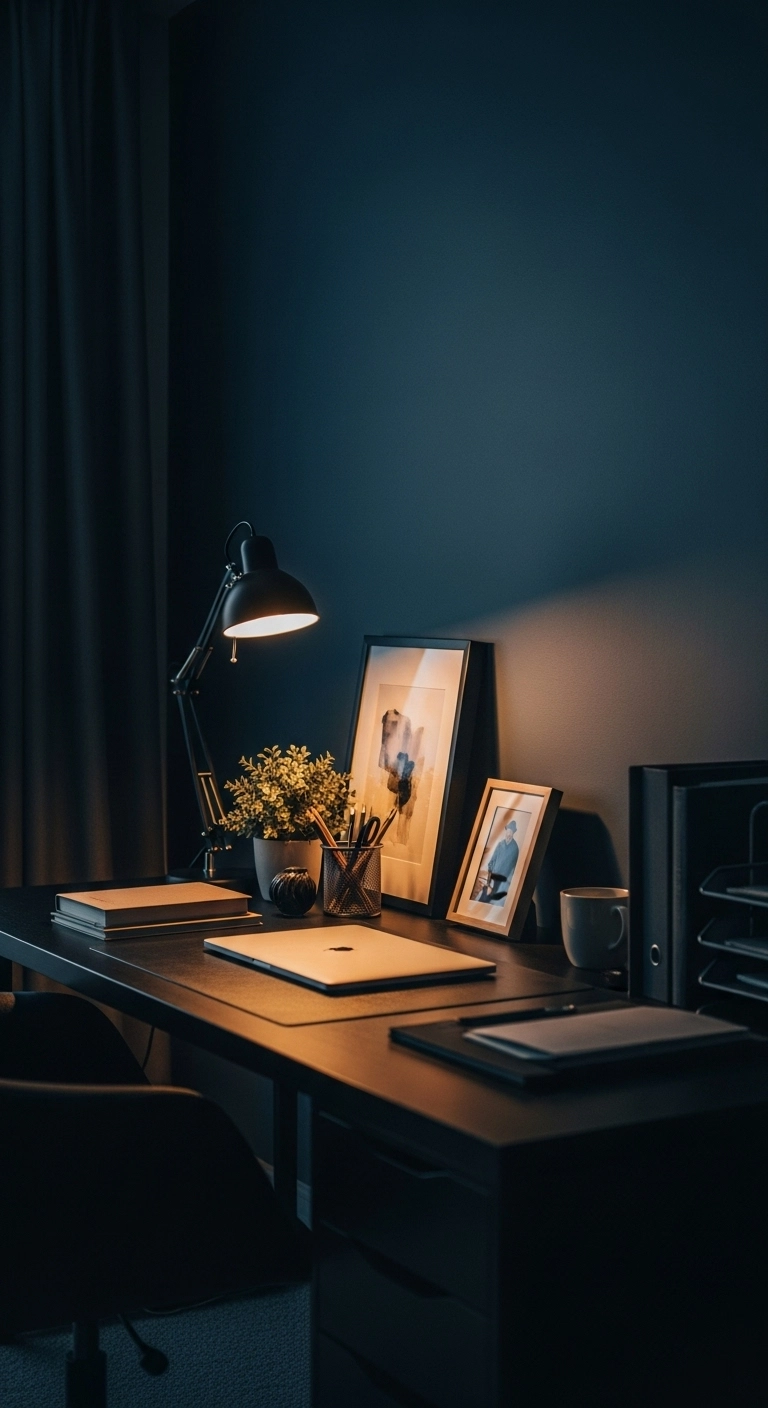
Decor in a moody office should never feel random. Each item should earn its place. Too many objects pull attention away from work and break the calm feeling the space is meant to create. Purposeful decor supports focus while still making the room feel personal.
A single framed image, a meaningful object, or a simple piece of art adds character without clutter. Clear surfaces help your brain feel organized, which directly affects productivity. When you remove unnecessary items, the room feels lighter even with darker colors. Over time, many people find they work better in spaces where everything has a reason to be there. This balance between personal and practical is key to a moody office that truly works.
6. Incorporate Greenery Thoughtfully
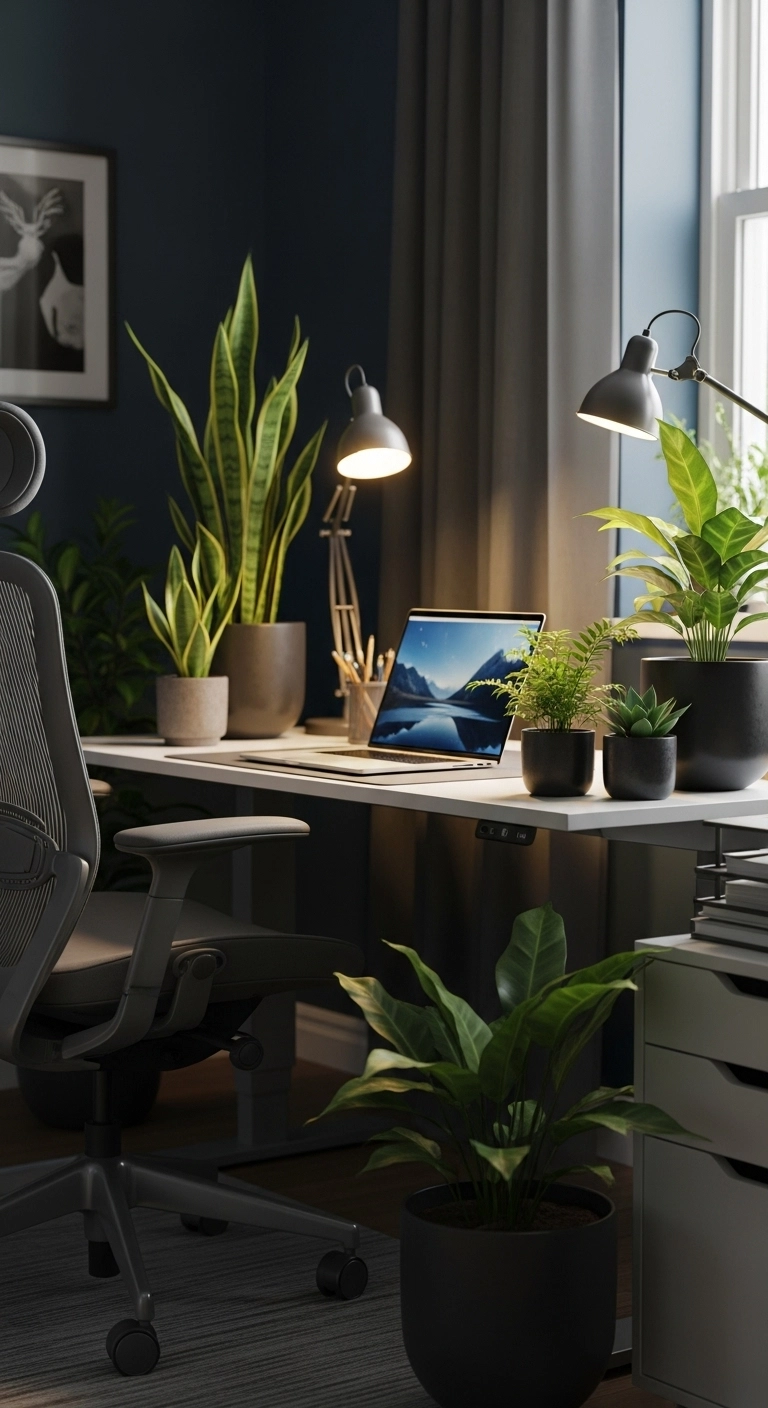
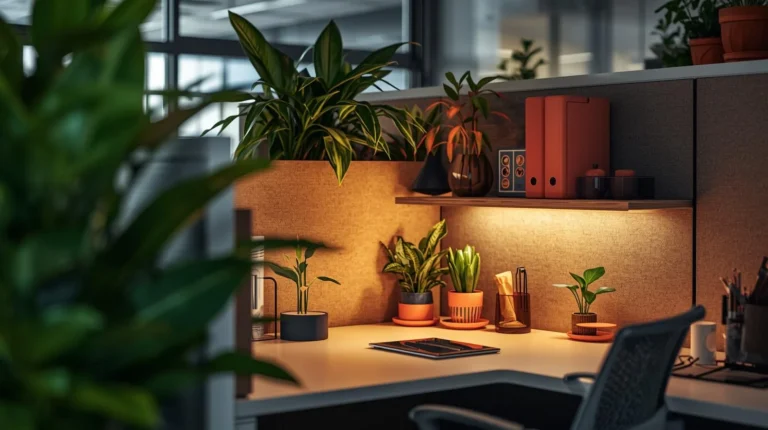
Plants bring life into a moody office in a quiet, natural way. Greenery softens dark colors and adds movement without noise. Plants like snake plants or ZZ plants work well because they need little care and tolerate low light. This keeps them from becoming a chore.
Placing plants in darker or neutral pots helps them blend into the room instead of standing out too much. Even one plant can change how the room feels. It adds freshness and makes the space feel balanced instead of heavy. Over time, having something living in the room can improve mood and focus, making long workdays feel less draining.
7. Layer Artwork and Personal Touches
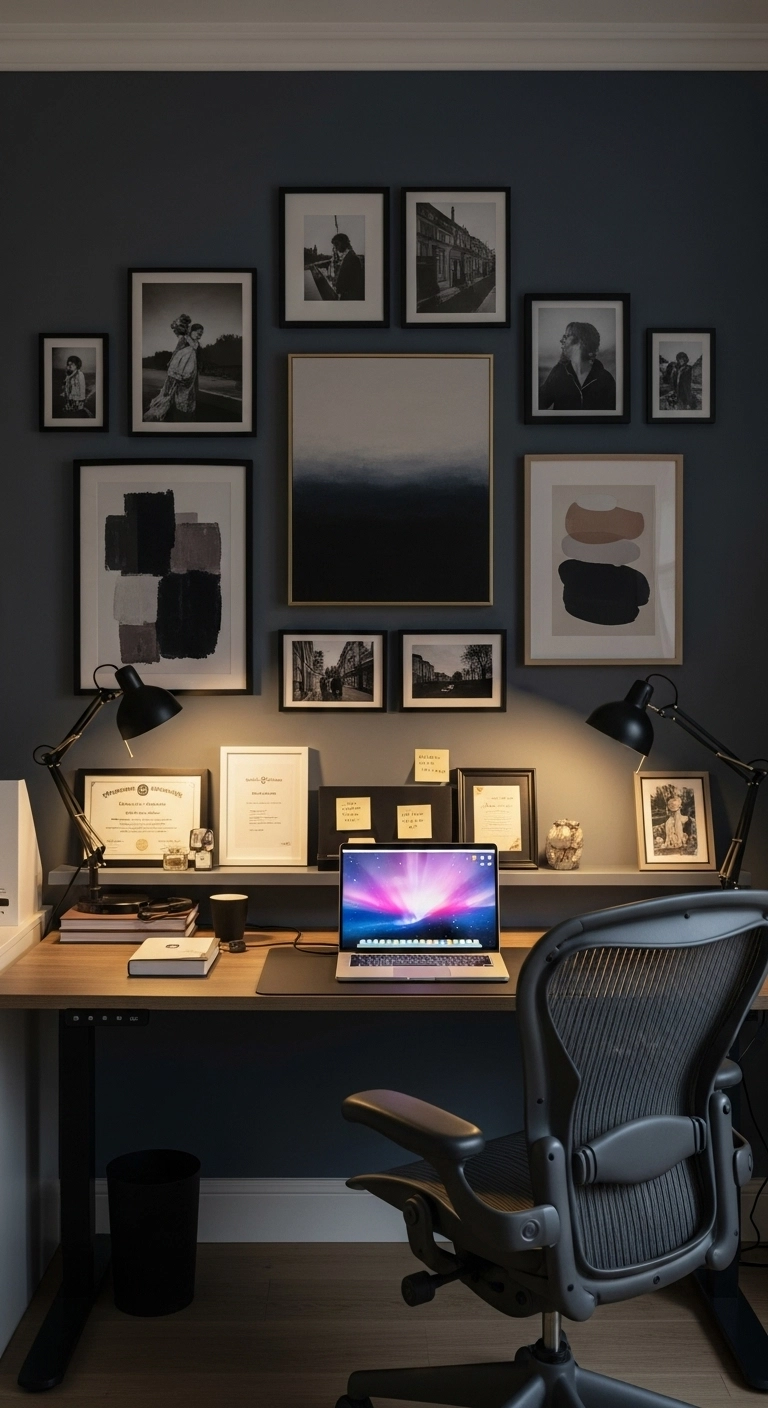
Artwork gives a moody office identity. It anchors the space and makes it feel finished. Pieces with soft contrast, muted tones, or simple forms work best. Bright or busy images can pull attention away from work and disrupt the calm mood.
Personal items also matter, but they should be chosen carefully. A framed reminder, a certificate, or a meaningful photo adds motivation without clutter. When artwork and personal touches are placed with intention, they support focus instead of competing with it. The goal is to create a space that feels like it belongs to you while still respecting the purpose of work.
8. Add Ambient Sound and Scent
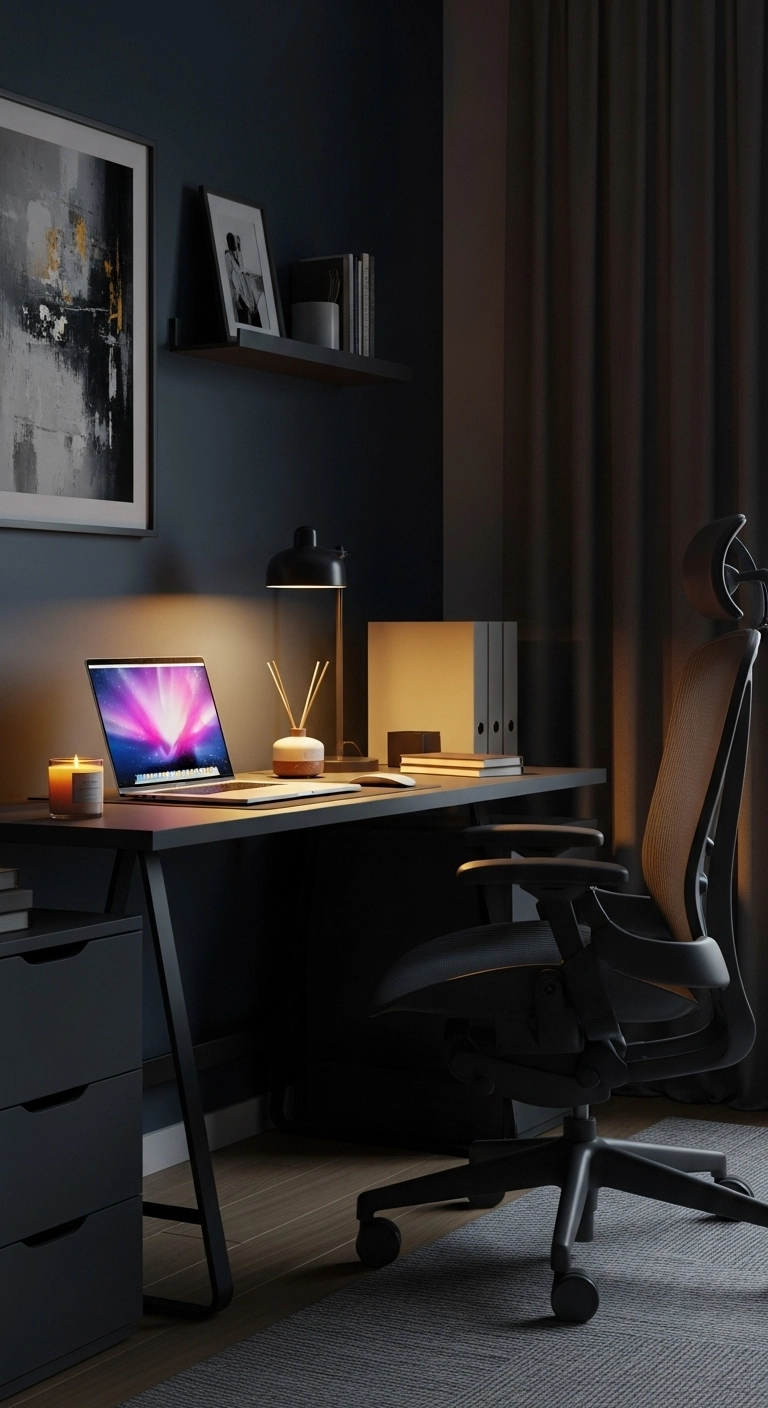
A moody office works best when it engages more than just sight. Sound and scent shape how the space feels throughout the day. Soft background music or gentle noise can block distractions and help you stay focused. Silence works for some, but many people find low, steady sound helps maintain concentration.
Scent also affects mood and energy. Light, natural scents can make the space feel calm and steady without becoming distracting. Candles or diffusers should be subtle and consistent. Strong smells can tire the senses and break focus. When sound and scent are balanced, the office feels more complete and supportive of long work sessions.
9. Keep Technology Organized and Out of Sight
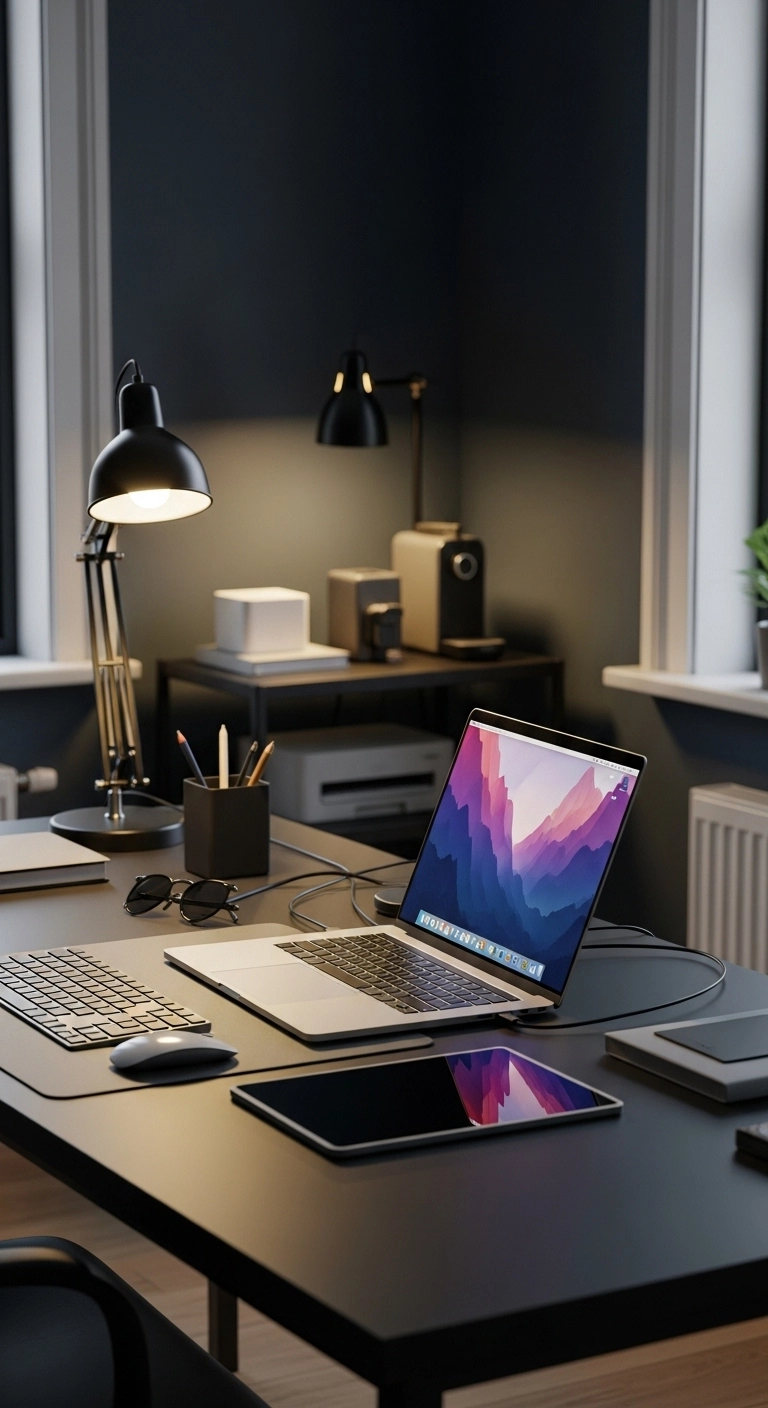
Technology is necessary, but visual clutter from cords and devices can break the calm of a moody office. Organizing cables and keeping extra devices tucked away helps maintain a clean look. Wireless tools and simple setups reduce distraction and make the space easier to manage.
When screens and devices have clear places, the room feels intentional rather than chaotic. This directly affects focus. A clean setup tells your brain that this space is for work, not constant stimulation. Over time, this organization supports better habits and a calmer workflow.
10. Focus on Personal Comfort and Ergonomics
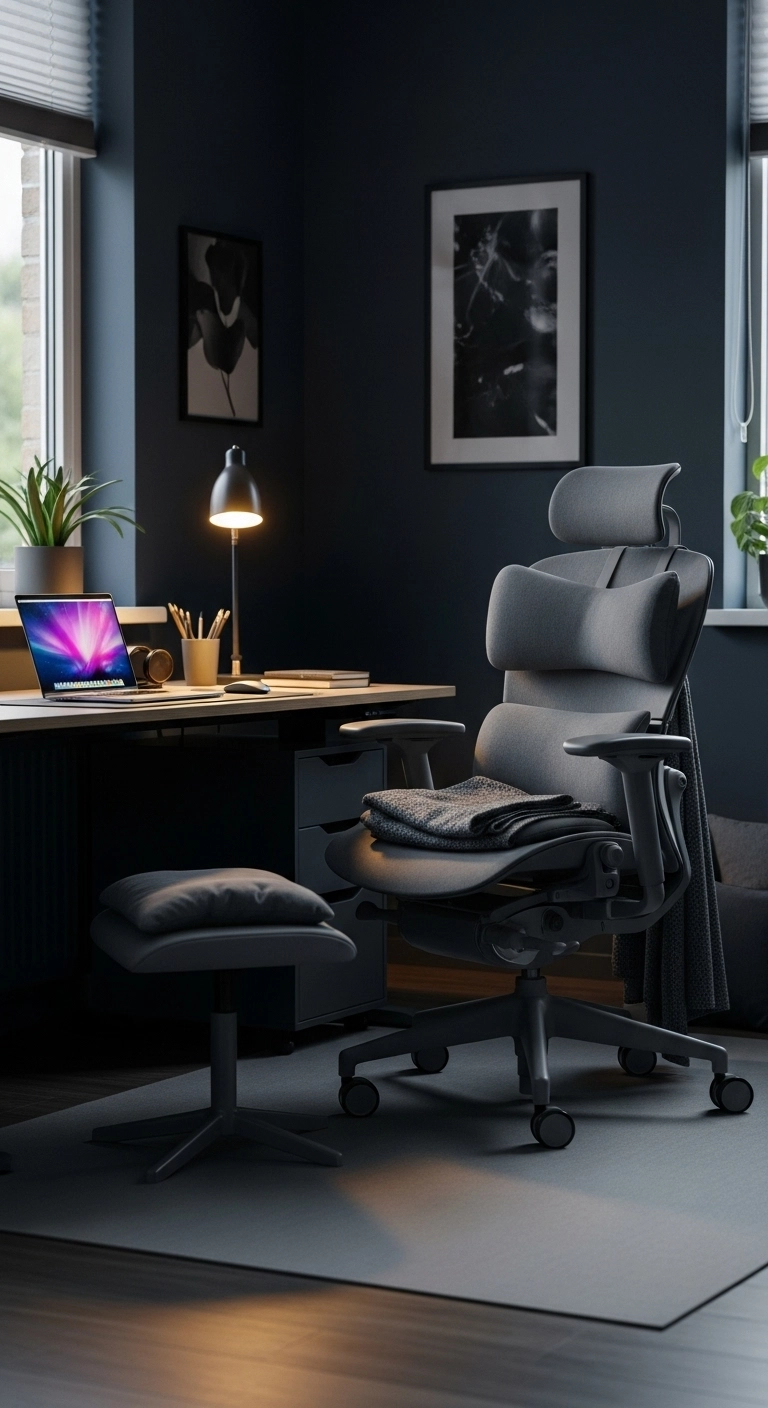
Comfort is the foundation of a successful home office. A moody space should feel good to sit in for hours. Proper chair support, desk height, and screen placement protect your body and reduce fatigue. Physical comfort allows mental focus to last longer.
Small comfort details also matter. A footrest, a cushion, or a way to adjust light and temperature makes the space feel personal. When your body feels supported, work feels less demanding. A moody office should feel like a place you can settle into, not a space you rush to leave.
Final Thoughts
Turning a home office into a moody space does not require major changes or expensive upgrades. It requires thoughtful decisions that support how you work and how you want to feel during the day. Deep wall colors, soft lighting, textured fabrics, and functional furniture work together to create calm and focus. Plants, art, sound, and scent add balance without distraction.
Every choice should support comfort and clarity. When your office feels steady and personal, productivity follows naturally. A well-designed moody home office becomes more than a workspace. It becomes a place where work feels manageable, focused, and even enjoyable. With careful attention to both function and feeling, your office can support your goals while reflecting your personality in a quiet, confident way.