10 Aesthetic Twin Beds in One Room Ideas

When you place two twin beds in one room, the setup can either feel cramped or become a welcoming space. How you arrange the beds, select furniture, and play with colors determines the final result. Designing a room with twin beds is practical for siblings, guests, or vacation homes. With careful planning, the room can look organized, neat, and cozy without sacrificing style.
The key is balance. Each bed should have enough space so the room feels fair for everyone using it. At the same time, the design shouldn’t feel split or heavy. Over the years, I’ve worked with guest rooms, family homes, and vacation rentals, and I’ve seen what truly works. Below are ten ways to style twin beds so the design feels natural and functional.
1. Classic Side-by-Side Arrangement
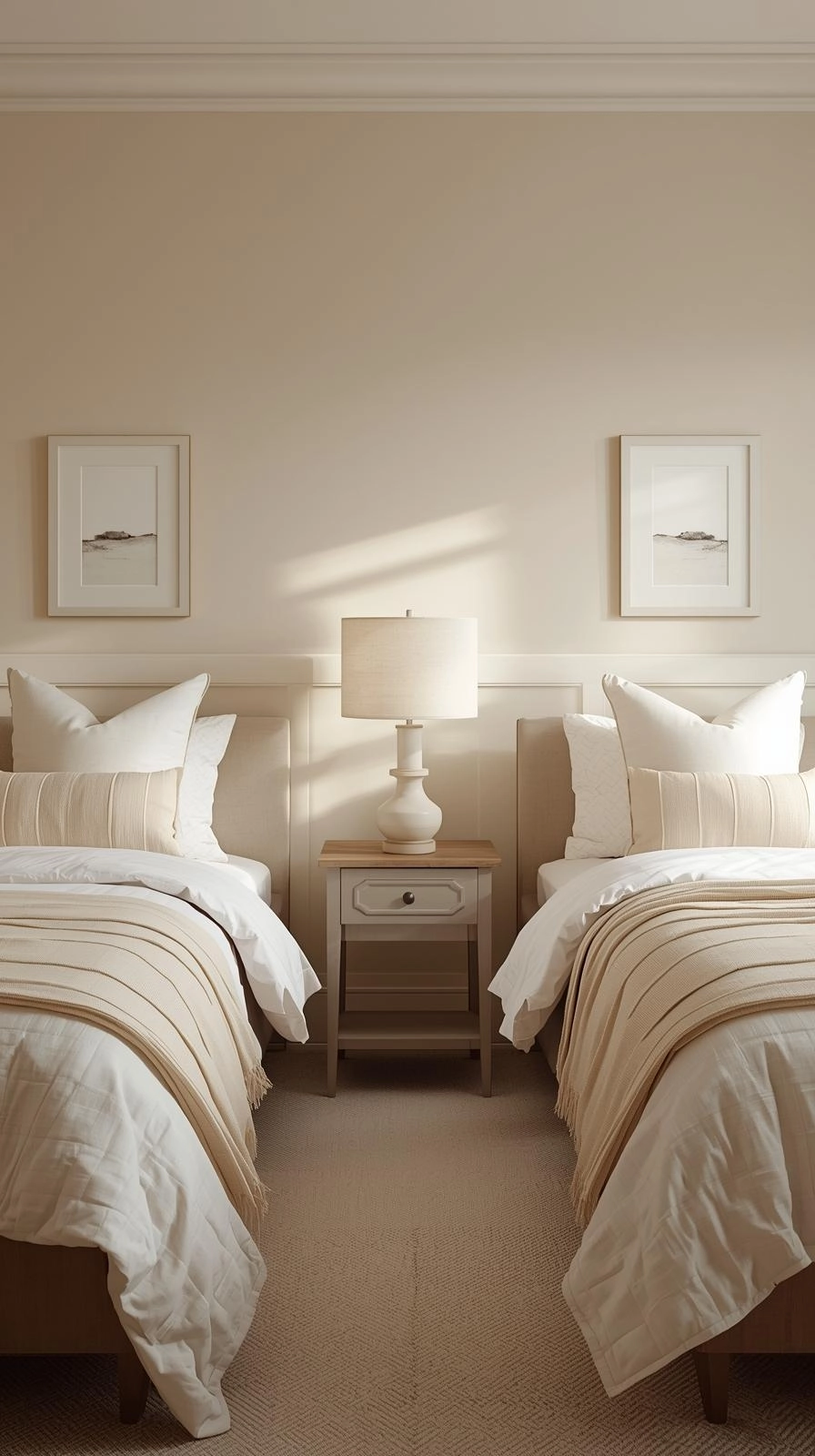
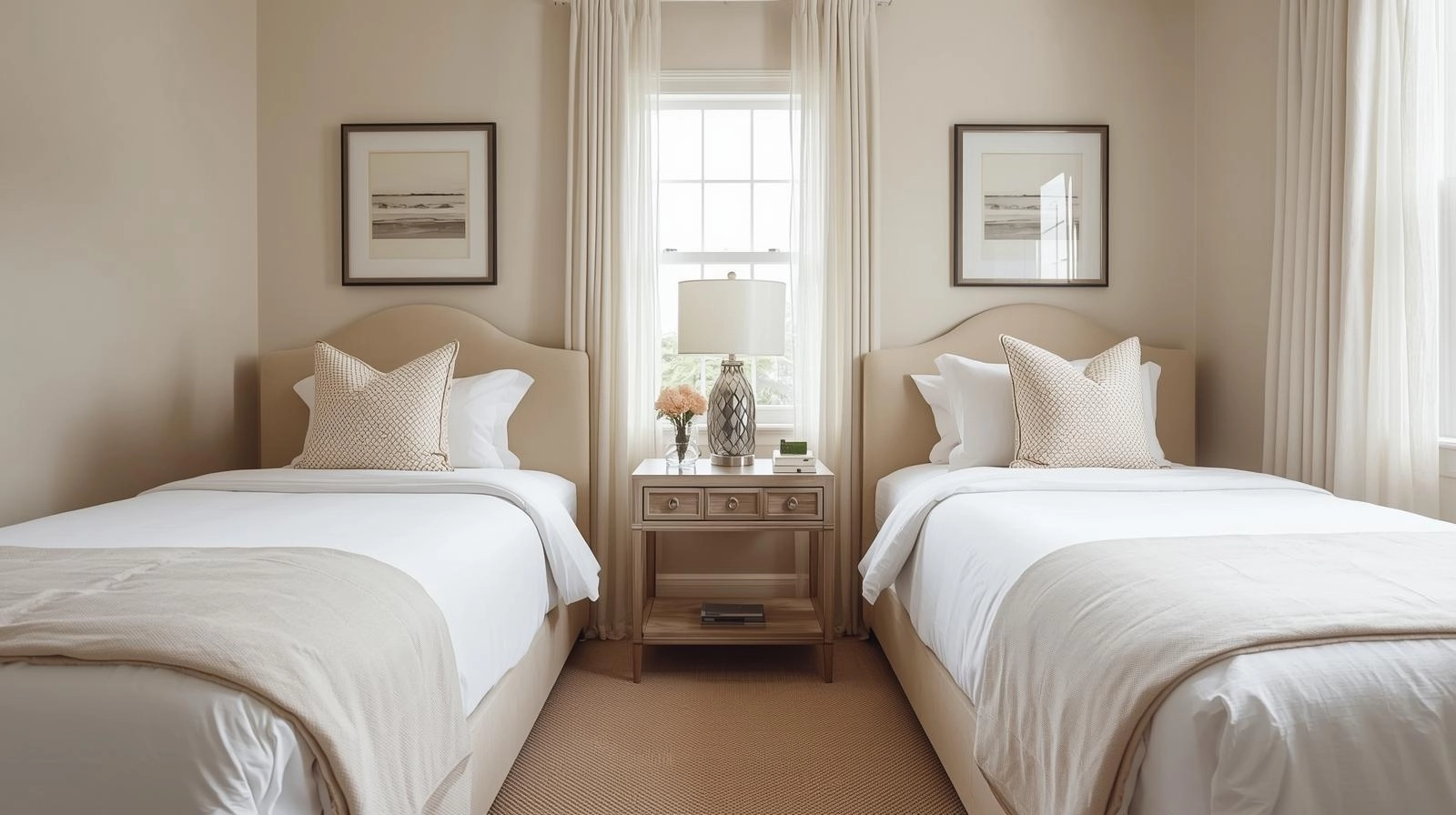
Placing twin beds side by side is the most common layout, but it can look special when done right. Leave just enough space between the beds—too close feels crowded, too far feels separate. A narrow table or shared nightstand balances the setup. Matching bedding ties the beds together, making them part of one design.
This style works in small or large rooms. In smaller spaces, it saves space by aligning the beds along a wall. In larger rooms, it feels symmetrical and calm. For siblings, adding matching lamps or wall art above each bed creates a personal yet even touch.
2. Twin Beds with a Shared Headboard Wall
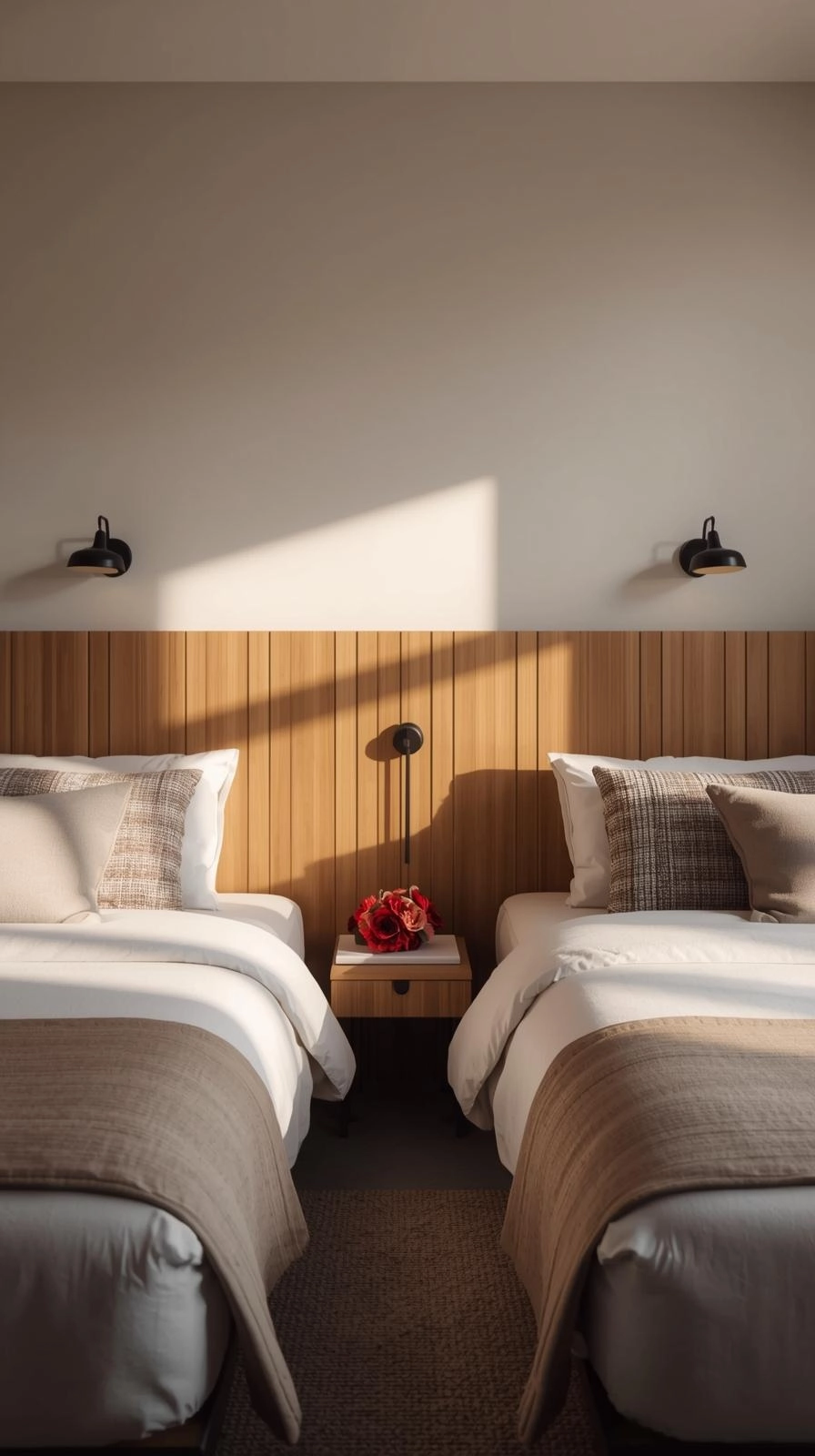
A shared headboard wall anchors both beds, avoiding a split look. This could be a long wooden headboard, paneling, or wallpaper running across the bed width. It makes the room feel cohesive rather than like two separate areas.
With a shared backdrop, bedding or pillows can vary slightly without feeling mismatched. This is perfect for guest rooms where uniformity matters but doesn’t need to be dull. It makes two small beds feel intentional instead of temporary.
3. L-Shaped Corner Placement
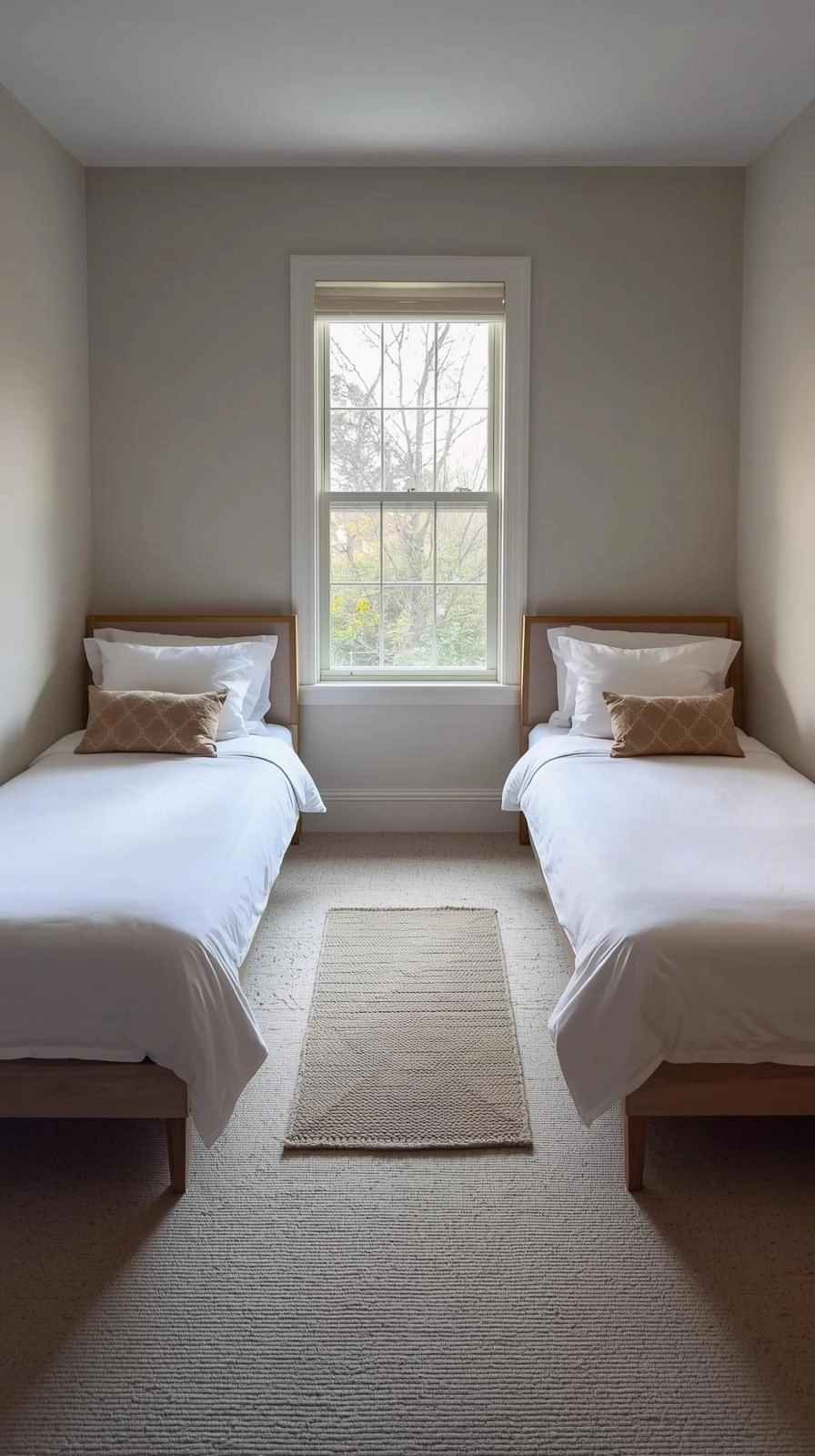
Arranging beds in an L-shape, each against a different wall, works in square rooms. It opens up floor space, making movement easier. Children often like the setup because it gives a sense of personal corner space while still sharing a room.
For adults or guests, the L-shape provides more privacy. Each person has a defined zone while the room stays unified. Adding a small rug in the center links the areas together, making the room feel like one shared space rather than two separate spots.
4. Mirrored Design for Balance
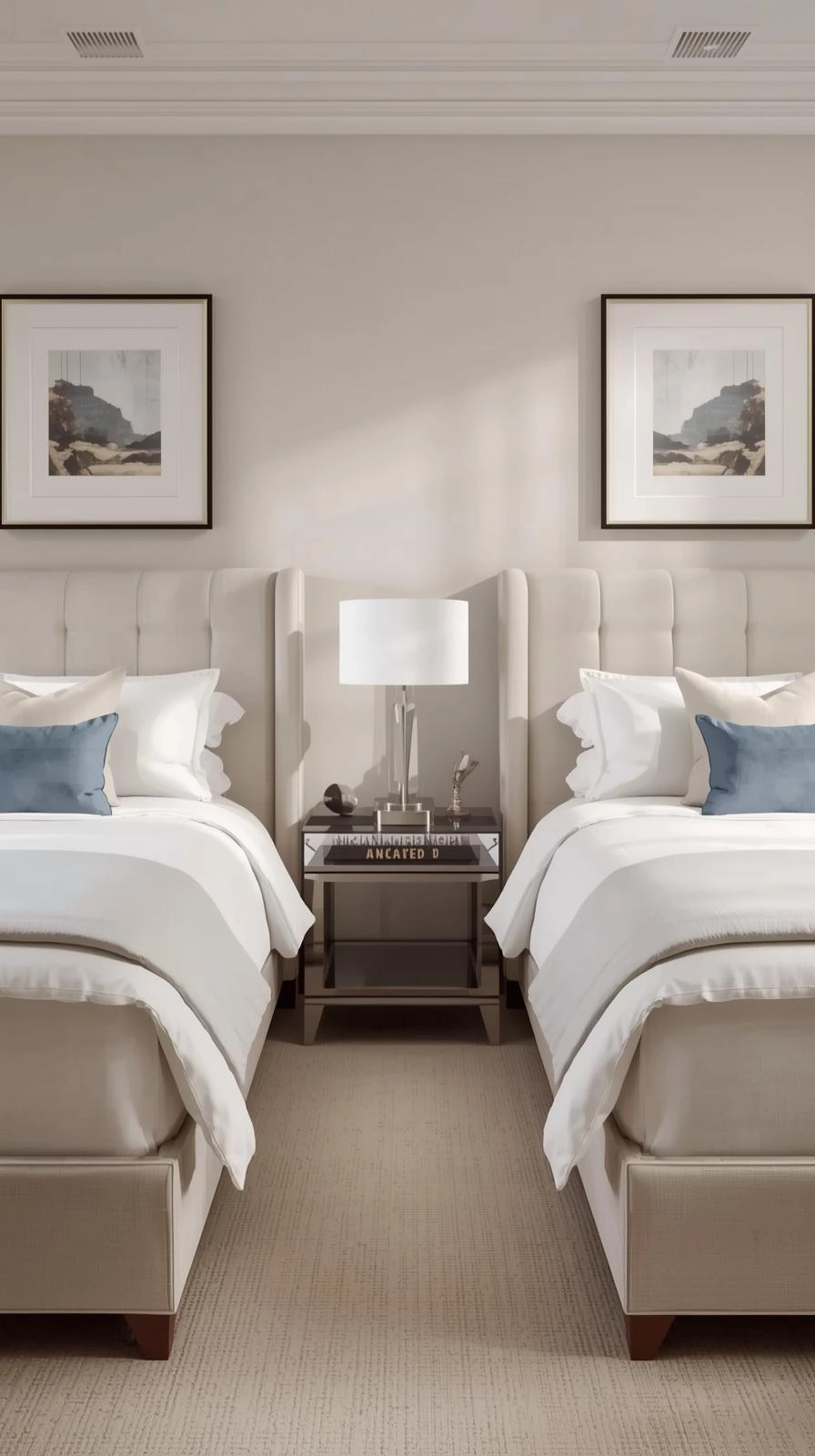
Mirrored layouts focus on symmetry. Beds face each other with identical nightstands, lamps, and bedding. This creates order and a neat appearance effortlessly.
This setup is common in rentals and vacation homes because it looks polished even with simple décor. The symmetry makes the space feel fair and organized, which guests often find calming and comfortable.
5. Twin Beds with a Desk Between Them
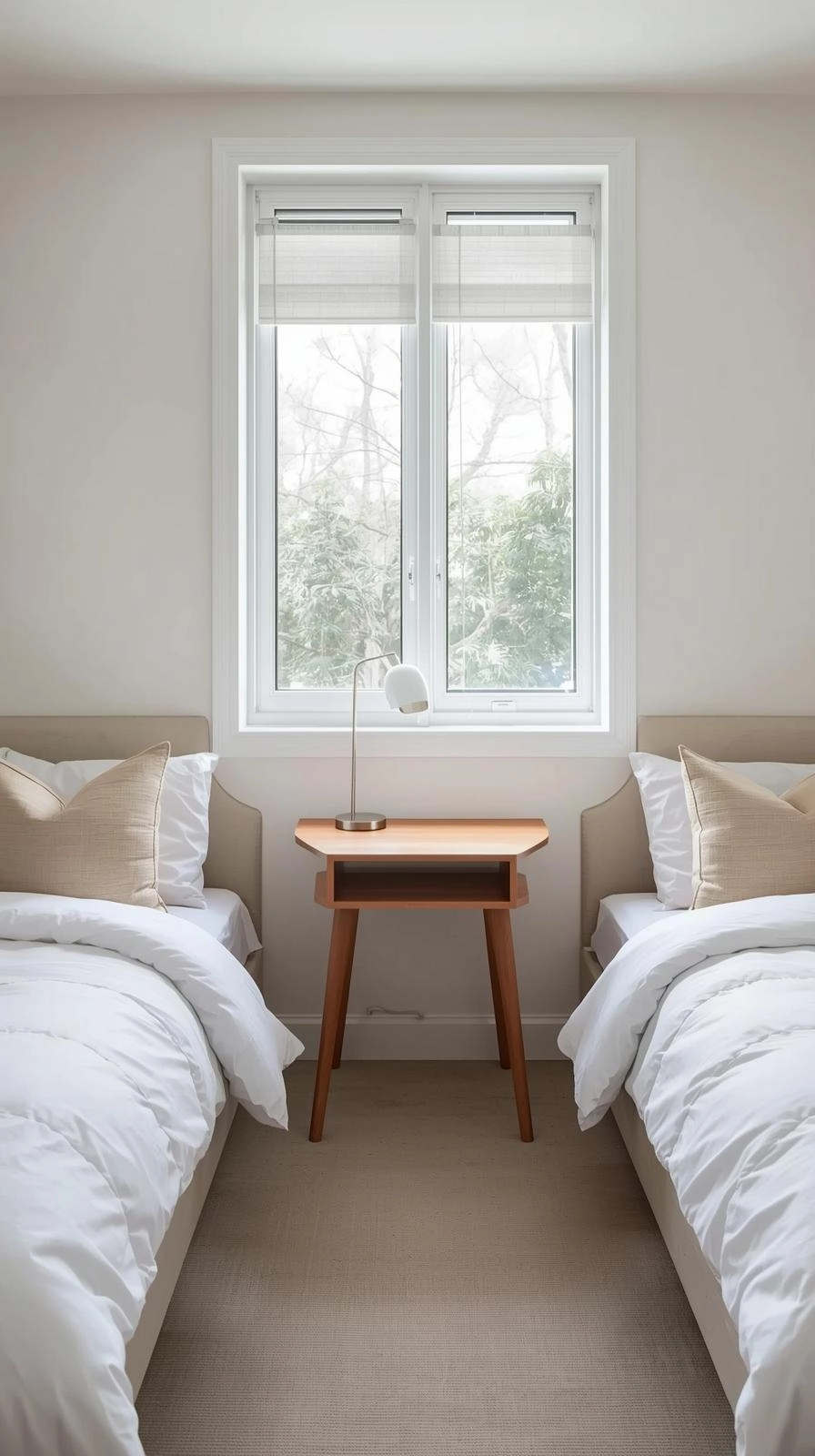
A desk between twin beds is ideal for shared kids’ rooms or student dorms. It creates a shared study or work zone without extra furniture. The desk acts as a divider while remaining functional.
Keep it simple and slim—a floating desk works best. This arrangement provides both sleep and work areas efficiently, maintaining a clean, functional space.
6. Twin Beds with Storage Underneath
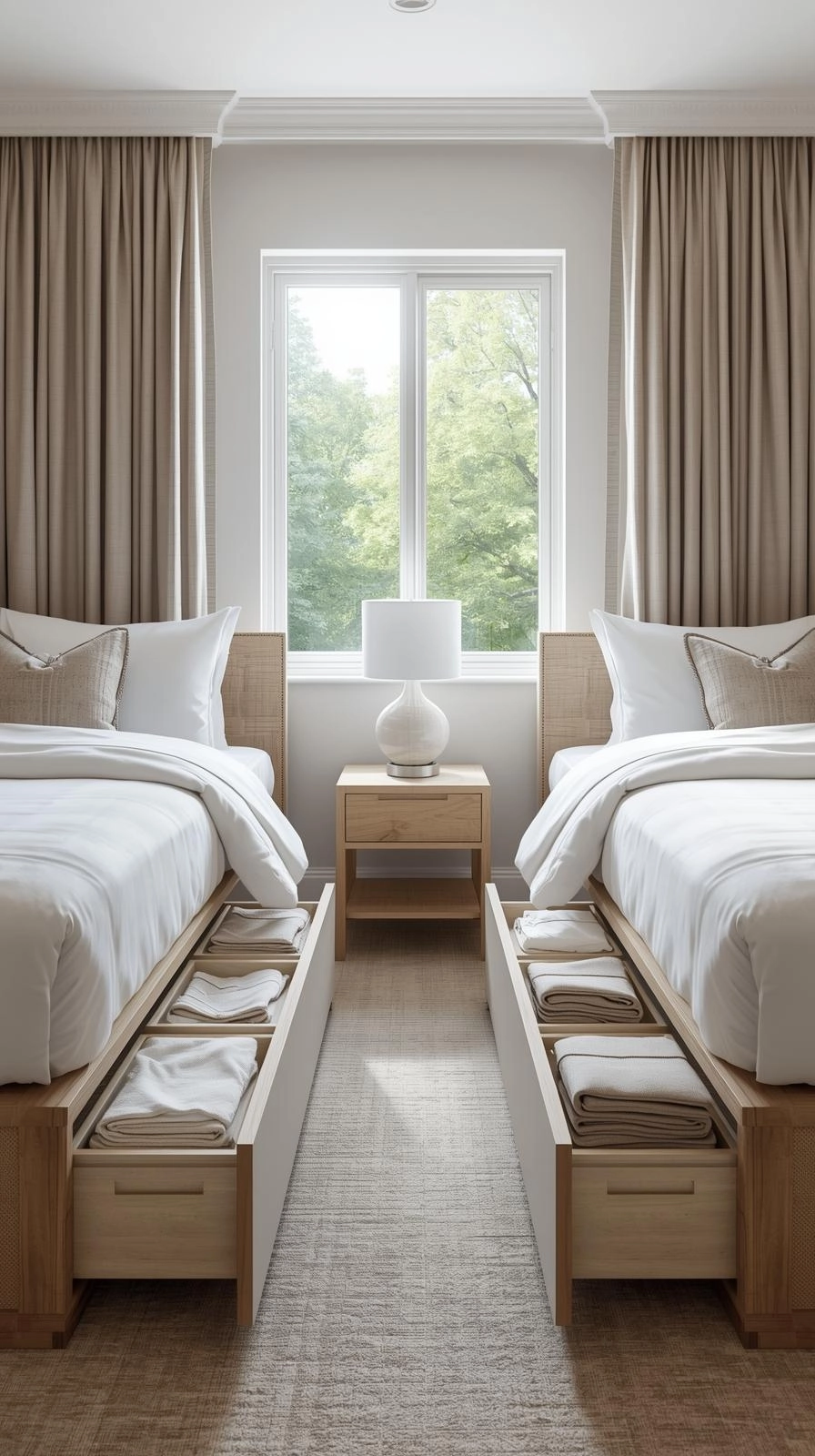
Storage is often limited in shared rooms. Beds with drawers or bins underneath solve this problem, removing the need for extra dressers. Each person gets individual storage without encroaching on shared space.
It also keeps the room organized. Toys, bedding, and clothes tuck neatly under the beds. Matching storage adds consistency and keeps the design clean.
7. Twin Beds Divided by a Bookcase
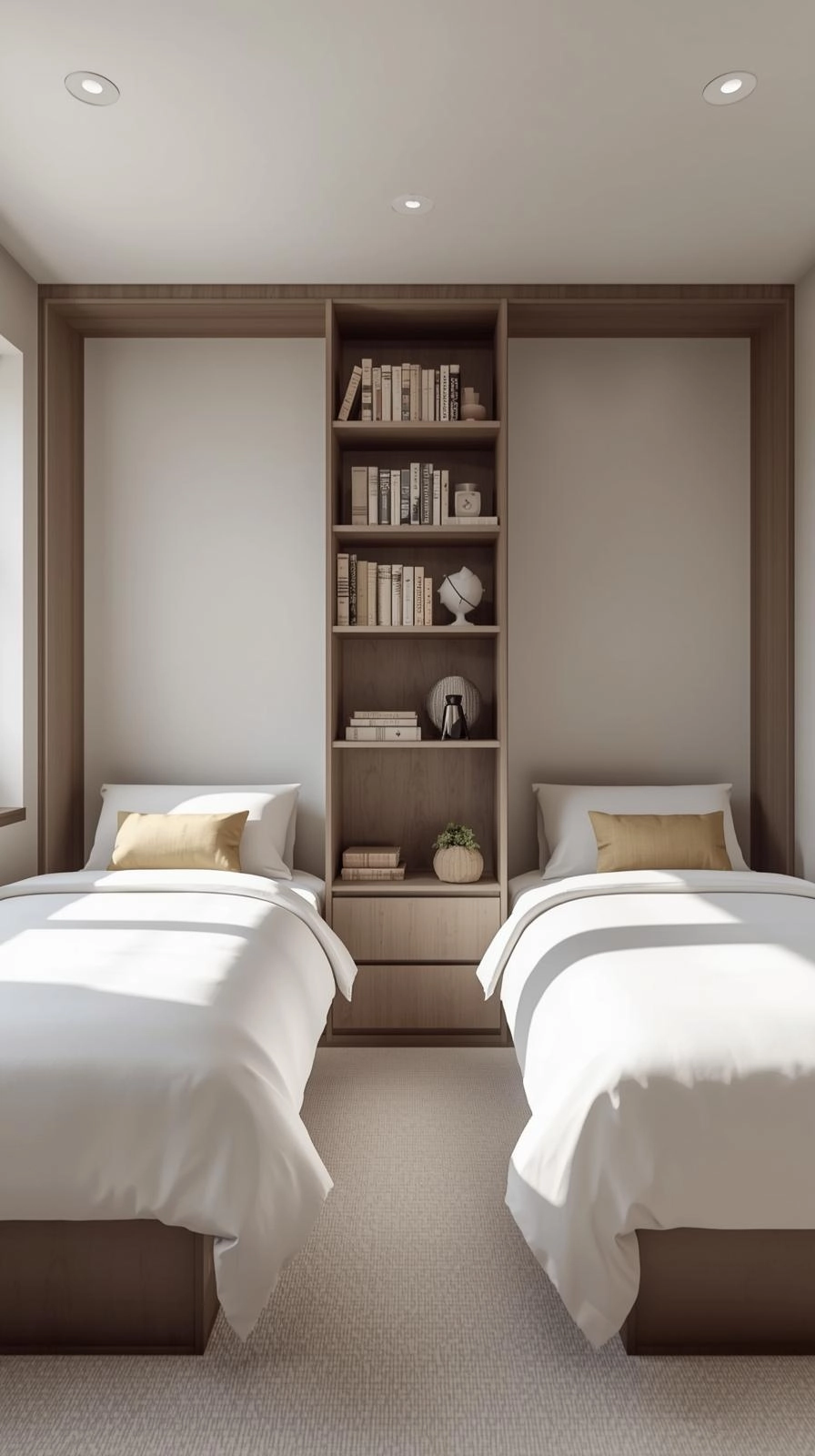
A bookcase between beds creates a divider without closing off the space. It gives each person a sense of privacy and adds storage.
This works well for older siblings who need some separation but share a room. Low bookcases keep openness, taller units add a stronger boundary. Either way, the beds remain part of one cohesive design.
8. Bunk-Style Twin Beds Without the Bulk
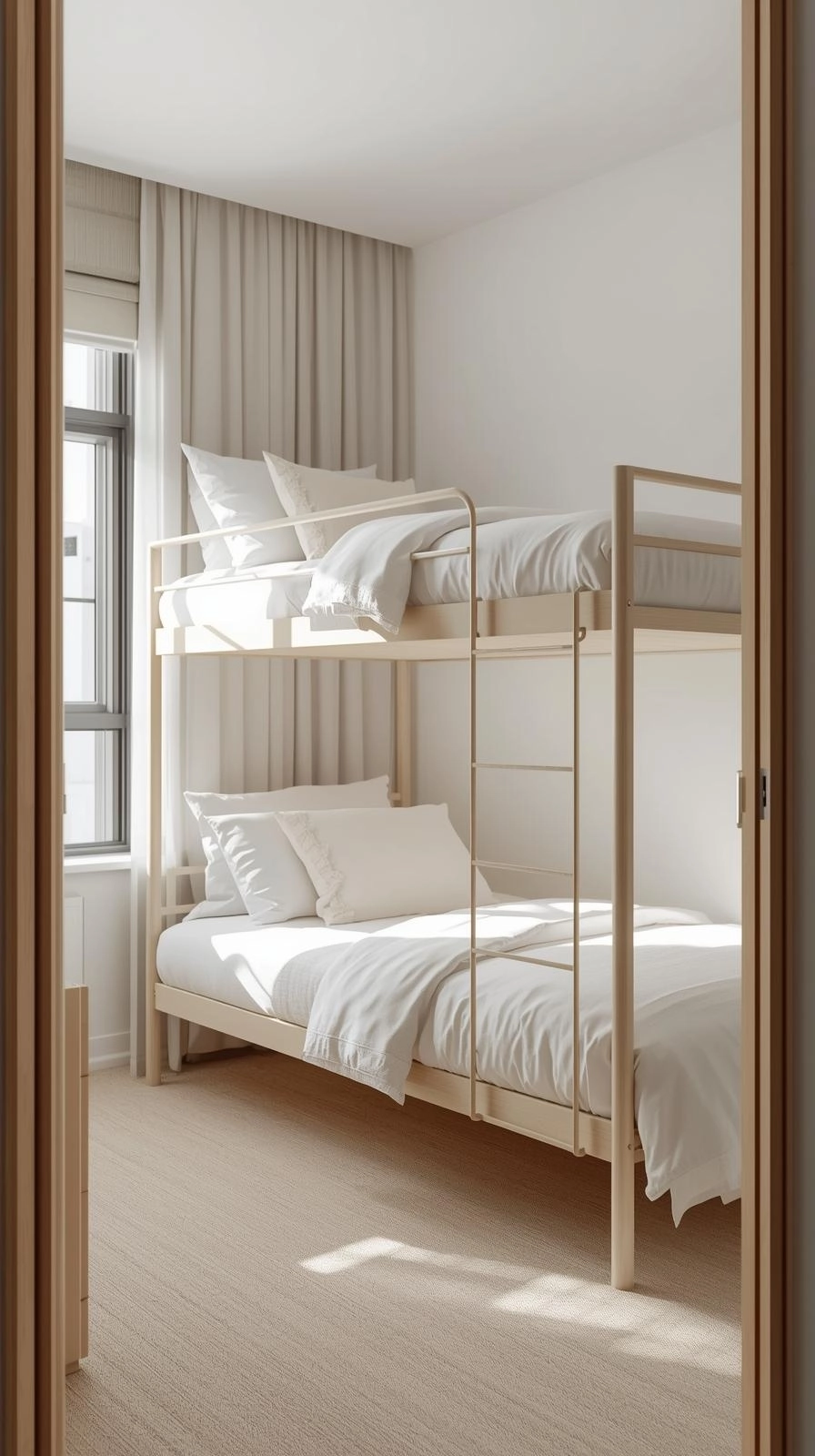
Not all setups must be side by side. Stacking beds saves floor space and can look modern if frames are slim or partial lofts are used. Unlike bulky bunk beds, this keeps the room open and light.
For vacation homes or apartments, this is a space-saving option. Siblings get shared space while preserving room for play or study. The floor stays clear, making the space feel larger and versatile.
9. Twin Beds Framed by Built-In Furniture
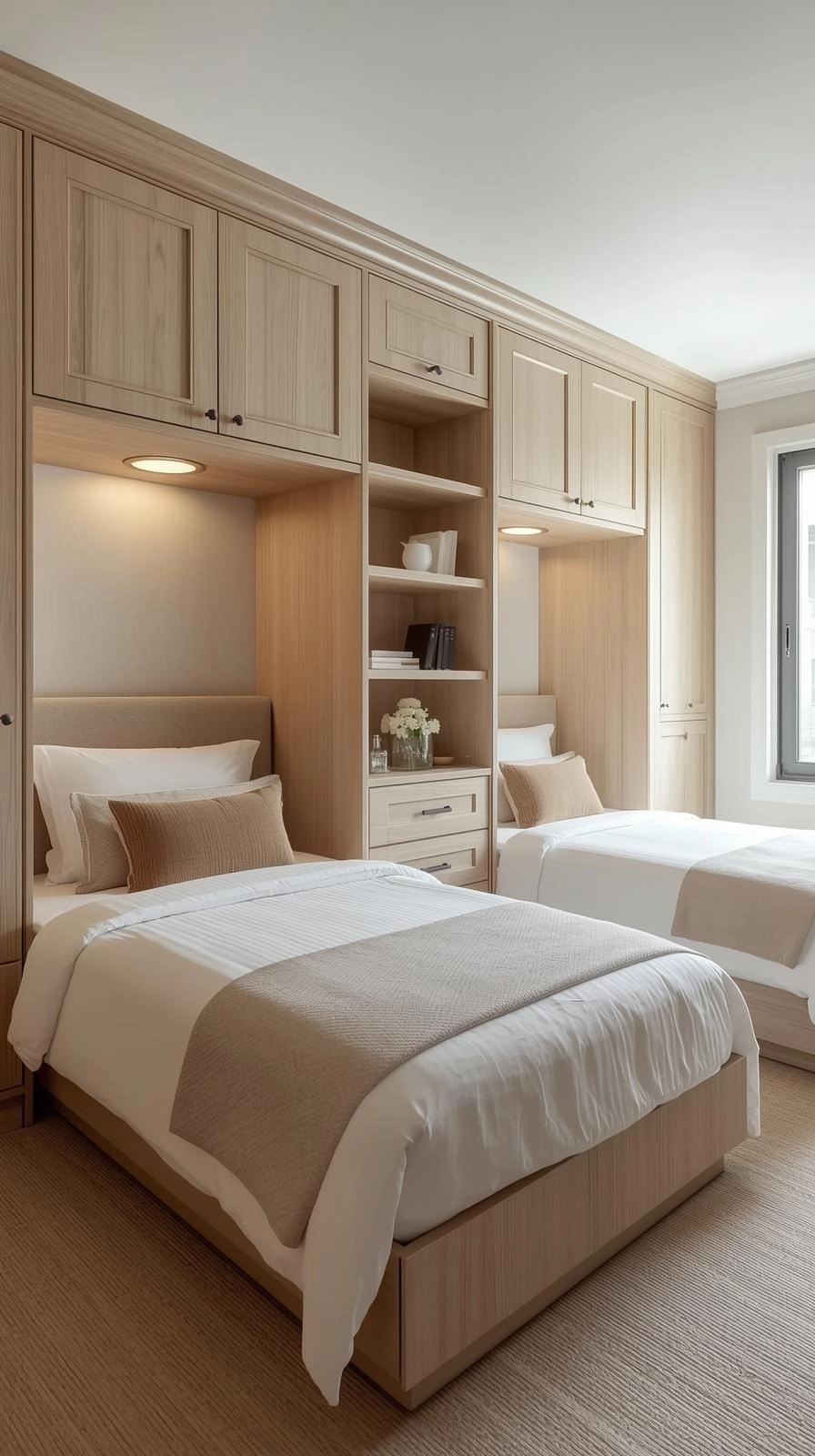
Built-ins around twin beds make the design look intentional. Cabinets, shelving, or wall units with lighting integrate the beds into the room plan.
This approach works well in modern homes or guest rooms where storage and style are equally important. Built-ins reduce clutter and make the beds feel like part of the furniture rather than an afterthought.
10. Floating Twin Beds for a Modern Look
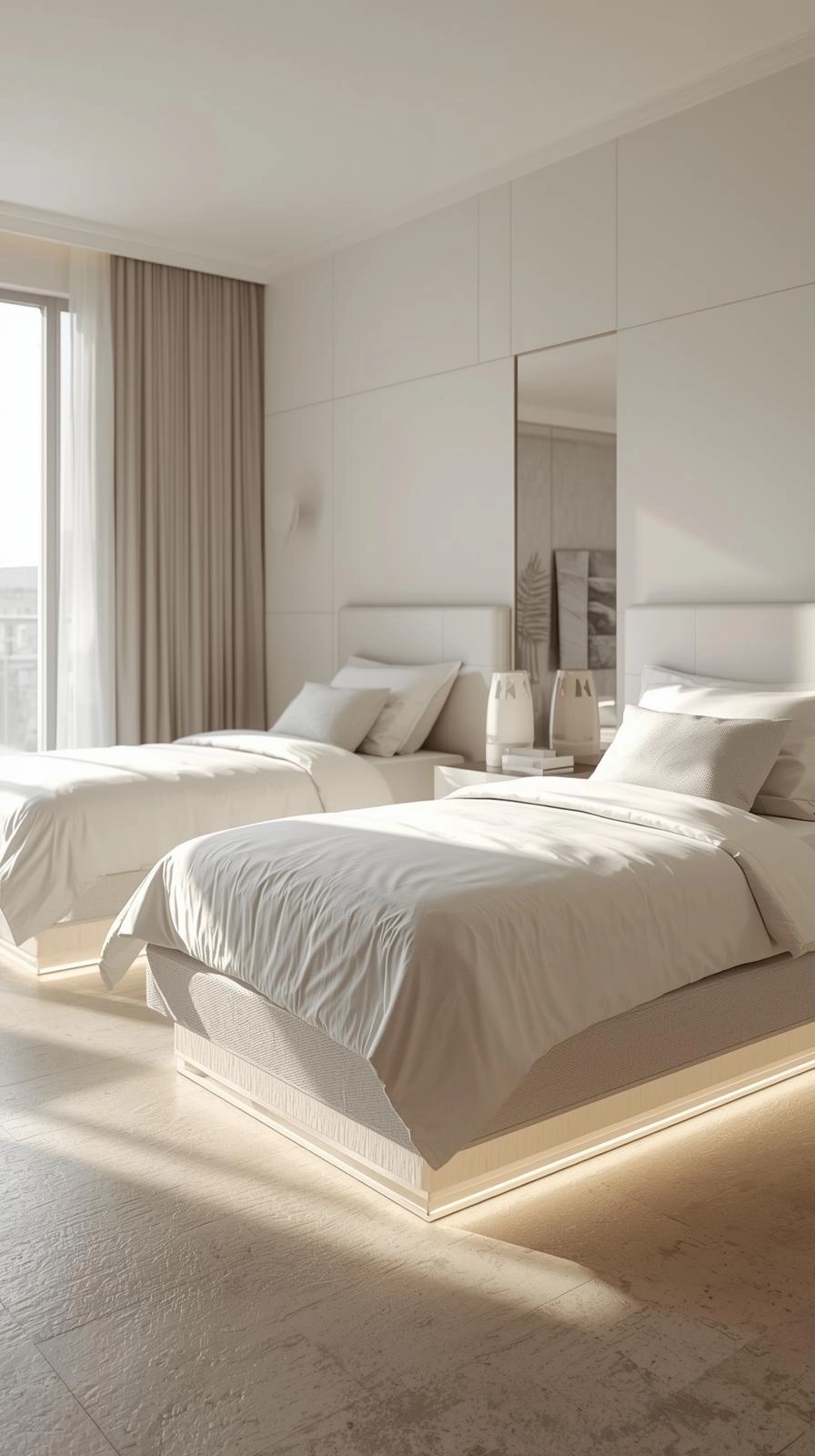
Floating beds use platforms that lift slightly off the floor, creating a light, open feel. Without bulky frames, this works in small rooms.
The style is simple yet modern. Lighting beneath the beds adds a soft glow, making the space inviting. This approach suits contemporary homes or guest rooms seeking a clean, low-maintenance design.
Final Thoughts
Twin beds in one room can be more than a space-saving solution. Layout affects comfort, storage, and the room’s overall feel. Each idea above works in different spaces—from children’s bedrooms to guest suites.
Balance is key. Both beds should feel equal, and the room should feel unified. With smart choices in placement, storage, and design, twin beds can look practical, neat, and welcoming while still stylish.