10 Large TV Wall Living Room Ideas

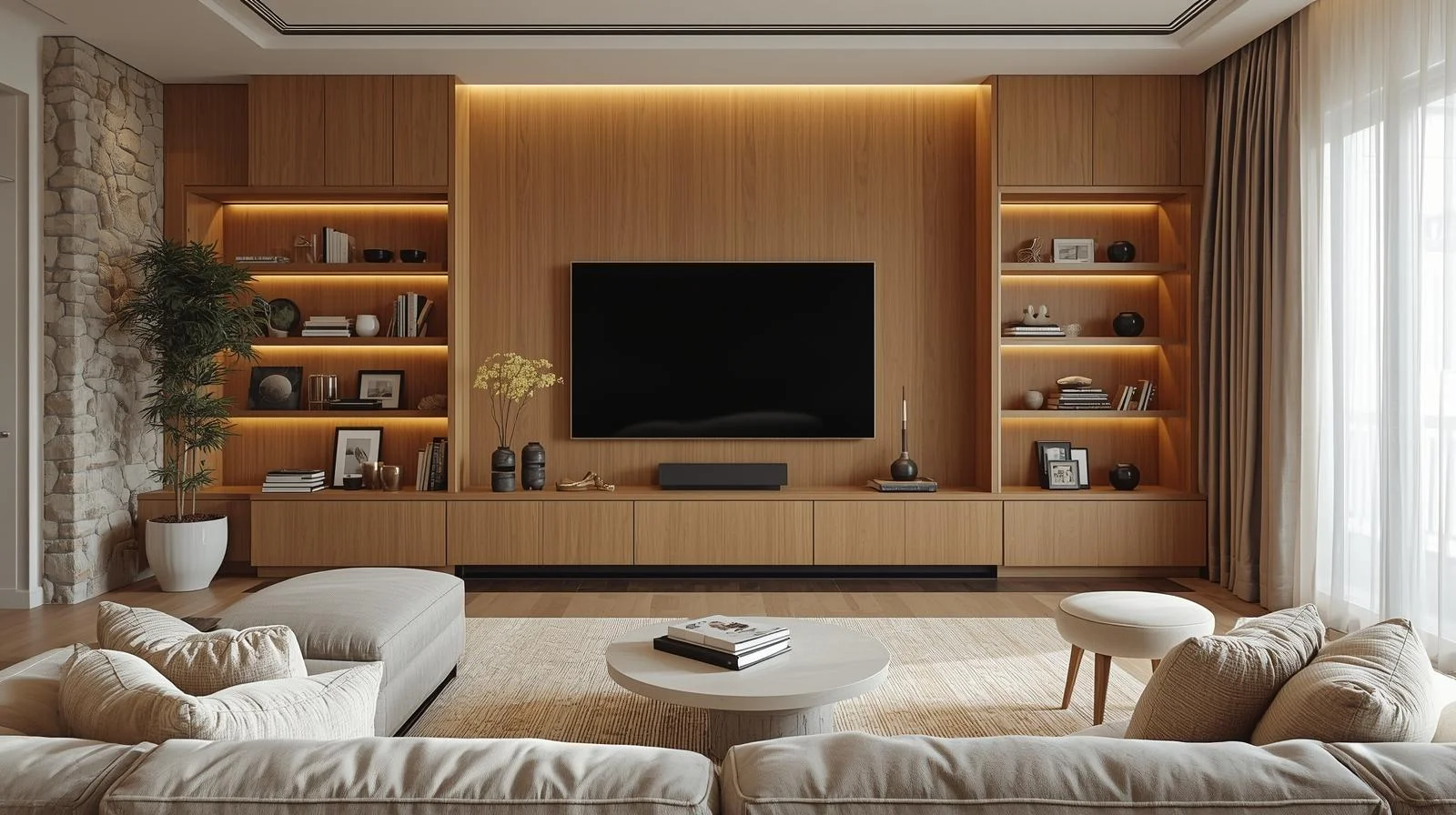
A living room rarely feels complete until the television has a clear and thoughtful place. In most homes, the TV is more than something you watch—it becomes the visual center that shapes the whole space. When you’re dealing with a large screen, the wall behind it matters even more. A big TV can feel overpowering and awkward, or it can blend smoothly into a well-designed room. That difference comes from how the wall is designed. After more than twenty years working with interiors, I’ve seen how the right wall treatment creates balance, warmth, and a lived-in feel.
The good news is that you don’t need an expensive budget to make it work. What matters most is having a clear plan. The ten ideas below show how a TV wall can support your living room instead of fighting it. By the end, you’ll see that your television doesn’t have to feel separate—it can fit naturally into your home’s style.
1. Built-In Wall Units for a Seamless Look
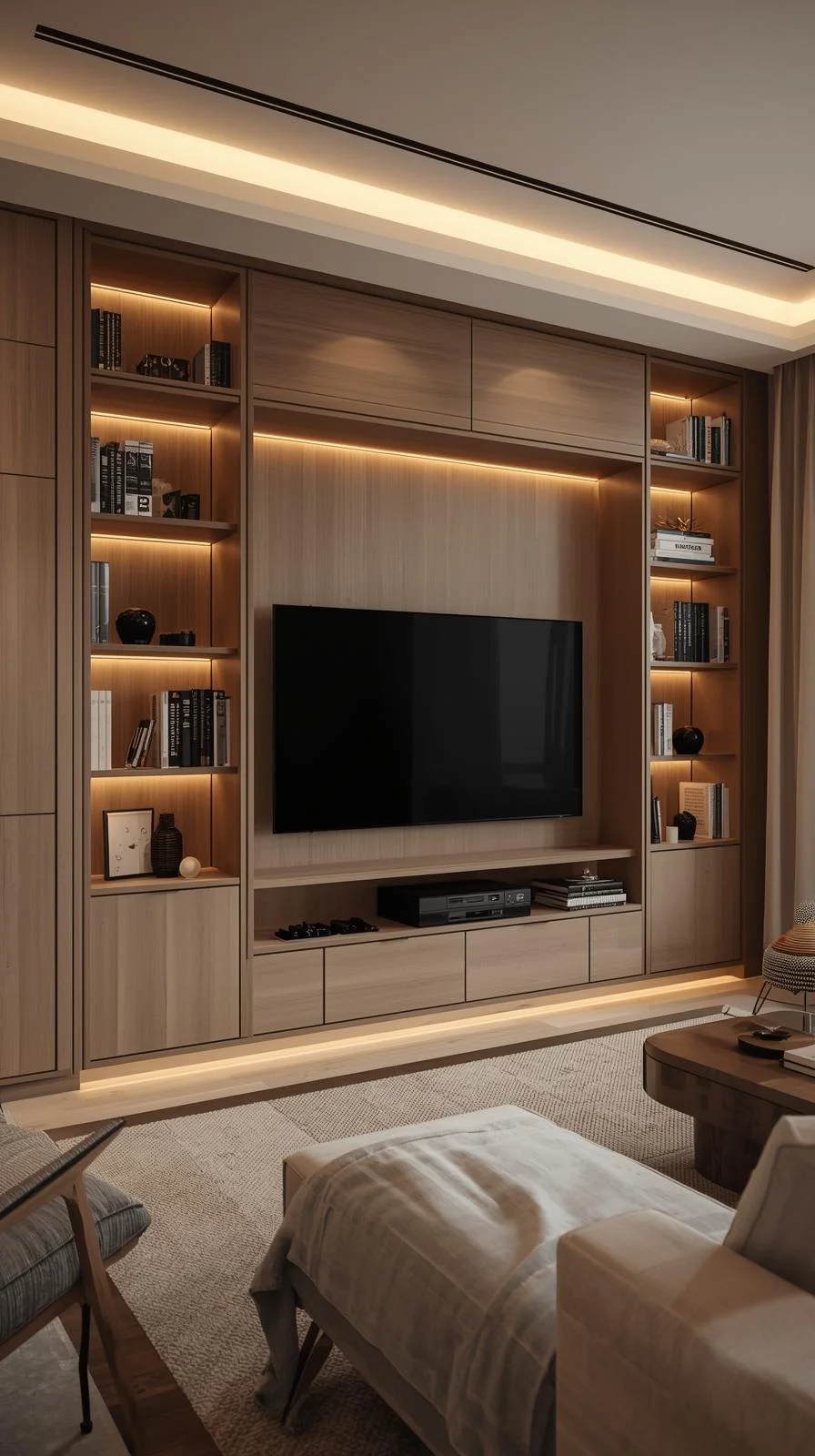
A large television can feel out of place when it’s mounted on an empty wall. Built-in wall units fix this by surrounding the TV with shelves, cabinets, and structure. Instead of floating on its own, the television becomes part of the room’s design.
This option works especially well if you need extra storage for books, decor, or electronics. Lower cabinets hide clutter, while open shelving adds interest and dimension. You can keep it traditional with painted wood or go sleek with modern finishes. When the TV sits flush inside the unit, it feels planned rather than added later.
2. Stone or Brick Accent Walls
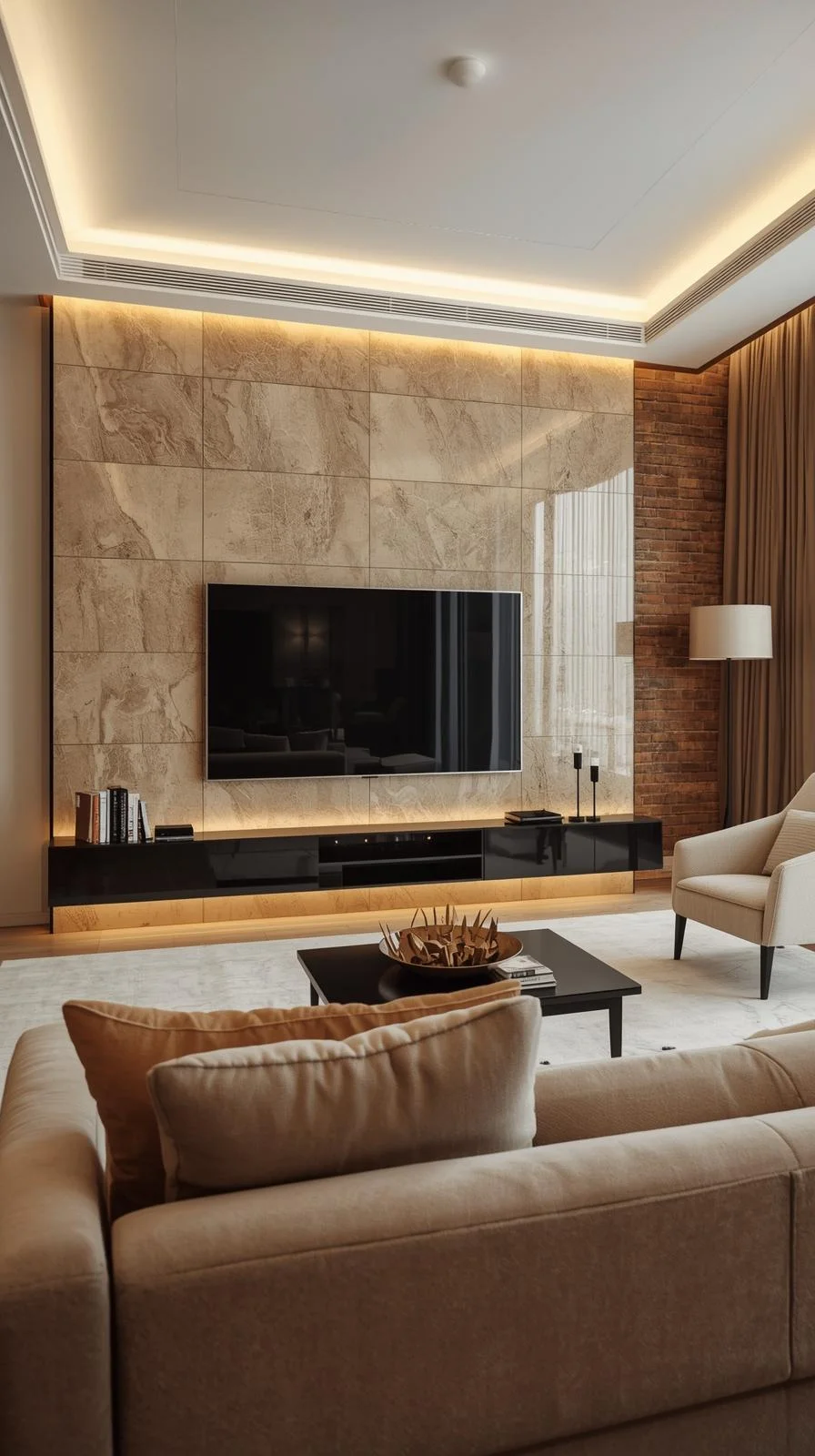
A large TV already draws attention, but placing it on a stone or brick wall keeps the space from feeling flat. The texture adds depth and helps balance the smooth surface of the screen. Brick creates the same effect but adds a softer, more relaxed mood.
The material you choose should match your home’s overall feel. Polished stone gives a refined look, while aged brick adds warmth and character. In both cases, the TV becomes part of a larger visual feature instead of standing alone. Keep furniture simple so the wall remains the focus.
3. Floating Media Consoles
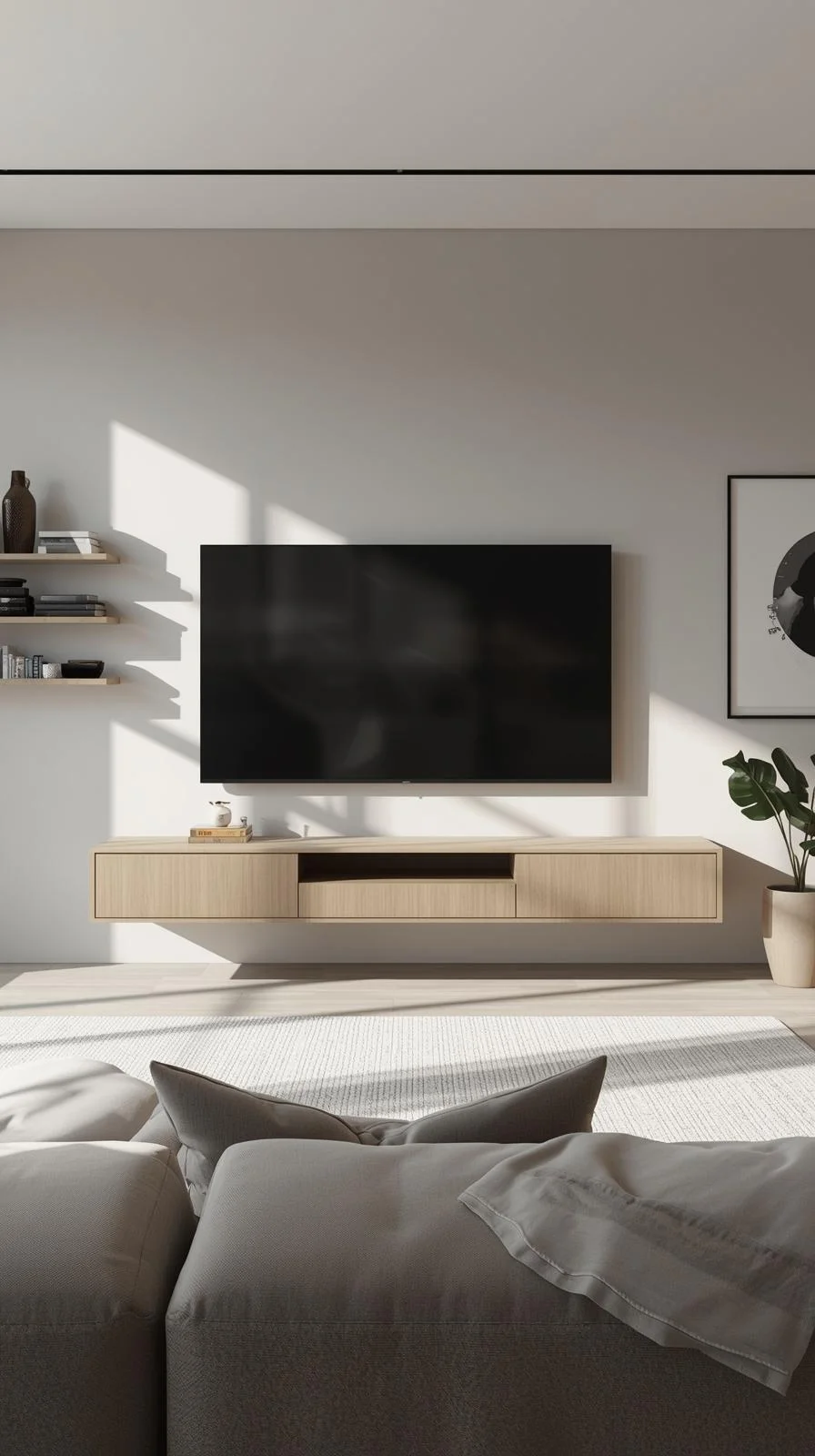
A full wall unit isn’t always necessary. A floating media console can be enough to ground a large TV while keeping the room open. Because it’s mounted off the floor, the space feels lighter and more spacious.
This approach works well in smaller living rooms where every inch counts. It also allows wires to be hidden inside the wall for a clean finish. Pairing the console with minimal decor keeps the wall feeling finished without becoming cluttered.
4. Framing with Wood Paneling
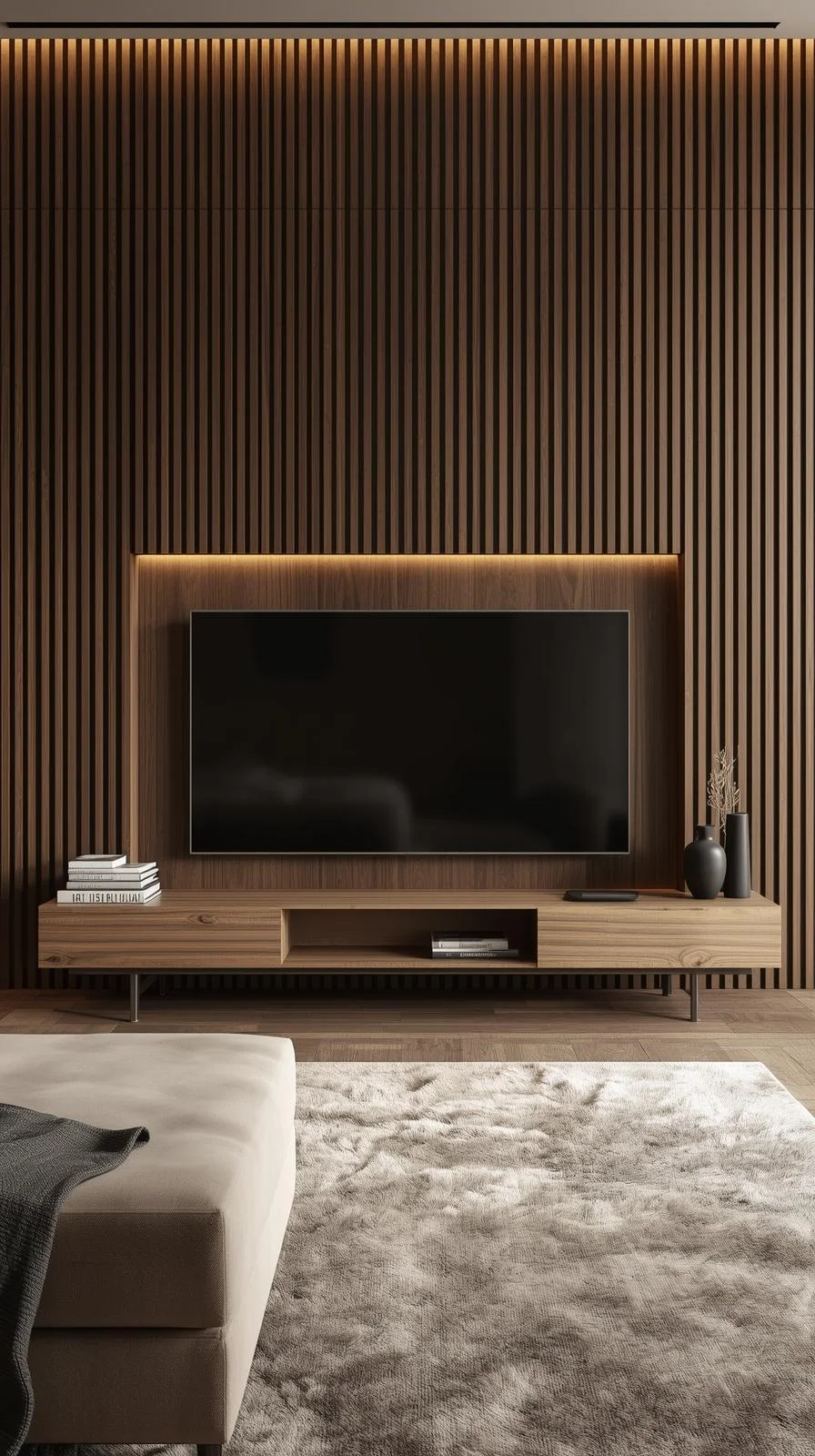
Wood paneling is one of the easiest ways to soften a large television wall. The natural texture reduces the harsh contrast of the screen and brings warmth into the room. Vertical panels make ceilings feel taller, while horizontal boards create a calm, steady look.
The wood finish makes a big difference. Dark tones feel bold and dramatic, while lighter woods feel fresh and modern. Extending the paneling across the wall helps the TV blend in rather than stand out on its own.
5. Minimalist TV Walls with Clean Lines
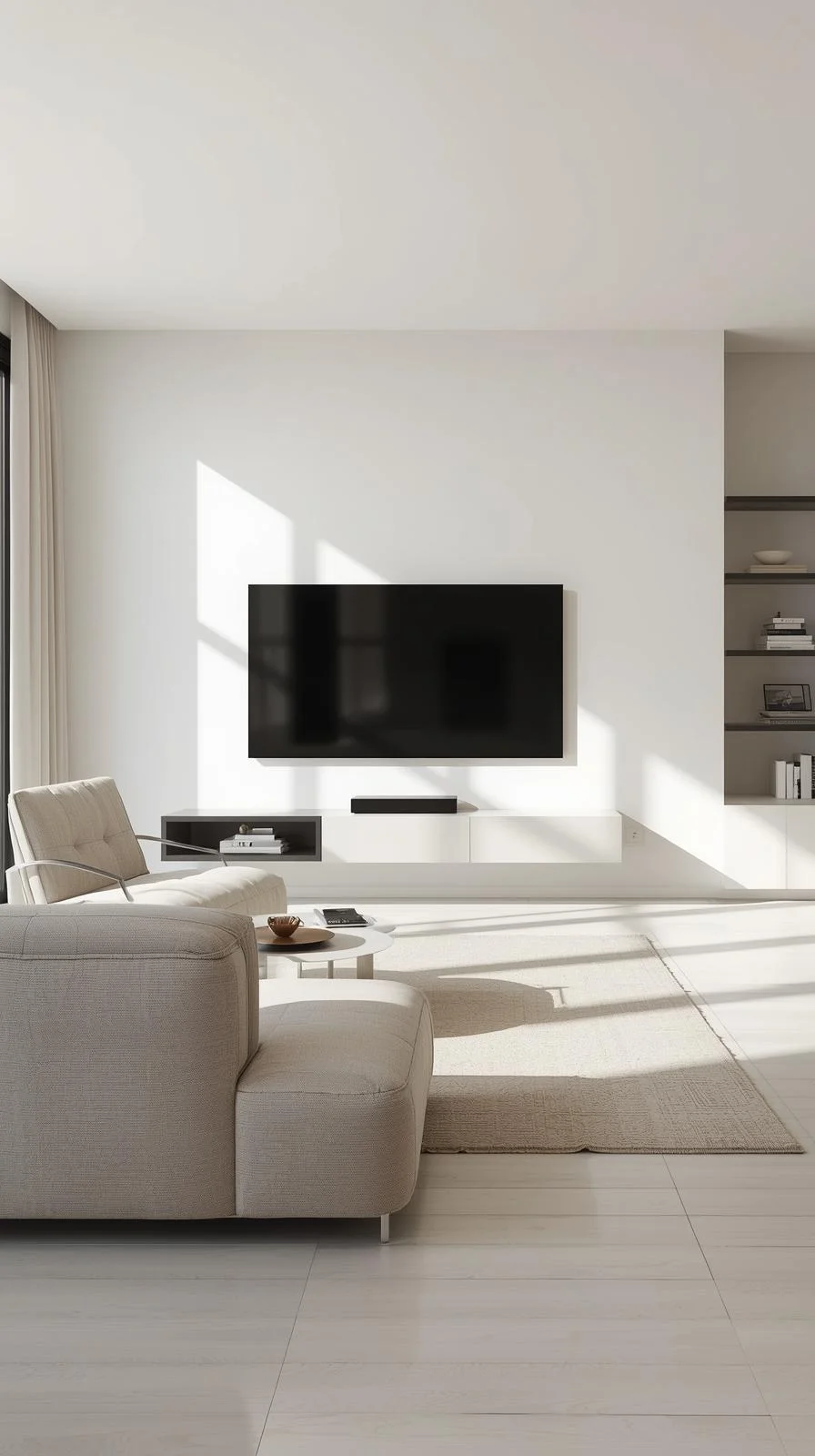
Some spaces work best with restraint. A minimalist TV wall uses simple lines, neutral colors, and very little decoration. The television is mounted cleanly, sometimes with only a slim console or no furniture beneath it.
This style works best when the rest of the room follows the same approach. Simple seating, limited decor, and open space keep everything balanced. The TV remains visible, but it doesn’t overpower the room.
6. Gallery Walls That Incorporate the TV

One way to make a television feel less technical is to surround it with art. A gallery wall allows the TV to blend in with framed prints, photos, and decorative pieces, turning the wall into a display.
Consistency is key. Similar frame colors and spacing keep the wall organized instead of chaotic. When the screen is off, it blends with the surrounding frames instead of standing out. This works especially well in relaxed, family-centered living rooms.
7. Fireplace and TV Combination Walls
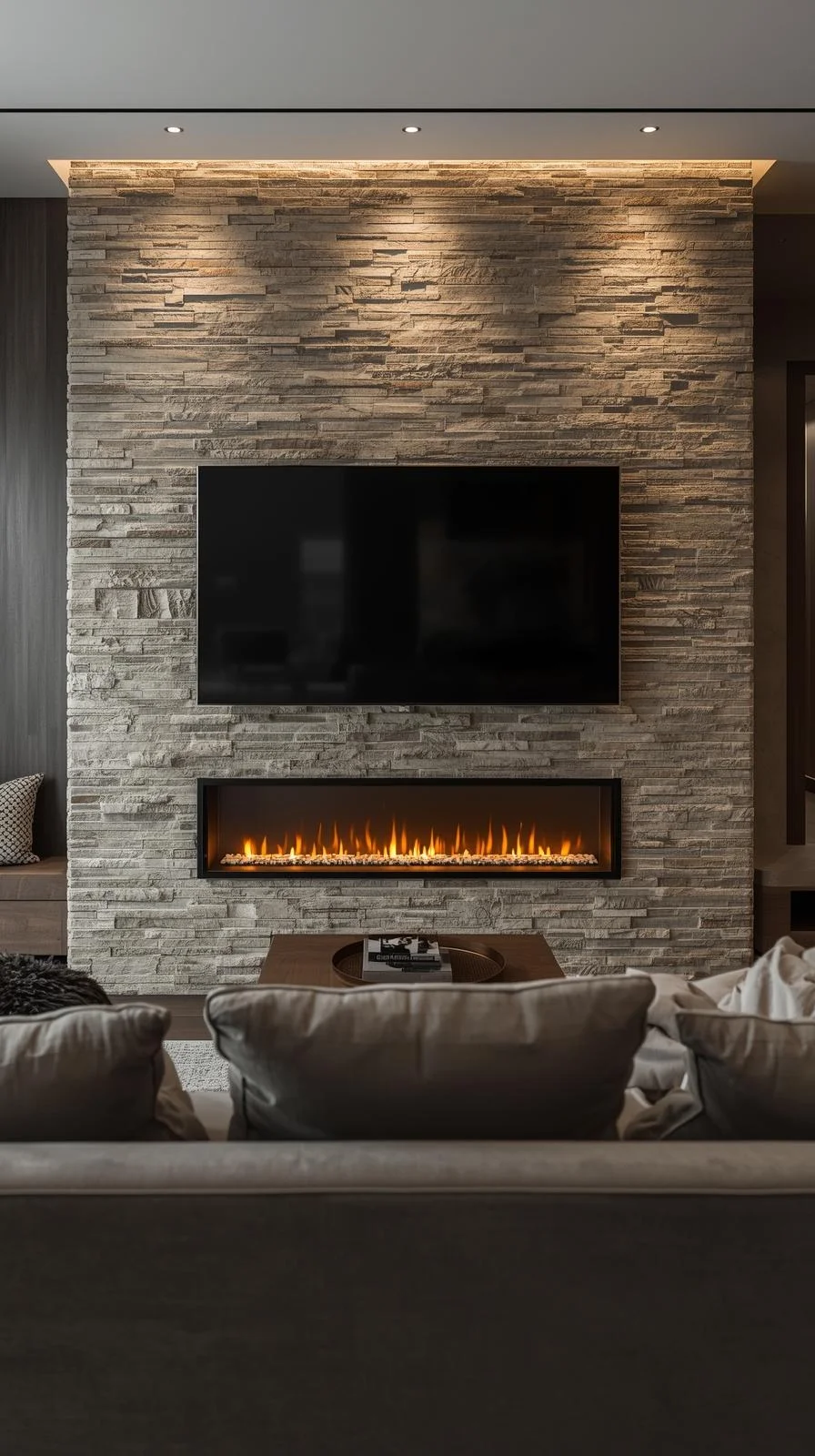
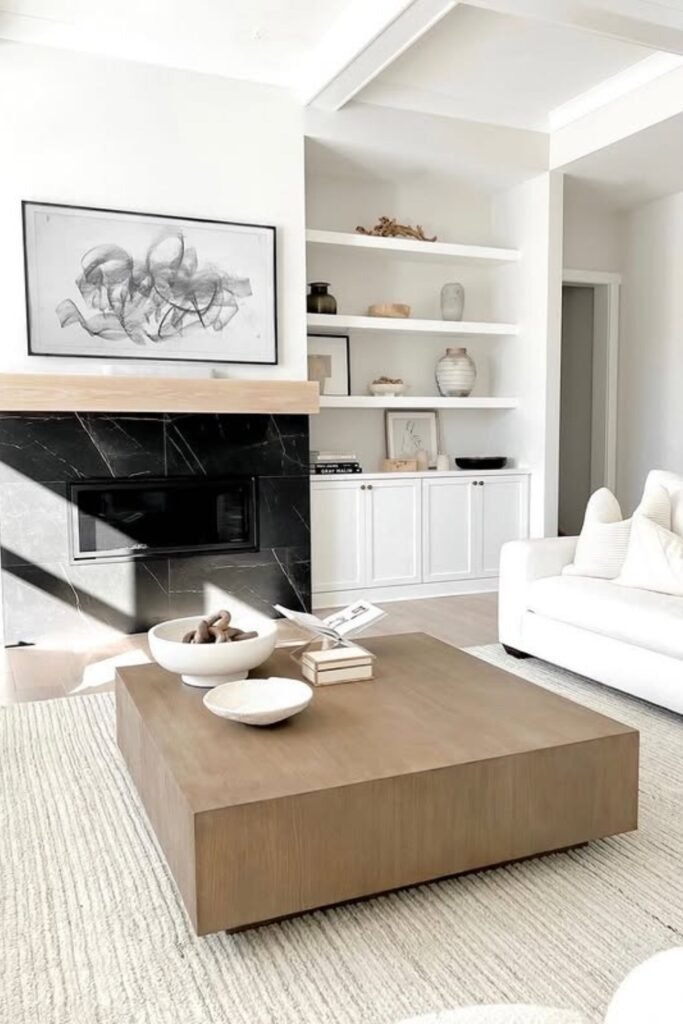
Combining a fireplace and television is a classic layout because it works. The fireplace naturally draws attention, and the TV can sit above or beside it to create balance. Together, they form a strong focal point.
Scale matters here. A large TV needs a fireplace surround that feels substantial. Thin mantels paired with oversized screens can feel awkward, while full-height designs feel intentional. When done correctly, the room feels both cozy and functional.
8. Bold Color Backdrops

Neutral walls are common behind TVs, but darker colors can make a strong impact. Deep blues, charcoal tones, or rich greens create contrast and help the TV wall feel purposeful instead of forgotten.
To keep things balanced, the rest of the room should stay simple. You don’t need to paint every wall—one accent wall behind the TV is often enough. This idea works well in modern or expressive spaces.
9. Hidden TVs with Sliding Panels
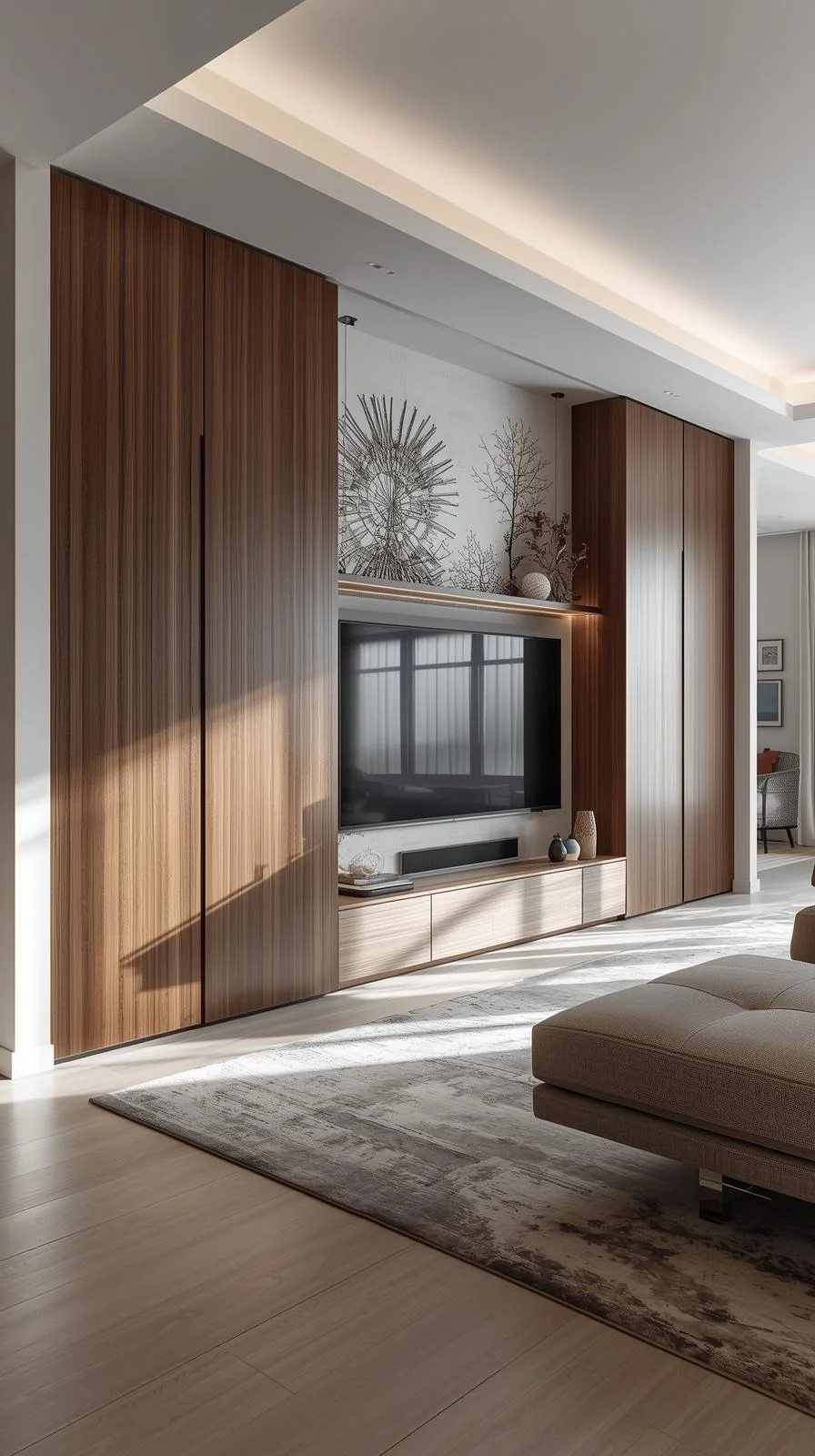
Some homeowners prefer their TV out of sight when it’s not in use. Sliding panels allow the screen to disappear behind decorative doors, artwork, or matching wall panels. When closed, the wall looks clean and intentional.
This is ideal for shared spaces used for both entertaining and relaxing. It’s also helpful in open layouts where you don’t want the TV visible from every angle. The wall feels more refined, with the screen hidden until needed.
10. Full-Wall Media Displays
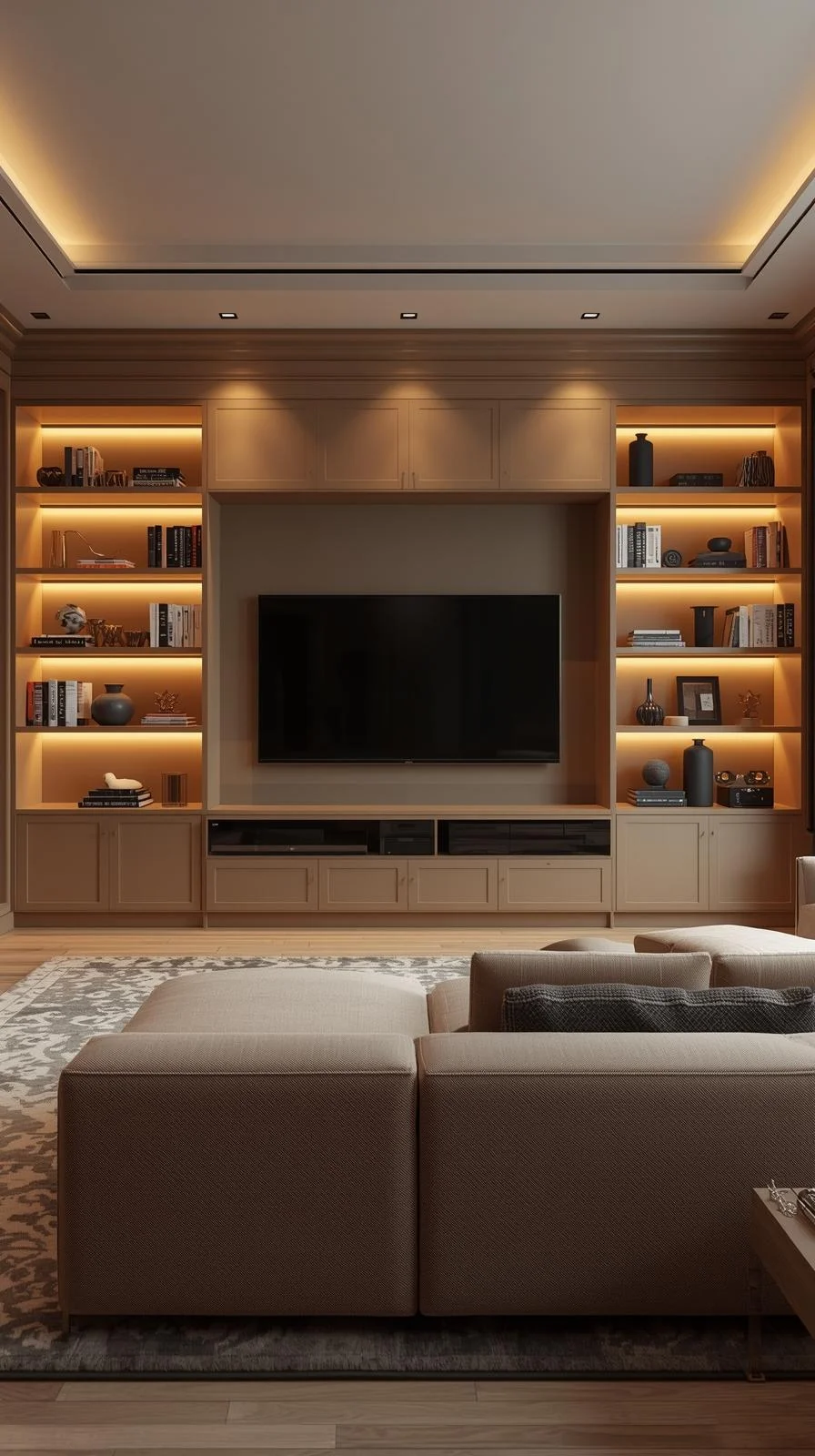
In some homes, the best solution is a fully designed media wall. This approach turns the entire wall into a feature with shelving, cabinets, lighting, and storage built around the TV.
This works well for families who use the living room often and need organization. Everything has a place, and the wall feels unified rather than pieced together. With thoughtful planning, it can feel both practical and polished.
Choosing the Right Idea for Your Home
Each of these ideas can work beautifully, but the best choice depends on your space and lifestyle. Smaller rooms benefit from minimal designs, while larger rooms can handle full-wall solutions. Materials like wood and stone add warmth, while color and hidden panels add flexibility.
The goal isn’t to decorate around the TV—it’s to make the room feel complete. When the wall is designed with intention, the television feels like it belongs.
Conclusion
A large TV wall doesn’t need to feel like a problem. With the right design, it can become one of the most attractive parts of your living room. Whether you prefer built-ins, natural textures, bold colors, or hidden screens, treating the TV as part of the design makes all the difference. After decades of working with real homes, I’ve seen how a thoughtful TV wall changes not just how a room looks, but how it’s used.
Your living room deserves more than a screen on an empty wall. With these ideas, you can create a space that feels balanced, comfortable, and ready for everyday life—from quiet evenings to busy gatherings.