10 Cool Cubical Ideas for Work

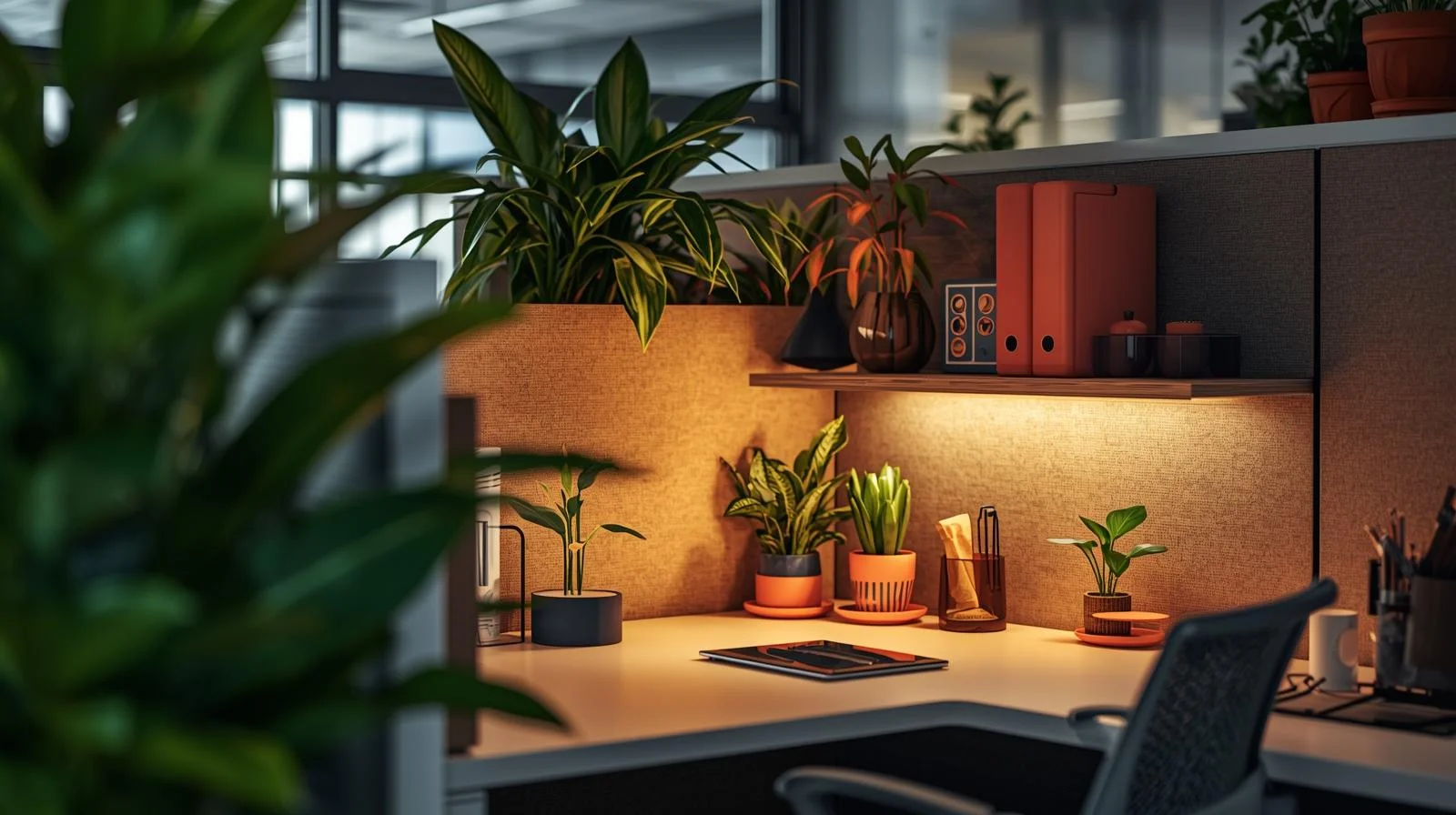
A work cubical can feel like a tight box that drains energy, or it can feel like a small space that supports creativity and focus. The difference usually comes down to how it is set up. After more than twenty years of helping people design both corporate offices and home workspaces, I have seen how even the smallest cubical can shift from dull and exhausting to a place that feels motivating, comfortable, and productive. A thoughtful cubical design does not require a large budget or weeks of effort. What truly matters is how color, texture, lighting, and personal details work together to shape the atmosphere around you.
The ideas below show how a standard cubical can become a space that feels personal and supportive. Each suggestion is flexible and works in many environments, whether you are in a traditional office, a shared co-working space, or working from home with a cubical-style setup.
1. Add Warm Lighting for Comfort
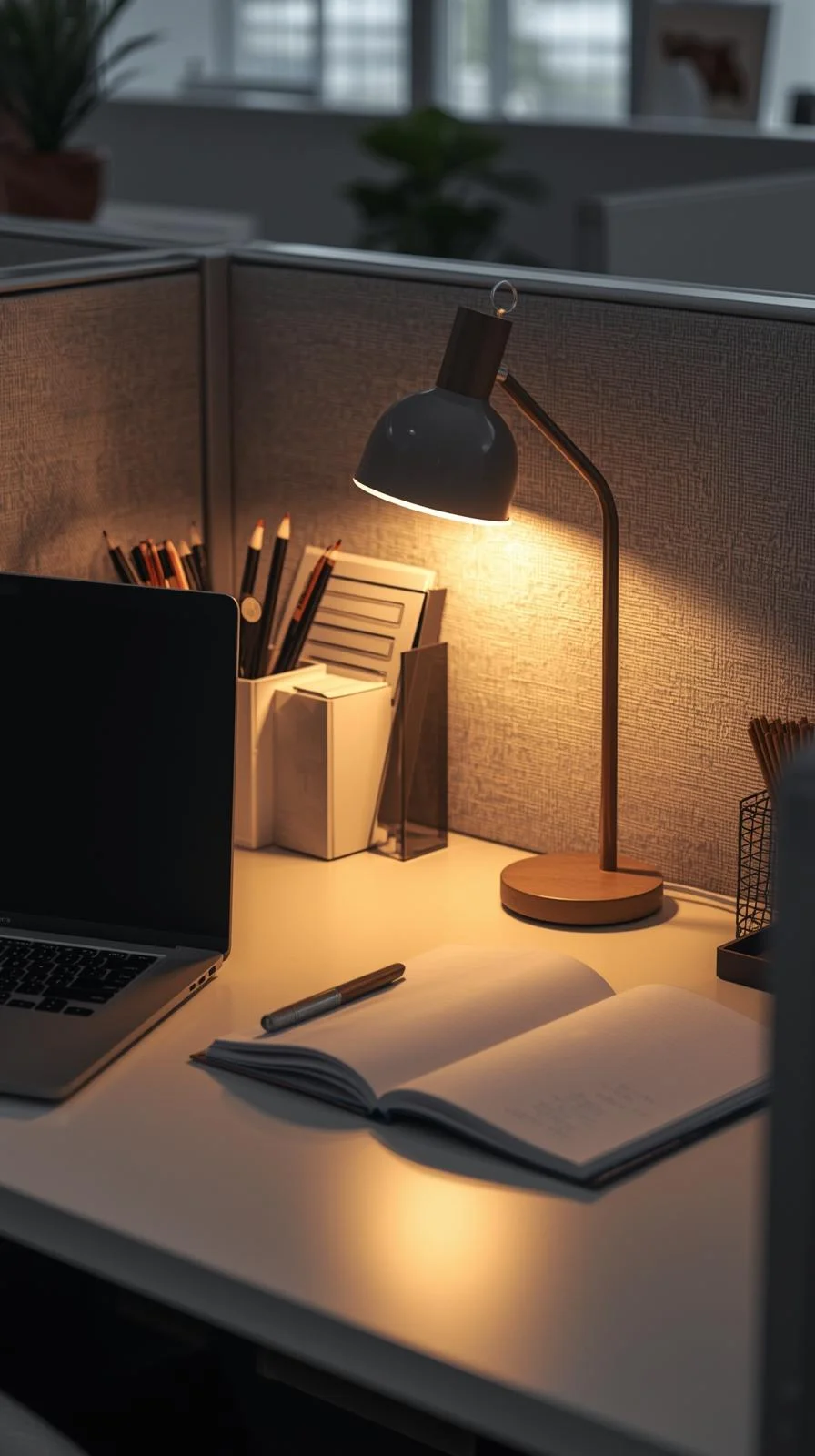
Harsh overhead office lighting often flattens a cubical and makes it feel cold. Adding a desk lamp or clip-on light can completely change the mood of the space. Warm lighting softens shadows and creates a calmer environment that is easier on the eyes during long work hours. The goal is not brightness alone, but comfort.
Many people benefit from lamps with adjustable brightness, allowing them to match the light to the task. Brighter settings help with detailed work, while softer light supports creative thinking. When lighting feels right, focus improves naturally, and the cubical becomes a place that feels supportive rather than draining.
2. Bring Nature Into Your Space
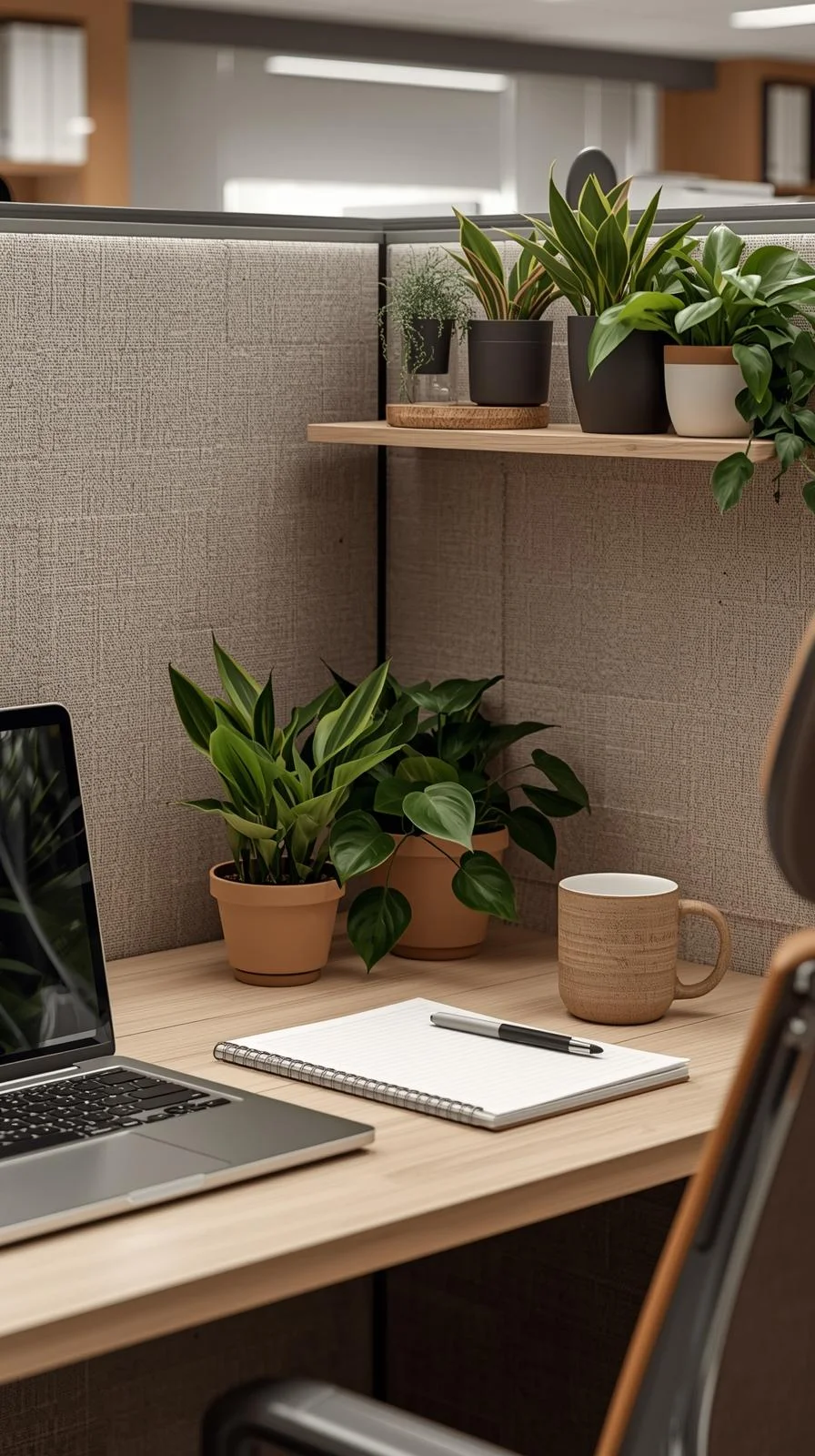
Cubicals often feel disconnected from the outside world, especially when windows are far away. Adding a plant instantly changes that feeling. Even simple plants like succulents, pothos, or snake plants bring life into the space and soften the rigid office environment.
Over time, many people notice that greenery helps them feel calmer and more grounded. Plants give the eyes a break from screens and paperwork. If live plants are not allowed or practical, realistic artificial plants can still offer a similar sense of balance. The purpose is to add a natural element that breaks up the straight lines and plain surfaces.
3. Personalize Walls with Meaningful Decor
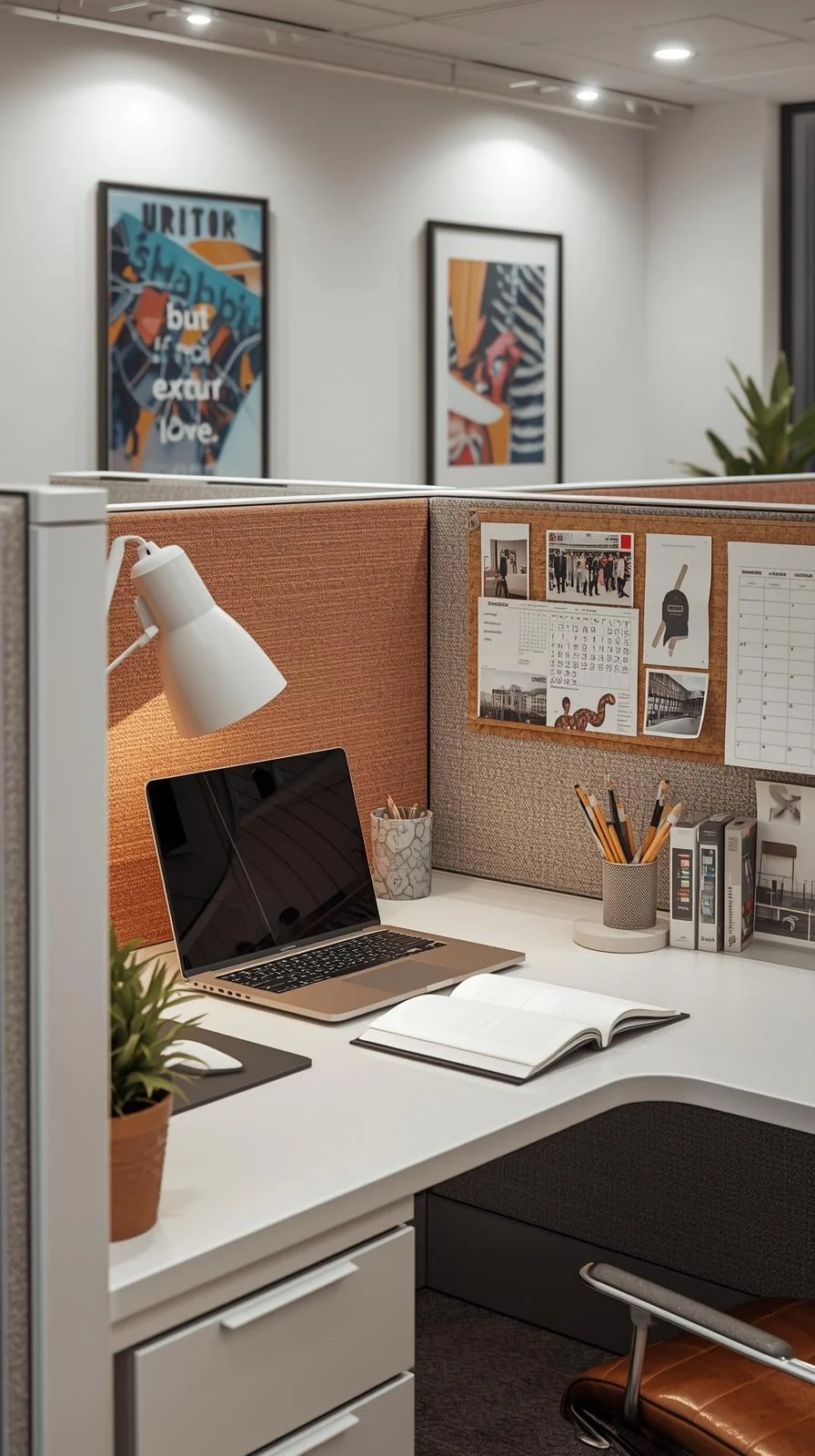
Cubical walls are often bare or covered with standard office boards. Treating them as a personal backdrop makes a noticeable difference. Framed prints, design-focused calendars, or fabric panels can introduce color and personality. Some people enjoy creating a vision board with images or words that reflect goals or motivation.
Personal wall decor helps the cubical feel less temporary and more personal. It is not about filling space, but about choosing items that carry meaning. When the walls reflect your interests or values, the workday feels more connected and the cubical gains its own identity.
4. Use Clever Storage to Clear the Desk
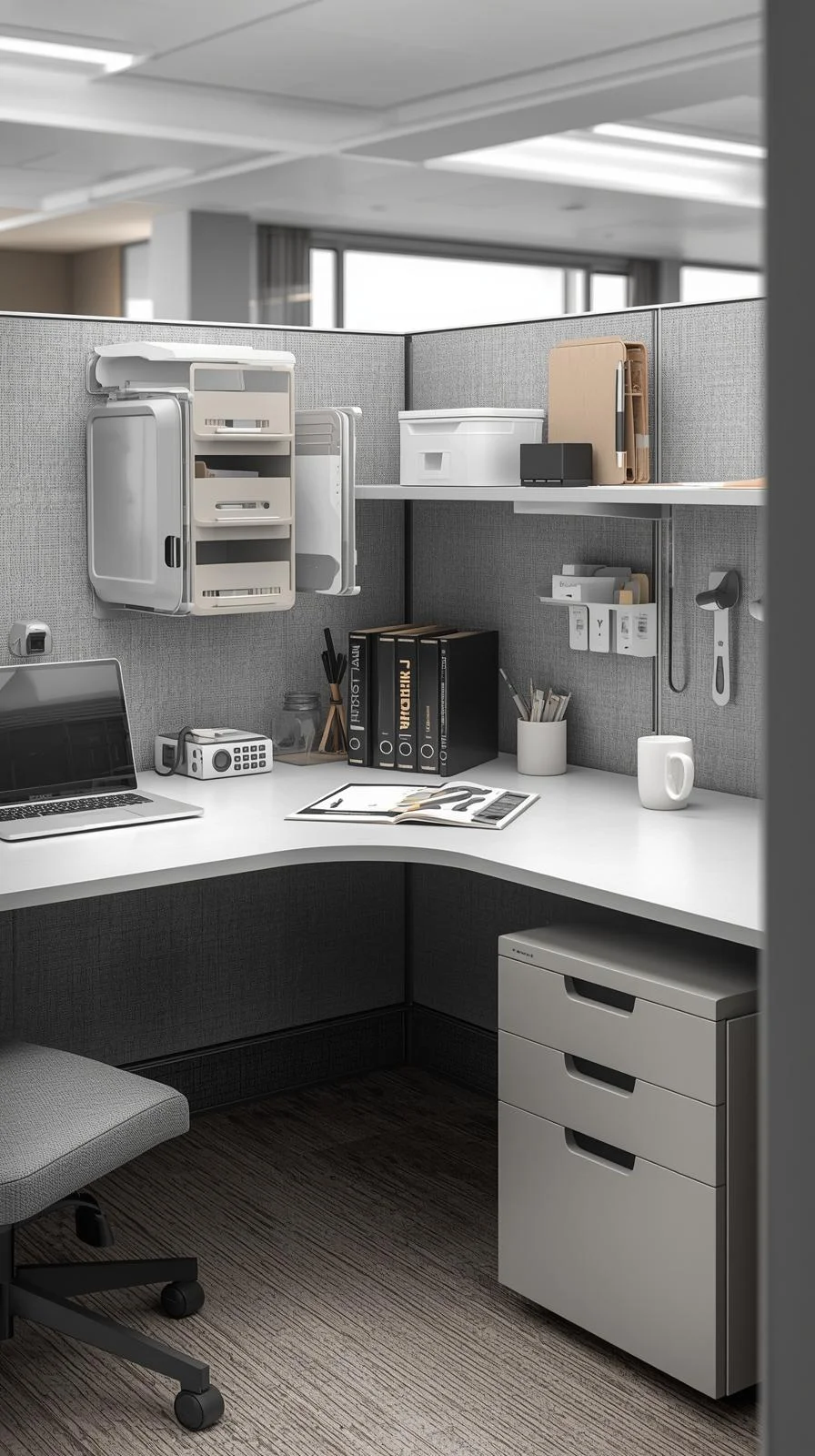
Cluttered desks often lead to scattered thinking. Since cubicals usually offer limited surface space, storage needs to be efficient. Vertical organizers, under-desk drawers, or slim wall-mounted holders keep supplies close without crowding the desk.
When storage works well, the desk stays clear and usable. You no longer need to move piles of items just to write or use your computer. Over time, this order supports better focus and smoother work habits. A tidy desk sends a quiet signal that the day is organized, which makes even demanding tasks feel easier to handle.
5. Play with Color for Energy
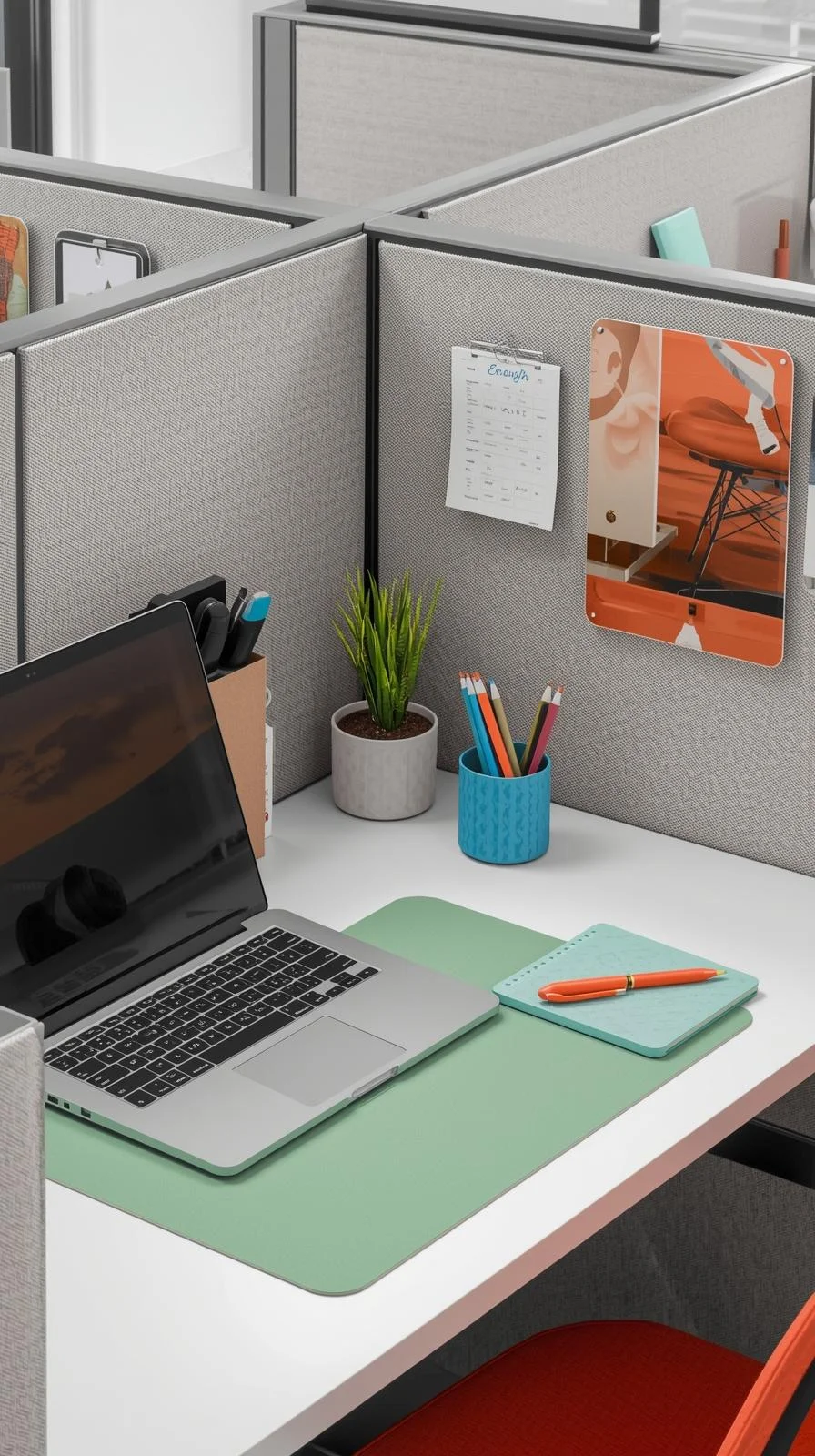
Color strongly affects mood, yet many offices rely on dull neutrals. Adding small touches of color can change how a cubical feels. Items like a desk mat, pen holder, or mousepad are simple ways to introduce energy without overwhelming the space.
Color works as a subtle tool. Cooler shades such as blue and green encourage calm and concentration, while warmer tones like yellow or orange support creativity. You do not need bold colors everywhere. A few thoughtful accents are enough to influence how the space feels throughout the day.
6. Add Texture for Depth
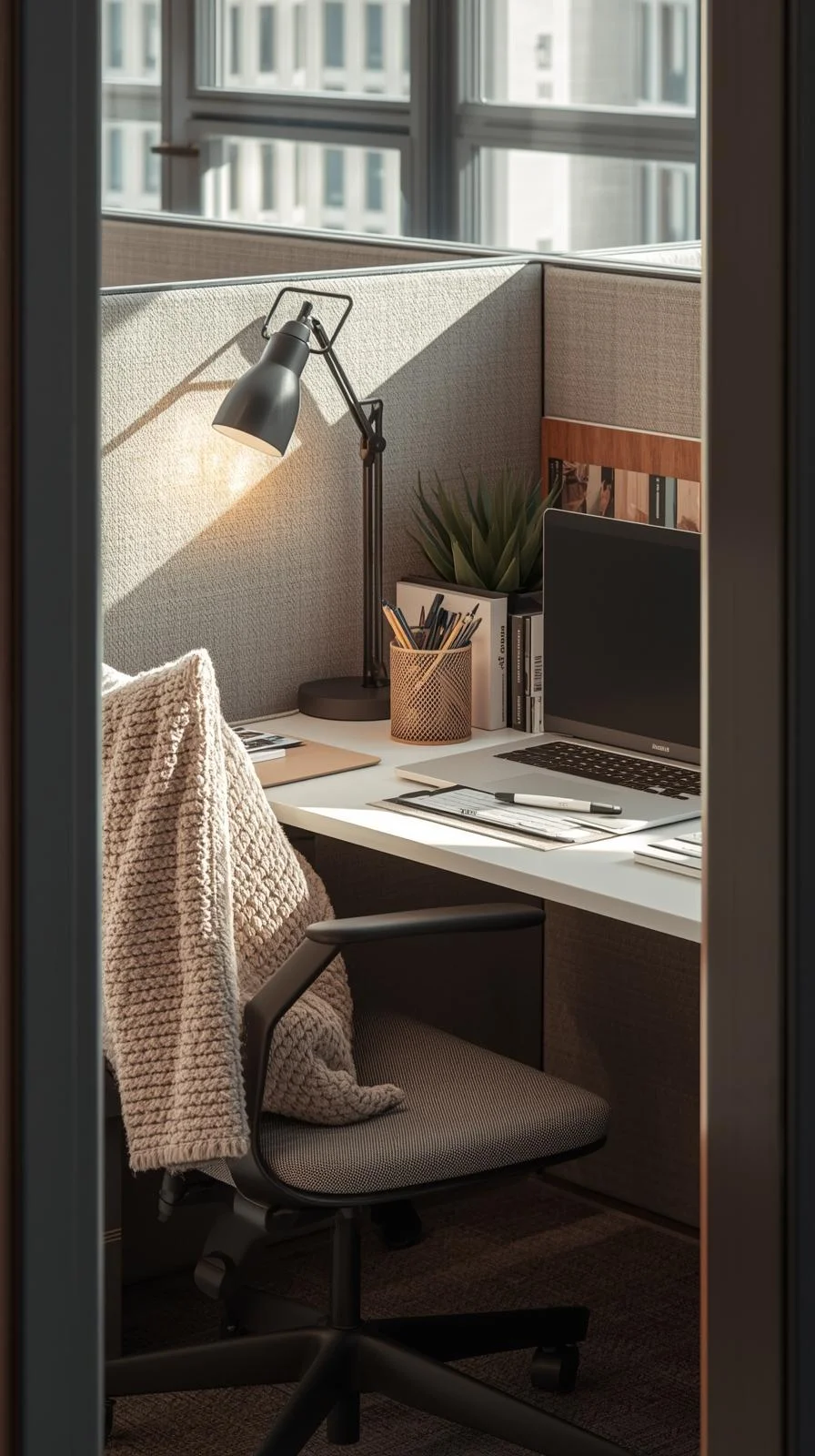
Most cubicals are filled with smooth, hard surfaces that feel flat. Introducing texture adds warmth and depth. A fabric seat cushion, woven organizer, or soft desk mat changes both the look and feel of the space.
Texture improves comfort in small but meaningful ways. Resting your arms on a softer surface feels better than hard laminate. Visually, texture makes the cubical appear layered rather than sterile. Over time, these small adjustments turn the cubical into a place that feels more inviting and less mechanical.
7. Create Zones Within the Cubical
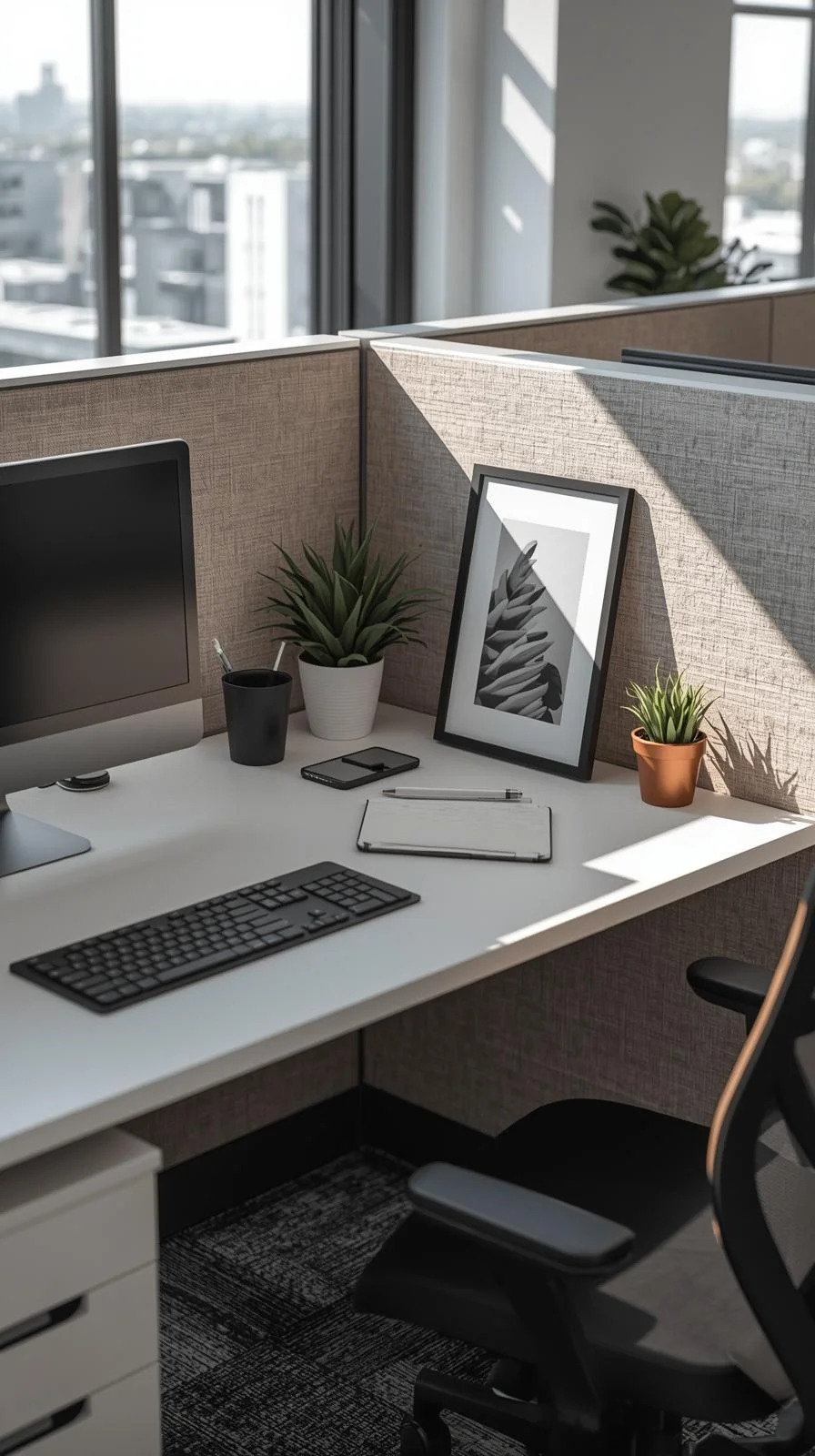
Even a small cubical can feel more engaging when divided into zones. One area of the desk can serve as the main work zone for your computer, while another can hold a notebook for planning or ideas. A small section can be reserved for items that inspire you, such as photos or art.
Zoning creates variety within limited space. Instead of one flat surface that feels repetitive, the cubical gains different areas for different tasks. This not only improves function but also keeps the mind more alert as you shift between activities.
8. Bring in Personal Comforts
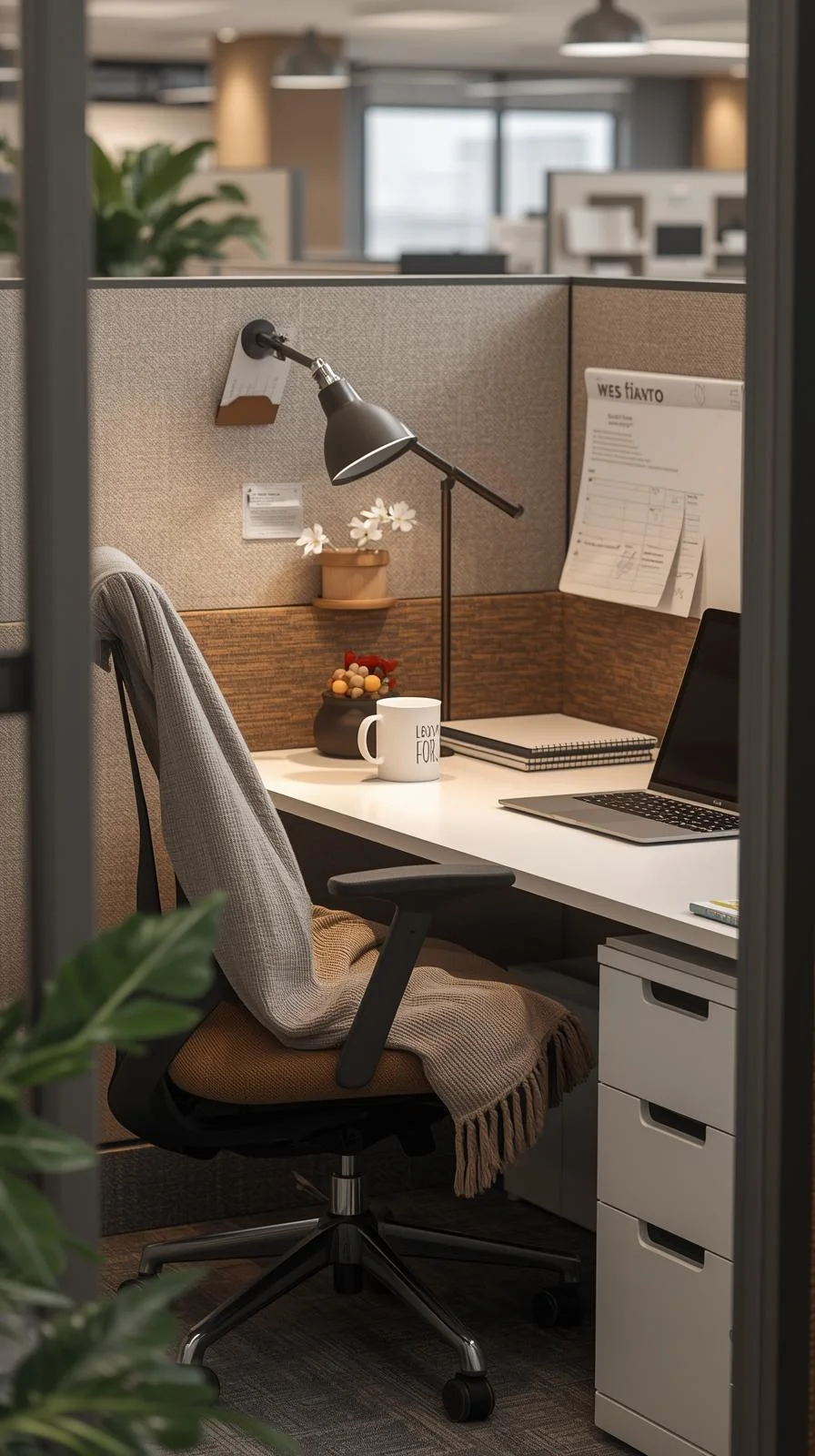
Productivity is closely tied to comfort. Adding small personal comforts can make a big difference. A cushion for your chair, a soft throw for colder days, or a favorite mug can make the cubical feel more pleasant.
These comforts support longer focus by reducing physical strain. They also reinforce the feeling that this space belongs to you. Over time, personal comfort reduces stress and makes daily work feel less exhausting.
9. Use Technology Smartly
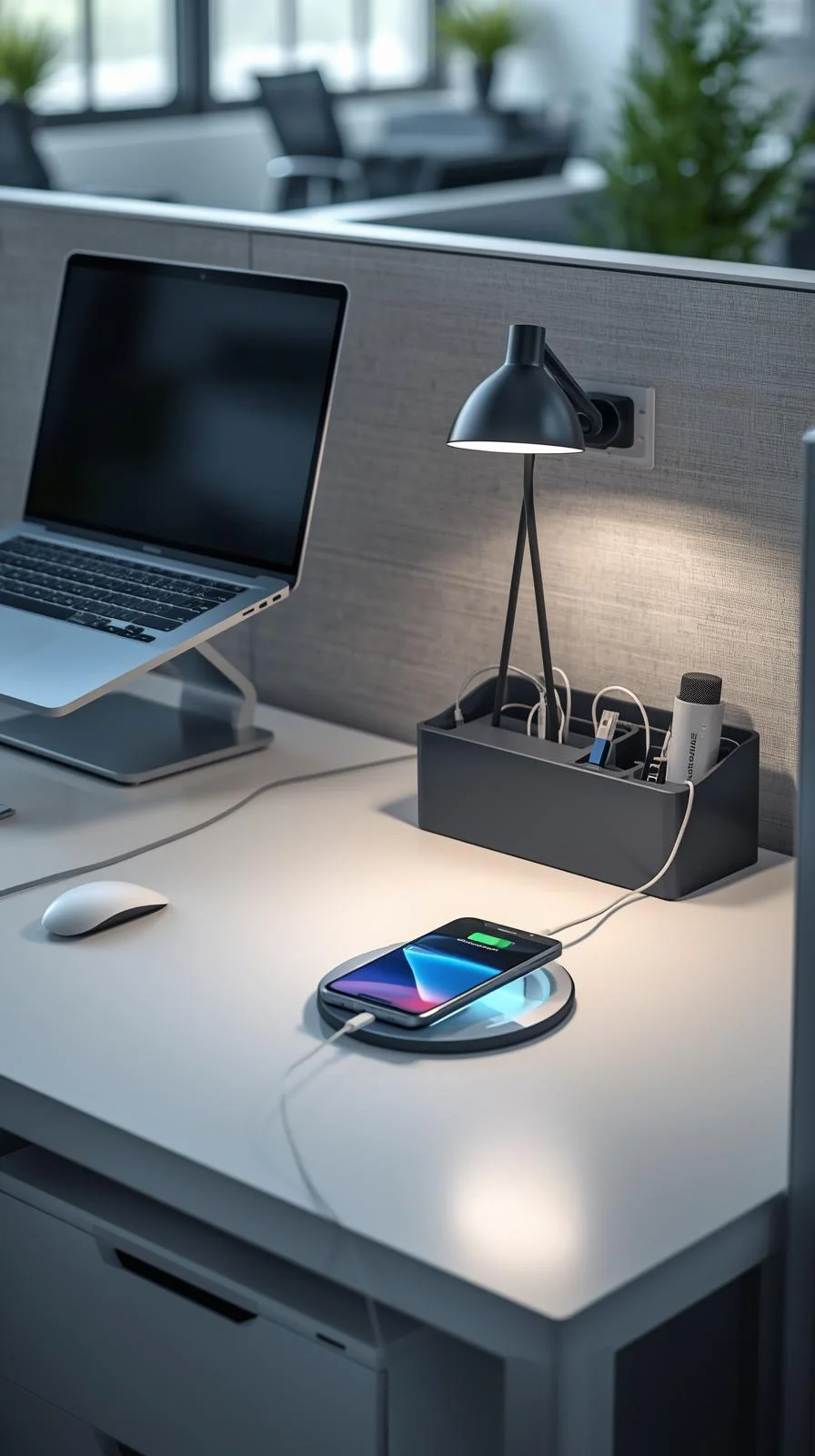
Limited outlets and desk space can make technology feel messy in a cubical. Cable organizers, wireless chargers, or compact device stands help keep things tidy and accessible.
When technology is well managed, the cubical feels smoother and more modern. You avoid tangled cords and constant rearranging. This organization saves time and mental energy, keeping the space ready for focused work.
10. Rotate Elements to Keep Things Fresh
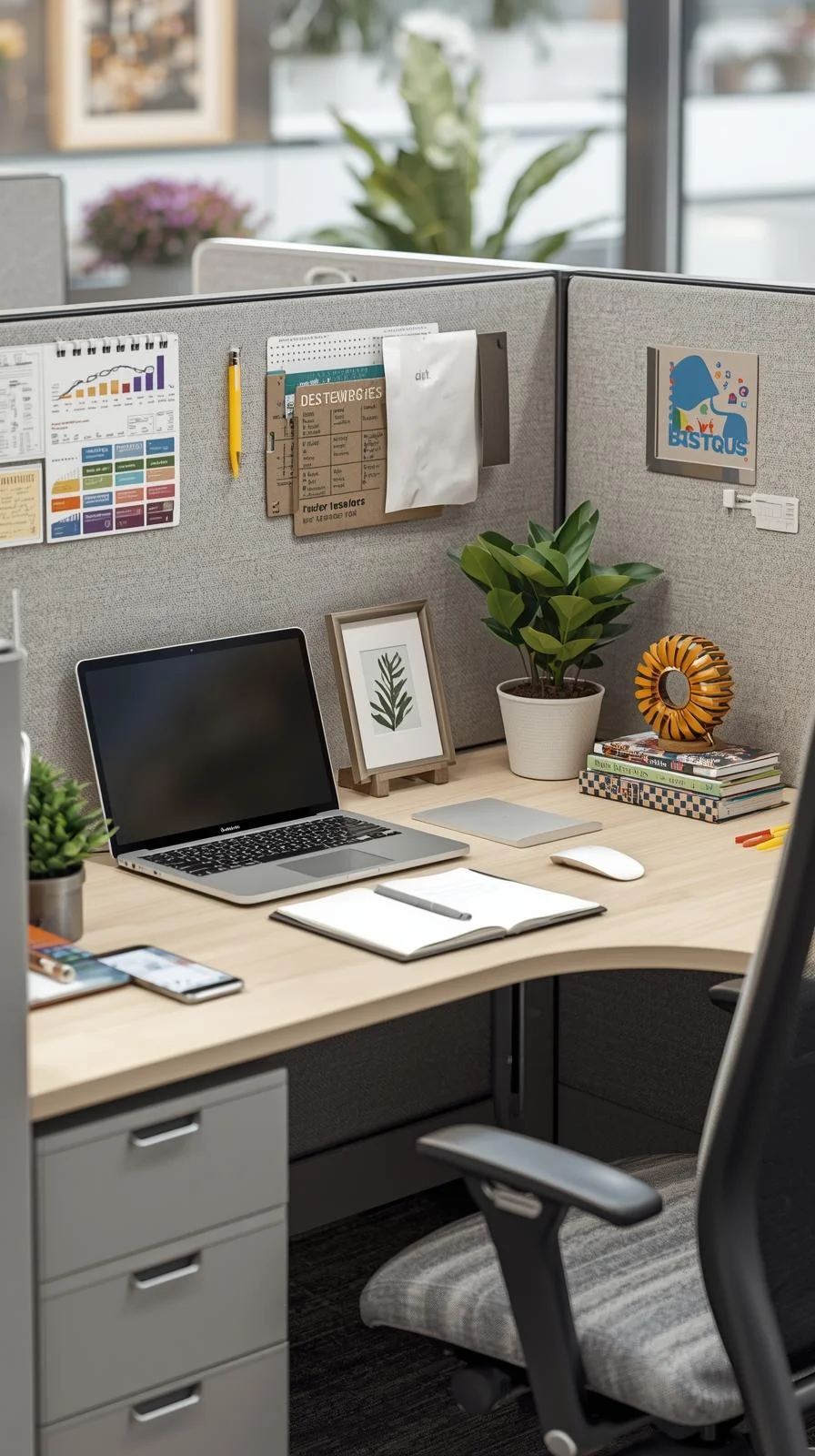
A simple way to prevent a cubical from feeling stale is to change small elements occasionally. This might mean rotating photos, swapping desk accessories, or moving plants.
These minor changes refresh the space without extra cost. A cubical seen every day can fade into the background, but small updates bring it back into awareness. Rotation also allows the space to reflect seasons, moods, or changing workloads.
Final Thoughts
A cubical does not have to feel dull or lifeless. With thoughtful use of lighting, greenery, storage, color, texture, zoning, comfort, and technology, it can become a space that supports rather than drains you. Each idea here is practical and easy to apply in almost any work setting.
Most importantly, a cubical is your personal workspace. Its size or shape matters less than how you arrange it. When the space feels like it belongs to you, work becomes less about pushing through the day and more about finding steady focus and balance.